Key Takeaways
-
A fan moves air but does not cool it; cooling comes from moving air across damp skin so sweat evaporates, which means fans lose power in very humid conditions.
-
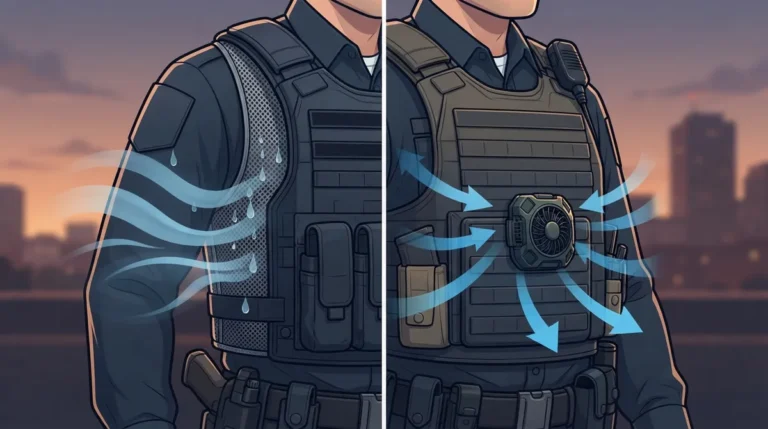
Air gap cooling is passive and silent, relying on movement and outside airflow, while direct fan cooling provides steady, adjustable airflow even when standing still.
-
The strongest setups often combine both: the air gap creates space for air to spread, and the fan supplies the push that moves air through that space.
-
Fan placement and vest fit matter as much as the fan itself, since air that never reaches the torso provides little relief.
-
Research shows promising results for fan-based cooling in specific tests, but these studies are small and controlled, so cooling vests should supplement hydration, rest, and heat planning, not replace them.
If you wear body armor for a living, you know the feeling. The shift starts fine. Then the heat settles in, your shirt sticks to your back, and your focus slips. You start hunting for a fix, and two ideas keep popping up: air gap cooling and direct fan cooling.
So what is the real difference? And which one should you pick? In this guide, we break down air gap cooling vs direct fan cooling in plain language. We look at how each one works, where each one shines, and where each one falls short. We also share what the research says, because the facts matter more than the hype.
Whether you patrol a beat, guard a site, work a call, or deploy overseas, this guide is for you. By the end, you will know how to match the cooling method to your job. Let’s get into it.
What Is Air Gap Cooling?
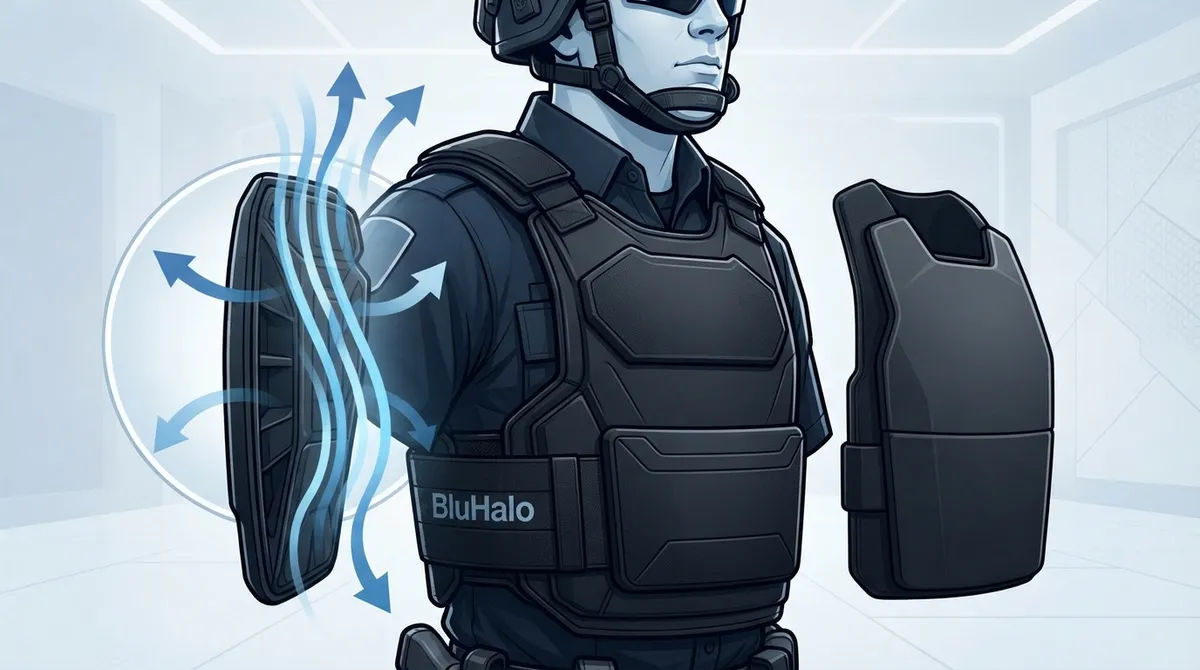
An air gap is a space between your body and your vest, or between layers of your gear. That space lets air move. It also gives sweat a place to evaporate instead of sitting against your skin.
Think of it like a tent in the wind. A tent that touches your skin traps heat. A tent held a little away lets air flow through. The gap does the same job under armor.
The air gap is passive. It has no motor and no battery. It simply creates room. How well it works depends on a few things:
- Fit: a snug vest leaves less room for air to move.
- Openings: air needs a way in and a way out.
- Fabric: breathable fabric lets moisture escape faster.
- Movement: walking, running, and working help push air around.
- Surrounding airflow: wind or a moving vehicle helps. Still air does not.
A passive gap is simple and quiet. It never runs out of battery. But it relies on the world around you to move the air. On a still, hot day, that help may be small.
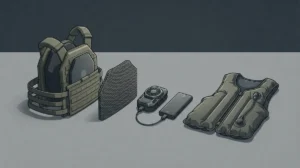
BluHalo is a clear example of this approach done well. It is a lightweight ventilation vest worn under body armor. It weighs under 7 ounces and sits flat when deflated. When you inflate it with the small pump, it can lift the vest up to about 1.5 inches off your body. That creates a cooling air gap on demand. When you do not need it, a button deflates it. You can read more about the idea in how to beat vest heat with BluHalo inflatable cooling.
What Is Direct Fan Cooling?
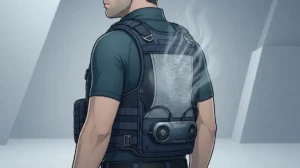
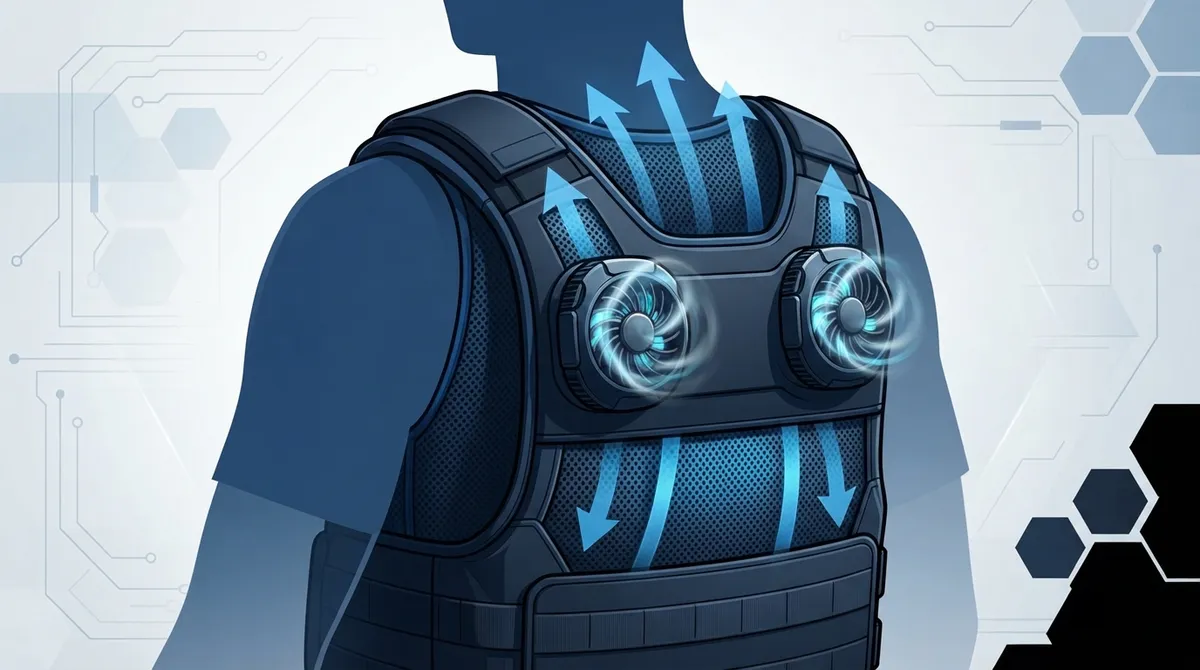
Direct fan cooling uses a small battery-powered fan. The fan pushes ambient air into or through the vest area. That moves air across your skin, which can help carry away heat and sweat.
Here is the key point that many people miss. A fan moves air. It does not make air cold. If the air outside is 95°F, the fan blows 95°F air. The benefit comes from moving that air across wet skin so sweat evaporates faster. Evaporation is what cools you.
That is why fans can feel so good. Moving air on damp skin feels like a breeze on a hot day. For a deeper look, see how an airflow system for military vests works.
Fan systems have their own strengths:
- They create steady airflow even when you stand still.
- Many have speed settings so you can adjust the breeze.
- They can push air exactly where you point it.
BluFano is built for this job. It is a self-contained, active airflow unit with a patented air-redirect spout that slides under any style of body armor. You can add an optional strap to hold it in place. It runs for about 8 to 32 hours depending on the fan setting. It also has a built-in 10,000mAh power bank and a forward-facing light. To learn the basics, check out how to use a BluFano body armor fan to stay cool.
Air Gap Cooling vs Direct Fan Cooling: A Side-by-Side Look
Here is a quick comparison to make the differences easy to see.
| Feature | Air Gap Cooling | Direct Fan Cooling |
|---|---|---|
| Power needed | None (passive) | Battery |
| How it works | Creates space so air can circulate | Pushes air across the skin |
| Noise | Silent | Low hum |
| Works when standing still | Limited without outside airflow | Yes |
| Adjustable | Gap size only | Fan speed and direction |
| Maintenance | Very little | Charging needed |
| Best for | Moving jobs, quiet settings | Still, hot, long shifts |
Neither one is the clear winner for everyone. Each solves a different part of the problem. For more head-to-head views, see fans vs. air gaps and small fan vs. air-gap vest.
Why the Best Setup Often Uses Both
Here is some good news. You do not have to choose just one. The two ideas work well together.
Think about it this way. A fan needs somewhere to push air. If your vest sits tight against your body, there is little room for that air to travel. It may hit one spot and stop. An air gap gives the airflow space to spread across your torso.
The reverse is true too. An air gap alone gives air a path, but nothing pushes it along. A fan adds the push. Together, you get space plus movement.
This is why where the air goes matters as much as having a fan at all. Outlet placement and how well the air reaches your torso can make or break the result. A strong fan aimed at the wrong spot will not help much.
That is the thinking behind pairing our two products. BluHalo builds the gap. BluFano drives the air through it. You can learn how they work as a team in 8 steps to use BluHalo and BluFano together. Both are also sold as a bundle at a discount, which helps if you want the full setup.
What the Research Says
We like to keep claims honest. So let’s look at what studies have found, and be clear about their limits.
Thermal Manikin Findings
A 2017 thermal-manikin study tested a hybrid cooling vest in hot, humid conditions: 34°C, 60% relative humidity, and 0.4 m/s air speed. The ventilation fans considerably increased evaporative heat loss compared with the fan-off condition. That study also tested phase-change material, so the results should not be applied to every fan vest.
A separate 2017 manikin evaluation looked at a fan-based wearable device on construction worker clothing. It estimated the insulation of the outfit dropped from 0.75 clo to 0.48 clo. But those fans mostly cooled the head and face. That shows how much design and airflow placement matter.
Human Study Findings
A 2022 study in the Journal of Occupational Health tested a fan-attached jacket that delivered 12 L/s. Nine healthy men exercised for 60 minutes in two settings: hot-dry (40°C, 30% RH) and warm-humid (30°C, 85% RH). The researchers reported the jacket may help reduce heat strain in both. It was a small study, so it does not prove equal results for everyone.
A 2021 experiment in Scientific Reports used a fan jacket delivering 30 L/s at 40°C and 50% RH. It compared the jacket to a 10°C water-circulating vest and a no-cooling control. In that test, the fan jacket held back the rise in core temperature better than the water vest. Again, that was one protocol, not a universal product ranking.
How to Read These Results
Manikin tests measure heat transfer under tight control. Human trials measure how real bodies respond. Neither one alone proves a certain vest will prevent heat illness. Treat the studies as helpful signs, not guarantees. A cooling vest should add to, not replace, good heat habits like water, rest, and acclimatization. The OSHA heat stress guide lays out those basics well.
Where Each Method Struggles
Every cooling tool has limits. Knowing them helps you pick smart.
Humidity
In very humid air, sweat does not evaporate easily. The air is already full of moisture. So fans lose some of their power. Moving air still helps, but the cooling effect shrinks. An air gap faces the same issue, since it also leans on evaporation. For a closer look, read which works better in humid heat.
Very Hot Air
When the air is hotter than your skin, moving it across you can add heat through convection. Evaporation may offset that, but not always. A fan is not an air conditioner. In extreme heat, you need more than airflow alone. Pair your gear with shade, breaks, and fluids.
Poor Fit and Placement
A great fan with poor placement is a waste. If the air never reaches your torso, you will not feel much. Fit also changes how well air flows. Our guide on how vest fit affects cooling airflow digs into this.
How to Choose Based on Your Job
Your work shapes what works best. Here is a simple way to think about it.
Law Enforcement Officers
Patrol means a lot of sitting in a car, then sudden action. A passive gap you can inflate on demand is handy. A small fan helps during long stretches in a parked cruiser. Many officers like both. See why police officers need a ventilation vest.
Military Personnel
Long missions and heavy loads call for steady airflow and long battery life. A fan with a wide run-time range suits that. Learn more in how to master body armor heat management for military use.
Security Professionals
Guards often stand still for hours. Still air means a passive gap gets little help. A quiet fan can fill that gap. Our piece on cooling systems for security guards covers this.
Tactical and SWAT Teams
High-intensity work means a lot of movement and heavy gear. A low-profile gap that lies flat until needed keeps your gear streamlined. A compact fan adds relief between entries.
Emergency Response Personnel
Firefighters and hazmat crews face extreme heat and heavy layers. Cooling gear can help comfort, but it must fit your protective ensemble and your department’s rules. Always follow your safety protocols first.
A Simple Five-Step Way to Decide
- Check your climate. Is it hot and dry, or hot and humid? Dry heat favors evaporation. Humid heat limits it.
- Think about movement. Do you move a lot, or stand still? Movement helps passive gaps. Stillness favors a fan.
- Consider noise. Do you need near silence? A passive gap is silent. Check fan noise levels too.
- Plan your power. Can you charge each day? If so, a fan is easy to live with.
- Test the fit. Wear it under your actual armor. Make sure air reaches your torso and nothing shifts.
For more help with the buying side, try how to choose the right body armor ventilation vest.
Quick Tips for Better Results From Any Setup
- Wear a moisture-wicking base layer to help sweat move away from skin.
- Aim airflow at your core, where most heat builds up.
- Keep your fan clear of lint and sweat.
- Charge your battery before every shift.
- Drink water often, even if you do not feel thirsty.
- Pre-cool in a shaded or air-conditioned space when you can.
Good armor choice matters too. The National Institute of Justice body armor standards explain what protective gear must do. Cooling add-ons should never reduce that protection, so always check fit and compatibility.
For more ideas, see how to stop overheating under body armor on duty.
The Bottom Line on Air Gap Cooling vs Direct Fan Cooling
Here is the short version. Air gap cooling gives air room to move. Direct fan cooling gives air a push. One is quiet and simple. The other is steady and adjustable. And the strongest setups often use both.
Remember the honest limits. Fans do not chill the air. Humidity cuts evaporation. Studies support the benefits but do not promise every vest will prevent heat illness. Cooling gear works best as part of a full heat plan.
If you want a proven pair, BluHalo and BluFano are built for exactly this job. BluHalo creates the air gap on demand. BluFano drives fresh air beneath your armor. Together, they help you stay cooler, drier, and sharper through long shifts.
Ready to feel the difference? Get in touch with our team and we will help you find the right fit for your gear and your job.
FAQs
Q: What is the difference between air-gap cooling and fan cooling in a ventilation vest?
A: Air-gap cooling uses open space between your body and your vest so air can move and sweat can evaporate. Fan cooling uses a battery-powered fan to push air across your skin. The two work well together, since a fan needs space to move air.
Q: Does a ventilation vest work without a fan?
A: Yes, it can help. A passive air gap lets air circulate and sweat evaporate, especially when you are moving or there is a breeze. It works best with some outside airflow, so a fan can add steady relief when you are standing still.
Q: Are fan-cooled vests effective in hot and humid weather?
A: They can still help, but humidity limits the benefit. When the air is full of moisture, sweat evaporates more slowly, so cooling drops. One small 2022 study found a fan jacket may reduce heat strain in warm-humid conditions too, though it does not prove the same result for everyone.
Q: Can a fan vest make you hotter when the air is above body temperature?
A: It can, in some cases. A fan moves air but does not cool it, so very hot air can add heat through convection unless evaporation offsets it. In extreme heat, pair your fan with shade, water, and rest breaks.
Q: Do ventilation vests reduce heat stress or just improve comfort?
A: Studies suggest fan-based cooling may reduce heat strain in certain conditions, but results depend on the product, the setting, and the person. No vest is proven to prevent heat illness on its own. Use it alongside hydration, rest, acclimatization, and monitoring.