Key Takeaways
-
Heat buildup under body armor significantly reduces cognitive performance and physical output, making airflow systems a performance necessity rather than a luxury for military and tactical professionals.
-
Passive spacer vests like Maxx-Dri Vest 4.0 and BluHalo offer reliable, maintenance-free cooling through 8mm standoffs creating 360-degree airflow without batteries or moving parts.
-
Active fan-driven systems like Blufano deliver maximum cooling with 8-32 hour battery life and weigh under 1oz, ideal for high-heat operations and extended deployments.
-
The tactical body ventilation market is projected to grow from $0.48 billion in 2026 to $0.82 billion by 2034, reflecting industry recognition that thermal comfort directly impacts mission effectiveness.
-
Evaporative cooling panels with body-mapped air channels like INUTEQ’s Respire® system provide efficient cooling in humid climates without adding noticeable bulk to existing armor.
-
Proper use requires moisture-wicking base layers, correct fit to prevent air channel collapse, consistent hydration, and regular equipment maintenance to maximize ventilation system performance.
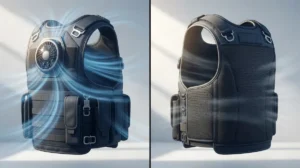
Wearing body armor in the heat is no joke. Whether you’re on patrol, deployed overseas, or running a high-stakes operation, the heat trapped under your vest can wear you down fast. That’s where an airflow system for military vests comes in. These systems are designed to move hot, humid air away from your body so you stay cooler, drier, and more focused. In 2026, the market for tactical body ventilation gear is booming — and for good reason. More professionals than ever are realizing that staying cool under armor isn’t a luxury. It’s a performance necessity. Let’s break down how these systems work, what types are available, and which solutions are worth your attention.

Why Heat Buildup Under Body Armor Is a Real Problem
Body armor is a lifesaver — literally. But it also traps heat like a furnace. The rigid panels sit flush against your torso, cutting off natural air circulation. Your body sweats, but that moisture has nowhere to go. The result? Overheating, fatigue, and loss of focus at exactly the moments when you need to be sharp.
According to the OSHA Heat Stress Guide, heat stress is a serious occupational hazard that reduces cognitive performance and physical output. For military personnel, law enforcement, and security professionals wearing heavy gear, this risk is significantly amplified. Heat exhaustion doesn’t care how trained you are — it hits anyone who gets too hot for too long.
That’s why soldiers and tactical professionals need tactical vest ventilation as part of their standard gear setup. It’s not optional anymore — it’s essential.
What Is an Airflow System for Military Vests?
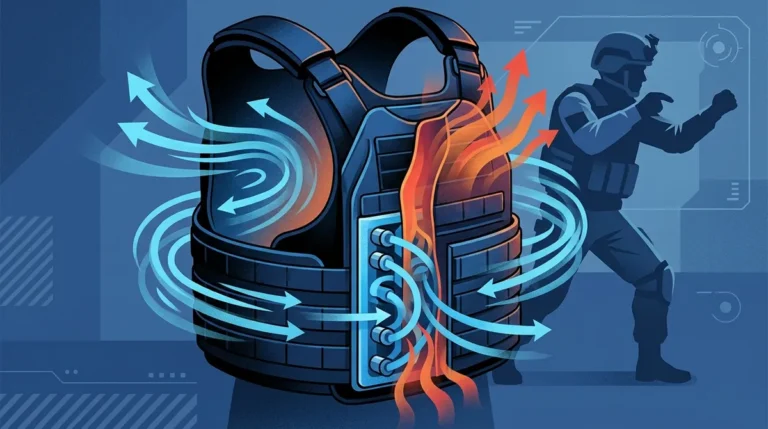
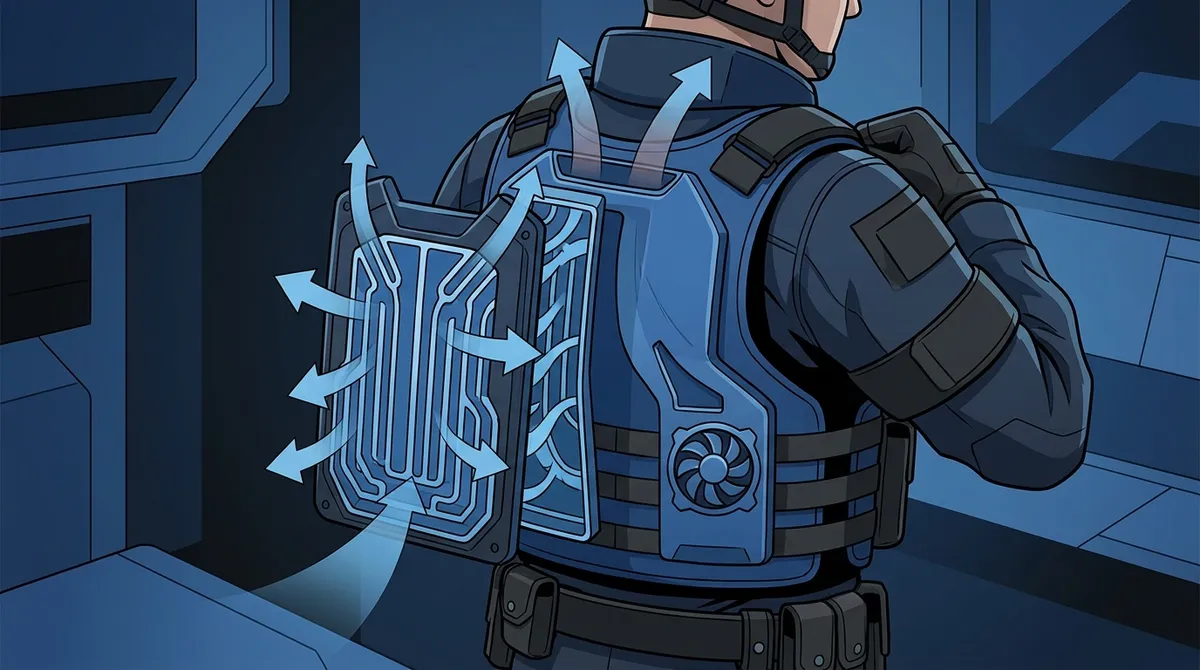
An airflow system for military vests is any device, panel, or garment that creates or promotes air movement between your body armor and your torso. The goal is simple: get fresh air in and push hot, moist air out. These systems can be passive (no moving parts) or active (fan-driven), and they come in several different forms.
Think of it like opening a window on a hot day. The moment air starts moving, things cool down fast. The same principle applies under your vest. A small gap or channel for airflow can make a massive difference in how comfortable and alert you feel during long operations.
You can explore how plate carrier ventilation actually works to get a deeper understanding of the mechanics behind these systems.
Types of Airflow Systems for Tactical and Military Vests
1. Passive Spacer Vests
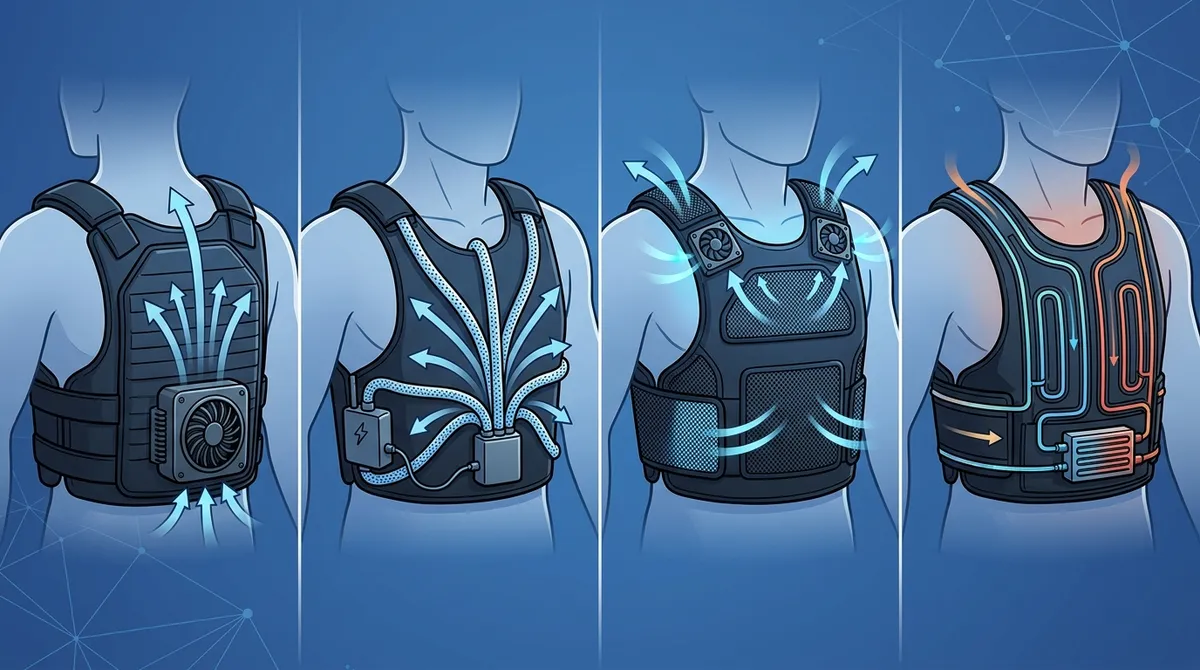
Passive spacer vests create a physical gap between your skin and your body armor. They don’t use fans or power — just smart design. The Maxx-Dri Vest 4.0, invented by a veteran officer, is a great example. It uses an 8mm non-collapsible polymer structure to create 360-degree airflow under body armor. No batteries. No moving parts. Just reliable, consistent air circulation.
The MILITAUR Adjustable Ventilation Vest works on a similar concept, acting as a spacer between your armor and undershirt. It helps reduce sweat buildup, odor, and discomfort from uneven weight distribution. These passive solutions are popular because they’re low-maintenance and extremely reliable in demanding environments.
2. Evaporative Cooling Panels
Evaporative cooling panels work by moving air over moisture to create a cooling effect — much like how sweating actually cools your body, just more efficiently. Body Armor Vent’s ICE and B-24 panels use their proprietary EVAP Technology™ with vertical air channels and horizontal vents. The result is a system that functions almost like a mini air conditioner under your vest.
INUTEQ’s Respire® system takes this further with body-mapped air channels designed to work with your body’s natural contours. Presented at MILIPOL 2025, it integrates seamlessly under body armor without adding noticeable bulk. These panels are especially effective in humid environments where passive spacers alone may not cut it.
3. Active Fan-Driven Systems
Active systems use small fans to push or pull air through channels under your armor. These provide the most consistent and powerful cooling — especially in environments without much ambient airflow. Qore Performance’s IceVents® Classic Ventilation Pontoons are a lightweight option (under 1 oz!) that enable up to 90% air volume and add conductive cooling on top of airflow benefits.
Active systems like BluHalo’s Blufano take this to the next level. Blufano is a self-contained, active airflow unit with a patented air-redirect spout that slides under any style of body armor. It delivers adjustable fan-driven airflow for 8 to 32 hours depending on the fan setting. It even includes a built-in 10,000mAh power bank that can charge USB devices — and a forward-facing light for low-visibility situations. That’s a serious piece of kit.
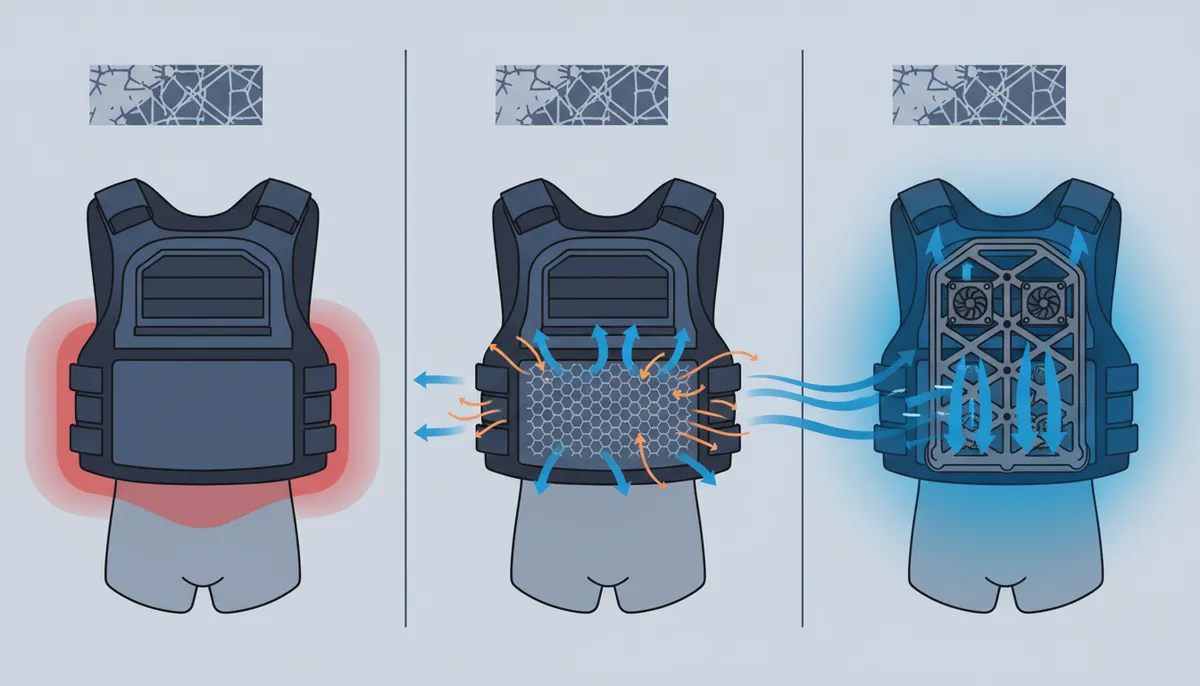
Comparing Airflow System Types: A Quick Overview
| System Type | How It Works | Best For | Key Benefit |
|---|---|---|---|
| Passive Spacer Vest | Creates a physical air gap | All environments, daily use | No batteries, ultra-reliable |
| Evaporative Cooling Panel | Moves air over moisture | Hot, humid climates | Cooling effect without power |
| Active Fan System | Fan-driven airflow under armor | High-heat, high-intensity ops | Maximum consistent cooling |
| Hybrid Systems | Combines spacer + fan or evaporative tech | Versatile, multi-climate use | Adaptable performance |
Key Features to Look for in a Military Vest Airflow System
Not all airflow systems are created equal. Here’s what you should prioritize when choosing the right one for your needs:
- Weight: Every ounce counts in the field. Look for systems that weigh as little as possible without sacrificing performance.
- Compatibility: The system should work with your existing plate carrier or body armor — no modifications needed.
- Durability: Tactical environments are rough. Your ventilation system needs to handle sweat, movement, and daily wear without breaking down.
- Ease of use: If it takes 10 minutes to set up, it’s not practical. Look for systems that are intuitive and fast to deploy.
- Battery life (for active systems): Longer shifts need longer battery performance. Aim for at least 8 hours of runtime on standard settings.
- Noise level: In tactical situations, a loud fan is a liability. Look for quiet operation.
You can also read about how to choose the best cooling systems for plate carriers for a more detailed buying guide.
Market Growth: Why Vest Ventilation Is a Growing Priority
The global tactical body ventilation market is growing fast. According to Intel Market Research, the market was valued at USD 0.45 billion in 2025 and is projected to grow from USD 0.48 billion in 2026 to USD 0.82 billion by 2034 — that’s a compound annual growth rate of 6.9%. This growth reflects a clear shift in how military and law enforcement agencies think about gear. Comfort and heat management are now seen as critical mission factors, not afterthoughts.
The Body Armor Standards from the National Institute of Justice also continue to evolve, with increasing attention to how armor design can better support the wearer’s physiological needs — including thermal comfort.
This momentum is great news for professionals who’ve been dealing with heat under their vests for years. More innovation means better products, better performance, and a whole lot more comfort on the job.
Top Airflow System Options at a Glance
| Product | Type | Key Feature | Ideal User |
|---|---|---|---|
| BluHalo Ventilation Vest | Inflatable spacer vest | Lifts armor 1.5″ for air gap; under 7 oz | Law enforcement, daily patrol |
| Blufano Active Fan System | Active fan-driven | 8–32 hrs battery; 10,000mAh power bank | Military, extended operations |
| Maxx-Dri Vest 4.0 | Passive spacer | 8mm standoff space; 360° airflow | Police, security personnel |
| Body Armor Vent ICE/B-24 | Evaporative cooling | EVAP Technology™; vertical air channels | Hot/humid climate professionals |
| IceVents® Classic Pontoons | Lightweight spacer | Under 1 oz; 90% air volume | Arid climate operators |
Why BluHalo Stands Out for Military and Tactical Users
BluHalo was created by a Chicago police officer who understood firsthand what it’s like to bake under body armor on a 12-hour shift in 95-degree heat. That practical experience shows in the design. The BluHalo ventilation vest weighs under 7 ounces, sits flat and low-profile when deflated, and inflates on demand to lift your vest about 1.5 inches off your body — creating a powerful air gap for cooling relief.
It attaches easily with Velcro and can be deflated in seconds with a push of a button. It’s built from double-layer high-strength polyethylene for lasting durability. Officers wearing it during hot summer shifts have reported noticeable improvements in comfort and focus — and that’s exactly the kind of real-world result that matters most.
Paired with the Blufano fan system, you get a complete airflow system for military vests that covers both passive air gap creation and active fan-driven circulation. Compare BluFano vs BluHalo to figure out which one — or combination — fits your situation best.
How to Get the Most Out of Your Vest Airflow System
Having the right gear is step one. Using it correctly is step two. Here are some tips to maximize your airflow system’s performance:
- Wear moisture-wicking base layers. A ventilation system works better when your base layer pulls sweat away from your skin. Check out moisture-wicking vests for body armor comfort for solid options.
- Check your fit. A vest that’s too tight will collapse air channels and reduce airflow. Make sure there’s enough room for your ventilation layer to do its job.
- Hydrate consistently. Airflow systems reduce heat buildup, but they don’t replace hydration. Drink water throughout your shift.
- Use active cooling after high-intensity activity. If you’ve been running or working hard, use your fan system or step into a cooler environment to let your ventilation system help you recover faster.
- Maintain your equipment. Clean your ventilation vest regularly to prevent odor and maintain performance. Follow the manufacturer’s care instructions.
Passive vs. Active: Which Airflow System Is Right for You?
| Factor | Passive System | Active Fan System |
|---|---|---|
| Power required | None | Battery or USB power |
| Cooling intensity | Moderate | High |
| Weight added | Very low | Low to moderate |
| Reliability in field | Very high (no failure points) | High (depends on battery) |
| Best environment | All climates | Hot, low-wind environments |
| Noise | None | Minimal (quiet operation) |
If you want a deeper breakdown, passive vs. active tactical vest ventilation is a great read. It walks you through the real-world pros and cons of each approach so you can make the best call for your specific role and environment.
And if you’re curious about how fan-driven systems operate on a technical level, this article on how an active cooling system works in ventilation vests explains it in plain terms.
It’s also worth noting that even non-tactical professionals are exploring innovative comfort solutions. For example, Charming Smiles of Ocoee has embraced patient comfort innovations in their practice — a reminder that in any high-stress professional environment, comfort tools improve performance. Similarly, outdoor adventure companies like Gulfside Adventures understand that managing heat and physical comfort is key to keeping people safe and energized in demanding conditions.
The Future of Airflow Systems for Military Vests
Innovation in this space is moving quickly. In 2026, we’re seeing more integration between ventilation technology and smart fabrics, body-mapped design, and modular gear systems. Companies are developing thinner, lighter, and more powerful cooling solutions that don’t compromise on tactical performance.
INUTEQ’s Respire® system, for example, showcased at MILIPOL 2025, represents a new generation of body-mapped ventilation that adapts to how you move. As military and law enforcement agencies continue to prioritize heat stress prevention gear, the technology will only get better.
For a look at the newest options on the market today, check out the best body armor ventilation options for 2026.
Conclusion: Stay Cool, Stay Sharp
An effective airflow system for military vests isn’t just a comfort upgrade — it’s a performance tool. When you’re not fighting your own body heat, you can focus on the mission. Whether you go passive, active, or a combination of both, the right vest ventilation system keeps you cooler, drier, and more effective across long, demanding shifts.
BluHalo’s ventilation vest and Blufano fan system are two of the best options available in 2026 for professionals who wear body armor every day. They were designed by someone who lived the problem — and built the solution. If you’re ready to take the next step toward serious on-duty comfort, reach out to the BluHalo team and find the right setup for your needs. You deserve to feel good while doing the job that matters most.
FAQs
Q: What is the best airflow system for military vests in 2026?
A: The best system depends on your environment and needs! For active fan-driven cooling, the Blufano system by BluHalo is a top pick — it runs for 8 to 32 hours and even charges your devices. For a passive, no-power option, a spacer vest like the BluHalo ventilation vest or Maxx-Dri Vest 4.0 works great and needs zero maintenance in the field.
Q: How do ventilation vests reduce heat stress under body armor?
A: Ventilation vests create a gap between your armor and your torso, which allows air to circulate and carry heat and moisture away from your body. This breaks the ‘oven effect’ that happens when armor sits flush against your skin, keeping your core temperature lower and your mind sharper during long shifts.
Q: Are airflow systems compatible with all types of plate carriers?
A: Most modern ventilation systems are designed to be universal and work with a wide range of plate carriers and body armor styles. Products like Blufano feature a patented air-redirect spout that slides under virtually any armor design, so you don’t need to modify your existing gear to benefit from active cooling.
Q: Do airflow vests add a lot of weight or bulk to my gear?
A: Not at all — that’s one of the best things about today’s vest airflow systems! The BluHalo ventilation vest weighs under 7 ounces and sits flat against your body when not inflated. Lightweight passive options like IceVents® Classic Pontoons weigh less than 1 oz, so you barely notice them.
Q: Can active fan systems for military vests be used in wet or field conditions?
A: Most quality active fan systems are built to handle demanding field conditions, including sweat exposure and light moisture. That said, always check the manufacturer’s specs for water resistance ratings before using them in rain or high-humidity environments. The Blufano system, for example, is designed for daily duty use in tough conditions.