Key Takeaways
-
Built-in rechargeable, removable rechargeable packs, and disposable cells are three distinct designs, so always check your exact vest model's manual rather than assuming how it works.
-
Stated runtime depends on fan speed, battery capacity, battery age, temperature, and airflow resistance, so compare runtimes only at the speed you actually plan to use.
-
Removable rechargeable packs let you swap in a charged spare mid-shift, making them the strongest choice for long or back-to-back shifts where downtime isn't an option.
-
Rechargeable packs usually cost less over time than disposable cells, but factor in the eventual pack replacement cost and the price of a spare pack or charger.
-
A plug that fits does not guarantee electrical compatibility; voltage, polarity, connector, and capacity must match, so use only maker-approved batteries and chargers.
-
Before buying, confirm whether you can change the battery without removing your vest, since stripping off gear to swap a battery is a real problem during a busy shift.
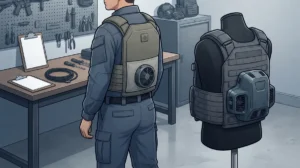
Picture this: it’s hour nine of a 12-hour shift, the sun is relentless, and your vest fan just went quiet. Nobody wants that moment. The battery inside your fan matters more than most people think, and picking the wrong type can turn a great cooling tool into a big headache.
If you wear body armor or a heavy vest, you’ve probably wondered about rechargeable vs replaceable battery vest fans. Which one lasts longer? Which one costs less? Which one is safer? The honest answer is that it depends on how you work, where you work, and how the vest is built.
In this friendly guide, we’ll walk through nine simple things to know before you choose. We’ll keep the words plain and the advice practical. Whether you’re a patrol officer, a soldier, a security guard, a SWAT team member, or a first responder, you’ll leave with a clear checklist you can trust.
1. Know What Each Battery Type Really Means
The labels sound simple, but they can mean different things from one vest to the next. That’s why a quick definition helps before we compare anything.
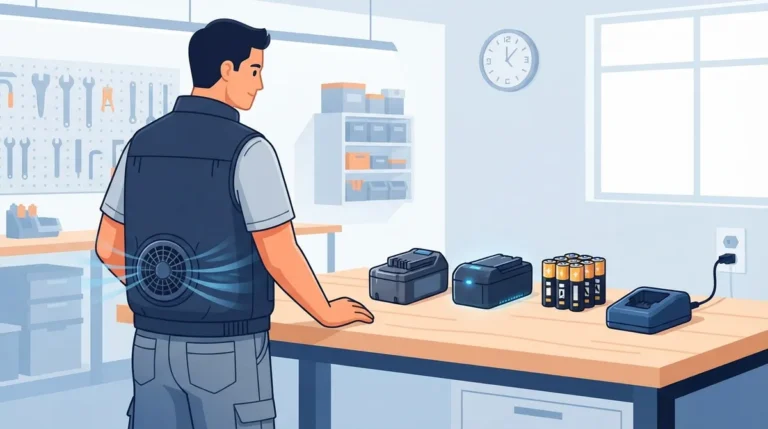
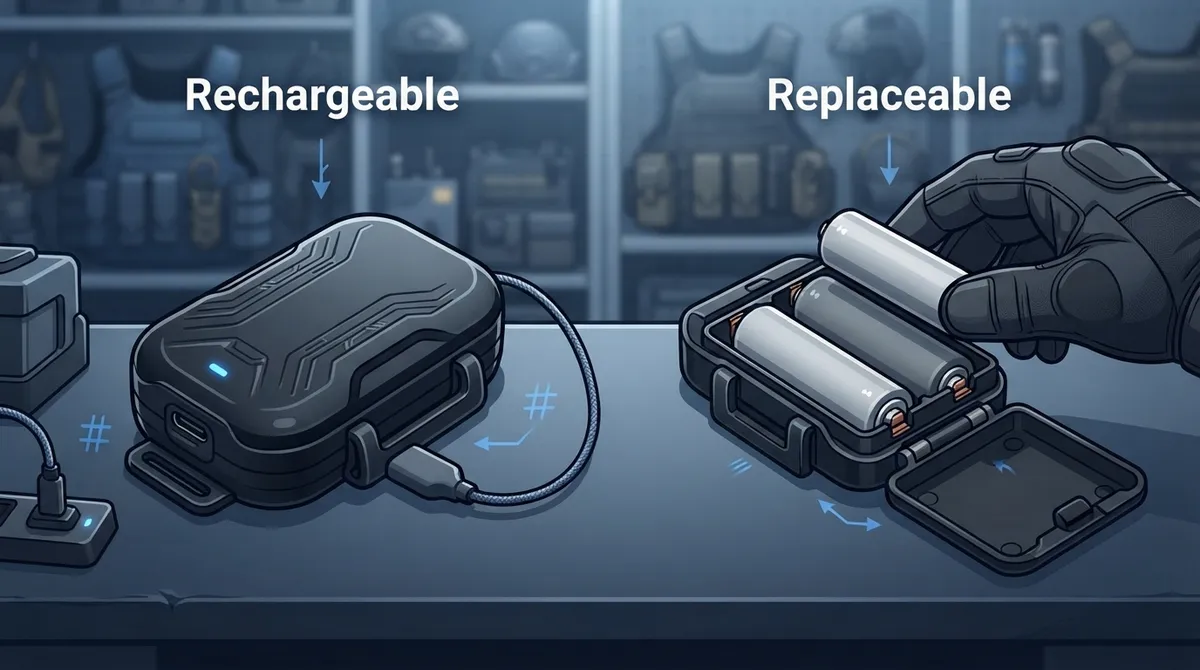
- Built-in rechargeable: the battery lives inside the fan unit. You plug the whole unit in to charge it.
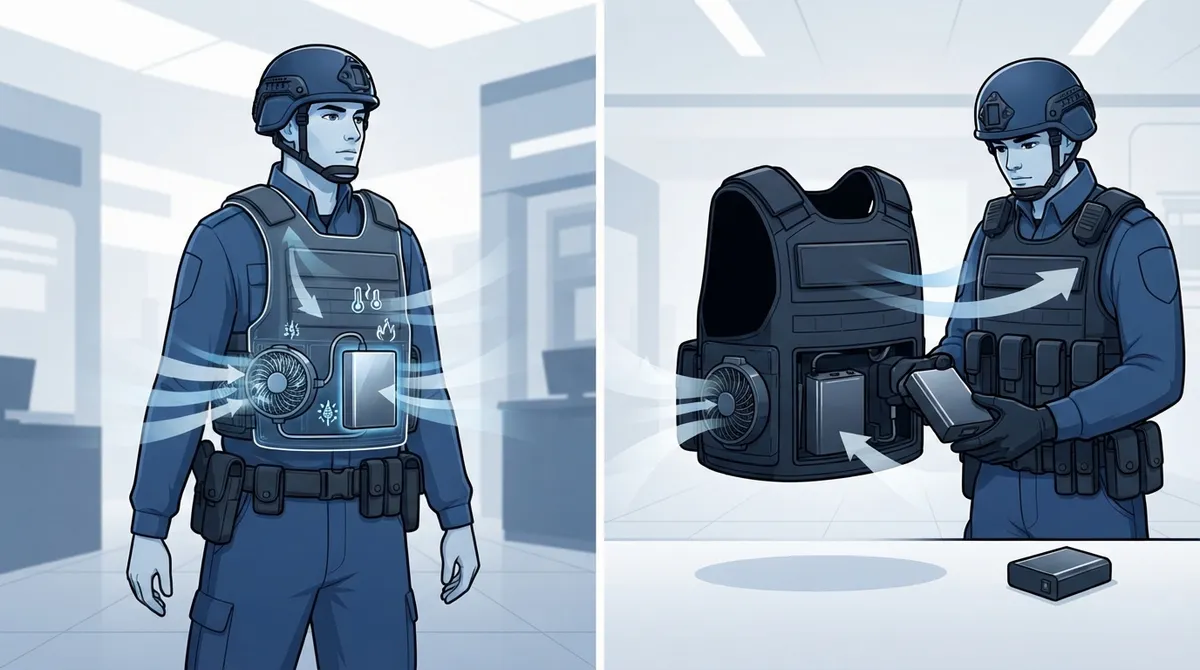
- Removable rechargeable pack: you pop the pack out, charge it, and swap in a charged spare.
- Replaceable disposable cells: you put in fresh single-use batteries when the old ones run out.
These are three different designs. Never assume all fan vests work the same way. Always check the manual for your exact model. The terms “rechargeable” and “replaceable” overlap more than people expect, since a swappable pack can be both.
2. Runtime Depends on More Than Battery Type
Here’s a surprise: the battery category alone doesn’t tell you how long your fan will run. There is no universal number for the whole category. Runtime depends on several things:
- Battery capacity
- Fan speed setting
- Number of fans
- Battery age and condition
- Outside temperature
- How much resistance the airflow meets under your gear
So when a brand lists a runtime, look for the fine print. Is that number for low speed or high speed? Different settings can change the result a lot. For example, the BluFano system runs for about 8 to 32 hours depending on the setting. That wide range shows why you should always match the number to the speed you actually plan to use. To see how this works in practice, check out how fan speed affects vest cooling battery life in 2026.
3. Rechargeable Packs Save Money Over Time
Let’s talk about your wallet. Disposable cells seem cheap at first. A pack of batteries costs little at the store. But if you run a fan every shift, those purchases add up fast, and you also have used cells to dispose of.
Rechargeable packs usually avoid that repeat spending. You pay more up front, then you charge the pack again and again. Eventually the pack wears out and needs replacing, so build that into your math. Compare these costs before you buy:
- Price of the vest or fan
- Price of a spare pack or charger
- Expected pack replacement cost
- Ongoing cost of disposable cells, if used
No single price applies across the whole category, so rely on the maker’s listed prices for your model.
4. Removable Packs Are Great for Long Shifts
If your shift runs long, a removable rechargeable pack can be a lifesaver. You charge one pack while you wear the other. When the first one runs low, you swap in the charged spare and keep going.
A built-in pack is simpler, but the vest or fan sits out of service while it charges. It can also be harder to replace when the battery finally wears down. That tradeoff matters for people who can’t afford downtime, like SWAT teams on extended operations or deployed military personnel.
Still, a built-in design can be a perfect fit for someone who charges at home between shifts and wants fewer parts to keep track of. Neither choice is wrong. It’s about matching the design to your routine.
5. Disposable Cells Shine Where Charging Is Hard
Replaceable disposable batteries have one big advantage: they work where power outlets don’t. If you’re out in the field for days with no easy way to charge, a pocket full of fresh cells can keep a fan going.
The downsides are real, though. You’ll buy cells again and again. Spent cells need proper disposal. And you have to carry extra weight and remember to restock. For most daily-duty users with access to a car charger or an outlet, rechargeable is more practical. For remote work, a disposable backup can still make sense.
6. Compatibility Is Not Just About the Plug
This one is important, so let’s slow down. Just because a battery or charger plugs in doesn’t mean it’s safe or right for your fan. Battery compatibility is model-specific. These details must all match:
- Voltage
- Connector type
- Polarity
- Capacity
- Discharge capability
A connector that fits does not guarantee the electrical match. Use only battery packs and chargers approved by the vest maker. Mixing random parts can damage your fan or create a safety risk. When in doubt, check the manual or ask the manufacturer.
7. Safety Matters With Lithium-Ion Packs
Most rechargeable fan packs use lithium-ion cells. They’re common and reliable when treated well. Still, the U.S. Consumer Product Safety Commission (CPSC) points out that batteries can cause overheating, fire, burns, and electrical shock from chargers. Problems can happen during use, storage, or charging.
The CPSC also notes that user-replaceable lithium-ion cells should have built-in protection against overcharge, over-discharge, and short circuits. Here are simple habits that help:
- Use only the charger that came with your pack or one the maker approves.
- Follow the instructions in your manual.
- Never use a damaged, swollen, or modified battery.
- Charge on a hard, clear surface, away from things that burn.
- Store packs in a cool, dry place, not in a hot vehicle all day.
- Recycle spent batteries at a proper drop-off point instead of tossing them in the trash.
For wider workplace safety, the OSHA Heat Stress Guide is a helpful read on staying safe in hot conditions.
8. Compare These Features Side by Side
A quick table makes the differences easy to see. Remember, these are general patterns, not fixed rules. Your exact model may differ.
| Feature | Built-In Rechargeable | Removable Rechargeable Pack | Disposable Cells |
|---|---|---|---|
| Ongoing cost | Low | Low (spare pack extra) | Higher over time |
| Swap mid-shift | No | Yes, with a spare | Yes, with spare cells |
| Needs charging access | Yes | Yes | No |
| Waste | Low | Low | More spent cells |
| Easy to replace when worn | Often harder | Usually easier | Very easy |
| Best for | Simple daily routines | Long or back-to-back shifts | Remote, no-charge settings |
Use the table as a starting point, then confirm each detail with the manufacturer for the model you like.
9. Use This Checklist Before You Buy
Ready to pick? Here’s a simple list of what to compare. It follows the factors that really matter for workwear:
- Stated runtime at each fan setting
- Charge time
- Availability of spare packs
- Pack weight and where it sits on your body
- Replacement cost
- Warranty coverage
- Whether you can change the battery without taking off the vest
That last point is easy to miss. If you have to strip off your gear to swap a battery, that’s a real problem on a busy call. Think about your actual day, not just the spec sheet. Our guide on how to pick a vest fan with all-shift battery life goes deeper on this.
Where BluHalo and BluFano Fit In
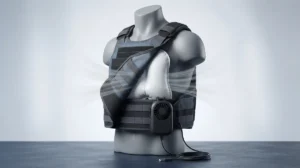
At BluHalo, we make gear for people who wear body armor and need to stay cooler, drier, and more focused. Our BluFano fan system is a self-contained, active airflow unit with a built-in 10,000mAh power bank. It slides under any style of body armor using a patented air-redirect spout, and it can run roughly 8 to 32 hours depending on the setting. The same power bank can also charge your USB devices, and a forward-facing light helps in low-light moments. You can read more in our BluFano battery runtime by fan setting guide.
Our BluHalo ventilation vest takes a different approach. It’s a lightweight device, under 7 ounces, that can lift your armor up to about 1.5 inches off your body to create a cooling air gap. It needs no battery at all, since you inflate it with a small pump and release it with a button. Many officers pair the two for the best of both worlds. If you’re deciding between them, see BluFano vs BluHalo: which cooling vest fits you.
For standards on the armor itself, the NIJ body armor standards are a good reference, and our team can help you match cooling gear to your setup.
So, Which Battery Type Wins?
There’s no single winner in the rechargeable vs replaceable battery vest fans debate. A removable rechargeable pack tends to suit long shifts. A built-in rechargeable unit suits simple daily routines. Disposable cells fit remote work with no outlets. The right pick is the one that matches your schedule, your charging access, and the manufacturer’s approved parts.
Whatever you choose, trust the numbers from the maker for your exact model, use only approved chargers, and treat your batteries with care. A little planning keeps you cool, comfortable, and focused when it counts.
Have questions about which cooling setup fits your duty gear? We’d love to help, so get in touch with our team today and stay cool out there.
FAQs
Q: Are ventilation vest fan batteries rechargeable or replaceable?
A: It depends on the model. Some use a built-in rechargeable battery, some use a removable rechargeable pack you can swap, and some use disposable cells. Always check your manual so you know exactly what your vest uses.
Q: Can I use a different battery or charger with my fan vest?
A: Please don’t mix and match. Voltage, connector, polarity, and capacity must all match your fan, and a plug that fits is not proof it’s safe. Stick with the battery packs and chargers your vest maker approves.
Q: How long does a ventilation vest battery last on one charge?
A: There’s no single answer, because runtime depends on battery capacity, fan speed, number of fans, temperature, and battery age. Check the maker’s stated runtime for your exact model and setting. For example, BluFano runs about 8 to 32 hours depending on the speed you choose.
Q: Is a removable battery pack better for long shifts?
A: Often, yes. A removable rechargeable pack lets you swap in a charged spare and keep cooling while the other pack charges. It’s a handy setup if you can’t afford downtime.
Q: How should I store and dispose of ventilation vest batteries?
A: Store packs in a cool, dry spot and avoid leaving them in a hot vehicle. Never use a damaged or swollen battery, and recycle spent batteries at a proper drop-off point rather than the regular trash.