Key Takeaways
-
In humid heat, sweat cools you only when it evaporates, and high humidity shrinks the gap needed for evaporation, so no fan or vest can make cooling unlimited.
-
Powered airflow tends to be more reliable for armor wearers who stand or sit in still air, because a fan keeps air moving when there is no breeze or body movement.
-
Research results on fans in humid heat are mixed: a 2017 manikin test and a 2020 trial showed benefits, while a 75% humidity trial showed moderate, non-significant reductions in strain.
-
Wet or damp inner layers can boost evaporative cooling: a 2025 study found a water-soaked shirt with a fan lowered rectal temperature by about 0.4°C and roughly halved sweat loss.
-
Body armor traps heat and moisture against the torso, so creating an air gap, as BluHalo does, gives a fan room to pull fresh air through and push damp air out.
-
A ventilation vest is a comfort tool, not a safety guarantee; water, rest, shade, acclimatization, and good procedures remain essential to prevent heat illness.
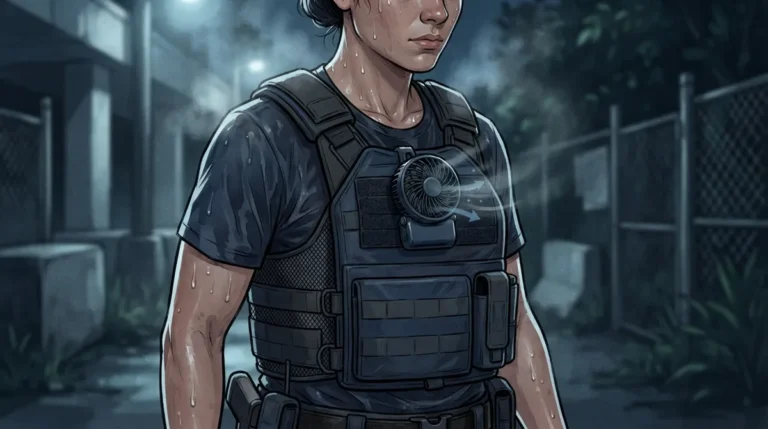
You know the feeling. It’s a muggy afternoon, you are deep into a long shift, and your body armor feels like a wet blanket. Your shirt is soaked, and the air around you feels thick. You start to wonder if any vest can really help when the whole day feels like a steam room.
That is a fair question, and it comes down to one big choice: passive airflow vs powered airflow in humid conditions. Passive designs rely on mesh, openings, and your own movement. Powered designs use a fan to push air where you need it. Both can help. Neither is magic.
In this friendly guide, we will walk through how each one works, what the research says about humid heat, and how to pick the right setup for your job. Whether you patrol a city street, guard a venue, serve in the field, or respond to emergencies, you will leave with clear, practical answers.
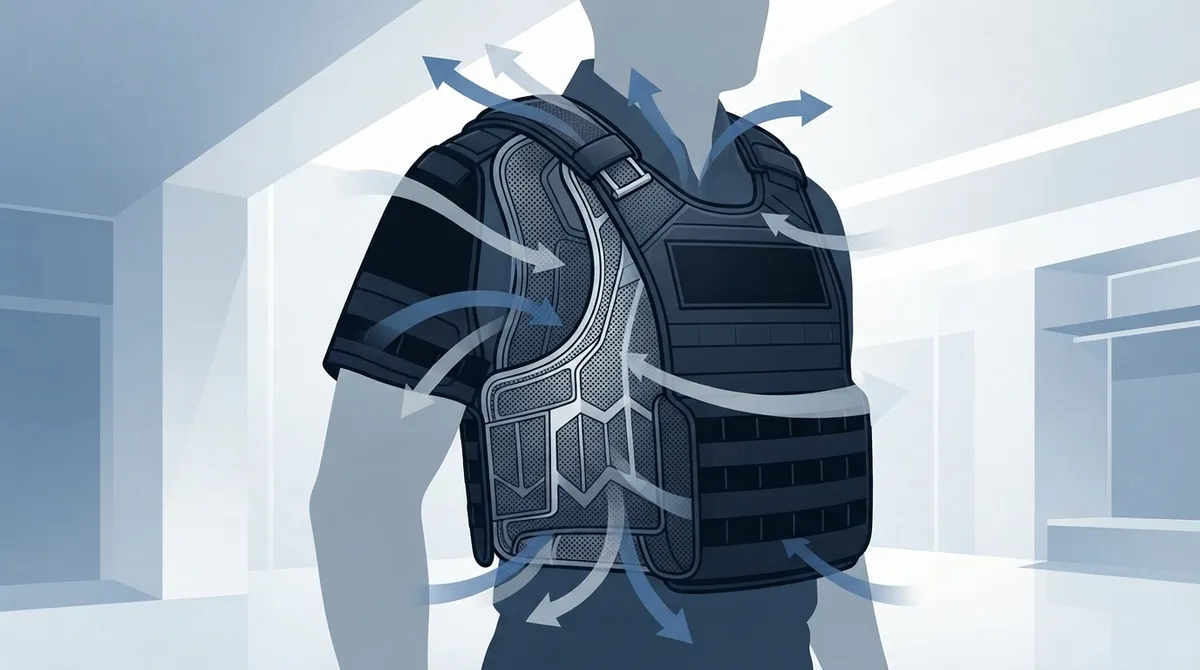
What Does Passive Airflow Actually Mean?
Passive airflow is the simple approach. There is no fan, no battery, and no noise. Air moves through the garment because of its design and because of what is happening around you.
Here is where passive airflow comes from:
- Openings and vents in the garment or carrier
- Mesh and spacer fabrics that let air pass through
- Fabric permeability, meaning how easily air and moisture pass through the material
- Body movement, like walking, which pumps air in and out
- Ambient wind, which can push air across the surface
The upside is clear. Passive gear is light, quiet, and has nothing to charge. The downside is that you cannot control it. If you are standing still in a stuffy car on a windless day, your passive vest has very little air to work with. If you want to compare styles more closely, our look at passive vs. active tactical vest ventilation breaks it down in more detail.

What Does Powered Airflow Mean?
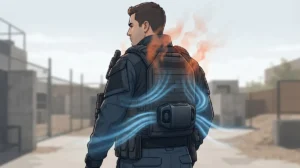
Powered airflow uses a small fan to move ambient air through or beneath the garment. The fan keeps air moving even when you are standing still, sitting in a cruiser, or posted at a door. That steady motion at the skin helps sweat and moisture evaporate.
Powered systems give you more consistent airflow, and many let you adjust the fan speed. The trade-offs are a little extra weight, a battery to charge, some fan noise, and basic upkeep. If battery life is on your mind, this guide on rechargeable vs replaceable vest fans is a helpful read.
Why Does Humidity Change Everything?
Sweat cools you only when it evaporates. Evaporation depends on the gap between the moisture on your skin (or wet fabric) and the moisture in the surrounding air. When humidity is high, that gap shrinks. The air is already loaded with moisture, so sweat has a harder time leaving your skin.
That is why humid heat feels so heavy. It is also why neither passive nor powered airflow can make evaporation unlimited. The air itself sets a ceiling.
Still, moving air matters. Fresh air near your skin helps carry moisture away and keeps a pocket of damp air from building up under your gear. Powered airflow can improve that exchange, but how much it helps depends on temperature, humidity, workload, clothing coverage, fit, and how much moisture is available to evaporate.
In other words, a fan does not beat the weather. It helps you make the most of whatever evaporation the weather allows.
What Does the Research Say About Fans in Humid Heat?
Good news first: several studies suggest powered airflow can help in hot, humid settings. The results are not identical across studies, though, so it pays to look at the details.
| Study | Conditions | What it found |
|---|---|---|
| 2017 sweating manikin test | 34°C, 60% RH | Fans substantially increased evaporative heat loss. A hybrid fan-and-phase-change vest averaged 67 W torso cooling vs 56 W for a comparison vest. |
| 2020 small human trial | 37°C, 60% RH | A fan-and-phase-change vest reduced thermal sensation and physiological and cardiovascular heat strain. |
| 2017 human trial (10 men) | 33°C, 75% RH | A fan-and-gel-pack vest gave moderate but statistically nonsignificant reductions in several strain measures. |
| 2021 fan jacket study (9 men) | 40°C, 50% RH | A fan jacket moving 30 L/s of ambient air under clothing lowered rectal temperature rise vs no cooling. |
Notice the mix. The manikin test and the 2020 trial leaned positive. The 75% humidity trial showed moderate benefits that did not reach statistical significance. That honest range is important. Product design, workload, and the exact heat and humidity combination all matter, and small studies cannot promise the same result for every wearer.
Can a Fan Make You Hotter?
It is a smart question. If the air is hotter than your skin, a fan could in theory push hot air across you. The 2021 study tested this at 40°C. The authors found the fan jacket still helped, and they credited evaporative heat loss exceeding the heat gained from hot-air convection. That was one specific experimental setup, not a universal rule, so treat it as a clue rather than a guarantee.
Does Wet Clothing Help?
A 2025 study of eight men walking for 60 minutes looked at a fan ventilation jacket plus a 350 mL water-soaked inner shirt. At both 32°C with 80% humidity and 40°C with 30% humidity, rectal temperature was about 0.4°C lower with the wet-shirt and fan combo. Reported sweat loss was also roughly halved versus the dry-shirt, fan-off control. This tested wet clothing plus powered airflow together, not a dry vest alone, but it shows how much available moisture can matter.
Passive vs Powered Airflow in Humid Conditions: Side by Side
Let’s put the two approaches next to each other so the trade-offs are easy to see.
| Feature | Passive airflow | Powered airflow |
|---|---|---|
| Power needed | None | Battery or power bank |
| Airflow control | Low, depends on wind and movement | Higher, often adjustable |
| Works when standing still | Limited | Yes, fan keeps air moving |
| Noise | Silent | Some fan noise |
| Weight | Usually lighter | Slightly heavier |
| Maintenance | Minimal | Charging and basic care |
| Humid-weather edge | Helps keep gear from sealing against the body | Forces air exchange to help moisture leave |
For a deeper side-by-side, see our guides on active vs passive body armor cooling and the Blufano fan system vs passive cooling.
How Does Body Armor Change the Picture?
Body armor is a special case. It sits flat against your torso and traps heat and moisture right where you sweat most. In humid weather, that trapped layer can get soggy fast. If you want to understand why this happens, read why body armor traps heat.
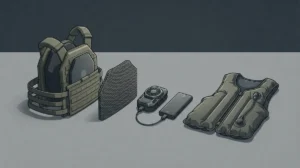
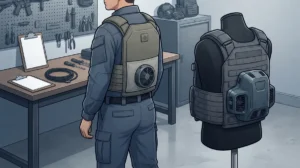
This is where the idea of an air gap helps. Creating a little space between the armor and your body gives air room to move. Then a fan can pull fresh ambient air through that space and push stale, damp air out. BluHalo and Blufano were built around exactly this idea, and they work well as a team.
How Do BluHalo and Blufano Fit In?
BluHalo is a lightweight ventilation vest that sits under your body armor. It weighs under 7 ounces and lies flat when deflated. When you want relief, you inflate it with a small pump and it can lift the vest up to about 1.5 inches off your body, creating a cooling air gap. A button deflates it quickly when you do not need it. It attaches to a clean vest with Velcro, and the double-layer, high-tensile polyethylene build is made for daily duty. You can learn more in this article on beating vest heat with BluHalo inflatable cooling.
Blufano is the powered piece. It is a self-contained fan unit with a patented air-redirect spout that slides under any style of body armor. You can secure it with an optional strap and adjust the fan with a control knob. Depending on the setting, it runs about 8 to 32 hours. It also has a built-in 10,000mAh power bank that can charge USB devices, plus a forward-facing light for low-light moments. You can read how to use a Blufano body armor fan to stay cool for setup tips.
Together, they cover both bases. BluHalo makes the space. Blufano moves the air through it. That pairing is a strong answer to the humid-weather problem, and it is why we suggest them as the top choices for armor wearers. You can see how they work as a pair in these steps to use BluHalo and Blufano together. The BluFano vs BluHalo comparison can also help you decide whether to start with one or bundle both.
Which Option Fits Your Job?
Your work style should guide your choice. Here is a friendly rundown.
Law Enforcement and Security
Long shifts in a cruiser or standing a post mean little natural wind. That makes powered airflow especially useful. Officers also appreciate being able to switch airflow on and off. For hot-weather routines, see how to stay cool on summer patrol under body armor.
Military and Tactical Teams
Missions can be loud and fast. A quiet fan on a low setting and a flat, low-profile BluHalo keep you comfortable without drawing attention. Runtime matters most here, so the 8 to 32 hour range gives plenty of room to plan.
Emergency Responders
Firefighters, hazmat crews, and EMS teams work in heavy gear and often in hot, wet settings. Powered airflow helps keep air moving, but gear compatibility is key, so check fit before you commit. Our guide to first responder cooling equipment can help.
How Do You Choose the Right Setup? A 5-Step Checklist
- Check your typical conditions. Do you spend long stretches standing still in humid air? Powered airflow earns its keep there.
- Look at your gear. Make sure the cooling device fits under your armor or outer carrier without bunching or slipping.
- Think about runtime. Match the fan’s hours to your longest shift, with room to spare.
- Plan for moisture. A moisture-wicking base layer helps move sweat so air can do its job. See our list of moisture wicking vests for body armor comfort.
- Test it before you rely on it. Wear it on a normal day first so you know how it feels and sounds.
Tips to Get More From Any Airflow Setup in Humid Weather
Gear is only part of the story. A few simple habits can make a big difference.
- Wear a clean, moisture-wicking layer so sweat spreads out and can evaporate.
- Keep your armor and carrier clean so they do not hold damp, smelly moisture. Here is how to stop body armor from smelling like sweat.
- Run the fan before you feel overheated, not after.
- Use vehicle air conditioning during breaks to reset your body.
- Drink water regularly and take shade or rest breaks when you can.
For more ideas, check out 10 tips for wearing body armor comfortably in heat.
Is a Ventilation Vest a Safety Guarantee?
Let’s be honest and clear here. A ventilation vest or fan system is a comfort and airflow tool. It is not a substitute for workplace heat controls, and it does not guarantee you will avoid heat illness. Real heat safety means water, rest, shade, acclimatization, and good procedures. The OSHA heat stress guide is a strong place to start. If you wear armor, it also helps to understand body armor standards from the National Institute of Justice, and to know the difference between heat stress and heat illness.
You can also read the peer-reviewed work on fan-attached jackets in this PubMed study on fan jackets in hot environments if you like to see the science for yourself.
The Bottom Line on Passive vs Powered Airflow
So, which wins in humid weather? For most armor wearers who stand, sit, or work in still, muggy air, powered airflow tends to be the more reliable helper because it keeps air moving when nature will not. Passive designs still shine for being light and simple, and they can work fine when you are active and there is a breeze.
The best answer is often both: create space with BluHalo, then move air through it with Blufano. That gives you cooling on demand and steady airflow in one easy-to-wear system. Ready to find your best fit? Contact the BluHalo team and we will gladly help you pick the right setup for your gear, your shifts, and your climate.
FAQs
Q: Do ventilation vests work in high humidity?
A: They can help, but humidity limits how much sweat can evaporate, so no vest works miracles. Powered airflow can still improve air exchange under your gear, and results depend on heat, humidity, workload, fit, and design. Think of it as a comfort boost, not a cure for muggy weather.
Q: Is a fan-powered vest better than a passive ventilation vest in humid weather?
A: For many people, yes, especially when you are standing still or sitting, because a fan keeps air moving when there is no breeze. Passive designs are lighter and need no charging, so they still suit active, windy conditions. Pairing a BluHalo air gap with a Blufano fan gives you the best of both.
Q: Do powered airflow vests need sweat or a wet base layer to cool well?
A: Evaporative cooling needs some moisture to evaporate, so a little sweat or damp fabric helps the airflow do its work. One 2025 study even used a water-soaked inner shirt with a fan jacket and saw lower core temperature. That setup was a combined test, so a dry vest alone may feel different.
Q: Can a ventilation vest prevent heat illness?
A: No, it is a comfort and airflow aid, not a safety guarantee. Real heat safety also needs water, rest, shade, acclimatization, and good workplace procedures. Use your vest as one helpful tool in a bigger plan.
Q: What should I look for when choosing a ventilation vest for hot, humid work?
A: Look for a snug fit under your armor, enough fan runtime for your longest shift, and easy on-demand control. Quiet operation, light weight, and durable materials matter too. Blufano offers 8 to 32 hours of runtime, and BluHalo adds a flat, low-profile air gap when you want it.