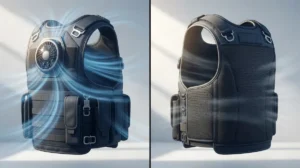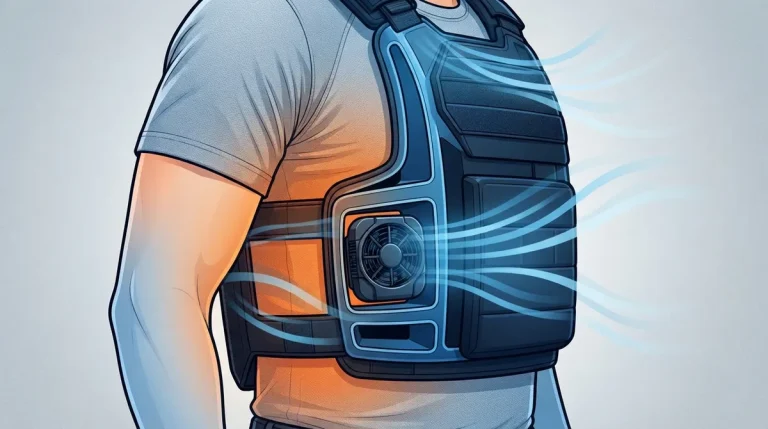
Key Takeaways
-
A small fan alone is ineffective without an air gap—pair it with a passive air-gap vest for optimal cooling, as fans need physical space to circulate air and can’t function properly in a closed environment.
-
Layered cooling systems combining moisture-wicking base layers, passive air-gap vests, and active fans significantly outperform single-solution approaches for managing heat stress and fatigue during 10+ hour shifts.
-
Battery runtime is critical for long shifts: prioritize fans offering 8+ hours of runtime, with Blufano delivering 8-32 hours through its built-in 10,000mAh power bank versus DIY builds lasting only 6 hours.
-
Heat stress under body armor directly impacts job performance and safety by impairing judgment and reaction time; proper ventilation is a safety requirement, not just a comfort upgrade.
-
Key features to evaluate include battery life (8+ hours), weight (under 8 oz), air-gap lift height, USB-rechargeable capability, and durable materials like double-layer polyethylene for daily duty reliability.
-
Different roles require different setups: patrol officers need all-day comfort with quick on/off use, military personnel need extended runtime, and tactical teams benefit most from combined fan and air-gap layering.
If you’ve ever finished a 12-hour shift with a soaked undershirt and a vest that felt like a portable sauna, you already know the struggle. A small fan for under a bulletproof vest sounds like a simple fix, and in many ways it is. But here’s the thing nobody tells you upfront: the fan is only half the story. Real cooling comfort comes from pairing airflow with something to actually move that air through, and that’s where things get interesting.
Whether you’re a patrol officer sweating through August, a soldier in a hot deployment zone, or a security pro standing post for hours, you deserve gear that works with your body instead of against it. In this guide, we’ll break down how small vest fans stack up against air-gap ventilation vests, look at real numbers from today’s market, and help you figure out what actually belongs under your armor in 2026.
What Is a Small Fan for Under a Bulletproof Vest?
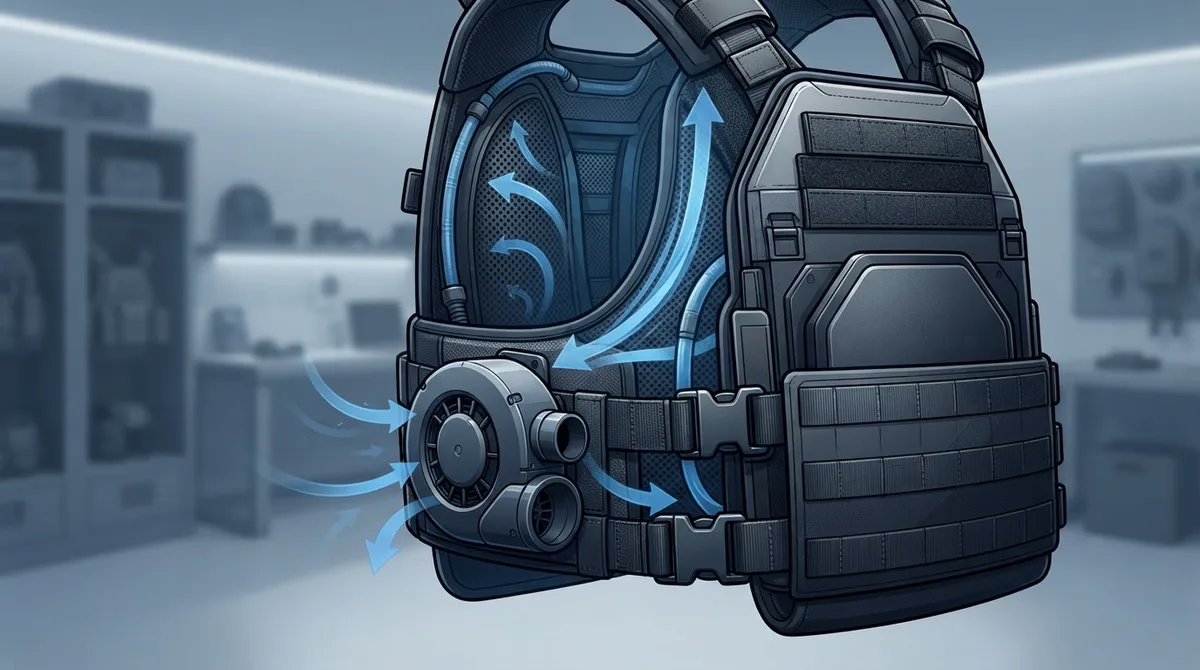
A small fan for under a bulletproof vest is a compact, battery-powered cooling device made to push air between your body and your armor. Unlike a desk fan, these units are flat, lightweight, and built to survive daily wear under tight gear. They’re part of a bigger category of body armor cooling tools that also includes air-gap spacers and moisture-wicking layers.
Most vest fans clip or strap onto the inside of your carrier and run on rechargeable batteries. Some, like Blufano, include a patented air-redirect spout that slides under any style of body armor. Others are smaller, 3D-printed builds meant for a single officer’s DIY setup. Either way, the goal is the same: keep fresh air moving so heat and sweat don’t get trapped against your skin.
Active Fans vs. Passive Air-Gap Systems
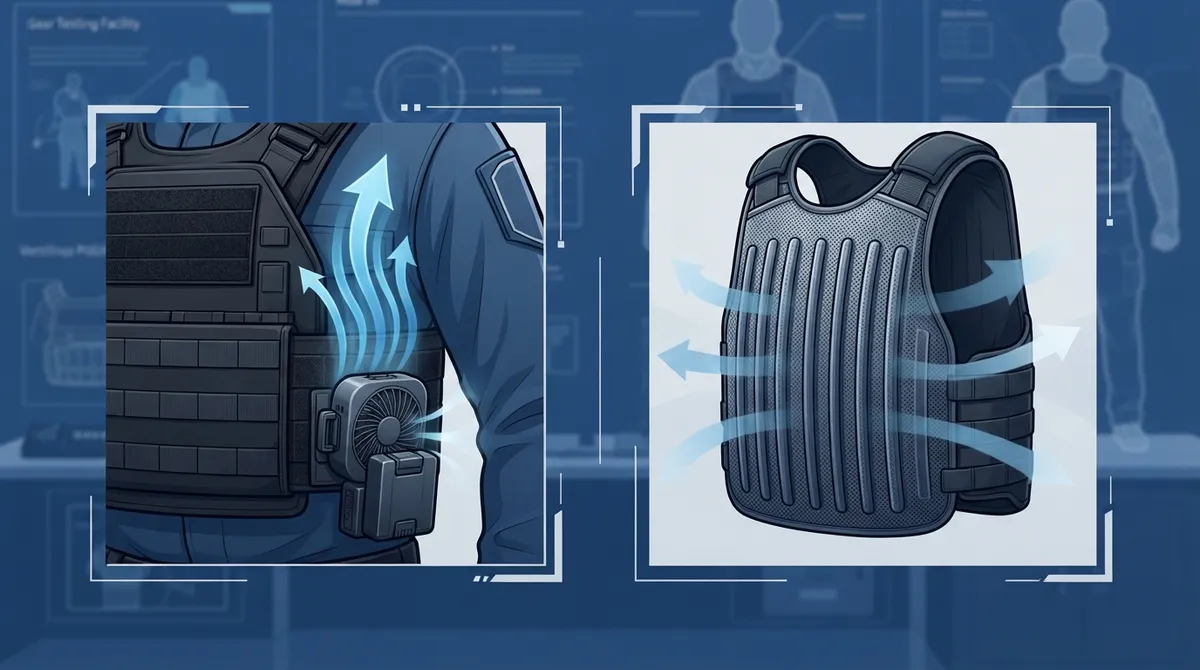
Ventilation solutions for body armor generally fall into two camps. Passive systems, like an inflatable spacer, create a physical air gap under the vest without using any power. Active systems use a small fan to move air continuously through that space. Understanding the difference helps you choose the right tool, or the right combination, for your job.
- Passive air-gap vests: These lift your armor slightly off your body, usually with an inflatable bladder or foam spacer, creating room for air to circulate naturally.
- Active fan systems: These use a small motor and blades to actively push air through the gap, giving you continuous airflow instead of relying on movement or wind.
- Layered combo systems: Many professionals now combine both, using an air-gap vest as the foundation and a fan to keep air constantly cycling through it.
According to a detailed breakdown on 10 Bulletproof Vest Cooling Solutions Ranked for 2026, the most effective setup isn’t a fan alone. It’s a layered approach: a moisture-wicking base layer, a ventilation vest for lift, and fan-driven airflow on top. Skipping the air gap and just adding a fan often means the fan has nowhere to actually move air.
Comparing Popular Small Fan and Ventilation Options in 2026
Not all cooling gear is built the same. Some products focus purely on runtime, others on lift height, and some on total comfort under long shifts. Here’s how a few well-known options compare side by side.
| Product | Type | Runtime | Weight | Best For |
|---|---|---|---|---|
| BluHalo Ventilation Vest | Passive air-gap | Inflate on demand, no battery needed | Under 7 oz | Officers wanting instant, quiet lift |
| Blufano Fan System | Active fan with power bank | 8–32 hours | Compact, self-contained unit | Long shifts needing continuous airflow |
| ArmorAir (3D-printed concept) | Active fan | About 6 hours on one 18650 battery | Lightweight, DIY-style build | Budget-conscious patrol use |
| Empa Air-Conditioned Vest (research) | Active dual-fan system | 3–4 hours per charge | Custom-built into vest | Experimental military and lab use |
Notice the runtime gap here. Blufano’s 8 to 32 hours, powered by a built-in 10,000mAh power bank, dramatically outpaces smaller DIY fan builds. That kind of battery life matters when you’re working a double shift or an extended deployment and can’t stop to recharge.
Why Air Gap Alone Isn’t Always Enough
Here’s a fact that surprises a lot of first-time buyers: researchers at Empa, a Swiss materials science institute, found that commercially available fans were originally too bulky to fit inside a vest design. Their team had to build custom mini fans just to make active cooling work at all, as detailed in coverage of the air-conditioned bulletproof vest research. That tells you something important. Fan technology has come a long way, but fit and integration still matter as much as raw airflow.
This is exactly why BluHalo focuses on the air gap first. Their vest creates up to a 1.5-inch lift when inflated, giving air somewhere to actually go. Pair that gap with a fan like Blufano, and you get the best of both worlds: separation plus circulation. You can learn more about how these two products work together on the Blufano vs BluHalo comparison page.
Signs You Need More Than Just a Fan
- You feel sweat pooling at your lower back or chest even with a fan running.
- Your vest still feels stuck to your body after a few hours.
- You notice hot spots where the fan simply can’t reach.
- You’re wearing your vest for 10+ hour shifts in hot or humid climates.
- You’ve tried a fan alone and still feel fatigued by midday.
If any of these sound familiar, it might be time to add a passive air-gap layer to your setup, not just rely on a small fan by itself.
Why Cooling Matters Beyond Comfort
Staying cool isn’t just about feeling good, though that matters too. Heat stress can seriously affect how well you do your job. Guidance referenced in the OSHA Heat Stress Guide notes that excessive heat can impair judgment, slow reaction time, and increase the risk of mistakes on the job. For officers, tactical teams, and first responders, that’s not a small deal. It’s a safety issue.
Body armor itself is built to strict protective standards, as outlined by the National Institute of Justice’s body armor standards. But protection and comfort don’t have to be at odds. Adding proper ventilation doesn’t compromise your armor’s protective qualities. It simply makes wearing it for long hours far more bearable.
Choosing the Right Setup for Your Role
Different jobs call for different priorities. Here’s a quick breakdown of what tends to matter most for each type of professional.
| Role | Top Priority | Recommended Approach |
|---|---|---|
| Patrol Officers | All-day comfort, quick on/off use | Air-gap vest plus optional fan for peak heat hours |
| Military Personnel | Long battery life, rugged build | Active fan system with extended runtime |
| Security Professionals | Discreet fit under uniforms | Low-profile air-gap vest |
| Tactical/SWAT Teams | Maximum airflow during high-intensity ops | Combined fan and air-gap layering |
| Emergency Responders | Fast heat release in extreme conditions | Fan-driven system with moisture-wicking base layer |
For a deeper look at role-specific gear choices, check out Optimal Cooling for Tactical Vests: A Must-Have for Every Officer and How to Prevent Heat Stress While Wearing Body Armor.
How to Build Your Own Layered Cooling System
Ready to put together a setup that actually works? Follow these steps to build a cooling system that keeps you comfortable through the longest shifts.
- Start with a moisture-wicking base layer. This pulls sweat away from your skin before it even reaches your vest.
- Add a passive air-gap vest. A product like BluHalo lifts your armor and creates instant breathing room, all without needing a battery.
- Layer in an active fan system. A unit like Blufano keeps air moving continuously, especially during the hottest parts of your shift.
- Check your attachment points. Make sure both pieces are secured with Velcro or straps so nothing shifts during movement.
- Test before your shift. Inflate, power on, and walk around for a few minutes to confirm everything fits comfortably before you’re out the door.
For a full walkthrough, see How to Use the BluHalo Ventilation Vest for Maximum Comfort.
Features Worth Looking For
Not every vest fan or air-gap system is created equal. Here’s what smart buyers check before purchasing:
- Battery life: Look for options offering 8+ hours if you’re working long shifts.
- Weight: Anything under 8 ounces won’t add noticeable bulk under your armor.
- Lift height: More air gap generally means better circulation, especially when paired with a fan.
- Attachment method: Velcro-based systems tend to be easiest to install and remove.
- Charging options: USB-rechargeable units are more convenient for daily duty use.
- Durability: Double-layer polyethylene or similar rugged materials hold up better over time.
You can browse real product options and specs anytime in our Shop, or check out honest feedback from working professionals on our Reviews page.
Final Thoughts on Small Fans and Body Armor Cooling
A small fan for under a bulletproof vest can genuinely change how you feel at the end of a shift. But the real magic happens when you combine that airflow with a proper air gap. Passive lift plus active circulation beats either one alone, every single time. Think of it like this: a fan without room to move air is like a window unit blowing into a closed closet. It just doesn’t do much good on its own.
Whether you’re patrolling the streets, standing guard, or heading into a hot deployment zone, your comfort directly affects your performance and safety. Don’t settle for soaked undershirts and midday fatigue when better options exist. Ready to build your own cooling setup? Get in touch with our team today, and let’s find the right combination of comfort and performance for your gear.
FAQs
Q: What is a small fan for under a bulletproof vest used for?
A: It’s used to push fresh air between your body and your armor, helping reduce sweat and trapped heat. Think of it as giving your skin a little breathing room during long, hot shifts. Many officers pair it with an air-gap vest for even better results.
Q: Do vest fans actually help reduce heat stress under body armor?
A: Yes, they can make a real difference, especially when paired with proper air-gap ventilation. On their own, fans work best when there’s already some space for air to move through. That’s why layering a fan with a lift system like BluHalo tends to work so well.
Q: What is the difference between a ventilation vest and a vest fan?
A: A ventilation vest, like BluHalo, is a passive system that creates physical space between you and your armor. A vest fan, like Blufano, actively pushes air through that space using a small motor. Many professionals use both together for maximum comfort.
Q: How long do body armor cooling fans last on a single charge?
A: It really depends on the product. Blufano offers an impressive 8 to 32 hours thanks to its built-in power bank, while smaller DIY-style fans typically run around 6 hours. If you’re working long shifts, longer runtime is definitely worth prioritizing.
Q: Which is better for cooling body armor: a fan or an air-gap vest?
A: Honestly, the winning combo is both together, not one or the other. An air-gap vest creates the space, and a fan keeps air actively moving through it. That layered approach consistently outperforms using either solution on its own.