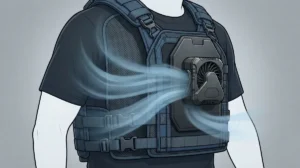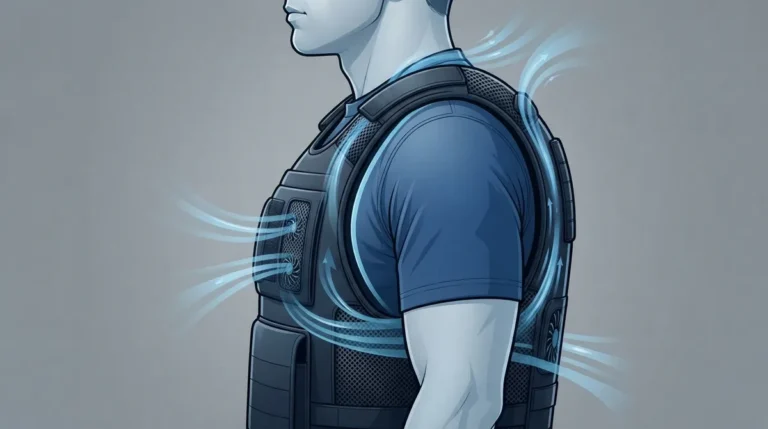
Key Takeaways
-
A vest that fits too tight can compress airflow channels and cover inlets or perforations, so even a strong fan cannot cool effectively; check that straps and armor edges leave openings clear.
-
A vest that fits too loose lets supplied air leak out the sides or bottom before it crosses your torso, and it can shift during movement, pulling outlets out of position.
-
The ideal fit depends on the cooling type: fan-driven and inflatable air-gap systems need room to move air, while phase-change panels work best with close, stable skin contact.
-
Bigger is not always better: research on a fan-assisted hybrid vest used a roughly 55 mm air gap at the lower back and 10 mm at the upper back, so match the gap to your specific system's design.
-
Test your setup before each shift by wearing your full kit, sliding a flat hand under the vest for a little room, moving around, and confirming air reaches your chest, sides, and back.
-
Gear over or under the vest, including thick base layers, cummerbunds, duty belts, and shoulder straps, can block airflow, so recheck airflow after adding pouches or plates.
Ever put on your gear for a long, hot shift and felt like the whole setup was working against you? You are not alone. Many officers, soldiers, and first responders spend hours wearing armor that traps heat close to the body. And here is something many people miss: the way your vest fits can change how well any cooling system works.
Fit is not just about comfort or how the vest looks. It shapes the space between your body and your gear. That space decides whether air can move, whether sweat can escape, and whether heat can leave. In this guide, we will walk through how vest fit affects cooling airflow in simple, practical terms. You will learn what “too tight” and “too loose” really mean, how different cooling designs need different fits, and how to check your own setup in 2026. Let’s get you cooler, drier, and more focused on your job.
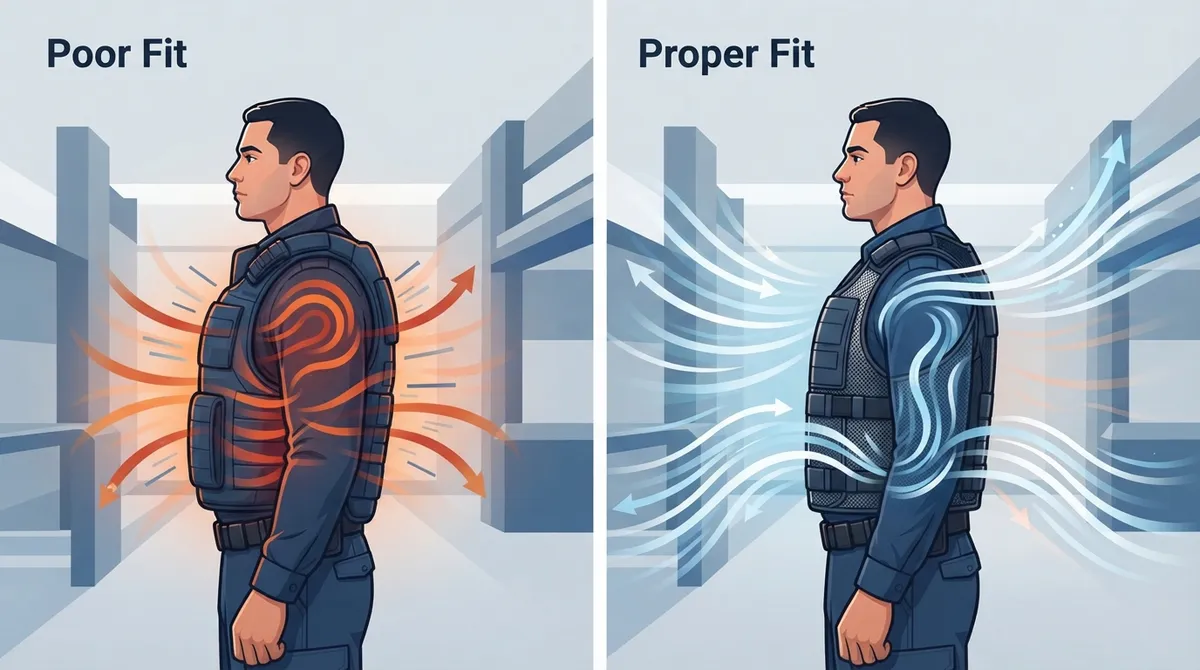
Why Fit Matters for Cooling Airflow
Think of your vest like a jacket with a built-in heat trap. Body armor is dense and often blocks air from reaching your skin. Heat and sweat build up in that closed space. To fix this, a ventilation system needs room to move air across your torso and then push it out.
Fit controls that room. In ventilation vests, fit affects cooling by shaping the air gap between your body and the vest. It also decides whether air can travel through the vest’s intended channels and outlets. If the fit is wrong, air gets blocked, leaks away, or never reaches the spots that need it most.
If you want a deeper look at why heat gets stuck in the first place, check out why vests overheat you with trapped heat. Once you see the problem, the role of fit makes even more sense.
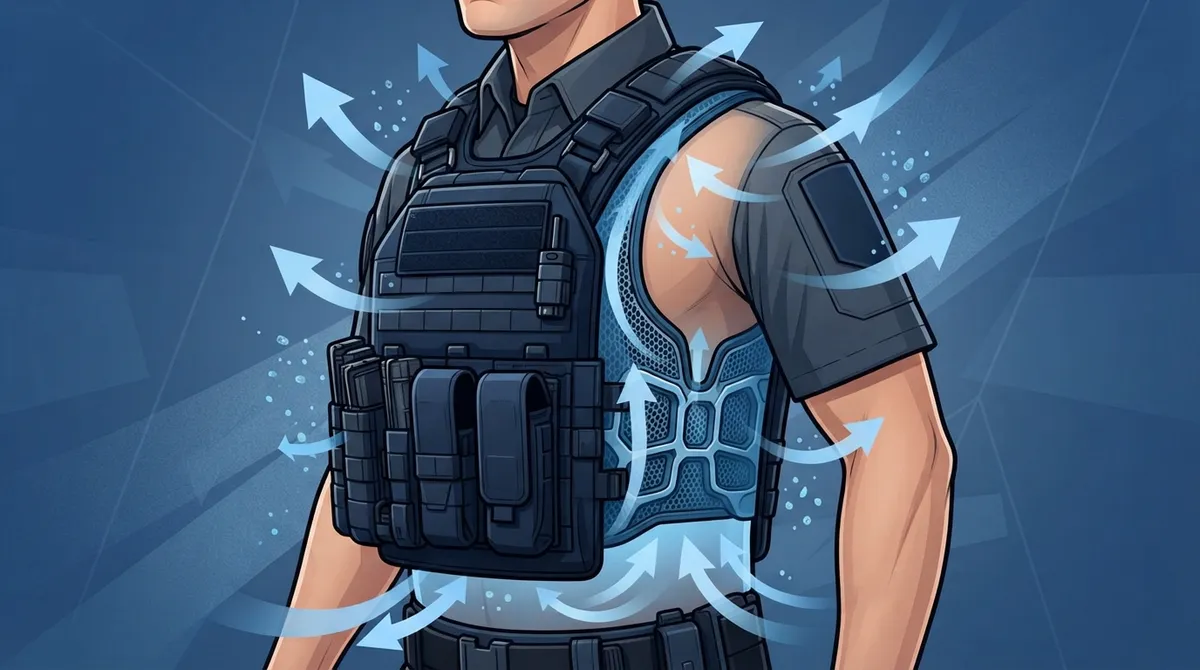
The Air Gap: The Hidden Key to Better Cooling
The air gap is the small space between your skin (or base layer) and your vest. A good air gap lets fresh air flow across your torso. It also lets warm, damp air escape so sweat can dry.
Without that space, armor presses flat against your body. Heat has nowhere to go. Sweat soaks your shirt and stays there, which leaves you tired and distracted.
This is the idea behind BluHalo. The BluHalo ventilation vest is a lightweight layer that weighs under 7 ounces. When you inflate it, it can lift your vest up to about 1.5 inches off your body. That lift creates a cooling air gap on demand. When you do not need it, you press a button to deflate it, and it lies flat.
Why a Bigger Gap Is Not Always Better
It is tempting to think more space always means more cooling. That is not always true. Research shows that the best gap depends on the cooling design. One 2017 study of a fan-assisted hybrid vest measured an air gap of about 55 mm at the lower back and about 10 mm at the upper back. The designers used the larger lower-back space for airflow and the tighter upper-back space for closer contact with cooling material. That is one design example, not a rule for every vest.
The takeaway is simple. The right gap is system-specific. Follow the design of your cooling gear instead of guessing.
What Happens When a Vest Fits Too Tight
A vest that is too tight can squeeze or flatten the channels air needs to travel through. It can also cover small openings or perforations that let air in and out. When that happens, even a strong fan cannot do its best work.
Here are common problems with a vest that fits too tight:
- Compressed airflow channels: Air paths get pinched, so less air moves through.
- Blocked openings: Perforations, inlets, and outlets get covered by straps or armor edges.
- Hot spots: Air only reaches part of your torso, leaving other areas sweaty.
- Restricted movement: You feel stiff, which adds fatigue on top of heat.
Tight gear also adds to stress on the body. For more on why this matters, read how to prevent heat stress while wearing body armor.
What Happens When a Vest Fits Too Loose
On the other side, a vest that is too loose has its own problems. Extra slack lets supplied air escape before it sweeps across your torso. Instead of cooling you, the air leaks out the sides, top, or bottom.
A loose fit can also let the vest shift as you move. That can pull a cooling layer out of place or shift an outlet away from where it should sit. During a foot chase or a long patrol, that shifting is more than annoying. It can reduce cooling at the exact moment you need it.
So the goal is not “as loose as possible.” Manufacturers of compressed-air vests specify size by body girth and use perforated linings to spread the air. Their advice is to follow the sizing chart for that exact model, not to size up and hope for better cooling.
Fit Needs Depend on the Cooling Type
Not all cooling vests work the same way, so the ideal fit changes with the system. This is one of the most helpful things to understand before you buy.
| Cooling Type | How It Works | Best Fit Approach |
|---|---|---|
| Fan or blower-driven ventilation | Moves air through the space under armor | Enough room for air to circulate, but not so loose that air leaks out |
| Phase-change material (PCM) panels | Absorb heat through direct contact | Close, stable contact with the body |
| Inflatable air-gap layers | Lift armor off the body to create space | Snug carrier fit, with space added when inflated |
| Hybrid designs | Mix airflow and contact cooling | Zones with different fits for airflow and contact |
Notice the pattern. Airflow systems want space. Contact-cooling systems want closeness. If you want to compare these approaches, see ventilation vs. phase change cooling vests.
What the Research Says
Studies on personal cooling garments give us some helpful clues, though they do not give one perfect fit for everyone. A 2023 review found that cooling performance depends on garment size, ventilation rate, fan and opening placement, and how the garment is built. It also summarized research showing that higher ventilation can increase upper-body heat loss. Interestingly, garment size had little effect when ventilation was strong.
What does that mean for you? Fit effects vary with system design and airflow strength. A powerful, well-placed fan can make up for some fit differences. A weaker system needs a cleaner, more carefully matched fit.
Another 2017 thermal-manikin test compared two vests at 34.0°C, 60% relative humidity, and light air movement. The vest with ventilation fans reached an average torso cooling power of 67 W, compared with 56 W for the other vest. The study also found that turning the fans on improved evaporative heat loss. These are results from specific products, so use them as a guide rather than a promise.
The main lesson is that airflow matters as much as the number on a fan’s spec sheet. Where the air goes counts just as much as how much air there is. You can learn more about the science in how air circulation under a bulletproof vest works.
How Armor, Straps, and Gear Block Airflow
Your vest does not fit in isolation. Everything layered over or under it matters too. Inlets, channels, perforations, and exhaust openings must stay clear of tight clothing, body armor edges, straps, and other PPE.
Watch for these common airflow blockers:
- Cummerbund or side straps pulled too tight over the airflow area.
- Thick base layers that bunch up and cover openings.
- Duty belt or pouches that press the vest flat at the waist.
- Shoulder straps that squeeze the upper channels shut.
- Extra plates or pads that crowd the space meant for air.
If you want practical ideas for improving your setup, take a look at 9 body armor fit and airflow tips for all-day comfort.
How Blufano and BluHalo Work With Your Fit
BluHalo and Blufano are built to work with the way body armor really fits. Together, they give you both space and moving air.
BluHalo: Space on Demand
BluHalo attaches to a clean vest with Velcro and fits under body armor or other protective vests. You inflate it with a small pump when you want cooling, and you deflate it with a button when you do not. Because it only adds space when needed, it keeps your vest feeling secure at the start of a shift and cooler when the heat rises. It is made from double-layer, high-strength polyethylene for durability, and many officers say it makes long, hot shifts far more comfortable.
Blufano: Moving Air Under the Vest
Blufano is an active fan system with a patented air-redirect spout. It slides under any style of body armor and can be held in place with an optional strap. The fan gives adjustable airflow for 8 to 32 hours depending on the setting. It also has a built-in 10,000mAh power bank and a forward-facing light, so it earns its place on your gear.
Used together, BluHalo creates the air gap and Blufano keeps fresh air moving through it. That combo handles both parts of the fit puzzle. You can learn more about how they pair in BluFano vs BluHalo: which cooling vest fits you. You can also shop bundles on the BluHalo shop page for a discount.
How to Check Your Vest Fit for Better Airflow
You do not need a lab to test your setup. A few simple checks can tell you a lot. Try this step-by-step routine before your next shift:
- Check your sizing. Measure your chest or torso girth and compare it to the manufacturer’s chart. For example, one compressed-air vest maker lists 36 to 41 inches for Large, 41 to 46 inches for XL, and 46 to 52 inches for 2XL. These ranges apply only to that brand, so always use your own model’s chart.
- Put on your full kit. Wear your base layer, armor, and duty belt so you test the real setup.
- Look for blocked openings. Make sure straps, pouches, and fabric are not covering any inlets, outlets, or perforations.
- Slide a flat hand under the vest. You should feel a little room, not a tight squeeze and not a big gap.
- Move around. Bend, twist, sit in your vehicle, and reach. Watch for shifting or pinching.
- Feel the airflow. Turn on your cooling system and check that air reaches your chest, sides, and back.
If something feels off, adjust one thing at a time. Small tweaks often make a big difference. For more help, see how to improve airflow under body armor.
Fit Tips for Different Roles
Different jobs put different demands on your gear. Here are quick fit tips for the people we serve most.
- Law enforcement officers: Spend time in a patrol car? Check that your seat does not press the vest flat against your back and block airflow.
- Military personnel: With plates, packs, and webbing, watch for pressure points that squeeze air channels shut. Our guide on body armor heat management for military use can help.
- Security professionals: Long, still shifts can trap heat. Keep the vest stable and your airflow path clear.
- Tactical and SWAT teams: Heavy loads need a secure fit. Choose gear that stays put during fast movement while still moving air.
- Emergency responders: Heat from the job plus heavy gear is a lot. See how to choose emergency responder gear that keeps you cool.
Cooling Gear Is Part of a Bigger Plan
One honest reminder: a cooling vest helps, but it is not a full heat safety plan. Cooling vests and air-cooled garments are supplemental heat controls. You still need work-rest breaks, water, time to adjust to the heat, and a buddy who watches for warning signs. The OSHA heat stress guide explains how to build a safe approach to heat on the job.
It also helps to know what your armor is designed to do. The National Institute of Justice body armor standards cover protection levels, so you can keep safety first while you work on comfort. For general science on how the body handles heat, the NIOSH heat stress resources are a trusted place to start.
Common Fit Mistakes to Avoid
Here are a few easy mistakes that quietly hurt cooling:
- Sizing up to feel “roomier” without checking the airflow design.
- Wearing a thick, bunchy shirt under the vest.
- Forgetting to check airflow after adding new pouches or gear.
- Ignoring the manufacturer’s wear instructions.
- Assuming one fit works for every cooling product.
For more ways to dodge errors, read 7 mistakes to avoid with a body armor ventilation system.
Final Thoughts: Get the Fit Right, Feel the Difference
Better cooling starts with better fit. The right fit protects your air gap, keeps channels open, and lets air sweep across your torso instead of leaking away or getting stuck. Tight fits can block airflow. Loose fits can waste it. The sweet spot depends on your cooling system, so always match your fit to the design.
If you are ready to cool down under your armor, BluHalo and Blufano are built for exactly this job. They help you create space, move air, and stay focused from the first call to the last. Have questions about sizing or setup? Contact the BluHalo team and we will help you find the right fit for your gear.
FAQs
Q: Should a cooling vest fit snugly or loosely?
A: It depends on the cooling type. Fan-driven vests need some room so air can move, while phase-change panels work best with close body contact. Follow your model’s sizing chart and wear instructions instead of guessing.
Q: Can a cooling vest that is too tight reduce airflow?
A: Yes, it can. A tight fit can squeeze airflow channels and cover inlets or perforations, so air cannot reach your torso. Loosening straps and checking for blocked openings often helps right away.
Q: Does a loose cooling vest let cold air escape?
A: It can. When there is too much slack, supplied air may leak out the sides or bottom before it sweeps across your body. A secure, well-sized fit keeps the air where you need it.
Q: How should a ventilation vest fit under body armor?
A: It should sit flat and stay put, with the airflow path clear of straps and gear. With BluHalo, you can inflate it to lift your armor and create an air gap, then deflate it when you want a lower profile.
Q: How can I tell if my vest’s airflow channels are blocked?
A: Turn on your cooling system and feel for air on your chest, sides, and back. If one area stays hot or damp, check for tight straps, bunched fabric, or pouches covering inlets and outlets.