Key Takeaways
-
Ventilation vests create an airflow gap between body and armor that reduces core temperature by 7-14°F, enabling better focus, faster reactions, and less fatigue during long shifts in heat.
-
Officers are more likely to wear body armor consistently when it’s comfortable, directly improving safety compliance; ventilation vests remove a major barrier to consistent armor use.
-
BluHalo ventilation vest offers the most versatile patrol solution at $60—under 7 oz, inflatable on-demand up to 1.5 inches, and designed by a Chicago police officer for real-world needs.
-
Heat under body armor creates serious occupational hazards including heat exhaustion, heat stroke, and impaired judgment; ventilation vests prevent these risks through airflow circulation.
-
When selecting a ventilation vest, prioritize weight under 10 oz, universal armor compatibility, quick attach/detach systems, and at least 0.75-inch airflow gap for optimal performance.
-
Ventilation vests benefit military, SWAT, security professionals, and first responders beyond standard patrol—any role requiring body armor in high heat gains measurable cooling and performance gains.
Picture this: It’s a blazing summer day, and you’re a patrol officer wearing 15+ pounds of body armor for a 12-hour shift. The heat builds up fast. Sweat soaks your uniform. Your focus starts to slip. Sound familiar? If you wear body armor regularly, you know this struggle all too well. That’s exactly why the ventilation vest police community has embraced is becoming such a game-changer in 2026.
A ventilation vest sits between your body and your armor, creating an airflow gap that lets heat escape and keeps you cooler throughout your shift. It sounds simple, but the impact on comfort, safety, and performance is enormous. Officers who wear ventilation vests report better focus, less fatigue, and a much more tolerable workday — even in brutal heat. Let’s break down everything you need to know about these life-improving pieces of gear.
What Is a Police Ventilation Vest and How Does It Work?
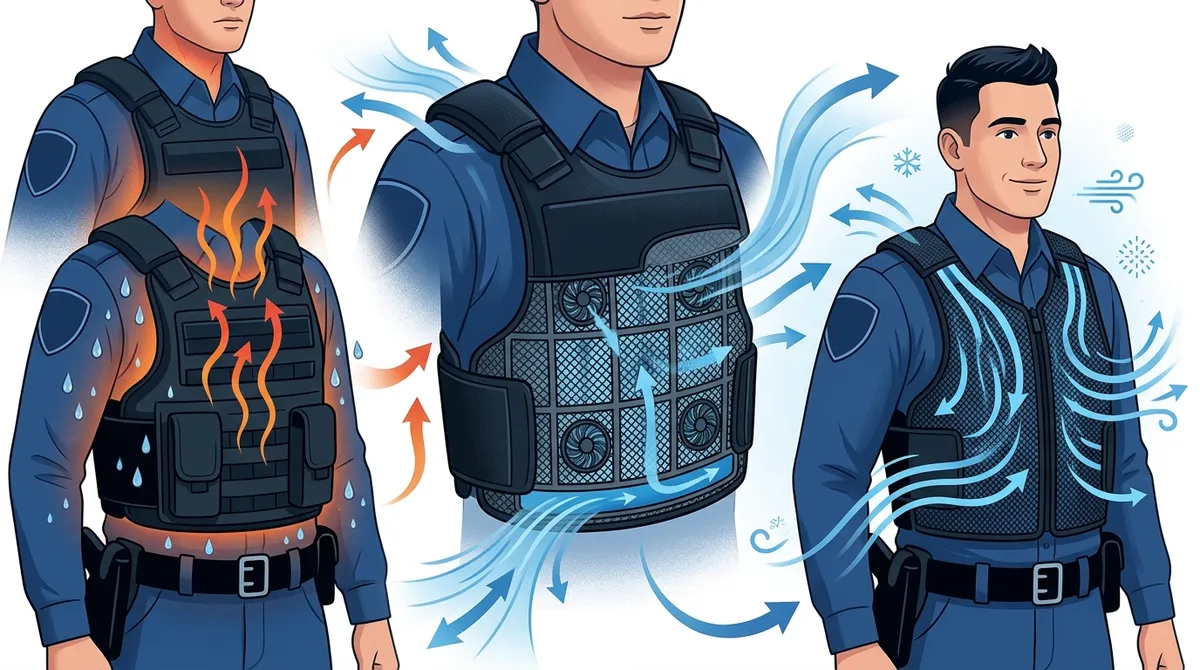
A ventilation vest for police is a specially designed undergarment or panel worn beneath body armor. Its main job is to create a gap between your skin (or uniform) and the armor plate. Without this gap, heat and moisture get completely trapped — like being wrapped in a sauna suit all day.
Most ventilation vests work in one of a few ways. Some use structured mesh or foam channels to physically lift the armor off your body. Others, like the BluHalo ventilation vest, use an innovative inflation system to create a cooling air gap on demand. The result in both cases is the same: fresh air circulates, sweat evaporates, and body temperature drops. It’s a small change with a big payoff.
For a deeper look at how these systems work, check out this guide on what body armor ventilation is and why you need one.
Why Heat Under Body Armor Is a Real Problem
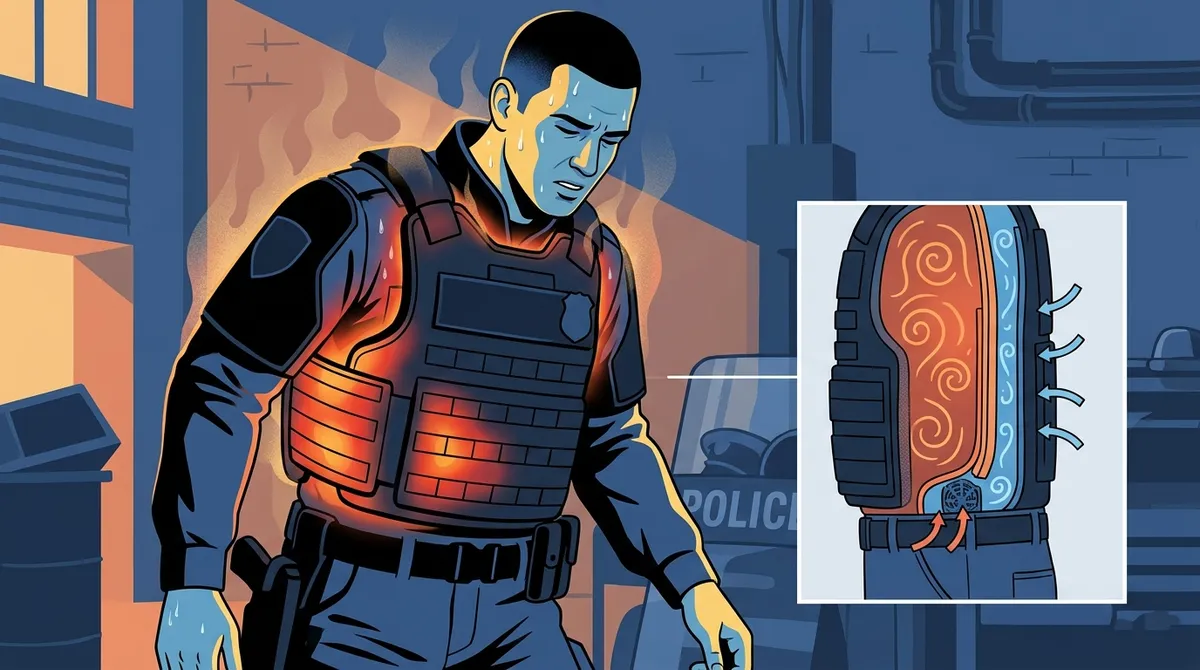
Body armor is essential. It saves lives every day. But it also creates a serious heat management problem that too many officers quietly suffer through. According to the OSHA Heat Stress Guide, working in high heat can lead to heat exhaustion, heat stroke, and dangerous lapses in judgment — all serious risks for officers on duty.
Here’s why heat builds up so badly under armor:
- Body armor blocks natural airflow across your torso
- The materials in most vests trap heat close to the body
- Physical activity raises core temperature even further
- Sweat has nowhere to evaporate when air can’t circulate
- Long shifts mean heat accumulates over many hours
When heat builds up like this, performance suffers. Officers feel sluggish. Reaction times can slow. Some officers even admit to wearing their armor less often just to escape the discomfort — which is a serious safety issue. A quality ventilation vest for police officers directly addresses all of these problems.
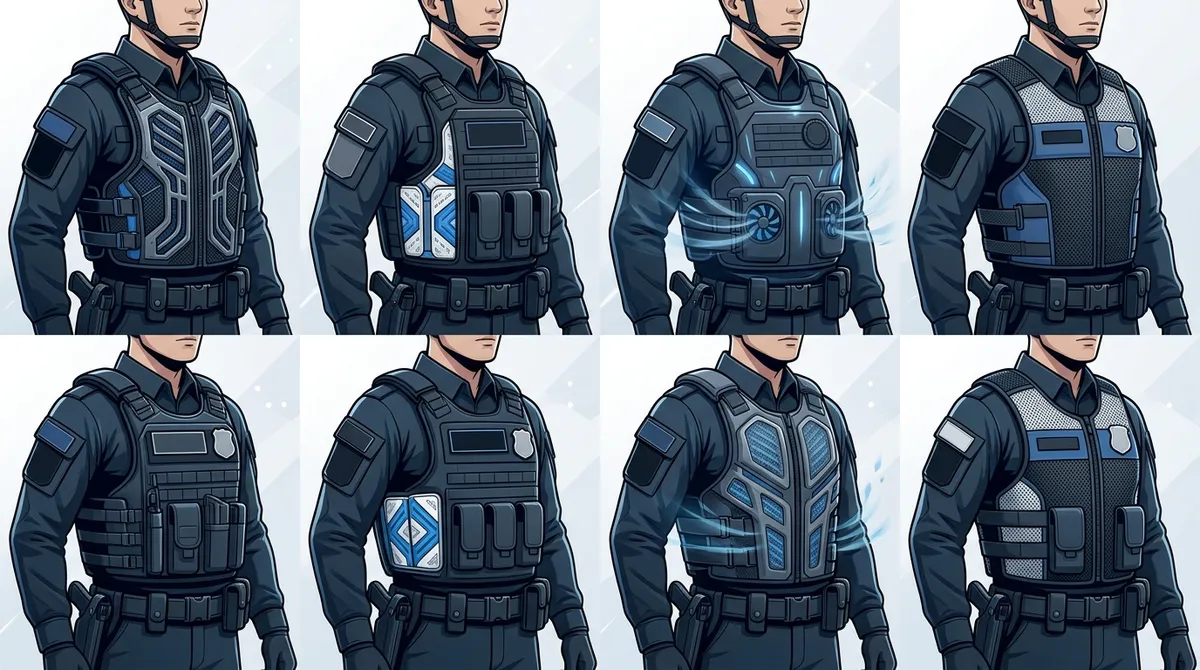
Top Ventilation Vest Options for Law Enforcement in 2026
The good news is there are several solid options available today. Let’s compare the most popular ventilation vest solutions to help you find the right fit.
| Product | Weight | Cooling Method | Key Feature | Best For |
|---|---|---|---|---|
| BluHalo Ventilation Vest | Under 7 oz | Inflation-based air gap (up to 1.5 inches) | On-demand cooling, cooling-on-demand design | Patrol officers, daily wear |
| Maxx-Dri Vest 3.0 | 9 oz | 360-degree mesh separation | Full torso coverage | All-day wear in hot climates |
| Tac Vent 2.0 | 9 oz | Structured airflow channels | Cools armor by 7–14°F | Active duty officers |
| IceVents Classic | Under 1 oz | Conductive panel inserts | Ultra-lightweight (90% air by volume) | Lightweight tactical use |
| MILITAUR Ventilation Vest | Varies | Large perforations + adjustable straps | Customizable fit and airflow | Officers with varied body armor styles |
Each option has its strengths. But for officers looking for the most versatile, low-profile daily solution, the BluHalo stands out. It was actually created by a Chicago police officer who experienced this exact problem firsthand — so it was built with real-world patrol needs in mind.

BluHalo and Blufano: Designed by Officers, for Officers
Two products from BluHalo’s lineup deserve a special mention because they take ventilation to the next level.
The BluHalo ventilation vest is a lightweight, inflatable vest that fits under any body armor. It weighs less than 7 ounces and lies flat when deflated — so it’s completely unobtrusive. When you need cooling, you inflate it with a small pump to create up to a 1.5-inch air gap. It attaches easily with Velcro and deflates instantly at the push of a button. It’s priced at just $60, making it one of the most affordable options on the market.
The Blufano takes things even further. It’s an active fan-driven ventilation system with a patented air-redirect spout that slides under any body armor style. It runs for 8–32 hours depending on the fan setting and includes a built-in 10,000mAh power bank that can also charge your other devices. It even has a forward-facing light for low-light situations. Think of it as next-level cooling for officers who need maximum relief on the hottest days. You can explore both products at the BluHalo shop.
How a Ventilation Vest Improves Officer Safety and Compliance
Here’s something important that often gets overlooked: ventilation vests don’t just make you more comfortable — they make you safer. When wearing body armor becomes more bearable, officers are more likely to wear it consistently. And consistent armor use saves lives.
The Maxx-Dri Vest 3.0, for example, has been credited by at least one officer with saving his life — because it made wearing his vest comfortable enough that he actually wore it every shift. That’s a powerful example of how comfort and safety are deeply connected.
The Body Armor Standards from the National Institute of Justice emphasize that protective equipment must be worn consistently to be effective. A ventilation vest helps make that consistency possible. You can also learn more about this in our article on how body armor ventilation is a game-changer for officers.
Key Benefits of Wearing a Police Ventilation Vest
Let’s spell out exactly what you gain when you add a ventilation vest to your gear setup:
- Reduced core temperature: Products like Tac Vent 2.0 can lower armor surface temperature by 7–14 degrees Fahrenheit.
- Faster moisture evaporation: Airflow helps sweat evaporate instead of soaking through your uniform.
- Better focus and performance: Cooler officers are more alert, quicker to react, and less fatigued.
- Increased armor compliance: When gear is comfortable, officers wear it — every shift, every day.
- Year-round comfort: Many vests help insulate in winter by trapping warm air, making them useful in all seasons.
If you want a more in-depth look at your options, check out our guide on the best vest cooling systems and how to beat the heat in body armor.
What to Look for When Choosing a Ventilation Vest for Police Use
Not all ventilation vests are created equal. Here’s what to consider before you buy:
| Feature | Why It Matters | What to Look For |
|---|---|---|
| Weight | Adds to total gear load | Under 10 oz preferred |
| Profile/thickness | Must not interfere with armor fit | Flat or collapsible design |
| Airflow gap size | Larger gap = more airflow | At least 0.75 inches preferred |
| Compatibility | Must work with your armor style | Universal fit options |
| Durability | Must withstand daily duty use | High-strength materials |
| Ease of use | Can’t slow down your gear-up time | Quick attach/detach system |
For a step-by-step guide on making the right choice, visit our article on how to choose the right body armor ventilation vest in 2026.
How to Set Up and Use Your Ventilation Vest Properly
Getting the most out of your ventilation vest is easy if you follow these steps:
- Clean your armor surface: Wipe down the inside of your vest before attaching the ventilation system to ensure a solid hold.
- Attach securely: Use the Velcro or strap system to fix the vest in place so it doesn’t shift during movement.
- Inflate or activate: If using an inflation system like BluHalo, pump to your preferred level. For fan systems like Blufano, dial your preferred airflow setting.
- Adjust as needed: Monitor comfort throughout your shift and adjust the airflow level for changing conditions.
- Deflate or deactivate after use: Store flat to extend product life and keep your gear bag organized.
For more practical tips, check out our guide on how to stay cool under body armor with smart ventilation.
Ventilation Vests for Military, SWAT, and Security Professionals
The benefits of a police ventilation vest extend well beyond standard patrol work. Military personnel operating in desert environments, SWAT teams in full tactical gear, and armed security professionals all face the same heat challenge. The need for airflow under protective gear is universal.
In fact, optimal cooling for tactical vests is considered a must-have for any professional wearing body armor in 2026. Whether you’re on a 12-hour patrol shift or a multi-day field operation, a ventilation vest helps you stay sharp and mission-ready.
Emergency first responders and hazmat teams can also benefit. While their protective gear differs from standard ballistic armor, the principles of airflow and heat management remain the same. Reducing heat exhaustion risk starts with giving your body room to breathe.
Heat Stress Prevention: It’s Not Just About Comfort
Heat stress is a genuine occupational hazard. Officers working in high temperatures without proper heat management face real health risks. Symptoms like dizziness, confusion, and muscle cramps can impair judgment and reaction time at the worst possible moments.
The good news is that prevention is straightforward. A quality ventilation vest is one of the most effective tools available. Paired with proper hydration and rest, it can dramatically reduce heat-related health risks on the job. Learn more in our guide on how to prevent heat stress while wearing body armor.
The Bottom Line on Ventilation Vests for Police Officers
If you wear body armor for a living, a ventilation vest for police use isn’t a luxury — it’s a practical, affordable upgrade that makes every shift better. From reducing heat and moisture to improving focus and increasing armor compliance, the benefits are real and well-documented.
Whether you choose a passive mesh vest, an inflation-based system like the BluHalo, or an active fan system like the Blufano, you’re investing in your own comfort, health, and performance. Your work is demanding enough without fighting your gear every step of the way.
Ready to find the right solution for your situation? Get in touch with our team — we’d love to help you stay cooler, drier, and more comfortable on every shift.
FAQs
Q: What is the best ventilation vest for police body armor?
A: The best choice depends on your needs, but the BluHalo ventilation vest is a fan favorite among patrol officers — it’s lightweight (under 7 oz), easy to use, and creates up to a 1.5-inch cooling air gap for just $60. For maximum active cooling, the Blufano fan system offers adjustable airflow for up to 32 hours per charge. Both were designed with real law enforcement needs in mind!
Q: Can a ventilation vest actually keep you cooler under body armor?
A: Absolutely! Ventilation vests create an airflow gap between your body and your armor so heat and sweat can escape instead of building up. Products like the Tac Vent 2.0 have been shown to reduce armor surface temperature by 7–14 degrees Fahrenheit, which makes a huge difference on a long, hot shift.
Q: Are ventilation vests compatible with all types of body armor?
A: Most ventilation vests are designed to be universal and work with soft armor, plate carriers, and tactical vests. Products like the BluHalo and Blufano are specifically built to slide or attach under any style of body armor, so there’s a good chance your gear is already compatible.
Q: How does a ventilation vest improve officer safety?
A: When body armor is more comfortable to wear, officers are more likely to wear it consistently — and consistent vest use saves lives. Ventilation vests also reduce fatigue and heat-related impairment, helping officers stay more alert and focused throughout their shift. It’s a win for comfort AND safety!
Q: Are police ventilation vests useful in cooler weather too?
A: Great question — yes! Many ventilation vests actually help in winter too by allowing you to regulate airflow based on conditions. In cooler weather, you can reduce or eliminate the air gap to retain warmth, while in hot weather, you maximize airflow for cooling. They’re a year-round comfort upgrade for anyone wearing body armor.