Key Takeaways
-
Concealed and outer are not official industry terms, so always confirm the fan design with the manufacturer before buying.
-
Neither mounting style is automatically cooler; airflow depends on the full system design, fit, humidity, and whether outer layers block the inlets or outlets.
-
Concealed mounting gives a low-profile look and lower snag risk, but it is harder to inspect and may require disassembly for cleaning.
-
Outer mounting offers easy access for inspection, cleaning, and replacement, but the exposed housings can catch on doors, vehicles, and equipment.
-
Test your choice with your full kit over a full shift, checking for pressure points, noise, snag spots, and whether jackets or carriers block airflow.
-
Never assume a cooling vest is approved PPE or compatible with a respirator; verify with the manufacturer and follow your workplace heat-safety rules.
If you wear body armor all day, you know the feeling. Your shirt is damp, your back is warm, and every extra minute in the heat feels longer than the last. A fan vest sounds like a great fix. Then you hit a choice: should the fan hide inside the garment, or sit on the outside?
That choice is what concealed vs outer vest fan mounting is all about. It sounds simple, but it affects comfort, cleaning, snag risk, and how well the air actually moves. Do not worry, though. You do not need an engineering degree to pick well.
In this friendly guide, we will walk through what each style means, how each one works in real life, and how to match one to your job. We will also share a simple step-by-step way to decide. Whether you patrol, guard, deploy, or respond to emergencies, you will leave with a clear plan.
What Do Concealed and Outer Fan Mounting Really Mean?
Here is a helpful heads-up first. “Concealed” and “outer” are not official industry terms. Brands use them in different ways, so always confirm the design with the maker.
In most product descriptions, the meanings are pretty consistent:
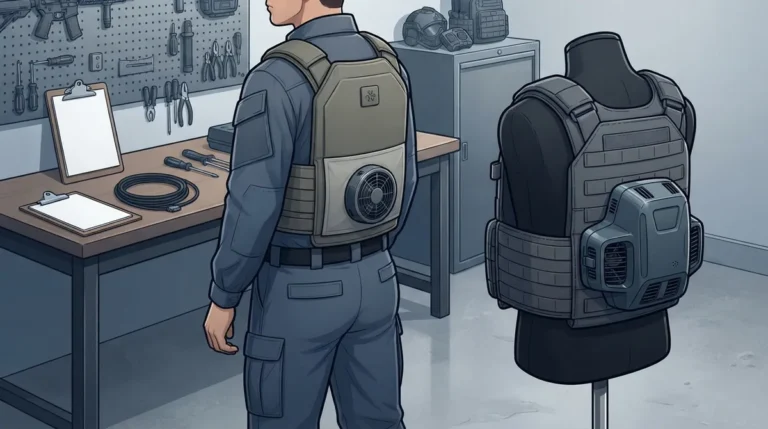
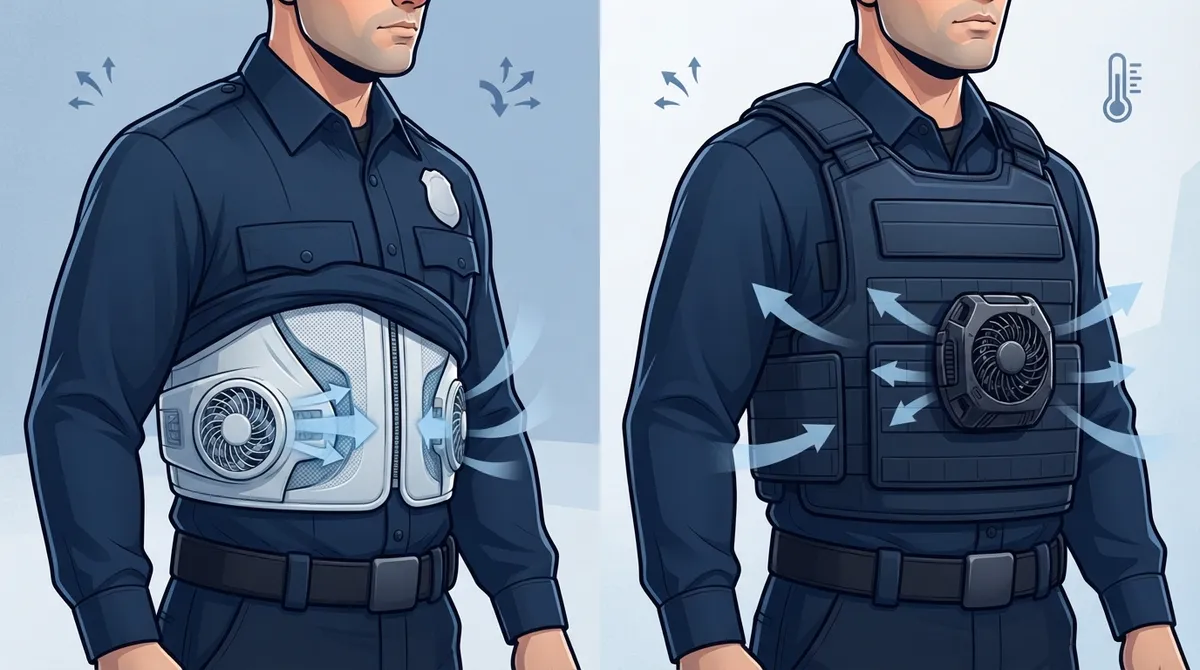
- Concealed mounting: The fans are built into the garment or covered by it. You see a cleaner, flatter shape.
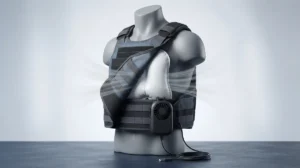
- Outer mounting: The fan housings sit on the outside of the vest or carrier. You can see them and reach them.
Think of it like a phone case. Some cases hide the buttons under a smooth shell. Others leave them out where you can press them. Neither one is “better.” It depends on how you use it.
Why the Words Can Be Confusing
Some vests have fans tucked under a layer of fabric. Others have fans that clip on and off. A few mix both ideas. So a label alone will not tell you much. Look at photos, read the care notes, and ask questions before you buy.
How Fan Vests Actually Cool You
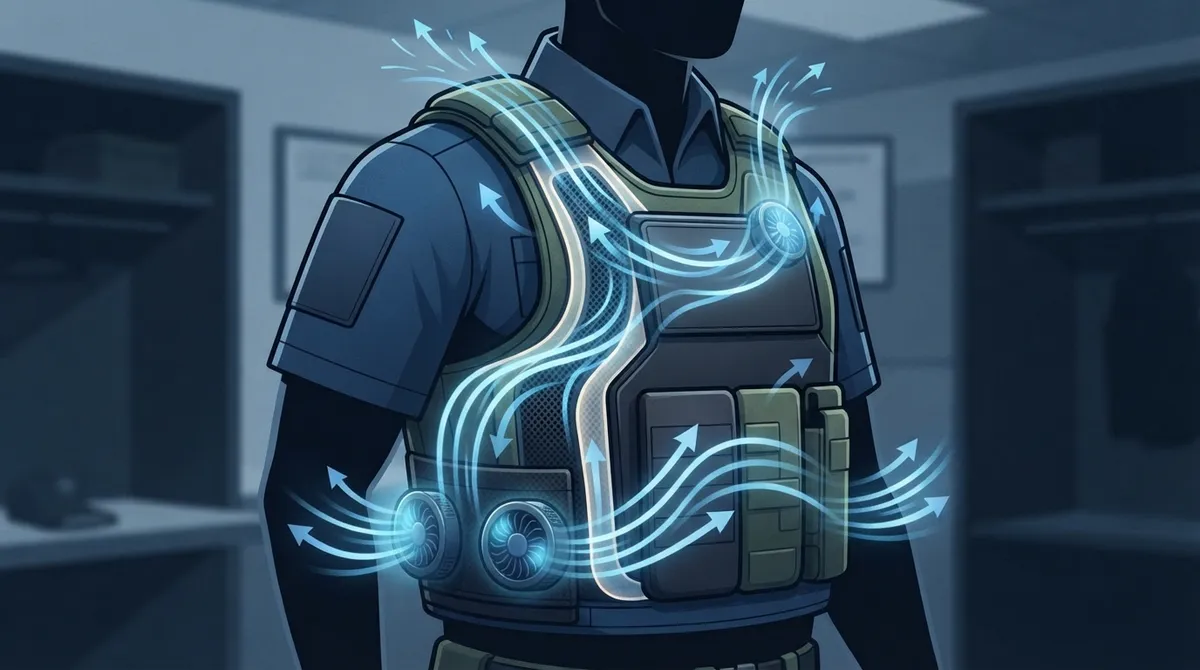
Before we compare mounting styles, let us clear up how cooling works. Most fan vests do not make cold air. They move the air around you. That moving air helps sweat evaporate, and evaporation is what cools your skin.
This matters because it means results depend on your setting. In dry heat, sweat evaporates fast, so airflow feels great. In very humid weather, sweat evaporates slowly, so you may feel less of a boost. Your clothing layers and fit also play a big role.
A 2026 study in Scientific Reports tested a fan-assisted evaporative vest with two axial fans at the lower back. The researchers tried airflow levels of 32, 42, 52, and 62 CFM. At 20% relative humidity, reported initial cooling power ranged from 92 W at 32 CFM to 124 W at 62 CFM. Those numbers came from one tested vest in lab conditions, so treat them as a clue, not a promise. The big takeaway is simple: more airflow can mean more cooling, but only when the whole system is designed well.
For a deeper look at how this works under armor, see how an airflow system for military vests actually works.
Concealed Fan Mounting: The Clean, Low-Profile Option
Concealed mounting hides the fans inside or under the garment. The result is a smooth, quiet look. Many people like that, especially when they wear plain clothes or work around the public.
Pros of Concealed Mounting
- Cleaner profile. Less bulk on the outside means fewer things to catch on doors, seat belts, or brush.
- Built-in airflow paths. Some designs push air through channels or spacer fabric. INUTEQ, for example, describes its AirVent Vest as using three integrated fans, two in front and one in back, to move air through 3D spacer fabric and boost evaporation.
- Less exposure to bumps. Covered parts may face fewer knocks during a busy shift.
Cons of Concealed Mounting
- Harder to inspect. If the fan is tucked in, you may need to open the garment to check it.
- Care can be trickier. You may need to remove fans and batteries before washing, and that takes a few more steps.
- Outer layers can block air. If a jacket or carrier covers the inlets or outlets, airflow drops.
If you work in plain clothes or under a uniform shirt, you may want to read about staying cool with concealed vest cooling in 2026 and fitting cooling accessories under concealed body armor.
Outer Fan Mounting: The Easy-Access Option
Outer mounting puts the fan on the outside of the vest or carrier. You can see it, touch it, and swap it quickly. For many working pros, that easy access is a big win.
Pros of Outer Mounting
- Easy to inspect and clean. You can spot dust, lint, or damage right away.
- Simple to remove or replace. A current product listing describes detachable, cleanable fans. Keep in mind that is a product-specific feature, not a rule for every outer design.
- Flexible placement. Some outer systems let you shift the fan to a spot that works better for your build or gear.
Cons of Outer Mounting
- More exposed. A fan on the outside can bump walls, vehicle frames, or equipment.
- Bulkier look. You may notice it more, and so might others.
- Possible snag points. Straps and housings can catch on things if they stick out.
If you like the idea of a carrier-mounted fan, you can learn more in what an external vest carrier fan is and whether it works or compare it in outer carrier cooling fan vs passive vent.
Side-by-Side Comparison
Here is a quick table to help you see the big differences at a glance. Remember, these are general patterns, not strict rules.
| Factor | Concealed Mounting | Outer Mounting |
|---|---|---|
| Look and profile | Clean, low-profile | Visible housings |
| Cleaning access | May need disassembly | Often easier to reach |
| Snag risk | Usually lower | Can be higher |
| Replacement | Depends on design | Often quicker if detachable |
| Airflow routing | Can use built-in channels | Depends on placement and gear |
| Best fit | Plain clothes, tight spaces | Fast checks, shared gear |
The takeaway? Neither style is automatically cooler or safer. The full airflow design, fit, and conditions matter more than where the fan sits.
What to Weigh Before You Choose
Mounting location affects more than looks. Here are the things worth checking, based on how you really work.
- Airflow distribution. Does the air reach your torso evenly, or only one spot?
- Weight. Fans and batteries add weight. Check where that weight sits when you lean, run, or sit.
- Noise. Some jobs need quiet. Listen to reviews, and see quiet cooling fan for body armor mistakes to avoid.
- Harness and gear fit. Make sure straps, belts, and radios do not press on the fan or block the air.
- Outer garments. A jacket or carrier can cover inlets and outlets. Always test with your full kit.
- Battery runtime. One USB-powered fan vest listing claims 13 hours on low, 8.8 hours on medium, and 6.7 hours on maximum with a 10,000 mAh battery. Those are listing claims and vary by product, so check your own model.
For more on this last point, read how fan speed affects vest cooling battery life in 2026.
How to Choose: A Simple 6-Step Process
Ready to decide? Here is an easy path you can follow today.
- Name your daily setup. Write down what you wear: uniform shirt, plate carrier, duty belt, jacket, or harness. This tells you how much room you have.
- Decide how visible you can be. Plain-clothes and protective-detail roles may prefer a low profile. Patrol and tactical roles may care less about looks.
- Think about cleaning. If your gear gets dusty, sweaty, or dirty, easy access to the fan can save time.
- Check the airflow path. Ask where air goes in and where it comes out. Make sure your outer layers will not block either one.
- Compare power and weight. Look at battery size, runtime by speed, and total added weight.
- Test it with your full kit. Wear everything for a full shift or training day. Notice pressure points, noise, and snag spots.
If you want help choosing, this guide on how to pick a cooling fan system for body armor goes deeper.
Safety and Care Notes You Should Not Skip
A ventilation vest is a comfort tool. It is not a substitute for proper heat-safety habits. Follow your workplace rules, drink water, take breaks, and watch for signs of heat illness. The OSHA Heat Stress Guide is a solid place to learn the basics.
Also, do not assume any vest counts as protective equipment. Verify any claim about PPE or respirator compatibility for the whole system. For example, Vortec states that its cooling vests are not approved for use with a respirator system. For background on armor itself, see the NIJ’s body armor standards.
Washing and Care
Always read the care label first. In general:
- Remove fans and batteries before washing when the design allows it.
- Do not submerge fans or batteries. One product listing specifically warns against this.
- Let everything dry fully before putting it back together.
Want to keep your gear fresh too? Try how to stop body armor from smelling like sweat.
Which Style Fits Which Job?
Let us bring it back to real life. These are general suggestions, not hard rules.
- Patrol officers: Easy access can help during long, hot shifts, especially when you get in and out of a vehicle all day.
- Military personnel: Think about snag risk, load weight, and compatibility with carriers and packs.
- Security and protective detail: A low profile often matters, so a hidden setup may feel more natural.
- Tactical and SWAT teams: Check weight, noise, and how gear sits during movement.
- Firefighters, hazmat, and first responders: Follow your department rules and confirm that any add-on works with your protective gear.
Where BluHalo and BluFano Fit In
If you want cooling that works with your armor rather than around it, take a look at BluHalo and BluFano from BluHalo’s team. BluHalo is a lightweight ventilation vest, under 7 ounces, that sits flat when deflated. When you inflate it, it can lift the vest up to about 1.5 inches off your body to create a cooling air gap. You can inflate it on demand and deflate it with a button.
BluFano is an active fan system with a patented air-redirect spout that slides under body armor. It runs for roughly 8 to 32 hours depending on the setting, and it has a built-in 10,000mAh power bank and a forward-facing light. You can use them alone or together. Learn more in BluFano vs BluHalo: which cooling vest fits you or see how to use BluHalo and BluFano together.
If you like the outer-mount idea, you can also see how to mount BluFano on an outer vest.
A Quick Word on Getting Expert Help
Heat management is part gear, part habit. If you run a team and want to build a smarter heat plan, a consulting group like O’Reilly Consultants can help you think through operations and training. It is a handy resource when you are planning for a whole department rather than one person.
Common Mistakes to Avoid
- Trusting the label alone. “Concealed” and “outer” mean different things on different sites.
- Skipping the full-kit test. A fan that works alone may struggle under armor or a jacket.
- Ignoring care rules. Water and fans do not mix.
- Expecting miracles in humid air. Airflow helps, but humidity limits evaporation.
For more ideas on what to avoid, check 7 body armor cooling fan mistakes you must avoid.
Final Thoughts: Pick What Fits Your Day
So, what is the winner in the concealed vs outer vest fan mounting debate? Honestly, it depends on you. Concealed designs give you a tidy, low-profile feel and can use built-in airflow paths. Outer designs give you easy access, quick checks, and simple replacement when the fan is detachable.
The best move is to match the mounting style to your gear, your job, and your care habits. Test it with your full setup, and trust how it feels by the end of a long shift. If you would like help choosing a system that fits under your armor, we are happy to talk. Reach out to the BluHalo team and tell us about your setup. We would love to help you stay cooler, drier, and focused.
FAQs
Q: What is the difference between concealed and outer fan mounting on a ventilation vest?
A: Concealed mounting usually means the fans are built into or covered by the garment, giving a cleaner look. Outer mounting usually means the fan housings sit on the outside where you can see and reach them. These are not official terms, so always confirm the design with the maker.
Q: Does fan placement affect how well a cooling vest works?
A: Yes, it can. Where the fan sits changes how evenly air reaches your body and how outer layers might block the inlets or outlets. Fit, humidity, and clothing matter too, so no single mounting style is automatically cooler.
Q: Are external vest fans easier to clean or replace?
A: Often they are, because you can reach them without opening the garment. Some outer designs even have detachable, cleanable fans, but that is a product-specific feature. Always check the care label, and never submerge fans or batteries.
Q: Can a fan ventilation vest be worn with a respirator or other PPE?
A: Do not assume it can. Compatibility depends on the full system, and some makers state clearly that their cooling vests are not approved for use with a respirator. Verify any PPE claims with the manufacturer and follow your workplace safety rules.
Q: Do fan-powered cooling vests work in humid weather?
A: They can still help by moving air, but humidity slows sweat evaporation, so the cooling boost may feel smaller. Pair your vest with water, rest breaks, and your workplace heat-safety plan for the best results.