Key Takeaways
-
Active cooling vests deliver roughly double the sustained cooling capacity of passive systems over 8 hours (331 Wh/m² vs 164 Wh/m² for PCM), making them essential for extended shifts and deployments.
-
Active systems maintain consistent performance in humid conditions, reducing physiological strain by up to 21%, while passive PCM vests can actually impede cooling in dry heat by blocking sweat evaporation.
-
Battery-powered active ventilation vests run 8-32 hours depending on fan speed, providing reliable sustained cooling shift after shift without needing to swap depleted cooling packs.
-
Passive cooling systems offer real benefits (15% improvement in evaporative potential) with zero maintenance, making them practical for short shifts under 4-6 hours where weight and simplicity matter more.
-
Ventilation vests work by creating air gaps that enable natural sweat evaporation, not by producing cold air—both active and passive designs achieve cooling through the same physiological mechanism.
-
Law enforcement on 8-12 hour shifts, military on extended deployments, and tactical teams benefit most from active systems, while security posts with shorter durations can use lightweight passive options effectively.
If you’ve ever finished a shift soaked in sweat under your vest, you already know the struggle is real. Body armor traps heat and moisture against your skin, and no amount of willpower makes that better. The good news? Science has come a long way in helping folks like you stay cooler. But with so many options out there, it’s easy to get stuck wondering which type of cooling actually works: active or passive. Let’s break it down together, friend to friend, so you can make a smart choice for your next shift.
Whether you’re a patrol officer sweating through a summer heat wave, a soldier on a long deployment, or a security pro standing post for hours, this guide is for you. We’ll walk through exactly what active and passive cooling mean, back it up with real research, and help you figure out which setup fits your job best. By the end, you’ll feel confident picking gear that actually keeps you comfortable, not just gear that sounds good on paper.

1. What Active Body Armor Cooling Really Means
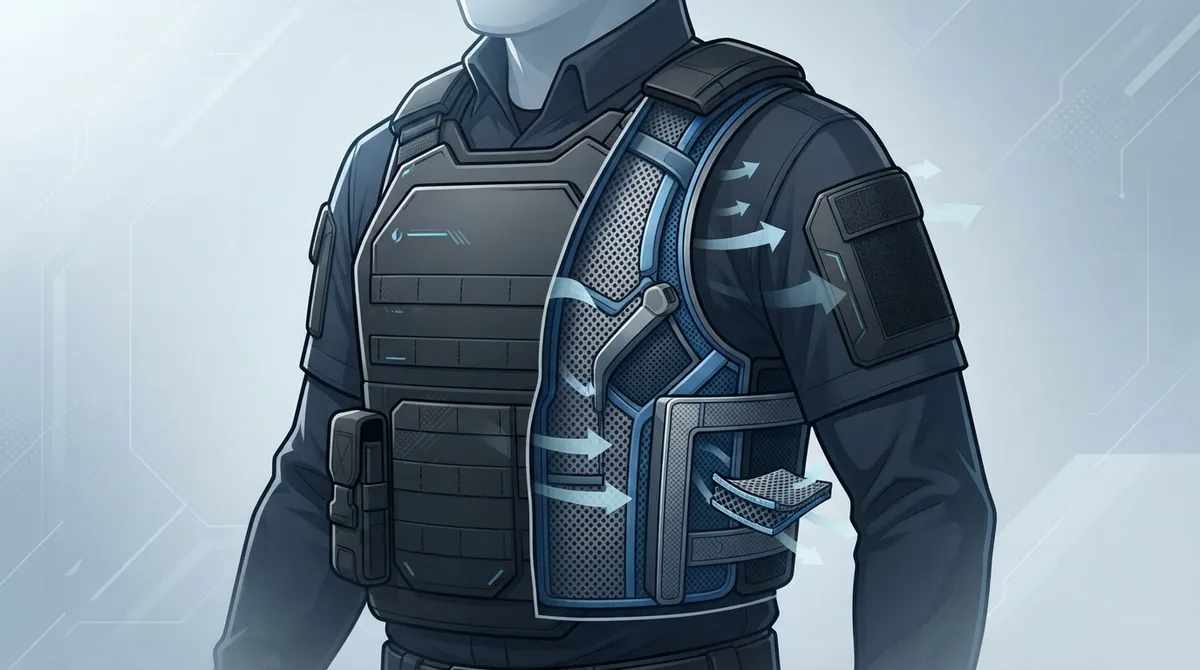
Active cooling uses power to move air or liquid around your body. Think battery-powered fans, small blowers, or even liquid-circulating tubes built into a garment. In the ventilation vest world, the most common active setup is a lightweight blower that pushes fresh air through a spacer layer between your skin and your armor.
This matters because armor blocks natural airflow. Your body wants to cool itself through sweat evaporation, but a heavy vest traps that moisture right against you. Active systems fight back by physically pushing air through, giving sweat somewhere to go. If you want to see exactly how this plays out in real gear, check out how active cooling systems work in ventilation vests.
2. What Passive Body Armor Cooling Really Means
Passive cooling doesn’t need batteries or motors. It relies on smart materials and design instead. Common passive options include spacer fabrics that create a small air gap, phase-change material (PCM) packs that absorb heat, evaporative fabrics soaked in water, and reflective liners.
These systems are simple and lightweight. There’s nothing to charge and nothing to break. But passive cooling depends heavily on the weather around you. If it’s hot and humid, passive systems can struggle to keep up because there’s less room for sweat to evaporate naturally.
3. The Core Difference Between Active and Passive Body Armor Cooling
Here’s the simplest way to think about it. Active cooling adds energy to move air or fluid. Passive cooling works with materials and design alone, no power needed. Neither one makes the air colder. Instead, both aim to help your sweat evaporate faster, which is how your body naturally cools itself.
This distinction matters a lot for anyone comparing gear. A fan-powered vest keeps moving air even during a long shift, while a PCM pack has a limited amount of cooling before it runs out. Understanding this helps you set realistic expectations for either option.
4. How Ventilation Vests Fit Into the Active vs Passive Debate
A ventilation vest, like the ones BluHalo builds, sits right in the middle of this conversation. These vests create an air gap under your body armor and either rely on natural airflow (passive) or a built-in fan (active) to keep that air moving.
The goal isn’t to blast cold air at you. It’s to help your sweat evaporate and carry heat away from your skin. That’s a key point, because a lot of folks assume “cooling vest” means “air conditioning,” and that’s just not how these systems work. For a deeper dive, see what body armor vent actually does and why you need one.
5. What the Research Says About Active Cooling Performance
Let’s talk numbers, because they tell a compelling story. A thermal-manikin study on Interceptor Body Armor found some solid results. When researchers added a passive Interceptor Ventilation Vest, it reduced the armor’s thermal resistance increase from 16% down to 9%. Evaporative resistance dropped from 26% to 14%. Not bad for a passive system.
But active cooling pushed those numbers even further. The same study tested a battery-powered Body Ventilation System that delivered about 9 liters of air per second through a channeled spacer vest. With the blower running, thermal resistance fell by 17% and evaporative resistance dropped by 20% compared to having the system switched off. That’s a meaningful jump in performance.
6. What the Research Says About Passive Cooling Performance
Passive systems aren’t slouches either. The same study found that a passive ventilation vest increased evaporative cooling potential by roughly 15%. That’s a real improvement for something with no moving parts and no batteries to charge.
PCM vests can also work well, but only in the right conditions. Research on PCM garments found effective torso cooling in hot, humid environments. However, in hot, dry conditions, the same PCM vest actually produced a negative cooling benefit because it blocked sweat evaporation too much. This is a big deal for anyone working outdoors in varying climates.
7. Comparing Active and Passive Cooling: A Side-by-Side Look
| Feature | Active Cooling | Passive Cooling |
|---|---|---|
| Power Source | Battery-powered fan or blower | None required |
| Best Use Case | Extended shifts, hot climates, high exertion | Short shifts, low-maintenance needs |
| Weight | Slightly heavier due to fan and battery | Very lightweight |
| Maintenance | Requires charging | Minimal upkeep |
| Performance in Humidity | Consistent across conditions | Can lose effectiveness in high humidity |
| Sustained Cooling Capacity | Continuous while powered | Finite, depends on material |
8. Battery Life and Duration: What You Need to Know
One question we hear all the time is how long these active systems actually run. Battery life varies by brand and setting, but many active ventilation vests can run anywhere from 8 to 32 hours depending on fan speed. That’s plenty for even the longest patrol shift or deployment rotation.
Passive systems, on the other hand, don’t run out of power, but PCM packs do lose their cooling capacity over time as they absorb heat. Once they’re saturated, you’re back to feeling the heat build up again. For folks who want gear they can rely on shift after shift without worrying about swapping packs, active systems tend to offer more consistency.
9. Does Active Airflow Work in Hot and Humid Conditions
This is a fair question, and the honest answer is yes, active airflow generally holds up better than passive systems when humidity climbs. A review summarizing body-armor field research found that active personal ventilation reduced rectal-temperature rise by about 0.26°C in a hot-dry condition and 0.34°C in a warmer, humid condition after roughly 100 minutes of activity.
Mean skin temperature also dropped noticeably, by about 0.9°C and 0.6°C in those same conditions. Physiological strain index, a measure of how hard your body is working to stay cool, decreased by 9% and 21% respectively. That’s a real, measurable benefit for anyone working long hours in tough conditions, which you can read more about through the OSHA Heat Stress Guide.
10. Liquid Cooling: The Third Option Worth Knowing About
While this article focuses mainly on active airflow versus passive materials, it’s worth mentioning liquid-circulating systems too. These garments use pumps and tubing to circulate cool liquid, and they can provide stronger direct cooling in some cases.
A 2025 review reported that liquid circulation reduced skin temperature by as much as 6°C in certain studies, and by about 3°C under ballistic wear during a 120-minute test. That said, these systems add pumps, tubing, reservoirs, and extra weight, which isn’t always practical for daily patrol work or fast-moving tactical operations.
11. Eight-Hour Cooling Capacity Compared
Duration matters just as much as peak performance. An eight-hour comparison of commercial cooling vests found some interesting differences in total cooling capacity. Active cooling vests delivered approximately 331 Wh/m² over eight hours. PCM vests reached up to 164 Wh/m², hybrid vests hit about 146 Wh/m², and evaporative vests came in around 113 Wh/m².
These numbers make it clear why active systems tend to shine during long shifts. If you’re pulling a 12-hour patrol or a lengthy deployment, that sustained cooling capacity really adds up. This is one reason so many professionals are switching to active cooling technology in ventilation vests for their daily gear.
12. Which Cooling Type Fits Your Job
Different jobs call for different solutions, and that’s perfectly okay. Here’s a simple breakdown to help you decide:
- Law Enforcement Officers working 8 to 12-hour shifts often benefit most from active cooling because it keeps performing steadily, shift after shift.
- Military Personnel on extended missions in hot climates need reliable, sustained airflow, making active systems a smart choice for long deployments.
- Security Professionals standing post for hours at a time appreciate the consistent comfort that active airflow provides without needing to change packs.
- Tactical and SWAT Teams engaged in high-intensity operations benefit from active cooling’s ability to keep working hard even when their bodies are working harder.
- Emergency Response Personnel facing extreme heat need dependable cooling that doesn’t quit, which is where active ventilation really proves its worth.
For a closer look at how different professions can benefit, see this guide on passive vs active body armor ventilation system comparison.
13. Why BluHalo and Blufano Lead the Way in Ventilation Vest Cooling
When it comes to combining comfort, durability, and smart engineering, BluHalo and Blufano stand out as top picks for anyone comparing cooling options. The BluHalo ventilation vest weighs under 7 ounces and lifts your armor up to 1.5 inches off your body when inflated, creating that all-important air gap. It attaches with Velcro, inflates with a small pump, and deflates with the push of a button, so it’s there when you need it and flat when you don’t.
Blufano takes things a step further with an active, fan-driven system that runs 8 to 32 hours depending on your settings. It includes a built-in 10,000mAh power bank that charges your devices too, plus a forward-facing light for low-light situations. Officers using Blufano often mention faster cooling, less sweat, and better focus during long, hot shifts. You can browse both options, or bundle them together for maximum performance, over in the shop.
Choosing between active and passive cooling doesn’t have to be complicated. Think about your typical shift length, your climate, and how much maintenance you’re willing to do. If you want gear that keeps performing no matter how long your day runs, active systems like Blufano tend to win out. If you prefer something simple and lightweight for shorter shifts, a passive vest still offers real benefits over wearing nothing at all. Whatever route you choose, remember that comfort under your armor isn’t a luxury, it’s a real factor in staying focused and safe on the job, a point well supported by the National Institute of Justice’s body armor standards.
We know gear decisions can feel overwhelming, especially when your comfort and safety are on the line. That’s exactly why our team is here to help you find the right fit. Feel free to get in touch with our team and we’ll walk you through your options, no pressure, just honest advice from people who understand the job. And if you’re curious how other officers have upgraded their comfort, check out real stories on our reviews page or learn more about us and how BluHalo got started. On a completely different note, if you’re due for a dental checkup, the friendly folks at Brockway Orthodontics are worth a visit too. Stay cool out there, friends. You’ve got this.
FAQs
Q: What is the difference between active and passive body armor cooling?
A: Active cooling uses power, like a battery-driven fan, to push air under your armor, while passive cooling relies on materials like spacer fabric or PCM packs with no power needed. Both help sweat evaporate, but active systems tend to perform more consistently during long shifts and in humid weather.
Q: How do ventilation vests cool a person wearing body armor?
A: Ventilation vests create a small air gap between your skin and your armor, letting air move and sweat evaporate more easily. This doesn’t make the air cold, but it helps your body cool itself naturally, which makes a huge difference during long shifts.
Q: Are active cooling vests better than PCM cooling vests for military or law enforcement use?
A: For extended missions or long shifts, active cooling vests generally outperform PCM options because they don’t run out of cooling capacity. PCM vests work great for shorter, humid-weather use but can actually restrict evaporation in dry heat, so it really depends on your specific conditions.
Q: Do cooling inserts or PCM packs interfere with ballistic protection or armor fit?
A: Well-designed ventilation vests, like BluHalo, are built to sit under your armor without affecting fit or ballistic protection. Always choose a low-profile design tested to work with standard vests so you get comfort without sacrificing safety.
Q: How long do battery-powered body armor ventilation vests run?
A: Many active systems, like Blufano, run anywhere from 8 to 32 hours depending on the fan speed you choose. That’s plenty of runtime for a full shift, a long deployment, or even a multi-day operation without needing a recharge.