
Key Takeaways
-
Body armor odor comes from bacteria breaking down sweat and skin oils, not sweat itself. Bacteria like Corynebacterium and Staphylococcus thrive in damp, trapped moisture, making odor worse the longer gear stays wet.
-
Ventilation vests create an air gap that speeds evaporation and moves humid air away from skin, reducing moisture transfer into armor carriers. However, ventilation alone won't eliminate odor without regular washing and complete drying of all gear.
-
Establish a cleaning routine: remove gear immediately after shifts, wash components every few uses (not just when smelly), air dry completely before storing, and keep gear in dry, ventilated spaces. Never pack away damp equipment, as bacteria multiply fastest in moisture.
-
Cotton, lyocell, and polypropylene fabrics show lower bacterial counts in sweat tests compared to polyester and polyamide. Wool absorbs up to 33% of its weight in moisture before feeling damp, keeping skin drier and limiting bacterial growth conditions.
-
Simple habits reduce odor significantly: change undershirts daily, rotate two ventilation vests so one is always drying, avoid storing gear in hot vehicle trunks, and follow OSHA heat management guidance. These habits protect both comfort and armor longevity.
-
Antimicrobial treatments reduce bacterial counts but don't guarantee less noticeable odor. Focus product selection on airflow quality, moisture transport, fit, and washability rather than marketing claims alone.
If you’ve ever peeled off your vest after a long shift and caught a whiff that made you wince, you’re not alone. Almost every officer, soldier, or security pro who’s worn body armor for more than a few months knows that smell. The good news? You’re not stuck with it. Once you understand why the odor shows up in the first place, you can actually fix it, not just cover it up.
This guide breaks down exactly why body armor smells like sweat, what actually helps, and where BluHalo ventilation vests fit into a smart, long-term odor solution. We’ll also cover cleaning routines, fabric choices, and a few habits that make a bigger difference than you’d expect.
Why Body Armor Smells Like Sweat in the First Place
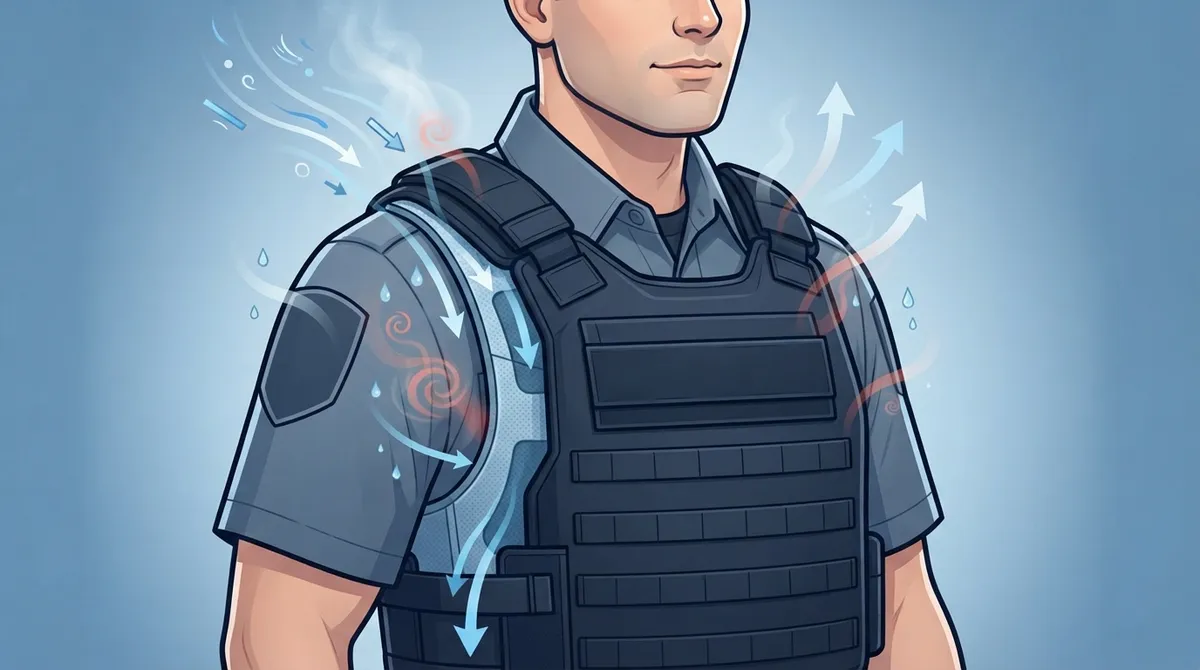
Here’s something that surprises a lot of people: fresh sweat barely smells at all. The odor you’re dealing with is actually created by bacteria on your skin and inside your gear. These bacteria feed on sweat, skin oils, and other moisture, breaking them down into the smelly compounds we all know too well.
According to a 2023 review, bacteria like Corynebacterium, Staphylococcus, and Micrococcus are the main culprits behind body odor on skin and fabric. When your vest carrier, undershirt, or ventilation layer stays damp for hours, it becomes the perfect breeding ground for these microbes. That’s why the smell tends to get worse the longer you wear your gear, not better.
Heat and Humidity Make It Worse
A tight-fitting vest traps warm, damp air right against your skin. That trapped heat slows down evaporation, which means moisture just sits there, feeding bacteria instead of drying out. Research shows many odor-producing bacteria thrive once water activity climbs above 0.90, so simply getting moisture away from your body fast is one of the best things you can do.
This is exactly the kind of situation covered in our article on how to prevent heat stress while wearing body armor. Heat and moisture management aren’t just about comfort. They’re directly tied to how bad your gear smells at the end of a shift.
How a Ventilation Vest Helps (and What It Can’t Do Alone)
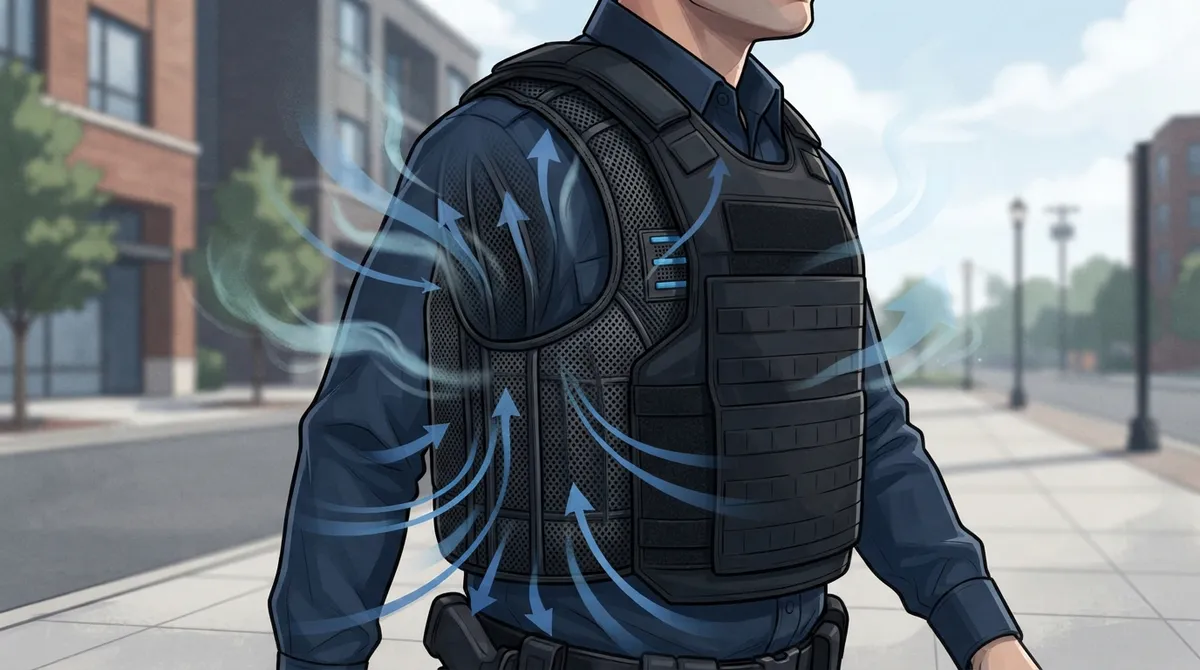
A ventilation vest like BluHalo creates a small air gap between your body and your armor. That gap lets warm, moist air escape instead of getting trapped against your skin. Instead of sweat soaking straight into your carrier or plate pockets, it has a chance to evaporate.
This is a big deal for anyone who’s read our breakdown of how sweat management works under body armor. Airflow doesn’t stop sweat from happening. It just gives that sweat somewhere to go besides your gear.
That said, ventilation alone won’t erase odor completely. If you never wash your undershirt, never dry your gear fully, or store everything damp in a locker, bacteria will still build up in seams, mesh, and hook-and-loop closures. Think of a ventilation vest as your first line of defense, not a magic eraser.
What Airflow Actually Changes
- Moves warm, humid air away from your skin instead of letting it sit there
- Speeds up evaporation, which limits how long sweat sits on fabric
- Reduces how much moisture transfers into the armor carrier itself
- Helps you feel drier and more comfortable, which often means less sweating overall
BluHalo was actually designed by a Chicago police officer who got tired of finishing 12-hour shifts in 95-degree heat soaked through. At under 7 ounces and sitting flat when deflated, it lifts your vest up to about 1.5 inches off your body once inflated, creating that crucial air gap on demand. You can check out real feedback from officers in our reviews section.
Step-by-Step: Cleaning Your Ventilation Vest and Gear
Odor control really comes down to a simple routine. Here’s how to keep your gear smelling fresh, step by step.
- Remove your ventilation vest and undershirt promptly after your shift. Don’t let sweaty layers sit in a bag or locker for hours.
- Check the care label before washing anything. Manufacturer instructions exist for a reason, especially with technical fabrics and fan components.
- Wash washable components regularly, ideally after every few uses, not just when they start to smell.
- Skip bleach, solvents, disinfectants, and fabric softener unless the manufacturer specifically says it’s safe. These can damage mesh, coatings, and hook-and-loop fasteners.
- Air dry completely before storing. Never pack away a damp vest, since that’s exactly when bacteria multiply fastest.
- Store gear somewhere dry and ventilated, not sealed in a plastic bag or stuffed in a hot trunk.
If you want more detail on gear care specific to daily wear, our piece on how to improve body armor airflow for all-day comfort covers a few extra habits worth building into your routine.
Does Fabric Choice Really Matter?
Yes, and the research backs this up. A 2025 review of textile laundering and body odor found that polyester and polyamide fabrics had the highest bacterial counts after a 24-hour sweat challenge. Lyocell, cotton, and polypropylene performed better in that same study.
Wool is interesting too. That same review noted wool can absorb up to roughly 33% of its own weight in moisture before it starts to feel damp. That’s a big reason hygroscopic fibers tend to keep skin drier, which limits the conditions bacteria need to thrive.
| Fabric Type | General Odor Performance | Best Use Under Armor |
|---|---|---|
| Cotton | Lower bacterial density in studies | Base layers, casual wear |
| Polyester/Polyamide | Higher bacterial counts in sweat tests | Common but needs frequent washing |
| Lyocell | Lower overall bacterial density | Moisture-wicking base layers |
| Wool | High moisture absorption before feeling damp | Cooler climates, longer wear |
| Polypropylene | Lower bacterial density in studies | Technical base layers |
Keep in mind, fabric performance depends on more than just fiber type. Knit structure, finish, and how often you wash the item all play a role too.
What About Antimicrobial Claims?
You’ve probably seen vests and undershirts marketed as “antimicrobial” or “odor-resistant.” These finishes can genuinely help reduce bacterial growth. But here’s the catch: research summarized by Library and Archives Canada found that antimicrobial treatment lowered bacterial counts without necessarily producing a matching drop in how strong the odor actually smelled.
In plain terms, fewer bacteria doesn’t always mean less stink. A 2023 peer-reviewed review in iScience broke odor control into three approaches: limiting the bacteria that cause odor, adsorbing the smelly compounds themselves, and chemically breaking those compounds down. Good ventilation vest design often works alongside all three, but no single feature is a guarantee.
Bottom line: don’t pick a product based on marketing buzzwords alone. Evaluate it on airflow, moisture transport, fit, washability, and how well it works with your specific carrier, similar to how we break things down in how to choose the right body armor ventilation vest in 2026.
Why BluHalo and Blufano Are Built for This Exact Problem
BluHalo attaches to a clean vest with Velcro and inflates on demand with a small pump, lifting your armor off your body to create that all-important air gap. When you don’t need it, one button deflates it flat in seconds. It’s made from double-layer, high-tensile polyethylene, so it holds up to daily duty use without adding bulk.
If you want continuous airflow instead of on-demand inflation, Blufano is our active fan system. It uses a patented air-redirect spout that slides under any style of body armor, delivering adjustable, fan-driven airflow for 8 to 32 hours depending on your settings. It even includes a built-in 10,000mAh power bank that doubles as a phone charger, plus a forward-facing light for low-visibility situations.
Officers who’ve switched to Blufano often mention faster cooling, noticeably less sweat, and better focus during long, hot shifts. You can browse both systems, along with bundle pricing, in our shop, or see them explained in more detail on our videos page.
Quick Comparison: BluHalo vs. Blufano
| Feature | BluHalo | Blufano |
|---|---|---|
| Cooling Method | Inflatable air gap, on demand | Continuous fan-driven airflow |
| Weight | Under 7 ounces | Compact, self-contained unit |
| Runtime | Instant inflate/deflate | 8 to 32 hours per charge |
| Extra Features | Low-profile when deflated | 10,000mAh power bank, built-in light |
| Best For | Quick relief during peak heat | All-shift active cooling |
Many officers actually combine both for maximum comfort, especially during brutal summer stretches. You can learn more about combining systems in our comparison piece, Blufano vs BluHalo: which vest cooling system is better.
Habits That Make the Biggest Difference
Beyond gear itself, a few simple habits go a long way toward keeping odor under control.
- Change your undershirt daily, even on shorter shifts
- Let your vest and ventilation system fully dry between wears
- Rotate two ventilation vests if your budget allows, so one is always drying
- Avoid storing gear in a hot, sealed vehicle trunk overnight
- Follow OSHA guidance on managing heat exposure during physically demanding shifts, since staying cooler overall reduces excess sweating
These habits matter just as much for military personnel operating in extreme climates as they do for patrol officers. Our guide on how to master body armor heat management for military use dives deeper into field-ready routines for extended missions.
A Word on Armor Longevity
Sweat buildup isn’t just unpleasant, it can actually shorten the service life of your protective gear. Moisture trapped against ballistic panels over time may affect materials, which is one more reason proper airflow and drying matter. For guidance on armor performance standards, the National Institute of Justice’s body armor resources are a solid reference point for understanding how your gear is tested and rated.
Taking care of your ventilation system protects your investment in both comfort and safety.
Ready to Stop Fighting the Funk?
You didn’t sign up for this job to spend your shift distracted by sweat and discomfort. A good ventilation vest, paired with smart cleaning habits, can genuinely change how your gear feels and smells by the end of the day. Thousands of officers, soldiers, and security professionals have already made the switch with BluHalo and Blufano, and honestly, once you feel that airflow, it’s hard to imagine going back.
If you have questions about which system fits your gear setup best, our team is happy to help. Reach out to our team today and let’s find the right cooling solution for your shift.
FAQs
Q: Why does my body armor vest smell like sweat?
A: It’s not the sweat itself, it’s actually bacteria breaking down sweat, oils, and moisture trapped in your vest, carrier, and undershirt. Fresh sweat has almost no smell on its own, so the odor builds up as moisture sits and bacteria multiply, especially in tight, damp spots.
Q: Can a ventilation vest stop body armor from smelling?
A: A ventilation vest like BluHalo helps a lot by creating an air gap that lets moisture evaporate instead of soaking into your gear. It won’t erase odor completely on its own, but combined with regular washing and full drying, it makes a huge difference.
Q: How often should I wash a vest worn under body armor?
A: As a good rule of thumb, wash your ventilation vest and undershirt every few wears, not just when they start smelling. Always check the manufacturer’s care label first, since some fabrics and fan components need specific washing instructions.
Q: What is the best fabric for preventing sweat odor under body armor?
A: Research shows cotton, lyocell, and polypropylene tend to hold onto less bacteria than polyester or polyamide during sweat testing. That said, how you wash and dry your gear matters just as much as the fabric itself.
Q: Are antimicrobial ventilation vests safe and effective?
A: Antimicrobial finishes can reduce bacterial growth, but studies show lower bacteria counts don’t always mean noticeably less odor. They’re a helpful bonus feature, not a replacement for regular cleaning and proper drying.