Key Takeaways
-
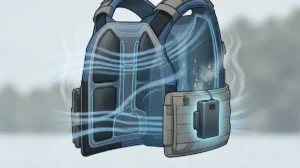
Body armor traps heat and moisture against skin with no evaporation, creating dangerous heat stress during summer patrols; ventilation vests solve this by creating air gaps that allow sweat to evaporate naturally.
-
Active fan-powered vests like Blufano run 8-32 hours per charge and boost evaporative cooling, while passive inflation vests like BluHalo weigh under 7 ounces and provide instant on-demand relief without batteries.
-
Research shows ventilation vests deliver 67 watts of torso cooling power in controlled tests and increase evaporative heat loss, with NIOSH officially recognizing air-cooled garments as accepted heat exposure strategies.
-
Follow OSHA's layered heat-safety approach: drink 1 liter water per hour, gradually acclimate over 5+ days at 20% increases, take scheduled breaks, use the buddy system, and watch for dizziness or confusion.
-
Maintain your ventilation vest by wiping it dry after shifts, fully charging before duty, checking Velcro attachments regularly, and inspecting seams and valves every few weeks to ensure reliability.
-
Many officers combine both active and passive cooling systems, using a lightweight passive vest as their daily base layer and adding active airflow during peak heat hours for maximum relief throughout the shift.
If you’ve ever finished a 12-hour patrol shift in 95-degree heat feeling like you just crawled out of a swimming pool, you already know the struggle. Body armor saves lives, but it also traps heat like nobody’s business. Add a duty belt, humidity, and hours of walking or standing in direct sun, and you’ve got a recipe for exhaustion, headaches, and dangerous heat stress. The good news? You don’t have to just tough it out anymore. Keeping cool on summer patrol is now a solvable problem, thanks to smart ventilation technology that works with your gear instead of against it.
This guide walks through why patrol work heats you up so fast, how ventilation vests actually help, and what to look for so your agency or your own gear bag is ready for the next heat wave. We’ll also cover the basics of heat safety that every officer, soldier, or security professional should know cold (pun intended). Let’s get into it.

Why Summer Patrol Feels Like an Oven
Patrol work stacks up heat from every direction. You’ve got the sun beating down, physical exertion from walking, running, or standing for hours, and then your protective gear on top of it all. Body armor and uniforms trap body heat and moisture right against your skin, with nowhere for it to go.
This combination is exactly why heat exhaustion and heat stroke are real risks for anyone wearing body armor in summer conditions. Your body tries to cool itself through sweat, but when that sweat has nowhere to evaporate, it just sits there making you feel sticky, heavy, and drained.
According to the OSHA Heat Stress Guide, workers in hot environments face real physiological strain that builds over a shift, not just discomfort. That’s a big reason agencies and individual officers are turning to vest cooling systems designed specifically for this problem.
The Hidden Heat Burden of Body Armor
Body armor is built for protection, not breathability. That’s the tradeoff. The dense materials that stop a bullet or blade also block airflow completely. Combine that with a uniform shirt, undershirt, and duty belt, and you’ve created a personal sauna around your torso.
Standards for body armor, as outlined by the Body Armor Standards from the National Institute of Justice, focus heavily on protective performance. Comfort and ventilation are left to accessories and add-ons, which is exactly where ventilation vests come in.
How Ventilation Vests Actually Keep You Cool
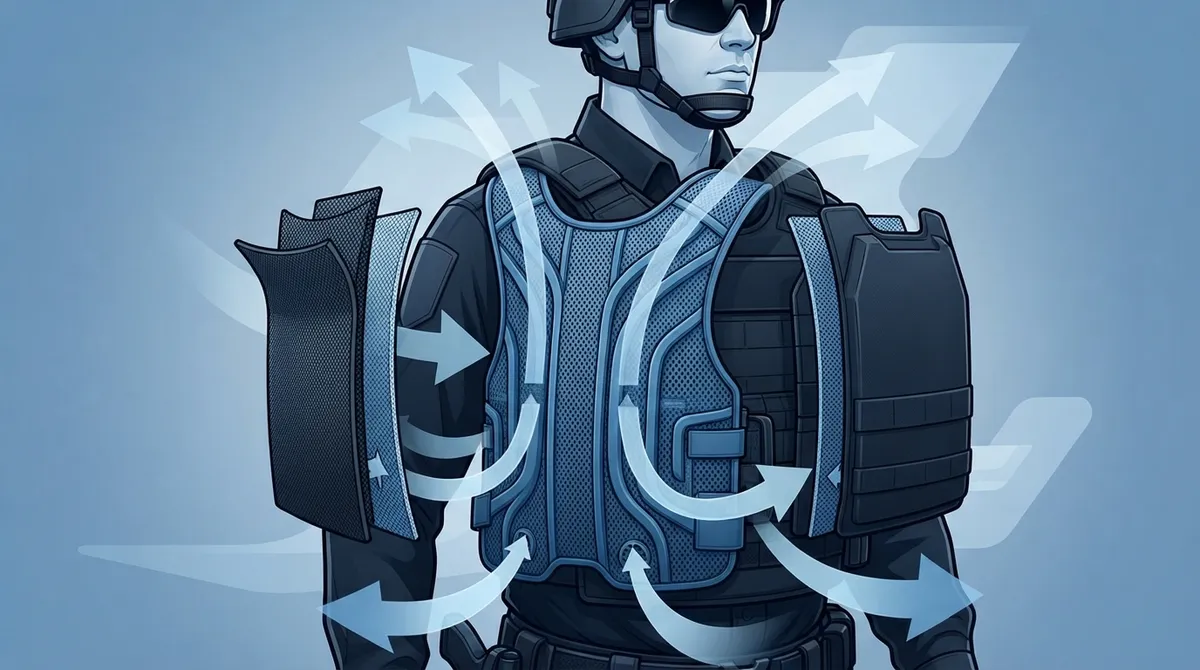
Ventilation vests work by creating a gap or channel between your body and your outer armor. This gap lets trapped heat and moisture escape instead of building up against your skin. Think of it like cracking a window on a hot car instead of sitting with everything sealed shut.
There are two main approaches, and understanding the difference matters a lot when you’re choosing gear for daily wear.
Active Air-Cooled Vests
Active vests use small battery-powered fans to physically move air through channels under your armor. This creates ongoing airflow that helps sweat evaporate faster, which is your body’s natural cooling method working the way it’s supposed to.
Blufano is a great example of this approach done right. It’s a self-contained, active airflow unit with a patented air-redirect spout that slides under any style of body armor. Depending on your fan setting, it runs anywhere from 8 to 32 hours on a single charge, and it even includes a built-in 10,000mAh power bank that can charge your phone or radio in a pinch. Officers using it during long, hot shifts report noticeably faster cooling, less sweat buildup, and better focus during those brutal afternoon hours.
Passive Ventilation Vests
Passive designs don’t use batteries or fans at all. Instead, they rely on spacer materials, mesh, or structural channels that hold their shape even when compressed under heavy armor. The idea is to preserve that all-important air gap without needing to charge anything.
BluHalo takes this concept and makes it genuinely clever. It weighs under 7 ounces and lies completely flat when deflated, so you barely notice it’s there. When you need cooling relief, you inflate it with a small pump, and it lifts your vest up to about 1.5 inches off your body to create an instant air channel. Need to go flat again fast? One button deflates it in seconds. It attaches to a clean vest with Velcro, making it one of the easiest tactical vest cooling upgrades an officer can add to their existing gear.
Both products were built with real-world duty conditions in mind, which is why BluHalo was actually invented by a Chicago police officer who got tired of overheating on the job. That kind of firsthand experience shows in the design.
Active vs. Passive Cooling: Quick Comparison
| Feature | Active (Blufano) | Passive (BluHalo) |
|---|---|---|
| Power source | Battery-powered fan | No battery needed |
| Runtime | 8-32 hours per charge | Unlimited, on-demand |
| Weight | Lightweight, self-contained unit | Under 7 ounces |
| Best for | Long shifts, extreme heat, extended patrol | Quick relief, low-profile carry, backup cooling |
| Extra features | Power bank, hands-free light | Inflates/deflates instantly, flat when off |
Many officers actually like combining both approaches, using a passive vest as their everyday base layer and adding active airflow during the hottest stretches of summer. You can check out the full shop lineup to see how these products can be bundled together for maximum relief.
What Real Research Says About Cooling Vests
This isn’t just marketing talk. Actual lab studies back up the science behind ventilation and cooling vests. A 2017 controlled study tested cooling vests at 34°C and 60% humidity, conditions that mimic a brutal summer patrol day. Researchers found that a hybrid vest design delivered an average torso cooling power of 67 watts, compared to 56 watts for another design, with continuous cooling maintained over a full three-hour test.
The same study found that ventilation fans increased evaporative heat loss compared to fans-off conditions. In plain terms: moving air really does help sweat do its job better.
A separate 2019 study on hybrid vests combining fans and frozen gel packs found a moderate reduction in physiological strain during exercise in heat. That’s encouraging news for anyone wearing heavy gear during physically demanding shifts.
Even government agencies overseas are catching on. In 2026, the Kyoto Prefectural Police deployed 1,500 fan-based cooling inner vests for officers with heavy outdoor patrol duties, with battery runtimes reported up to 17 hours. While that’s one agency’s specific rollout rather than a universal benchmark, it shows how seriously departments are taking heat management for patrol personnel.
Building a Complete Heat-Safety Plan
Here’s the thing: a ventilation vest is a powerful tool, but it’s not a magic fix by itself. NIOSH and OSHA both recommend a layered approach to heat safety, and ventilation vests fit in as one important piece of that puzzle.
Follow these steps to build a solid heat-management routine for summer patrol:
- Hydrate consistently. OSHA recommends drinking about 1 liter of water per hour, roughly one cup every 15 to 20 minutes. Don’t overdo it though, staying under 48 ounces per hour is important too.
- Acclimate gradually. New or returning officers should start at about 20% heat exposure on day one, increasing by no more than 20% each following day.
- Wear ventilation gear daily. Whether it’s an active fan system or a passive air-gap vest, consistent use helps prevent heat buildup before it starts.
- Take scheduled breaks. Shade, air conditioning, or a cool patrol car can give your body a chance to reset during long shifts.
- Watch for symptoms. Dizziness, confusion, nausea, or stopping sweating altogether are red flags for heat exhaustion or heat stroke that need immediate attention.
- Use the buddy system. Check in on your partner and have them check in on you. Heat illness can sneak up fast.
NIOSH specifically lists air-cooled garments and cooling vests among accepted auxiliary cooling strategies for occupational heat exposure, right alongside hydration and work-rest scheduling. That’s a strong endorsement for making ventilation vests part of your standard gear, not just a nice-to-have.
Choosing the Right Vest for Your Role
Not every cooling vest fits every job the same way. Here’s what different professionals should keep in mind:
- Law enforcement officers need low-profile designs that fit under existing body armor without changing fit or restricting weapon access.
- Military personnel often need longer battery runtimes for extended missions in remote or extreme heat environments.
- Security professionals benefit from lightweight, easy-to-maintain options that work across varied climates and long shifts.
- Tactical and SWAT teams need cooling systems that don’t interfere with rapid movement or heavy equipment during high-intensity operations.
- Emergency responders like firefighters and hazmat teams need durable ventilation that holds up under extreme, sustained heat exposure.
Whatever your role, compatibility matters most. A vest that changes your armor’s fit, blocks coverage, or gets in the way of your duty belt shouldn’t be worn without proper agency approval and a fit assessment. Check out how to prevent heat stress while wearing body armor for more detailed guidance on getting the fit right.
Maintenance Tips to Keep Your Vest Working All Summer
Getting the most out of your ventilation gear means a little upkeep. Follow these simple habits:
- Wipe down and air-dry your vest after each shift to prevent moisture buildup and odor.
- Charge active fan units fully before every shift, especially during multi-day heat waves.
- Check Velcro attachments regularly to make sure your vest stays securely in place under armor.
- Inspect for wear and tear on seams, spouts, or inflation valves every few weeks.
- Store your vest flat in a cool, dry place when not in use to extend its lifespan.
Simple habits like these keep your gear reliable when you need it most, during that 3 PM heat spike on a July patrol shift.
Real Comfort Makes a Real Difference
Officers who’ve made the switch to ventilation vests describe genuinely significant changes in their day-to-day comfort. Testimonials often mention faster cooling using vehicle AC combined with active airflow, noticeably less sweat soaking through uniforms, and better mental focus during those grueling 12-hour summer shifts. That focus matters. Heat stress doesn’t just make you uncomfortable, it can slow reaction time and cloud judgment when you need to be sharp.
If you’re curious how these products actually perform in the field, customer reviews offer a candid look at real-world results. You can also browse product demonstration videos to see exactly how the inflation, deflation, and airflow systems work before you commit to a purchase.
It’s also worth mentioning that partnering with organizations focused on officer wellness, like InCare, can round out a broader approach to health and safety for patrol personnel, especially during high-heat months when both physical and mental strain increase.
Making the Switch This Summer
Keeping cool on summer patrol doesn’t have to mean just gritting your teeth and pushing through. With the right combination of hydration, smart scheduling, and quality ventilation gear, you can protect yourself from heat exhaustion while staying sharp and focused on the job. Whether you go with an active fan system like Blufano or a passive air-gap vest like BluHalo, the goal is the same: give your body a fighting chance against the heat trapped under your armor.
BluHalo built its reputation because it was designed by someone who lived the problem firsthand, a Chicago officer who got tired of sweating through every summer shift. That real-world understanding is baked into every product in the lineup, and it’s why so many departments and individual officers trust the brand for daily wear.
Ready to stop dreading hot shifts? Get in touch with our team today to find the right cooling solution for your patrol gear, your body, and your budget.
FAQs
Q: How does a ventilation vest keep police officers cool under body armor?
A: It creates a small air gap or channel between your body and your armor, giving trapped heat and moisture a way to escape. Active versions like Blufano use a fan to push air through, while passive designs like BluHalo use inflation to lift the vest and hold that gap open naturally.
Q: What’s the difference between active and passive cooling vests?
A: Active vests use a battery-powered fan to keep air moving continuously, great for long, brutal shifts. Passive vests skip the battery entirely, relying on materials or inflation to hold an air channel open, which makes them super lightweight and easy to use on demand.
Q: Can I wear a ventilation vest safely under bullet-resistant body armor?
A: Yes, both BluHalo and Blufano are designed specifically to slide under existing body armor without changing its fit or protective coverage. Just make sure your agency approves the setup and that it doesn’t interfere with your duty belt or weapon access.
Q: How effective are fan-powered cooling vests in hot, humid weather?
A: Research shows fans genuinely boost evaporative cooling compared to no airflow at all, even in humid conditions. That said, extreme humidity can limit how much cooling you actually feel, so pairing your vest with hydration and scheduled breaks still matters a lot.
Q: How should I combine a ventilation vest with other heat-safety steps?
A: Think of your vest as one piece of a bigger plan that includes drinking water regularly, taking shaded or air-conditioned breaks, and watching for symptoms like dizziness or confusion. Combining good gear with smart habits is really the winning formula for staying safe all summer.