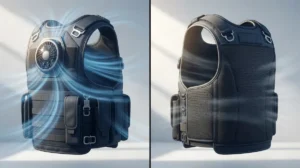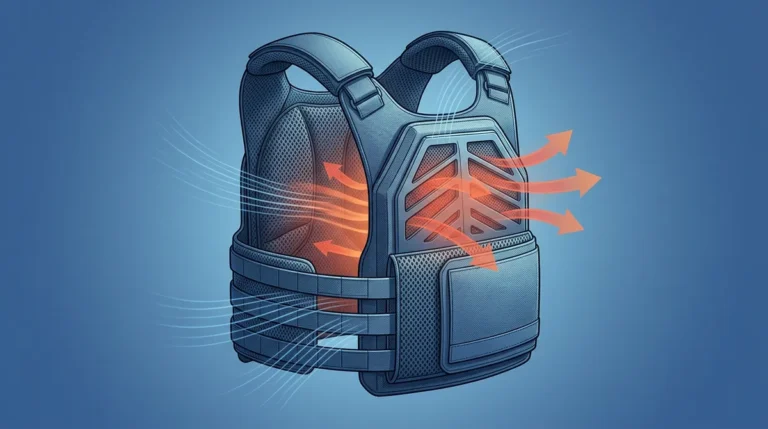
Key Takeaways
-
Passive ventilation systems (like TacVent) reduce under-armor body temperatures by at least 14.5°F through structural air gaps, making them ideal for officers with active movement during patrols without requiring batteries or maintenance.
-
Active fan-driven systems (like Blufano) deliver continuous cooling for 8-32 hours per charge and are superior for low-movement scenarios such as vehicle patrol or surveillance where passive airflow is insufficient.
-
Combining both passive and active systems—such as BluHalo’s inflate-on-demand vest with Blufano’s powered airflow—provides maximum cooling performance for demanding 12+ hour shifts at an affordable combined price.
-
Tactical vest ventilation retrofits attach easily to existing plate carriers using Velcro without requiring new armor purchases, and most passive panels can be custom-cut to fit your specific vest.
-
Ventilation panels provide dual benefits beyond cooling: they reduce blunt force trauma through cushioning layers while also preventing sweat from freezing against skin during cold-weather operations.
-
Heat exhaustion under body armor is an occupational hazard recognized by OSHA, making ventilation selection critical for officer safety, focus, and performance—passive systems work well for active duty while active systems excel in stationary positions.
If you wear body armor for a living, you already know the struggle. After a few hours on shift, the heat builds up under your vest. Sweat soaks through your shirt. You lose focus. You feel drained. And the worst part? You still have hours left on duty. Tactical vest ventilation exists to solve exactly this problem — but not all solutions work the same way.
In 2026, officers and tactical professionals have two main options: passive ventilation and active ventilation. Passive systems use physical gaps and smart materials to let air flow naturally. Active systems use fans or airflow technology to push fresh air under your armor on demand. Both have real benefits — and real trade-offs. So which one is actually better for you?
Let’s break it all down in plain language so you can make the right call for your comfort, your performance, and your mission. Whether you’re a patrol officer, a military operator, or a security pro, this guide has you covered.
What Is Tactical Vest Ventilation?
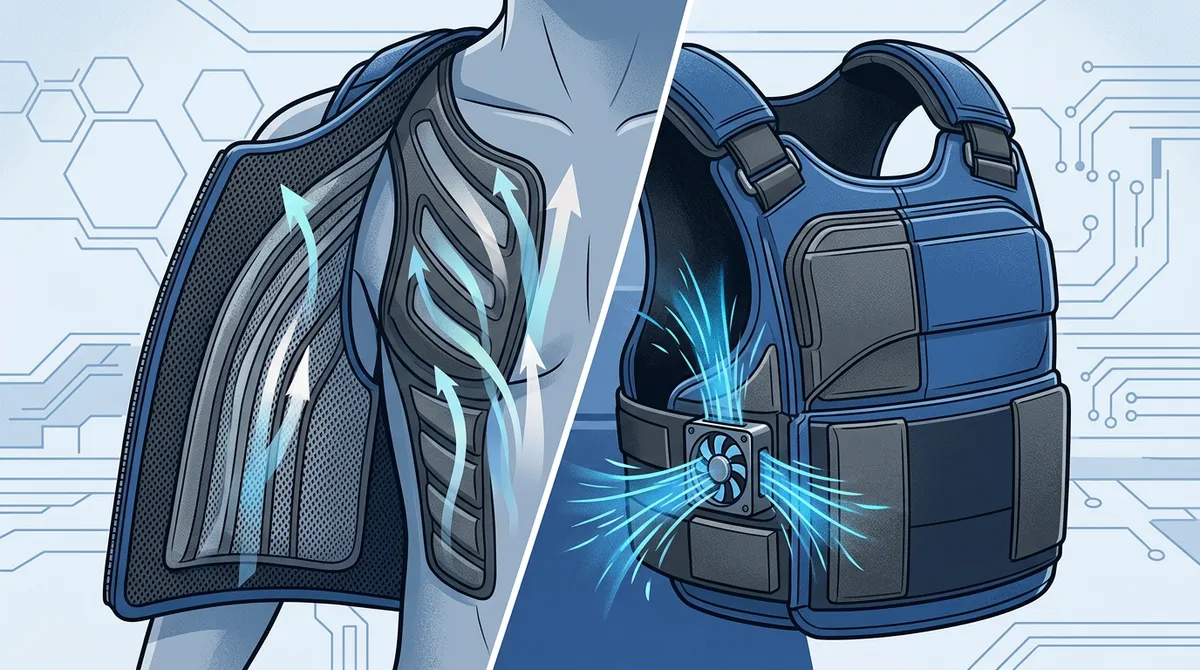
Tactical vest ventilation refers to any system designed to create airflow between your body and your body armor. Ballistic materials are not breathable by nature. They trap heat and moisture against your skin, which leads to overheating, fatigue, and discomfort during long shifts or intense operations.
Ventilation systems work by creating a physical separation between your body and the armor. That gap — even just half an inch to three-quarters of an inch — allows cool air to enter and hot, moist air to escape. This is the basic principle behind all tactical vest ventilation, whether passive or active. You can learn more about the science behind it in this guide on what body armor ventilation is and why you need one.
According to Body Armor Standards from the National Institute of Justice, body armor is rigorously tested for ballistic protection — but heat management is left entirely to the wearer. That’s why choosing the right ventilation system matters so much.
Passive Tactical Vest Ventilation Explained
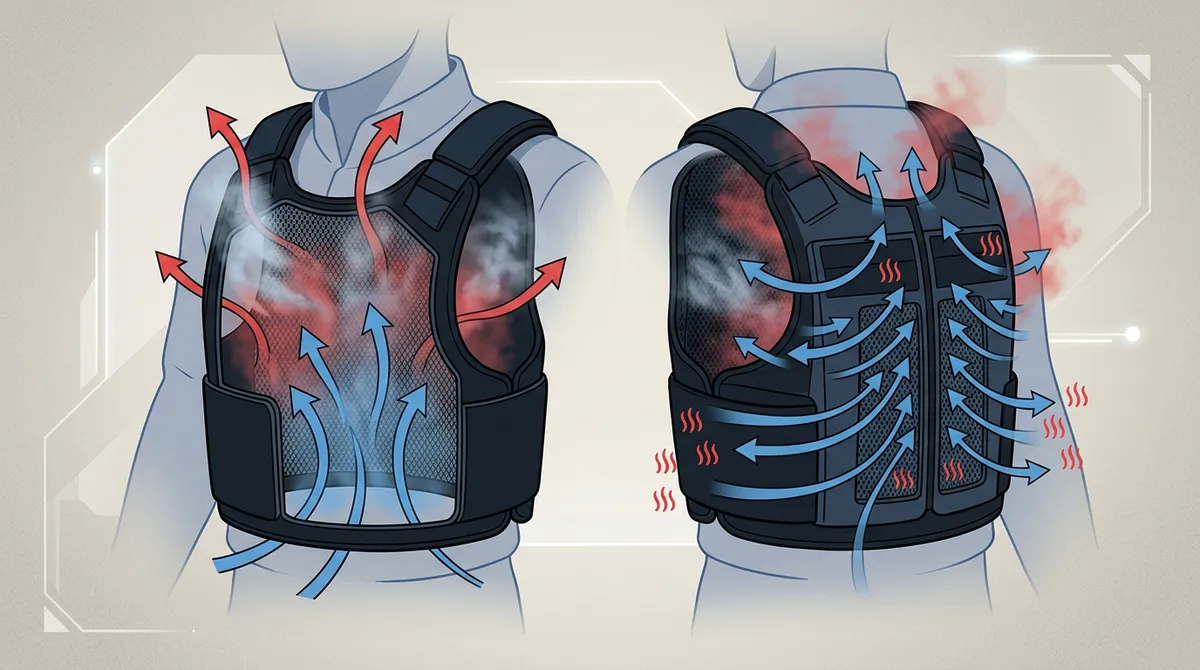
Passive ventilation systems use structure, not power, to move air. They typically involve panels, frames, or padded inserts made from materials like honeycomb mesh, corrugated thermoplastic, or 3D spacing fabrics. These materials hold the armor away from your body and let air circulate naturally as you move.
Some well-known passive products include EVAP panels, TacVent systems, and Maxx-Dri Vests. TacVent, for example, creates a half-inch separation between ballistic armor and the body. Studies show it lowers under-armor body surface temperatures by at least 14.5°F — that’s a significant drop during a hot summer patrol. The Maxx-Dri Vest has been used by over 350,000 law enforcement officers, military personnel, and security professionals since 2014.
Passive systems are popular for several reasons:
- No batteries or power source required
- Lightweight and low-profile under armor
- Compatible with plate carriers and concealable vests via Velcro attachment
- Made from hypoallergenic, durable materials like HDPE or engineering-grade thermoplastic elastomer
- Usable in both hot and cold weather to prevent sweat freeze
Many passive systems also reduce blunt force trauma by adding a cushioning layer between your body and the armor. For long shifts with minimal movement, they’re a solid entry-level solution. Check out more body armor cooling solutions for officers in 2026 to see how passive systems fit into a broader cooling strategy.
Active Tactical Vest Ventilation Explained
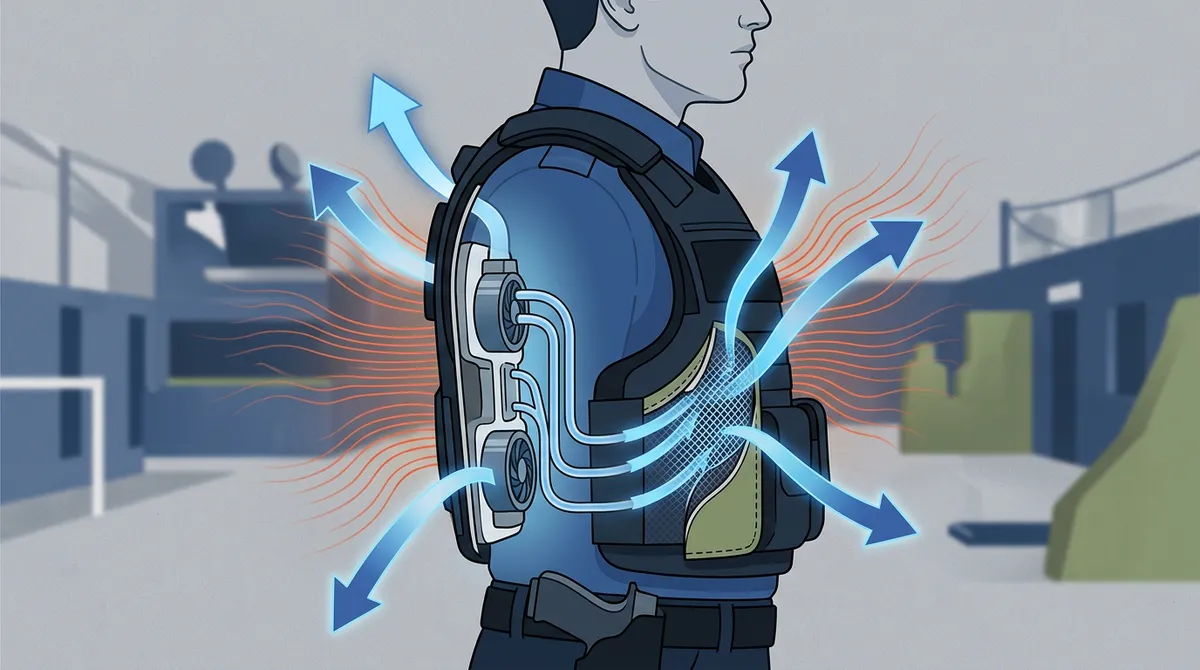
Active ventilation systems use powered fans or air-circulation technology to push fresh air under your armor. Instead of relying on natural airflow from body movement, active systems deliver consistent, on-demand cooling regardless of how much you’re moving.
This is where products like Blufano come in. Blufano is an advanced, self-contained active airflow unit designed specifically for body armor wearers. It features a patented air-redirect spout that slides under any style of body armor. It runs for 8 to 32 hours depending on your fan setting. It even includes a built-in 10,000mAh power bank that can charge your USB devices — plus a forward-facing light for low-light situations.
Active systems shine in these situations:
- High-heat environments where passive airflow isn’t enough
- Extended duty shifts of 10 to 12+ hours
- Low-movement scenarios like vehicle patrol or surveillance
- Tactical operations requiring sustained peak performance
The OSHA Heat Stress Guide makes it clear that heat exhaustion is a serious occupational hazard for workers in heavy protective gear. Active ventilation addresses this risk directly by delivering continuous airflow even when you’re not moving around.
Side-by-Side Comparison: Passive vs. Active
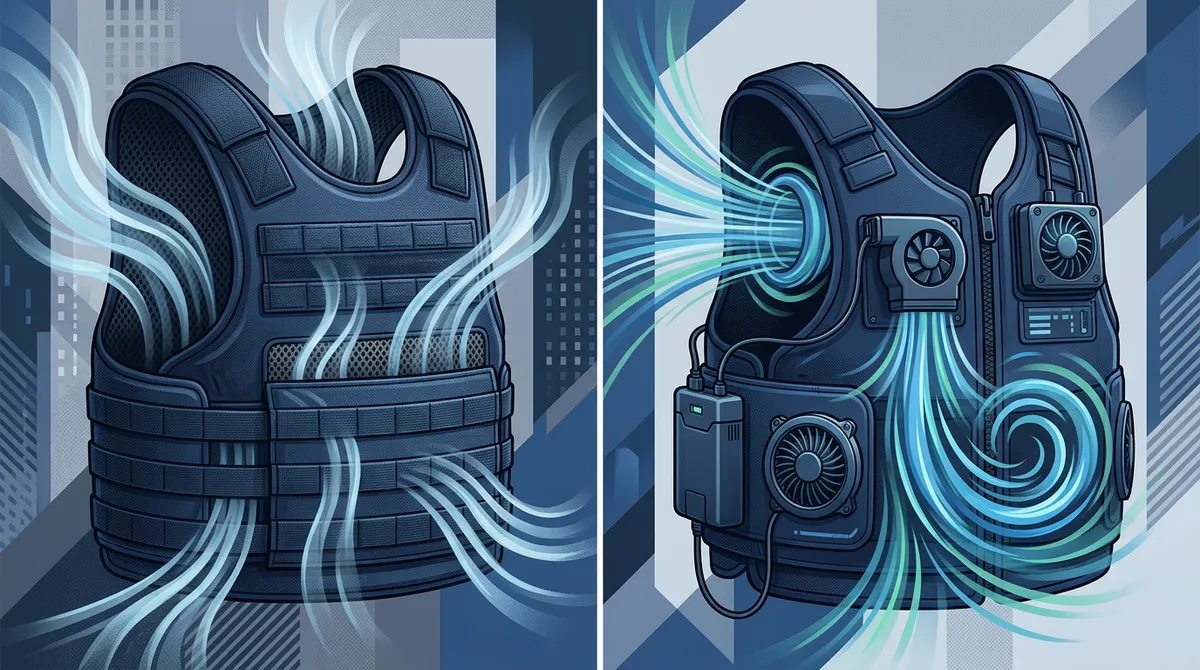
Let’s put both systems side by side so you can see the differences at a glance. This table covers the most important factors for tactical professionals choosing a vest ventilation solution.
| Feature | Passive Ventilation | Active Ventilation |
|---|---|---|
| Power Source | None (no batteries needed) | Built-in battery or power bank |
| Airflow Consistency | Depends on body movement | Constant, adjustable fan-driven flow |
| Weight | Very lightweight | Slightly heavier due to hardware |
| Profile Under Armor | Low and flat | Small unit, mostly discreet |
| Battery Life | N/A | 8 to 32 hours per charge |
| Best For | Active movement, all-day patrol | Low-movement or extreme heat situations |
| Cold Weather Use | Yes, prevents sweat freeze | Adjustable for various conditions |
| Maintenance | Minimal (rinse and dry) | Charge battery regularly |
As you can see, neither system is universally “better.” The right choice really depends on your specific role, environment, and how you spend your shift. For more help deciding, the guide on how to choose the right body armor ventilation vest in 2026 walks you through the decision step by step.
How Each System Handles Heat in Real Conditions
Theory is great, but real-world performance is what matters most. Here’s how each system typically performs across different duty scenarios.
| Scenario | Passive System Performance | Active System Performance |
|---|---|---|
| Foot Patrol in Summer Heat | Good — movement drives airflow | Excellent — fan adds extra cooling |
| Sitting in a Patrol Vehicle | Limited — minimal natural airflow | Excellent — fan works independently of movement |
| SWAT / High-Intensity Operations | Good for quick bursts of movement | Excellent — sustained cooling under stress |
| Cold Weather Patrol | Good — prevents moisture buildup | Good — adjustable settings manage warmth |
| 12+ Hour Shifts | Good baseline comfort | Superior — consistent cooling all shift long |
Officers who spend a lot of time in vehicles often find passive systems less effective because there’s not enough movement to drive natural airflow. This is where an active system like Blufano really earns its place. Users have reported faster cooling when combined with a vehicle’s AC, reduced sweat, and better focus during long, hot days on duty.
The BluHalo Approach: Combining Both Worlds
What if you didn’t have to choose just one? BluHalo takes a clever approach by bridging the gap between passive and active ventilation. The BluHalo vest was created by a Chicago police officer who got tired of overheating on the job. It’s a lightweight ventilation vest worn under body armor that weighs under 7 ounces and uses an inflate-on-demand system.
When inflated, the BluHalo lifts your armor up to 1.5 inches off your body to create a cooling air gap. When you don’t need it, you simply deflate it with a button press and it lies completely flat. It attaches to your vest with Velcro and is built from double-layer high-strength polyethylene. It’s priced at just $60, making it one of the most accessible tactical vest ventilation solutions on the market.
You can also bundle BluHalo with Blufano together at a discount to get the best of both systems — a structural air gap from BluHalo plus continuous fan-driven airflow from Blufano. That combination delivers next-level comfort for professionals who need maximum cooling during demanding shifts. Browse the full lineup at the BluHalo shop.
How to Install a Retrofit Ventilation Kit: Step-by-Step
Most passive ventilation panels and active systems are designed as retrofit kits — meaning you don’t need to buy new armor. Here’s how to install a typical retrofit panel on an existing plate carrier or concealable vest:
- Clean your vest surface. Wipe down the interior surface of your body armor where the ventilation panel will attach. Make sure it’s dry and free of dust or debris.
- Position the panel. Hold the ventilation panel against the interior of your vest to check sizing and fit. Many panels can be custom-cut to match your vest’s shape.
- Attach with Velcro. Press the Velcro side of the panel firmly against the corresponding surface on your vest. Most panels use hook-and-loop Velcro for a secure, removable fit.
- Test the fit. Put on your vest and check that the panel creates a noticeable gap between the panel and your body. You should feel air moving when you breathe or walk.
- Adjust as needed. If the panel shifts or feels uneven, reposition it. Some systems offer modular sections you can rearrange for the best fit.
For active systems like Blufano, installation is even simpler — just slide the air-redirect spout under your body armor and secure it with the optional strap. You can learn more tips for staying cool in the guide on how to stay cool under body armor with smart ventilation.
Key Benefits at a Glance
To wrap up the comparison, here’s a quick summary table showing the top benefits of each ventilation approach for tactical professionals.
| Benefit | Passive Systems | Active Systems (e.g., Blufano) |
|---|---|---|
| Reduces core temperature | ✓ (up to 14.5°F reduction) | ✓ (continuous cooling) |
| Reduces sweat buildup | ✓ | ✓✓ (more effective) |
| Works without movement | ✗ | ✓ |
| Zero maintenance required | ✓ | ✗ (requires charging) |
| Budget-friendly entry point | ✓ | Mid-range investment |
| Reduces blunt force trauma | ✓ | Partial (depends on design) |
| Cold weather compatible | ✓ | ✓ |
No matter which path you choose, any tactical vest ventilation system is dramatically better than wearing unvented body armor with nothing underneath. Even a modest improvement in airflow can reduce fatigue, improve focus, and help you perform better when it matters most. Read why body armor ventilation is a game changer for officers to see just how much of a difference it can make.
Which System Is Right for You?
Here’s the honest answer: if you’re highly active and move around a lot during your shift, a quality passive system may give you strong results at a lower cost. If you spend significant time stationary — in a vehicle, at a post, or during surveillance — an active fan-driven system like Blufano is worth the investment.
The smartest move? Use both together. The BluHalo vest paired with Blufano gives you structural separation AND powered airflow. That combo delivers the most complete tactical vest ventilation solution available in 2026. You can also explore optimal cooling for tactical vests for more in-depth advice tailored to law enforcement officers.
Want to know more about preventing heat stress on the job? Check out this useful resource on how to prevent heat stress while wearing body armor for practical tips you can start using today.
Conclusion: Stay Cool, Stay Sharp
Heat under body armor is a real challenge — but it’s one you don’t have to just endure. Whether you go passive, active, or combine both approaches, the right tactical vest ventilation system can genuinely transform how you feel and perform on duty. Cooler gear means clearer thinking, less fatigue, and better focus when your team needs you most. Real reviews from real officers back this up — head over to the BluHalo reviews page to see what your fellow professionals are saying.
Ready to take the next step toward a cooler, more comfortable shift? Reach out to the BluHalo team and get personalized advice on the best ventilation solution for your specific needs. You’ve earned the right to stay comfortable while protecting others — let’s make that happen.
FAQs
Q: What is the best tactical vest ventilation system for law enforcement officers?
A: The best system really depends on your daily routine! If you’re active and moving around a lot, a passive honeycomb or spacing panel works great. If you spend time in a vehicle or stationary post, an active fan system like Blufano delivers consistent cooling. Many officers love combining BluHalo with Blufano for maximum comfort during long, hot shifts.
Q: Can tactical vest ventilation panels be used in cold weather?
A: Absolutely — and this surprises a lot of people! Ventilation panels don’t just keep you cool in summer; they also prevent sweat from building up and freezing against your skin in cold weather. That layer of airflow actually helps regulate body temperature year-round, keeping you more comfortable no matter the season.
Q: Do ventilation panels for tactical vests reduce blunt force trauma?
A: Yes, many passive ventilation panels add a helpful cushioning layer between your body and your armor, which can reduce the impact of blunt force trauma. Materials like engineering-grade thermoplastic elastomer and honeycomb structures absorb some of that shock while also keeping you cooler — it’s a great dual benefit!
Q: How long does an active tactical vest ventilation system run on one charge?
A: A great example is Blufano, which runs between 8 and 32 hours on a single charge depending on your fan speed setting. That comfortably covers a standard 8- to 12-hour duty shift without needing a recharge. Plus, its built-in 10,000mAh power bank can even charge your other USB devices while it keeps you cool!
Q: Are tactical vest ventilation kits compatible with my existing plate carrier?
A: Great news — most ventilation systems are designed as retrofit kits that attach to your existing body armor using Velcro. You don’t need to buy new gear! Products like TacVent, EVAP panels, and BluHalo are all designed to work with standard plate carriers and concealable vests, making it super easy to upgrade your comfort without replacing your armor.