Key Takeaways
-
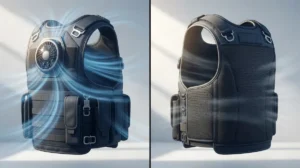
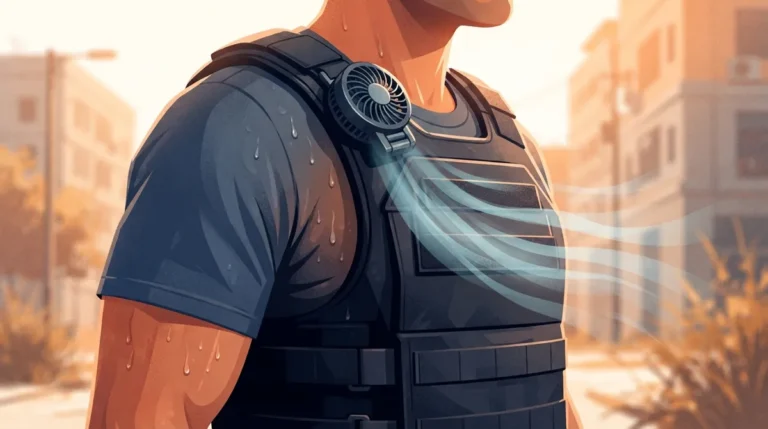
Body armor traps heat because its snug coverage of the torso blocks the moving air needed for sweat to evaporate, the body's main cooling method.
-
Weight alone doesn't explain heat buildup; fit, dense materials, cotton underlayers, activity level, humidity, and acclimatization all combine to raise heat strain.
-
A simple 1.27 cm spacer under Class II soft armor did not significantly reduce heat strain in one small study, so effective airflow depends on design, not just a gap.
-
Passive ventilation relies on your movement for airflow, while active ventilation uses powered fans to keep air moving even when you are standing still in a hot vehicle.
-
Ventilation vests and fans are comfort aids, not replacements for certified armor; never cut or modify ballistic panels or carriers, and follow maker and agency instructions.
-
Pair ventilation with habits like drinking water early, wearing moisture-wicking base layers instead of cotton, taking shade breaks, and cooling your vehicle before suiting up.
If you wear body armor for a living, you already know the feeling. About an hour into your shift, your shirt is soaked, your back feels like a heating pad, and you are wondering if the vest is secretly plotting against you. You are not imagining it. So, why does body armor trap heat, and what can you do about it?
The short answer is simple. Armor covers a big part of your torso, and it blocks the air your body needs to cool off. In this guide, we will compare two worlds: the trapped-heat world of standard armor and the airflow world of ventilated setups. We will keep it friendly and easy, and we will give you real facts you can use on your next shift.
Whether you patrol a city, guard a site, deploy overseas, or run into emergencies, this article is for you. Let’s break it down together.
Why Does Body Armor Trap Heat? The Simple Science
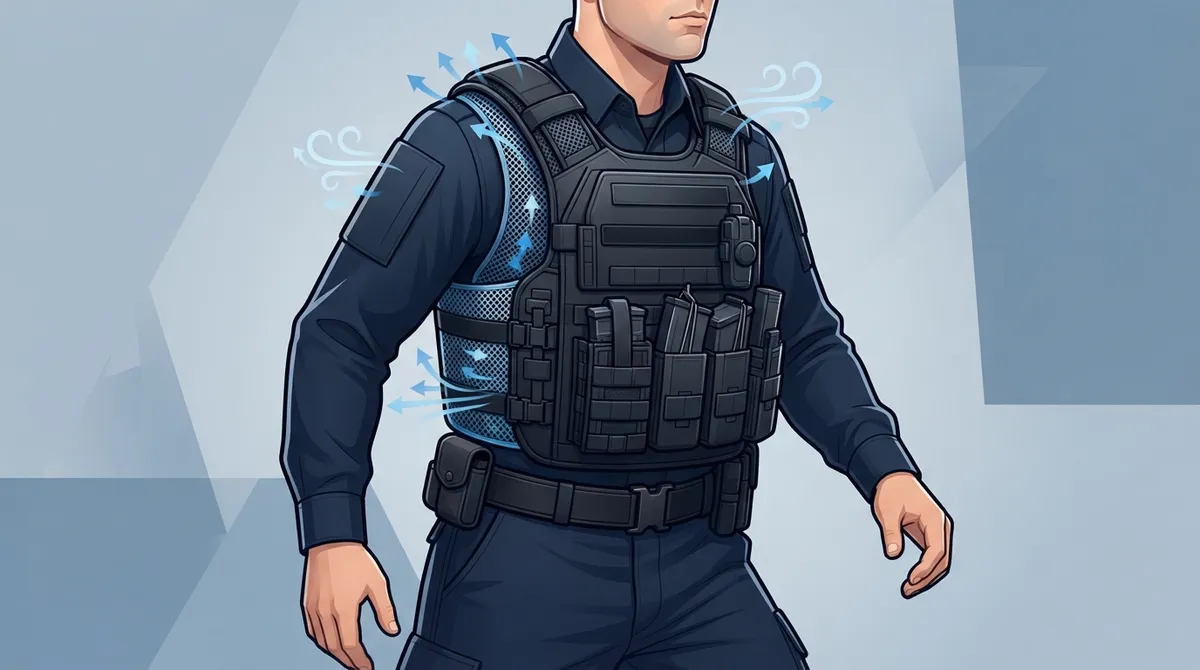
Your body cools itself mostly by sweating. Sweat only cools you when it evaporates. That needs moving air. Body armor sits snug against your torso, and it stops that air from moving. So sweat stays on your skin, and heat stays with it.
Here is what is going on under your vest:
- Close-fitting panels and carrier: They cover your chest, back, and sides, which are big heat-release zones.
- Limited air movement: With little airflow, sweat cannot evaporate well, so cooling slows down.
- A warm, humid microclimate: Heat and moisture build up between your body, your shirt, and the vest.
- Layers add up: Undershirts, uniforms, and gear belts can all hold in more warmth.
The NIJ body armor resources note that armor can be very hot and may become a health hazard under extreme conditions. That is a good reminder to take heat seriously.
It Is Not Just About Weight
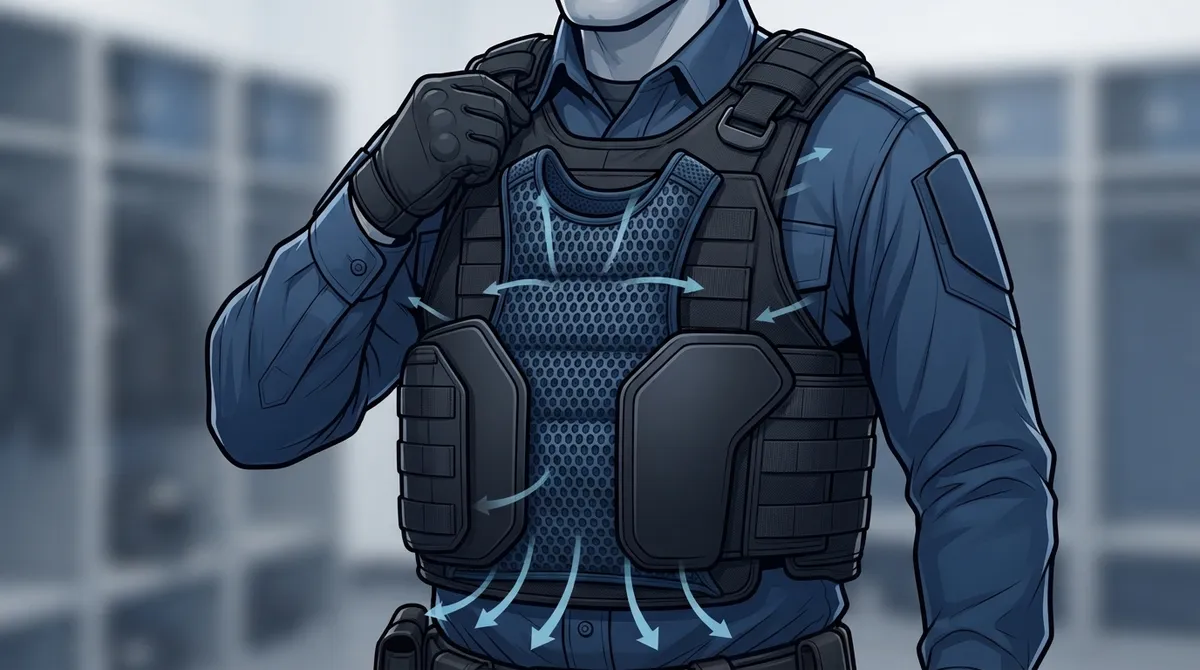
Many people blame weight. Heavy gear does add strain, but weight alone does not explain heat retention. Several things work together:
- Fit and coverage: A snug fit leaves little room for air.
- Materials: Dense panels and carriers do not breathe much.
- Layers underneath: Cotton shirts hold sweat against your skin.
- Activity level: Running, climbing, and tactical work create more heat.
- Weather: Hot, humid days make evaporation even harder.
- Acclimatization: A body not used to heat struggles more.
That is why two people in the same vest can feel very different. Your job, your climate, and your gear setup all matter. For a deeper look at the numbers, check out how hot body armor really gets.
The Real Cost of Trapped Heat
Feeling hot is not just annoying. It can affect how well you work. In a 2015 study summarized in a systematic review, nine participants completed a 2.5-hour simulated patrol in hot, humid conditions wearing armor. The loaded condition raised perceived effort and heart strain. In that study, no one passed the core-temperature limit for heat illness, but the added strain was clear.
The OSHA heat exposure guidance and NIOSH both point out that protective clothing and equipment can raise the risk of heat-related illness. Smart controls include hydration, rest breaks, acclimatization, and cooling down in a shaded or cool spot.
Heat can also cloud your focus. If you want to dig into that side of the story, see how heat affects police reaction time.
Trapped Heat vs. Airflow: A Side-by-Side Look
Here is a simple comparison of a standard armor setup and a ventilated one.
| Factor | Standard Armor Setup | Ventilated Armor Setup |
|---|---|---|
| Air movement against the torso | Very limited | Improved, depending on design |
| Sweat evaporation | Slow | Faster with airflow |
| Microclimate under the vest | Warm and humid | Less trapped heat and moisture |
| Comfort on long shifts | Often drops over time | More steady |
| Impact on armor panels | None | None, when used as directed |
Notice that ventilation does not replace good heat habits. It works alongside them.
Do Simple Spacers Actually Help?
Here is a fair and honest note. Not every gap solves the problem. In one small controlled study of seven volunteers, 1.27 cm standoffs under Class II soft armor did not significantly improve measured heat strain. The test ran 120 minutes at 32°C and 80% humidity.
That does not mean airflow solutions are useless. It means a basic gap alone may not be enough, especially in very humid air. Design matters, and so does how air actually moves. Another study on military protective clothing found lower core temperature and heart rate with vents open than closed at 90 minutes. That setup was different from regular body armor, so we should not stretch the result too far. Still, it points to one idea: moving air helps.
For more on how air gaps and moving air compare, read how air circulation under a bulletproof vest works.
Passive vs. Active Ventilation: What Is the Difference?
Ventilation vests fall into two main groups. Knowing the difference helps you pick the right tool.
Passive Ventilation
Passive designs create space or channels between you and your armor. Air moves through them from your motion and natural convection. They are simple and need no power. But they rely on you moving around, and results vary.
Active Ventilation
Active designs use powered airflow, like a small fan, to keep air moving even when you are standing still or sitting in a car. This can help when you are stuck in one spot on a hot day.
Want a full breakdown? See passive vs. active tactical vest ventilation.
How BluHalo Fights Trapped Heat
BluHalo was created by a Chicago police officer who got tired of overheating and heavy sweating in his vest. It is a lightweight ventilation vest that goes under your armor. It weighs under 7 ounces and lies flat and low-profile when deflated.
When you need relief, you inflate it with a small pump. It can lift your vest up to about 1.5 inches off your body, creating a cooling air gap. Press a button, and it deflates again. That is cooling on demand.
Here is why many officers like it:
- Attaches with Velcro to a clean vest, so setup is quick.
- Built from double-layer, high-tensile polyethylene for durability.
- Helps reduce moisture and release trapped heat during long, hot shifts.
- Easy to use: inflate when hot, deflate when you do not need it.
You can read real feedback on the reviews page, or see how it works in this BluHalo how-to guide.
How Blufano Adds Active Airflow
If you want moving air that keeps working, Blufano is built for that. It is a self-contained fan system with a patented air-redirect spout that slides under any style of body armor. You can secure it with an optional strap.
Key features include:
- Adjustable fan-driven airflow for about 8 to 32 hours, depending on the setting
- A built-in 10,000mAh power bank that powers the fan and can charge USB devices
- A forward-facing light for hands-free help in low light
- A simple control knob for easy use
Many users say they feel cooler faster and sweat less, and they stay more focused on hot days. You can explore the Blufano page to learn more.
BluHalo vs. Blufano: Which One Fits You?
| Feature | BluHalo | Blufano |
|---|---|---|
| Type | Inflatable ventilation vest | Active fan system |
| Main benefit | Air gap under armor | Constant moving air |
| Power needed | Manual pump | Built-in battery |
| Extras | Cooling on demand, deflates flat | Power bank and light |
| Best for | Low-profile, quiet comfort | Ongoing airflow during long shifts |
The best part? They work great together. You can buy either one alone or bundle them at a discount for top cooling performance. Compare them closely in BluFano vs BluHalo, then visit the shop to see current options.
Safety First: Ventilation Is a Helper, Not a Cure-All
A ventilation vest adds comfort and thermal management. It is not a substitute for certified armor or for workplace heat rules. Keep these points in mind:
- NIJ guidance says armor should be snug but not too tight, and it should fit correctly.
- Never change or cut your ballistic panels or carrier in ways that could affect protection.
- Follow your armor maker’s directions, the ventilation maker’s directions, and your agency policy.
- Keep up with hydration, rest breaks, and cooling recovery time.
Curious about those DIY ideas you see online? Read why cutting holes in body armor is a bad idea.
7 Everyday Habits to Beat the Heat
Gear helps, but habits help too. Try these on your next shift:
- Drink water early and often, not just when you feel thirsty.
- Wear a moisture-wicking base layer instead of cotton.
- Cool your vehicle before you suit up, and use the AC during breaks.
- Take shade breaks whenever the job allows.
- Build up heat tolerance slowly if you are new to hot climates.
- Check your armor fit so it stays snug but not too tight.
- Add airflow with a ventilation vest or fan system.
Want more ideas? Browse how to prevent heat stress while wearing body armor and 7 ways to stay cool under pressure.
Who Benefits Most From Better Airflow?
Almost anyone who wears armor or heavy gear can gain from improved airflow. Here are a few examples:
- Patrol officers: Long shifts in a hot cruiser or on foot.
- Military personnel: Extended missions in high-heat settings.
- Security professionals: Hours of standing in the sun or a stuffy building.
- Tactical and SWAT teams: High effort, heavy gear, and little downtime.
- Emergency responders: Fast, hot, high-stress calls where heat exhaustion is a real risk.
No matter your role, the goal is the same: stay cool, stay sharp, and stay safe.
Final Thoughts: Trapped Heat or Fresh Air?
So, why does body armor trap heat? Because snug armor blocks airflow, slows sweat evaporation, and builds a warm, humid layer against your body. The good news is you do not have to just put up with it. Smart habits plus a good ventilation tool can make a real difference.
BluHalo gives you an on-demand air gap, and Blufano keeps fresh air moving beneath your armor. Together, they make a strong team against heat. Ready to feel the difference on your next shift? Get in touch with our team and we will help you find the right setup for your gear and your job.
FAQs
Q: Why does body armor get so hot?
A: Body armor sits snug against your torso and covers a large area, so air cannot move freely. That slows sweat evaporation, which is your body’s main way to cool off. The result is a warm, humid layer of trapped heat under your vest.
Q: Can a ventilation vest keep you cooler under body armor?
A: It can help. A ventilation vest like BluHalo creates an air gap, and a fan system like Blufano keeps air moving, so heat and moisture can escape. Results vary by design and weather, so pair it with good heat habits like hydration and rest breaks.
Q: Does a ventilation vest affect body armor protection or fit?
A: A ventilation layer is a comfort accessory and should not replace certified armor or change your ballistic panels. Always follow the armor maker’s and ventilation maker’s instructions and your agency policy. Never cut or modify the panels or carrier.
Q: What is the difference between passive and active ventilation?
A: Passive ventilation uses channels or gaps and relies on your movement and natural airflow. Active ventilation, like a fan system, uses powered airflow so air keeps moving even when you are standing still. Active setups can help most when you are stuck in one hot spot.
Q: Does body armor increase the risk of heat exhaustion or heat stroke?
A: Protective gear can raise the risk of heat-related illness, especially in hot, humid conditions or during hard work. Staying hydrated, taking rest breaks, building heat tolerance, and adding airflow can all help lower that risk.