Key Takeaways
-
Airflow-based ventilation systems (like BluHalo) hide better than frozen packs or water-cooled vests because they deflate flat and don't create visible bulges or require external hoses under clothing.
-
Concealment is a fit and layering feature, not a cooling method itself; effectiveness depends on testing your full outfit (base layer, armor, shirt, and gear together) in a mirror before real shifts.
-
Airflow-based cooling systems last 8-32 hours depending on fan speed, while frozen packs typically provide only 2-3 hours of real cooling before needing re-chilling, making airflow better for long shifts.
-
Pairing a deflatable spacer (BluHalo) that lifts armor 1.5 inches with an active fan unit (Blufano) creates a two-part system: the gap allows air circulation while the fan pushes fresh air through it.
-
Heat stress becomes serious at 80°F heat index and impairs thinking, speed, and safety; cooling vests cut heat build-up by 48-65% in controlled studies but must pair with water, rest, and scheduling.
-
Common setup failures include skipping layer tests, ignoring humidity (which weakens evaporative cooling), using dirty attachment surfaces, and relying solely on cooling without addressing water intake and heat acclimation.
If you wear body armor under a uniform or plain clothes, you know the feeling. Ten minutes into a hot shift, your shirt is damp, your back is soaked, and you are thinking about nothing but the heat. Now add one more rule: nobody should be able to tell you are wearing anything extra. That is the real challenge of concealed vest cooling.
Here is the good news. You can stay cooler without showing a bulky pack, a hose, or a strange bump under your shirt. You just need to pick the right type of cooling and set it up the right way. In this guide, we will walk through what concealed vest cooling really means, which methods hide best, and how to build a setup that works for long shifts. Whether you are a patrol officer, a security guard, a soldier, a SWAT team member, or a first responder, you will find simple steps you can use today.

What Is Concealed Vest Cooling?
Concealed vest cooling means wearing a low-profile cooling or ventilation product under regular clothes, a uniform, or workwear. It is not one single product type. It is a goal: stay cool while staying discreet.
Here is an important point many people miss. Being concealable is a fit and layering feature. It is not a cooling method by itself. How well a setup cools depends on how it moves air or absorbs heat, plus the weather, your workload, and what you wear over it.
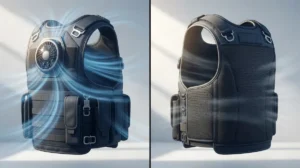
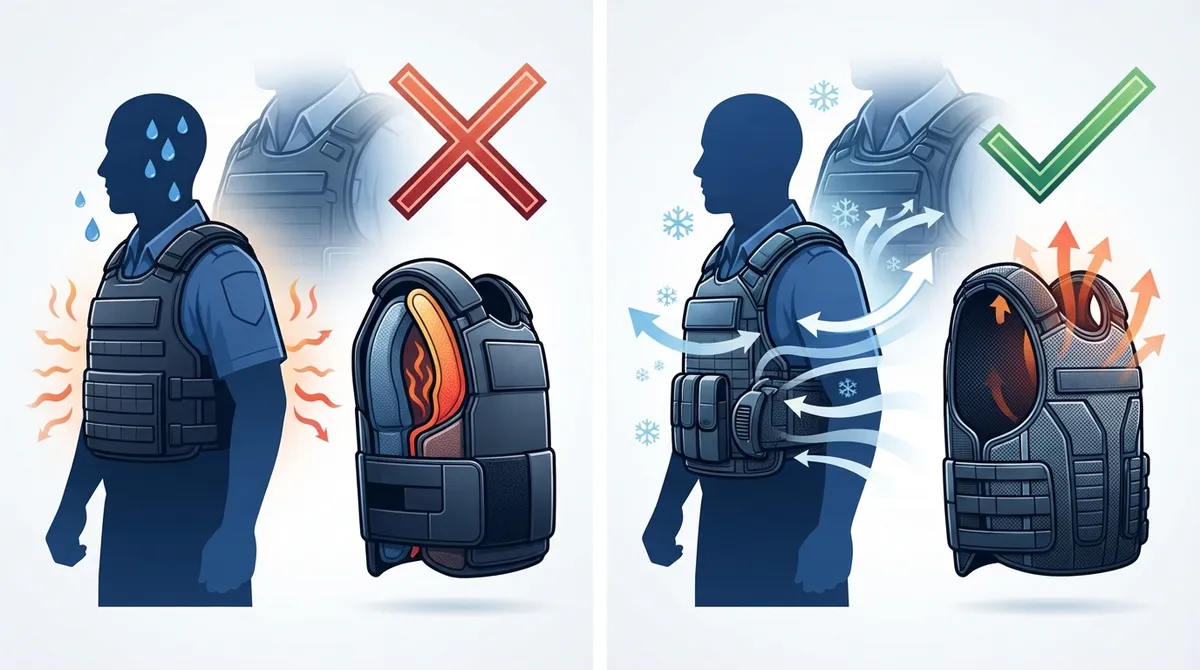
In the ventilation vest world, the main goal is to fix the root problem. Body armor sits flat against your torso. Heat and sweat get trapped. Air cannot move, so sweat cannot evaporate. A good concealed system opens up even a small space so air can flow again.
How Cooling Methods Differ (And Why It Matters for Concealment)
Not every cooling product hides well. Some are bulky. Some leave marks under a shirt. Some only work in dry air. Before you buy, it helps to know the main types.
| Cooling Method | How It Works | Concealment | Main Limits |
|---|---|---|---|
| Ventilation / air-gap spacer | Lifts armor slightly so air can flow and sweat can evaporate | Very good when deflated or flat | Not as strong as powered cooling alone |
| Active fan airflow | Moves fresh air under the vest with a small fan | Good with a low-profile spout | Needs battery power |
| Phase-change or frozen packs | Absorb heat as the pack melts or changes phase | Fair; packs can add bulk | Time-limited; need re-chilling |
| Evaporative vests | Cool as water evaporates from fabric | Fair; can feel wet under clothes | Weak in humid air |
| Water-cooled garments | Circulate cool liquid through tubes | Poor; hoses and equipment show | Tethers you to a cooler or pump |
NIOSH notes that ice-style vests may not stay cool long enough, and water-cooled garments can tie a worker to equipment. That is why many people who need discreet cooling lean toward ventilation and airflow solutions. For a deeper look at this trade-off, read ventilation vs. phase change: which cooling vest wins.
Ventilation Vest vs. Cooling Vest: Know the Difference
These two terms get mixed up a lot. A ventilation vest is built to promote airflow and reduce trapped heat and moisture. A cooling vest may actively remove heat using ice, liquid, or powered air. They are not always the same thing.
Do not assume a simple ventilated design gives you the same cooling power as a powered system. A passive spacer helps a lot, but a fan adds moving air on top of it. If you want to understand this gap, our guide on passive vs. active tactical vest ventilation breaks it down in plain language.
Why Concealment Can Hurt Cooling
Here is the honest part. The more layers you wear over your cooling gear, the harder it can be to cool down. Tight outer shirts can block airflow. Heavy duty belts and covers can press on your setup. Bulky packs can show through clothes and limit how you move.
So when you look at any product, ask one question: does it claim to work with the layers I actually wear? A product tested only in a bare-torso setting may act very differently under a button-up shirt and a vest carrier.
You also need to think about the whole outfit, not just one piece. Your base layer, your armor, your outer shirt, and your gear all work together as one system.
Why Heat Matters More Than You Think
Staying cool is not only about comfort. Heat can slow you down, cloud your thinking, and raise your risk of illness. OSHA’s heat guidance notes that serious heat-related illness and injury become more common when the heat index hits 80°F or higher, especially for workers who are not used to the heat and who do hard work. You can read more in the OSHA Heat Stress Guide.
Research also shows that cooling helps. In one NIOSH-reported study, healthcare workers exercising in hot, humid conditions while wearing PPE had higher body temperatures and heart rates, and lost more body weight, when they did not use cooling vests. That is a clear sign that personal cooling can matter.
Still, a cooling vest is only one tool. NIOSH describes personal cooling systems as extra measures, not replacements for a full heat-illness prevention plan. We will cover that plan below.
How to Build a Concealed Vest Cooling Setup: Step by Step
Ready to put this into action? Follow these steps to build a setup that is cool and discreet.
- Check your gear rules. Make sure any cooling product is allowed with your agency or employer policy and fits with required PPE.
- Pick your cooling method. For discreet daily wear, airflow-based options usually hide best. Frozen packs and water systems tend to show or limit movement.
- Start with a clean, flat fit. Attach any spacer or ventilation device to a clean vest so it lies flat and does not bunch.
- Add active airflow if you need more. A small fan with a low-profile outlet can push fresh air under your armor without much bulk.
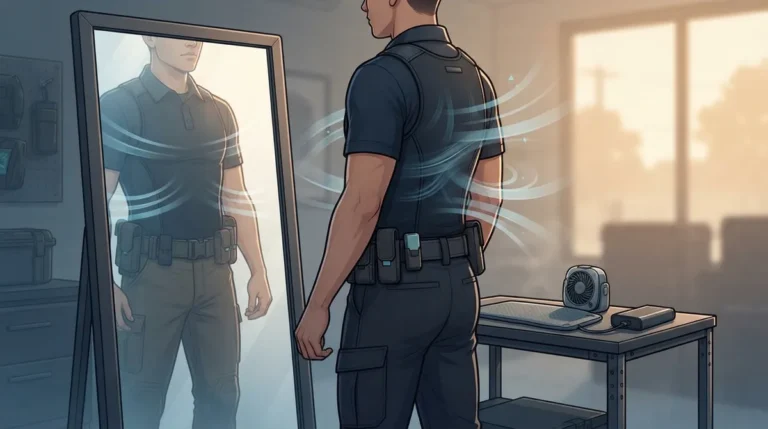
- Test under your real outer layer. Put on your normal shirt, jacket, or uniform. Look in a mirror. Move, bend, sit, and reach.
- Run a trial shift or training day. Check comfort, noise, battery life, and any visible lines before you rely on it.
- Adjust and refine. Change the fan speed, the strap, or the layer order until it feels right.
The Best Concealed Option: BluHalo
For discreet, on-demand cooling, the BluHalo ventilation vest is a top choice. It was created by a Chicago police officer who knew the problem firsthand: overheating, heavy sweating, and constant discomfort in body armor.
BluHalo weighs under 7 ounces and sits flat and unobtrusive when deflated. When you need relief, you inflate it with a small pump, and it can lift your vest up to about 1.5 inches off your body. That gap creates room for air to move. When you are done, you press a button to deflate it, and it lies flat again. That “cooling on demand” idea is what makes it so easy to hide.
It attaches to a clean vest with Velcro and is built from double-layer, high-strength, high-tensile polyethylene for durability. Officers have shared that it makes long, hot shifts, like 12 hours in 95-degree weather, much more bearable. You can see more about it on the BluHalo page, or learn how to get the most from it in how to use the BluHalo ventilation vest for maximum comfort.
Add Active Airflow With Blufano
Want even more cooling without adding bulk you can see? Pair BluHalo with Blufano. Blufano is a self-contained, active airflow unit with a patented air-redirect spout. It slides under any style of body armor and can be held in place with an optional strap.
Here is what makes Blufano a strong match for concealed use:
- Adjustable fan speed: Run it for roughly 8 to 32 hours depending on the setting.
- Built-in 10,000mAh power bank: It powers the fan and can charge USB devices too.
- Forward-facing light: Handy hands-free light in low-light moments.
- Simple control knob: Easy to use, even with gloves.
- Duty-ready build: Made to handle daily wear.
Together, the two products work as a team. BluHalo creates the air gap, and Blufano moves fresh air through it. Many users also report faster cooling and less sweat, even better focus on hot days. Learn how they compare in BluFano vs BluHalo: which vest cooling system is better, or see the Blufano page for details. You can also grab both in a bundle from the shop at a discount.
Which Setup Fits Your Job?
Different jobs have different needs. Here is a quick guide to help you choose.
- Patrol officers: Long shifts in a car and on foot. BluHalo plus a small fan keeps you cool and still looks professional. See why law enforcement officers need a cooling vest.
- Security professionals: You often wear a plain shirt or jacket over armor. A flat, deflatable spacer keeps the outline clean.
- Military personnel: Heat and long missions call for steady airflow. Active fan systems help in extended wear.
- SWAT and tactical teams: Heavy gear and hard work mean you need strong airflow that does not slow you down.
- Emergency responders: You deal with extreme heat and PPE. Always check that anything you add fits with required protective gear.
For officers who want to compare more choices, the guide on body armor cooling solutions for officers in 2026 is a helpful next read.
How Long Will Cooling Last?
This depends on the method. A NIOSH-cited assessment found that cooling vests could give some cooling for up to four hours in set conditions, but about two to three hours of real cooling was more typical. In an extreme case of 51.7°C (125.1°F) and 25% humidity, the benefit was negligible.
In another controlled study of five male volunteers, heat-storage-rate dropped by about 48% with a frozen-polymer vest, 56% with an air-cooled vest, and 65% with a water-cooled vest, compared with no cooling. Those results came from specific lab conditions, so do not expect the same numbers for every product or workplace. Still, they show that moving air or liquid can cut heat build-up in a real way.
Pack-based cooling fades over time. Evaporative cooling struggles in humid air. Airflow-based systems keep working as long as you have power or can re-inflate. That is a big reason they suit all-day, concealed use.
Common Mistakes to Avoid
Even a great product can fall short if you set it up wrong. Watch out for these slip-ups:
- Skipping the layer test. Always try your full outfit before a real shift.
- Ignoring humidity. If the air is already damp, evaporative gear may not help much.
- Using a dirty vest. Attachments stick better and last longer on a clean surface.
- Relying on cooling alone. No vest replaces water, rest, and smart planning.
- Forgetting PPE rules. Added layers can change fit and mobility.
For more help here, check out 7 mistakes to avoid when choosing a cooling vest under body armor.
Pair Your Vest With a Real Heat Plan
A cooling vest works best as part of a bigger plan. If you lead a team or run a department, build these habits into daily work:
- Set work and rest schedules that fit the heat.
- Make water easy to reach, and remind people to drink often.
- Give new or returning workers time to get used to the heat.
- Watch the weather and the heat index during shifts.
- Teach everyone the signs of heat illness, like dizziness, nausea, and confusion.
You can read more about staying safe in how to prevent heat stress while wearing body armor. For standards on the armor itself, the Body Armor Standards page from the National Institute of Justice is a trusted resource. And if you ever need gear for a backyard cool-down after a long shift, our friends at Panther Pools can help you build a spot to relax.
Final Thoughts
Concealed vest cooling is all about balance. You want real cooling, but you also want a clean, professional look and easy movement. The best path for most body armor wearers is a low-profile, airflow-based system that you can turn on when you need it and tuck away when you do not.
BluHalo and Blufano make that possible. One lifts your vest to open up an air gap. The other pushes fresh air through it. Together they cut trapped heat and sweat, so you can stay sharp from the first minute to the last. Ready to feel the difference? Get in touch with our team and we will help you pick the right setup for your gear, your job, and your climate.
FAQs
Q: Can you wear a cooling vest under regular clothes or a uniform?
A: Yes, many people do, but it depends on the type. Low-profile airflow options like a deflatable spacer and a slim fan hide best, while frozen packs and water-cooled systems can show through clothing. Always test your full outfit in a mirror before a real shift.
Q: What is the difference between a ventilation vest and a cooling vest?
A: A ventilation vest is built to boost airflow and release trapped heat and moisture. A cooling vest may actively pull heat away using ice, liquid, or powered air. Pairing a ventilation device like BluHalo with a fan like Blufano gives you the best of both.
Q: Do cooling vests work in hot, humid weather?
A: It depends on the method. Evaporative cooling gets weaker in humid air because sweat and water cannot evaporate well. Airflow-based systems still help by moving air and lifting your vest off your body, so they are a smart pick when it is muggy.
Q: How long does a cooling vest stay effective?
A: Frozen or phase-change packs usually give about two to three hours of real cooling before they need re-chilling. Powered airflow systems like Blufano can run roughly 8 to 32 hours depending on the fan setting, which makes them better for long shifts.
Q: Can a cooling vest replace a heat illness prevention plan?
A: No. NIOSH treats personal cooling as an extra tool, not a replacement. You should still use work and rest breaks, drink water, allow time to adjust to the heat, and watch the weather alongside your cooling gear.