Key Takeaways
-
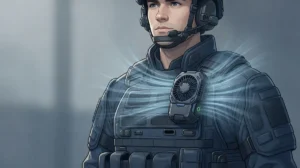
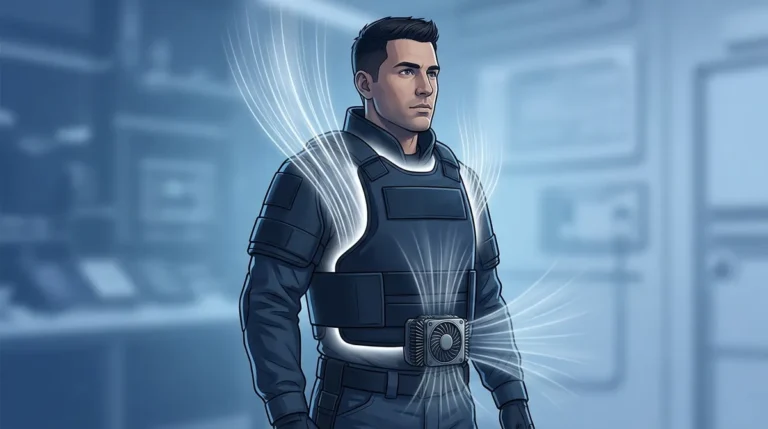
A cooling fan system actively pushes air under body armor to prevent heat and moisture buildup, improving focus and physical performance during long shifts by breaking the heat seal between your body and vest.
-
Look for fan systems with at least 8 hours of battery life, adjustable airflow settings, secure attachment, and low profile design to ensure reliable all-day cooling without compromising gear access or movement.
-
Combining a cooling fan system with a purpose-built ventilation vest (like BluHalo) creates both active airflow and physical separation under armor, delivering superior cooling results compared to either solution alone.
-
Heat stress under body armor impairs judgment and reaction time—a serious safety risk for law enforcement, military, and tactical professionals—making active cooling systems essential, not just comfort upgrades.
-
Pair your cooling fan system with moisture-wicking undershirts, pre-cooling sessions, and regular fan maintenance to maximize effectiveness and ensure consistent performance throughout your shift.
-
Always choose cooling systems specifically engineered for body armor use to ensure compatibility with your existing gear and maintain compliance with NIJ Body Armor Standards without compromising protective integrity.
If you wear body armor every day, you know the struggle. Heat builds up fast. Sweat soaks through your clothes. And after a few hours, staying focused becomes a real challenge. A good cooling fan system can change all of that. It keeps air moving under your vest so heat and moisture don’t get trapped against your skin.
In 2026, more officers, soldiers, and security professionals are turning to fan-powered ventilation solutions. And honestly, it makes total sense. When your body stays cooler, you think more clearly, move more freely, and finish your shift feeling a lot better. This guide will walk you through everything you need to know to pick the right system for your needs.

Why Heat Under Body Armor Is a Serious Problem
Body armor is designed to protect you, but it comes with a big downside: it traps heat. The vest sits tight against your torso, blocking natural airflow. Your body sweats to cool down, but the sweat has nowhere to go. This leads to discomfort, chafing, rashes, and even heat exhaustion on hot days.
According to the OSHA Heat Stress Guide, heat exposure is a serious occupational hazard that can impair judgment and physical performance. For officers and military personnel, that’s a safety risk — not just a comfort issue. Getting this under control isn’t optional. It’s essential.
That’s why more professionals are looking at body armor ventilation solutions that actively move air beneath their gear. A cooling fan system does exactly that — it pushes fresh air into the space between your body and your vest, pulling heat and moisture away in the process.
How a Cooling Fan System Works Under Body Armor
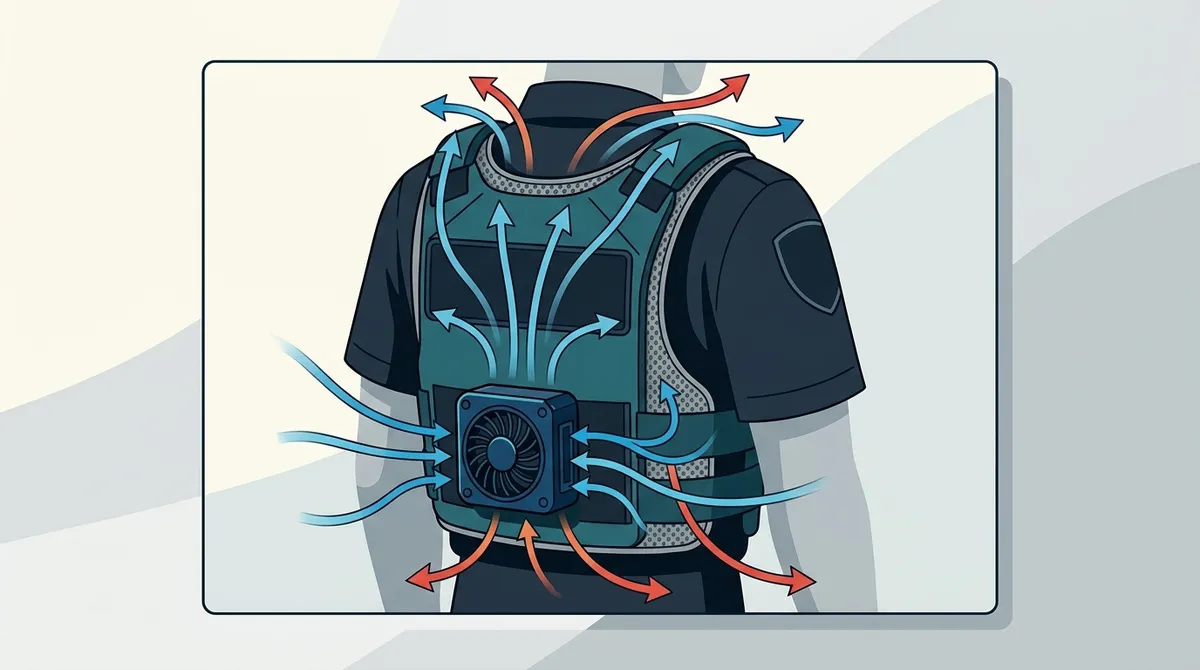
The concept is simple and smart. A fan unit draws in outside air and directs it through channels beneath your vest. This creates a steady flow of cooler air across your torso, which helps your body’s natural cooling process work more efficiently.
Some systems use perforated vest linings or foam channels to spread the airflow evenly. Others use a direct-flow spout or nozzle that slides under the armor panel. Either way, the goal is the same — break the heat seal between your body and your vest.
Here’s a quick look at how fan-based systems compare to other cooling methods:
| Cooling Method | How It Works | Best For | Drawbacks |
|---|---|---|---|
| Cooling Fan System | Active fan pushes air under armor | Long shifts, hot climates | Requires battery power |
| Evaporative Vest | Water evaporates to reduce heat | Dry, hot environments | Needs re-wetting, adds weight |
| Ice Pack Vest | Cold packs absorb body heat | Short duration use | Heavy, melts quickly |
| Ventilation Vest (passive) | Spacer fabric lifts armor off skin | General daily use | No active airflow |
As you can see, a fan-powered system gives you the most consistent relief over a long shift. It’s active, not passive — meaning it keeps working whether you’re standing still or on the move.
Key Features to Look for in a Cooling Fan System
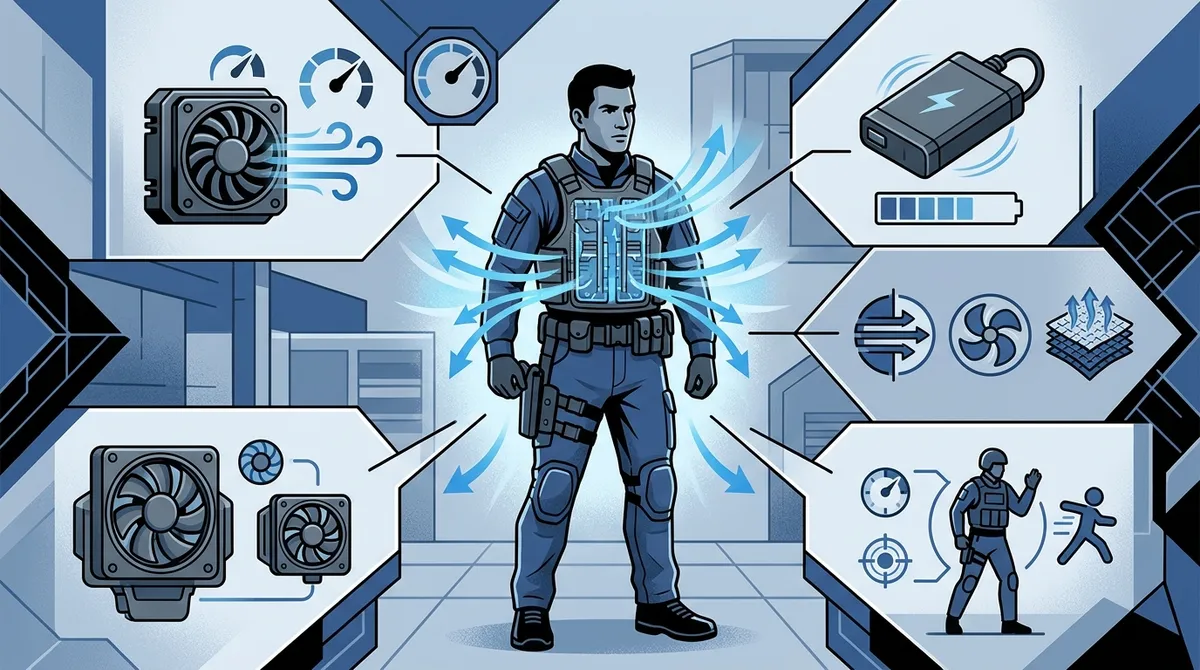
Not all fan systems are created equal. Here’s what to look for when you’re shopping for one.
1. Battery Life and Power
Your shift can run 8, 10, or even 12 hours. You need a system that keeps up. Look for a built-in battery that lasts at least 8 hours on a single charge. Some advanced units, like the Blufano fan system, include a 10,000mAh power bank that runs the fan for 8–32 hours depending on your speed setting. That’s real-world reliability.
2. Adjustable Airflow Settings
Different situations call for different levels of cooling. A simple control knob or button that lets you increase or decrease airflow is a must. You want low settings for moderate days and high settings when the heat is brutal.
3. Compatibility With Your Gear
Your cooling fan system should work with the armor you already own. Look for systems with a universal fit design or a flexible spout that slides under any style of vest. Check out the guide to choosing the right ventilation vest in 2026 for more details on sizing and fit.
4. Secure Attachment
The system shouldn’t shift around when you move. Look for options with straps, Velcro, or clip-in mounting so the unit stays in place during high-activity situations.
5. Weight and Profile
You’re already carrying a lot. Your cooling system should add as little weight and bulk as possible. A low-profile design that sits flat and doesn’t interfere with your draw or movement is ideal.
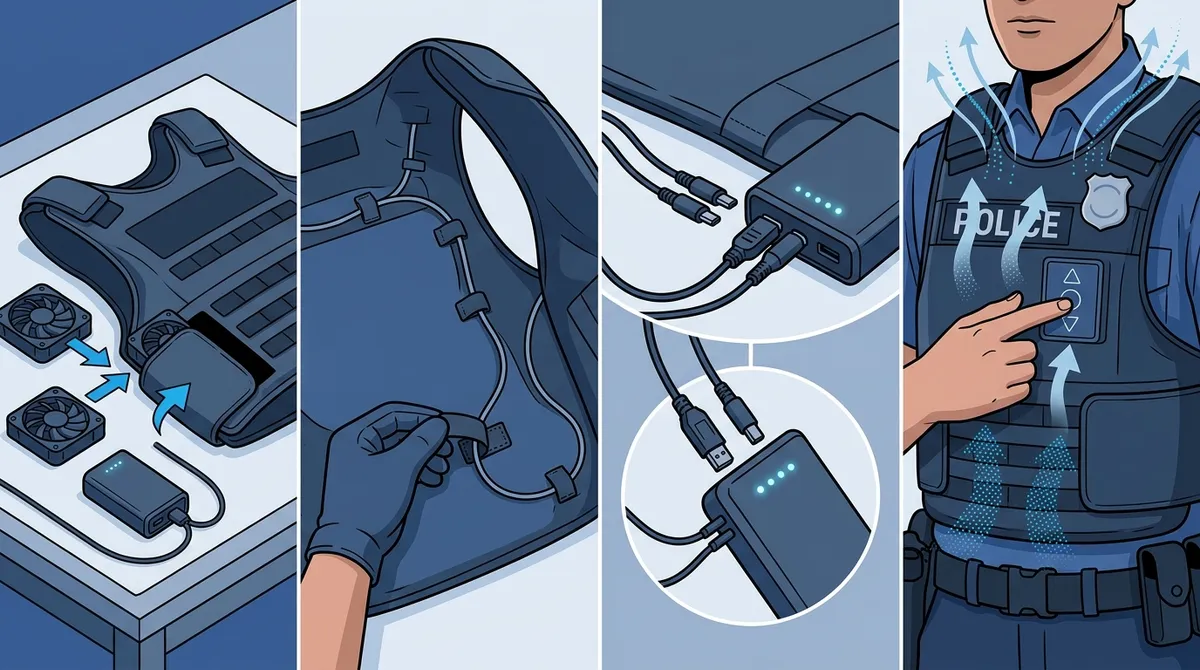
Step-by-Step: How to Set Up Your Cooling Fan System
Getting started is easier than you might think. Follow these steps to get your system running properly on day one.
- Choose your mounting location. Decide whether you want the fan unit at the front, back, or side of your vest. Most officers prefer front placement for easy access.
- Secure the unit to your vest. Use the included strap or Velcro attachment to fix the fan in place. Make sure it won’t shift during movement.
- Route the airflow spout under your armor. Slide the air-redirect nozzle between your undershirt and the vest panel. It should point toward your torso for maximum coverage.
- Charge the battery before your shift. A full charge before you head out ensures you’ll have power all day. Some units also charge your phone via USB — a nice bonus.
- Test the airflow settings. Run through the speed settings before you hit the field. Find the setting that feels best for your current conditions.
- Pair with a ventilation vest for best results. Adding a vest like the BluHalo ventilation vest creates a physical air gap under your armor, amplifying the fan’s effectiveness significantly.
Comparing Top Cooling Systems for Body Armor
Let’s look at some of the top options available in 2026 so you can see how they stack up.
| Product | Type | Battery Life | Key Feature | Best For |
|---|---|---|---|---|
| Blufano (BluHalo) | Active fan system | 8–32 hours | Patented air-redirect spout + 10,000mAh power bank | Law enforcement, daily duty |
| BluHalo Vest | Inflatable ventilation vest | N/A (non-electric) | Lifts armor up to 1.5″ off body | All-day comfort under armor |
| Maxx-Dri Vest | Passive spacer vest | N/A | Polymer spacer creates air channel | Budget-friendly passive option |
| Body Armor Vent (EVAP) | Passive evaporative panel | N/A | Breath-driven vertical air channels | Year-round evaporative cooling |
If you want the most powerful and versatile option, combining the Blufano cooling fan system with the BluHalo vest gives you both active airflow and a physical separation layer. That’s a combination hard to beat. You can learn more about the best vest cooling systems to help make your decision easier.
Who Benefits Most From a Cooling Fan System
While anyone who wears body armor can benefit, certain groups see the biggest difference.
- Police officers on patrol: Long shifts in hot weather make cooling a top priority. A fan system keeps focus sharp and reduces end-of-shift exhaustion.
- Military personnel in deployed environments: High-heat combat zones demand reliable thermal management over extended missions. Active fan systems provide that consistency.
- SWAT and tactical teams: High-intensity operations with heavy gear mean heat builds up fast. A powerful fan system helps maintain peak physical output when it matters most.
- Security professionals: Long hours in various climates require adaptable cooling. Adjustable fan speed settings make this easy to manage.
- Firefighters and hazmat teams: Protective gear in extreme heat is a recipe for heat exhaustion. Any additional cooling layer can be a lifesaver.
If you fall into any of these categories, check out these real-world customer reviews from professionals who have already made the switch. Their experiences are encouraging and very relatable.
Tips for Getting the Most Out of Your Fan System
A good cooling fan system works even better when you pair it with smart habits. Here are some practical tips to maximize your comfort.
- Wear a moisture-wicking undershirt. This helps pull sweat away from your skin so the fan can do its job more effectively.
- Pre-cool when possible. Running the fan while sitting in an air-conditioned vehicle before heading into the heat gives you a head start on temperature management.
- Keep the battery topped up. Don’t wait for the battery to die. Charge it during breaks to ensure you always have power.
- Clean the fan intake regularly. Dust and lint can clog the fan over time, reducing airflow. A quick wipe-down keeps it performing well.
- Combine with a ventilation vest. As mentioned earlier, pairing your fan with an inflatable or spacer vest creates more space for air to flow, dramatically improving results.
Want to understand the full picture of why ventilation under body armor matters so much? Read more about body armor ventilation and why it’s a game changer for professionals in high-heat environments.
Understanding Body Armor Standards and Cooling
It’s worth noting that adding a cooling system should never compromise your protection level. Always make sure your ventilation vest or fan unit is compatible with your current armor setup. The NIJ Body Armor Standards provide clear guidelines on what modifications are acceptable with certified armor systems.
A properly designed cooling fan system slots in place without altering the structural integrity of your armor. Look for products specifically engineered for use under body armor — not general-purpose fan products. This protects both your comfort and your safety.
How to Prevent Heat Stress With the Right System
Heat stress is more than feeling uncomfortable. It can affect your reaction time, decision-making, and physical performance. That’s a serious risk for anyone in a high-stakes role. The good news is that the right cooling fan system addresses this directly.
Read more about how to prevent heat stress while wearing body armor for a deeper dive into the science behind cooling and its impact on performance. The more you understand the problem, the better equipped you’ll be to solve it.
| Heat Stress Level | Symptoms | Cooling Solution |
|---|---|---|
| Mild | Sweating, slight discomfort | Passive ventilation vest |
| Moderate | Fatigue, reduced focus | Fan system on low setting |
| High | Dizziness, heavy sweating | Fan system on high + ventilation vest |
| Severe | Heat exhaustion risk | Remove armor, immediate cooling, medical attention |
Conclusion: Stay Cool, Stay Sharp
Wearing body armor is non-negotiable in many professions. But suffering through the heat doesn’t have to be. A quality cooling fan system is one of the smartest investments you can make for your daily comfort and long-term performance.
Whether you’re a patrol officer pulling a 12-hour shift in summer heat, a SWAT operator gearing up for a high-intensity operation, or a security pro working outdoor events, an active cooling fan system keeps you cooler, drier, and more focused. When you combine it with a purpose-built ventilation vest like those from BluHalo, the results are even better.
Explore the full range of ventilation vests and fan systems available in the shop and find the right combination for your needs. If you have questions about which products are right for your specific situation, feel free to reach out to the BluHalo team — they’re always happy to help you find the perfect fit.
FAQs
Q: How long does a cooling fan system battery last under body armor?
A: Battery life varies by product, but the best systems offer 8–32 hours of runtime depending on fan speed settings. The Blufano fan system, for example, includes a 10,000mAh power bank that keeps you cool through even the longest shifts — with enough juice left to charge your phone too!
Q: Will a cooling fan system interfere with my body armor’s protective rating?
A: A properly designed cooling fan system should not compromise your armor’s protective integrity at all. Always choose systems specifically engineered for use under body armor and check the NIJ Body Armor Standards for guidance on compatible accessories. When in doubt, reach out to the manufacturer directly.
Q: What is the difference between a cooling fan system and a passive ventilation vest?
A: A cooling fan system actively pushes air under your armor using a battery-powered fan, giving you consistent airflow even when you’re standing still. A passive ventilation vest like the BluHalo creates a physical air gap under your armor without any power source, relying on natural airflow. Combining both gives you the best of both worlds!
Q: Can I use a cooling fan system under all types of body armor?
A: Most modern cooling fan systems are designed with a universal fit in mind and can work under soft armor, plate carriers, and tactical vests. Look for systems with a flexible, adjustable spout or attachment method that accommodates different armor styles and fits your specific gear setup.
Q: Is a cooling fan system worth it for security professionals who don’t work in extreme heat?
A: Absolutely! Even in moderate temperatures, wearing body armor for long hours causes heat and sweat buildup that leads to fatigue and distraction. A cooling fan system improves comfort year-round, not just in summer — making it a smart investment for any professional who wears protective gear regularly.