Key Takeaways
-
Ventilation vests move air to carry away heat and moisture, while phase-change vests use packs that absorb heat as they melt; neither wins in every situation, so match the method to your shift and climate.
-
Phase-change packs keep working in humid weather because they do not rely on sweat evaporating, whereas airflow cooling is less effective when the air is thick and muggy.
-
Phase-change cooling is finite: research reports relief of roughly 60 to 120 minutes in some studies, so 12-hour shifts may require spare packs and a place to recharge them.
-
Phase-change vests can add noticeable bulk and weight under armor, while low-profile airflow gear like BluHalo (under 7 ounces, flat when deflated) limits restriction during fast movement.
-
Check PPE compatibility before buying: airflow devices designed to slide under armor, such as the BluFano spout, may fit better than torso-worn packs that can feel snug or restrict your carrier.
-
No vest replaces good heat habits; OSHA data shows 479 U.S. worker heat deaths from 2011 to 2022, so hydrate early, take shade breaks, and acclimate to hot weather.
If you wear body armor for a living, you already know the feeling. Your shirt is soaked by mid-shift. Your core feels like a furnace. And all you want is something that works without adding more bulk to your gear.
Two popular answers keep coming up: airflow-based gear and phase-change cooling packs. So, which one is right for you? The ventilation vest vs phase change cooling vest debate comes up a lot with officers, soldiers, guards, and first responders. The honest truth is that neither one wins every time. The best pick depends on your job, your gear, and your climate.
In this guide, we break down 13 things to know before you choose. We keep it simple and friendly, like a chat with a fellow teammate. We also point out where BluHalo and Blufano fit in. They are built for people who wear armor all day and need relief that keeps up. Let’s get into it.
1. They Cool in Two Very Different Ways
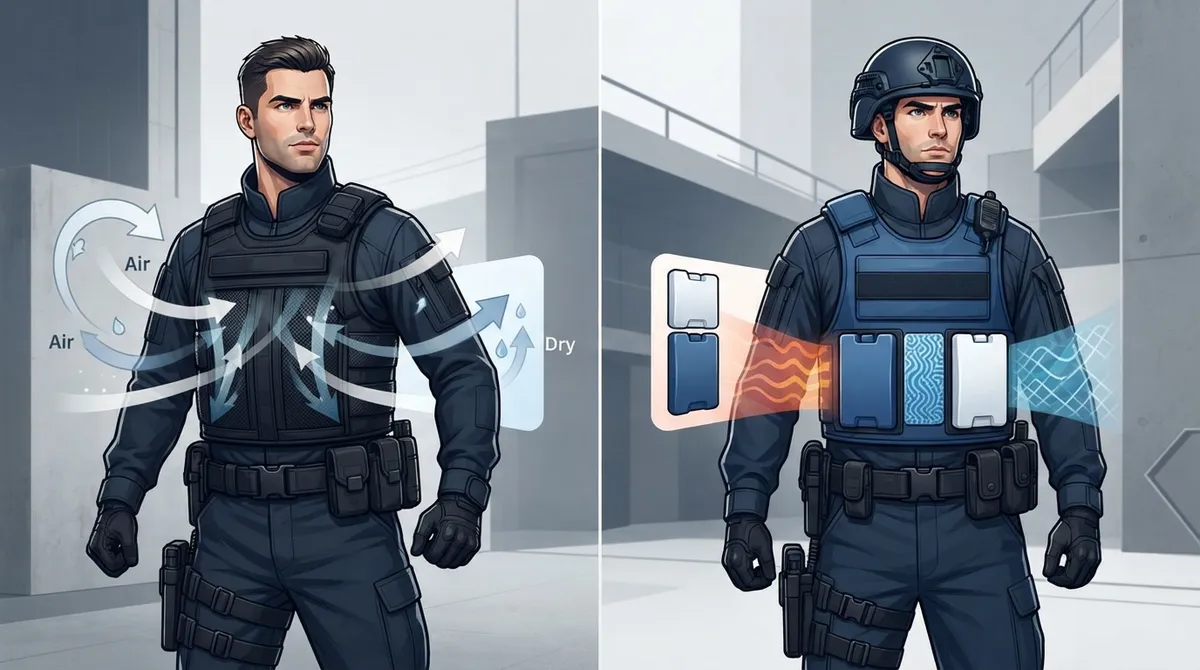
This is the biggest difference, so let’s start here. A ventilation vest moves air. It helps carry away heat and moisture that get trapped under your armor. A phase-change cooling vest uses special packs that soak up heat as they melt from solid to liquid.
Think of it this way. Ventilation is like opening a window. Phase change is like putting a cold drink against your chest. Both feel good. They just work in different ways.
Because of this, the ventilation vest vs phase change cooling vest question is not about which is “better.” It is about which method fits your day. For a deeper look at the airflow side, see our guide on ventilation vs. phase change.
2. Quick Side-by-Side Comparison
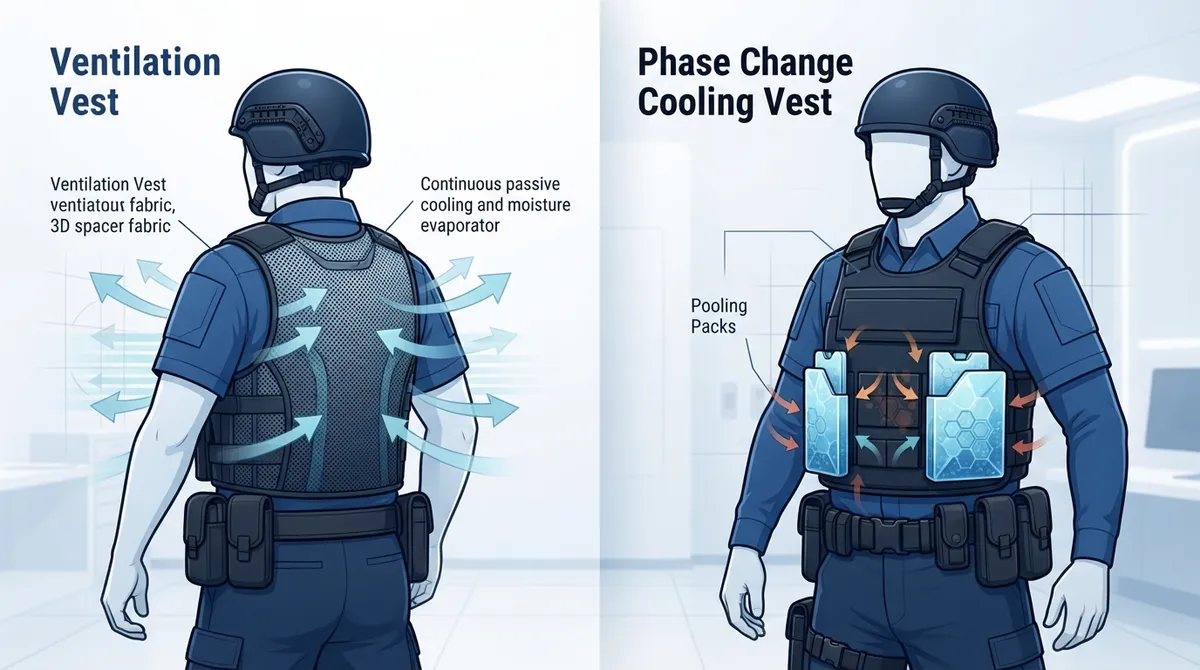
Here is a snapshot to help you picture the trade-offs. Remember, these are general patterns. Each product is different, so always check the specs.
| Feature | Ventilation Vest | Phase Change Cooling Vest |
|---|---|---|
| How it cools | Moves air to remove heat and moisture | Cooling packs absorb heat as they change phase |
| Power needed | Depends on design (manual or fan-powered) | None while in use |
| Cooling time | As long as airflow continues | Limited until packs are recharged |
| Humid weather | Evaporation is less effective | Still works, since it does not rely on sweat |
| Bulk and weight | Often light and low profile | Packs add weight and bulk |
| Upkeep | Charge or inflate as needed | Chill or reset packs between uses |
3. What a Ventilation Vest Actually Is
The term “ventilation vest” can mean a few things. Some are powered by a fan. Some use air gaps. Others are just breathable fabric. So always check how a product really works before you buy.
For armor wearers, the goal is simple. Create space and airflow between your body and your vest so heat and sweat do not stay stuck. If you are new to the idea, our explainer on what vest ventilation is and why you need it covers the basics.
4. What a Phase Change Cooling Vest Actually Is
A phase-change vest holds special packs. When they warm up, the material inside changes from solid to liquid. That change soaks up heat from your body.
The big plus is that it works quietly and passively. There is no fan and no battery. The catch is that the cooling does not last forever. Once the material fully melts, you need to reset or swap the packs.
5. Humidity Changes Everything
Airflow cools best when sweat can evaporate. In dry heat, that works great. In thick, muggy air, evaporation slows down, so airflow alone may feel less dramatic.
Phase-change packs do not need evaporation. That gives them an edge in humid places. But a cooling pack that is bulky or does not touch your skin well will not feel great either.
The takeaway? Know your climate. If you work in swampy summers, think about how much relief you really get from airflow alone. If you want to understand the heat side of things, OSHA’s heat stress guide is a solid resource.
6. Cooling Time Is Not the Same
Here is where the two styles really split. A powered ventilation system can run for hours as long as you have battery or supply. A phase-change pack has a finite cooling window.
Research gives us a rough picture. A 2025 review reported that some phase-change designs lowered torso temperature for about 60 minutes in one evaluation. The same review noted effects of up to 3 to 4 degrees Celsius for as long as 120 minutes in some studies. Results vary a lot, so do not treat these as promises for every product.
For a 12-hour shift, that gap matters. You may need spare packs and a place to recharge them.
7. Bulk, Weight, and Mobility
If you have ever chased someone on foot, you know every ounce counts. Phase-change packs can add real weight and bulk under your gear. That can limit movement and make armor sit differently.
Airflow gear tends to be slimmer. BluHalo is a great example. It weighs under 7 ounces and sits flat when deflated. When you want relief, you inflate it to lift your vest up to about 1.5 inches off your body. Then you can deflate it with a button and go back to a low profile.
Curious how it works step by step? Check out how to use the BluHalo ventilation vest for maximum comfort.
8. Power and Upkeep: Know the Real Work
Every cooling method asks something from you. Here is what each one needs:
- Phase-change vests: chilling or resetting packs, plus spares for long shifts.
- Fan-powered ventilation: a charged battery or power source.
- Inflatable ventilation: a quick pump and a clean mounting surface.
Think about your day. Can you get to a freezer or cooler mid-shift? Or is a quick top-off with a power bank easier? Your answer helps you choose.
9. PPE Compatibility Matters
A cooling vest only helps if it fits with your armor and gear. Some phase-change vests are worn directly on the torso. They may feel snug under armor or restrict how your carrier sits.
Ventilation devices are made to slide under the armor. Blufano, for example, uses a patented air-redirect spout that slides under any style of body armor. You can learn more in our guide on using the BluFano air redirect spout under armor.
10. What the Research Says
Good news first. NIOSH reported testing in which people wearing cooling vests under protective gear had smaller rises in body temperature and heart rate. They also lost less weight than people with no vest. That tells us cooling gear can help.
Here is the honest part. There is no proof that one vest type always beats the other. A 2025 review describes trade-offs among cooling time, bulk, power needs, and mobility across vest types. So choose based on your real conditions, not hype.
11. Heat Is a Real Safety Issue
This is not just about comfort. OSHA’s rulemaking materials report 479 U.S. worker deaths from environmental heat exposure between 2011 and 2022. That averages about 40 per year.
OSHA also estimates 33,890 heat injuries and illnesses that led to days away from work between 2011 and 2020. That is about 3,389 per year, and the true number is likely higher. Heat hurts focus too. Learn more in how heat affects police reaction time on duty.
12. Neither One Replaces Good Heat Habits
No vest can do the job alone. Whichever style you pick, keep up the basics:
- Drink water before you feel thirsty.
- Take rest breaks in shade or cool spaces when you can.
- Ease into hot weather so your body can adjust.
- Watch for signs of heat illness in yourself and your partner.
- Use your cooling gear early, not only after you feel miserable.
Cooling gear is a tool. Good habits are the foundation. For more ideas, see our list of 10 tips for wearing body armor comfortably in heat.
13. Why BluHalo and Blufano Are Top Picks for Armor Wearers
If your day involves body armor, airflow is hard to beat for long shifts. BluHalo was created by a Chicago police officer who knew the problem firsthand. It boosts airflow, helps reduce moisture, and releases trapped heat. It is built from double-layer, high-strength polyethylene for daily wear.
Blufano takes it further with active fan-driven airflow under your armor. It offers adjustable airflow for roughly 8 to 32 hours depending on the setting. It also has a built-in 10,000mAh power bank that can charge USB devices, plus a forward-facing light for low-light moments.
Many officers use both together. You get passive lift from BluHalo and active airflow from Blufano. Compare them in BluFano vs BluHalo: which cooling vest fits you. You can also read about ventilation vests vs. cooling packs for security work.
Who Should Choose Which?
- Patrol officers on long shifts: airflow gear like BluHalo and Blufano keeps weight low and cooling on demand.
- Tactical and SWAT teams: low bulk and easy mobility matter most during fast movement.
- Military personnel: active airflow can support long missions where recharging packs is not practical.
- Security professionals: quiet, low-profile cooling suits long posts in varied climates.
- Firefighters and hazmat teams: consider your full gear setup and conditions, since these jobs vary widely.
Also standards matter. If you want to understand armor basics, the NIJ body armor standards are a helpful reference. And if you want to compare more options, our ranked list of bulletproof vest cooling solutions is a good next read.
The Bottom Line
So, who wins the ventilation vest vs phase change cooling vest matchup? It depends on you. Phase-change vests can shine in humid heat for short, planned periods. Ventilation systems tend to win for long shifts, low bulk, and mobility under armor.
For most people who wear armor all day, airflow is a smart place to start. BluHalo and Blufano were built for exactly that need. Ready to find your fit? Get in touch with our team and we will help you pick the right cooling setup for your gear and your shift.
FAQs
Q: What is the difference between a ventilation vest and a phase-change cooling vest?
A: A ventilation vest moves air to help carry away heat and moisture, while a phase-change vest uses packs that absorb heat as they melt. One works with airflow, the other with passive heat absorption. Each has its own strengths, so the best pick depends on your job and climate.
Q: Which cooling vest works better in hot, humid weather?
A: Phase-change vests can help in humid weather because they do not rely on sweat evaporating. Airflow gear works best when sweat can dry. Still, active airflow under armor can ease trapped heat, so many people find it useful in many climates.
Q: How long does a phase-change cooling vest stay cold?
A: It varies by product and conditions. Some studies report cooling for about 60 to 120 minutes, but that is not a promise for every vest. Once the packs fully melt, you need to reset or swap them.
Q: Do ventilation cooling vests need a battery?
A: It depends on the design. Fan-based systems like Blufano use a built-in battery, while inflatable designs like BluHalo use a small pump and need no battery for airflow lift. Always check how a specific product works.
Q: Can a cooling vest prevent heat illness on its own?
A: No. A cooling vest helps, but it does not replace water, rest breaks, shade, and slowly getting used to hot weather. Think of it as one helpful tool in your heat safety plan.