Key Takeaways
-
Active ventilation devices move air under armor to clear heat and aid sweat evaporation, and they keep working as long as they have power, unlike ice or PCM packs that warm up and need replacing.
-
In a study of 12 men in ballistic vests, an active blower-and-vest system cut skin temperature by 0.6-0.9°C and reduced sweat rate by 21-25% during 100 minutes of hot exercise, though it offered no benefit at rest.
-
NIOSH notes some cooling vests last only about two to three hours, often needing backup packs every two to four hours, which makes them a poor fit for long shifts.
-
High humidity slows sweat evaporation, so ventilation helps less in muggy conditions; adding an air gap under armor can help clear trapped heat and moisture.
-
Cooling products are comfort tools, not protection upgrades, so check that any added layer doesn't change how your armor fits or sits, and follow your armor maker's care guidance.
-
Heat remains a serious workplace hazard, so pair any cooling gear with water, shaded rest breaks, heat acclimation, and weather awareness rather than relying on gear alone.
If you wear body armor for a living, you already know the feeling. About two hours into the shift, your shirt is soaked, your back is slick, and all you can think about is the heat. You start asking the big question: should I get a body armor ventilation device, or an extra cooling garment?
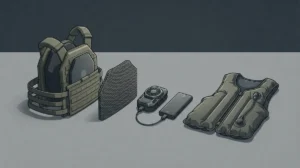
Good news: you’re asking the right question. These two options sound alike, but they work in very different ways. One moves air under your vest. The other cools you through ice, phase-change packs, liquid, or wet fabric.
In this guide, we’ll break down how each one works, what the research says, and where each one fits best. We’ll keep it simple and honest. By the end, you’ll know which approach suits your shift, your climate, and your gear. Let’s dig in.
What Is a Body Armor Ventilation Device?
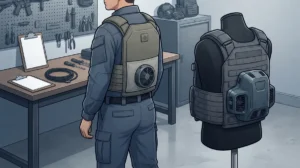
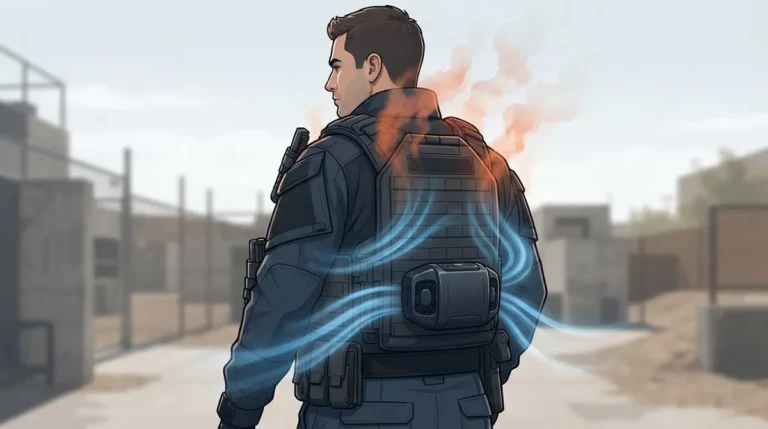
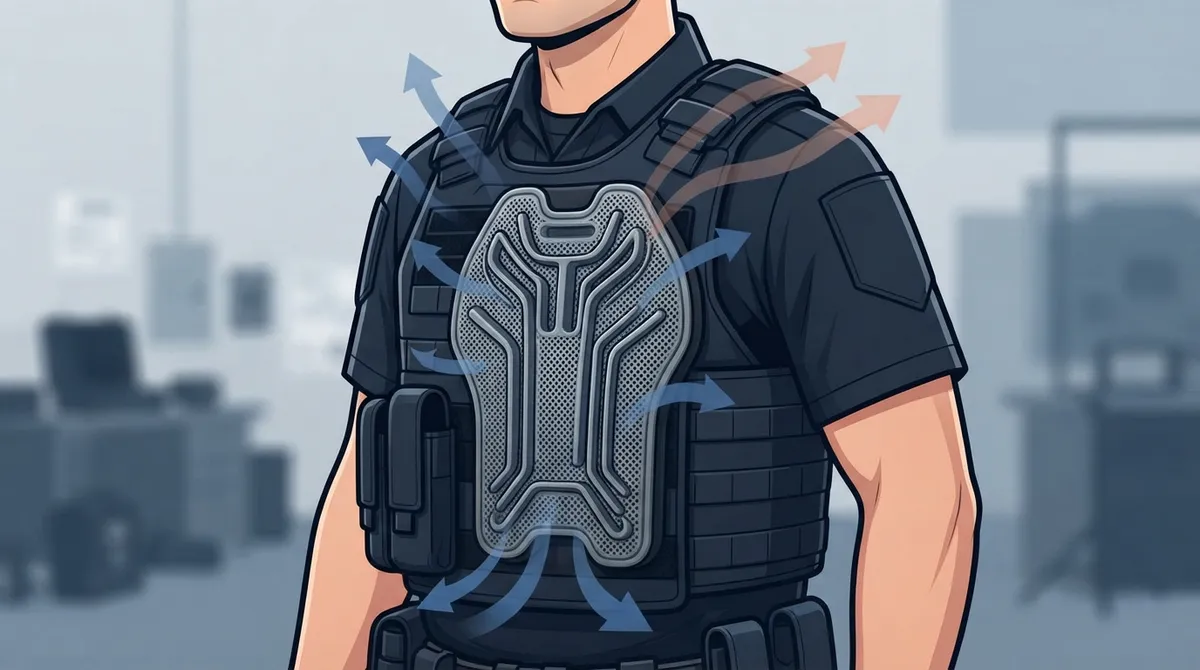
A body armor ventilation device is a system that moves air beneath or around your armor. Most are active, meaning a small fan or pump does the work. The goal is to push out warm, humid air and let fresher air flow across your torso.
This is different from a passive ventilation vest. A passive design relies only on fabric construction and whatever breeze you happen to get. An active device keeps air moving even when you’re standing still in a parked cruiser or at a post.
Here at BluHalo, we build products in this category. The BluHalo ventilation vest lifts your armor up to about 1.5 inches off your body to create an air gap. It weighs under 7 ounces and lies flat when deflated. The Blufano fan system adds active airflow under any style of armor. If you want the full picture on how these systems work, read how an active cooling system works in ventilation vests.
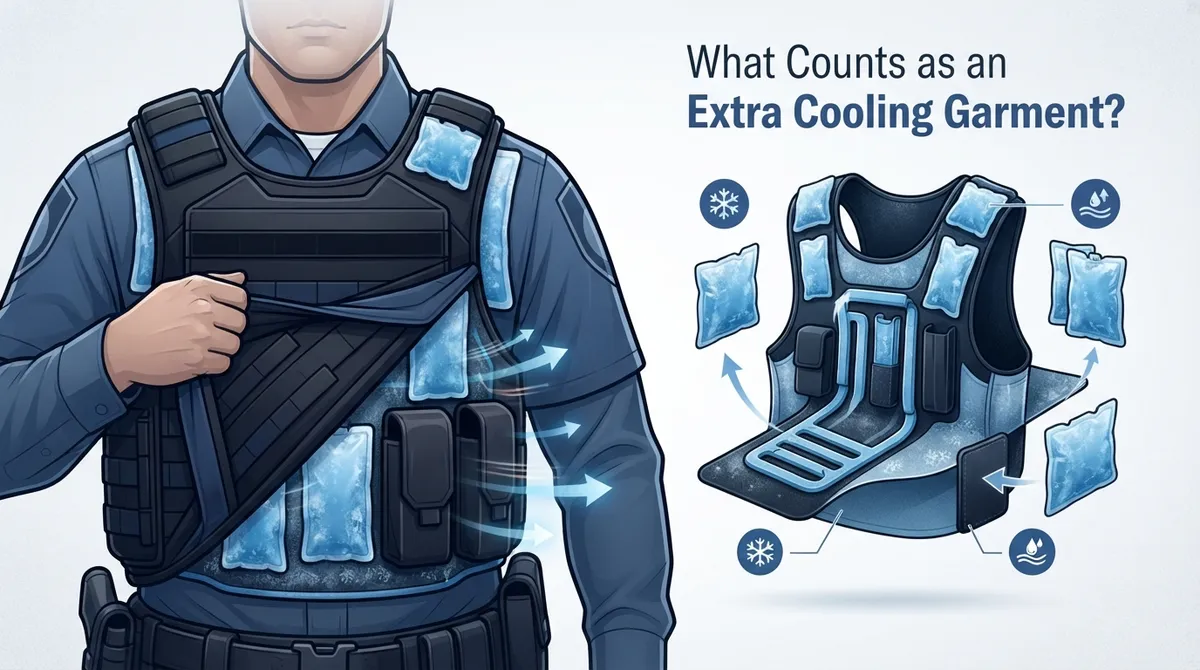
What Counts as an Extra Cooling Garment?
“Extra cooling garment” is a much broader label. It covers several different technologies that all try to pull heat off your body. They are not interchangeable, so it helps to know the types.
- Air-cooled garments: These use moving air, much like a ventilation device.
- Liquid-cooled garments: Tubes carry chilled water across your torso.
- PCM vests: Phase-change material packs absorb heat as they melt.
- Ice-pack vests: Frozen packs sit against your body.
- Evaporative vests: Wet fabric cools as water evaporates.
Each one cools in its own way, and each has trade-offs. A cooling garment is also worn as an extra layer, which can matter when you are already carrying a lot of gear. For a closer look at one type, see ventilation vs. phase change cooling vests.
How Do They Actually Cool You Down?
The core difference comes down to the cooling method. Understanding it makes the choice much easier.
Ventilation: Moving Air and Sweat
A ventilation device works by moving air. Fresh air carries away warm, damp air near your skin. It also helps your sweat evaporate, which is how your body naturally cools itself. The device does not make anything cold. It simply helps your body do its job better.
Cooling Garments: Pulling Heat Away
Ice packs, PCM inserts, and liquid systems work differently. They act as a heat sink. They absorb warmth from your body and hold it. That works well, but only until the pack warms up or the supply runs out.
This is why ventilation tends to shine for long shifts. Airflow does not melt, warm up, or need to be refrozen. If you want to dig deeper on this split, check out 13 facts on active vs passive body armor cooling.
What Does the Research Say?
Let’s look at real data, because it helps cut through the marketing. A few controlled studies stand out. Keep in mind that each one used specific products and test conditions, so results will not match every user.
In a study of 12 men wearing ballistic vests, an active blower-and-vest system lowered the rise in core temperature by about 0.26 to 0.34°C after 100 minutes of exercise in hot conditions. Mean skin temperature was lower by 0.6 to 0.9°C, and sweat rate dropped by 21 to 25% compared with no cooling. The system did not improve cooling during rest, though.
A separate study of eight heat-acclimated men in 45°C heat, wearing combat clothing, body armor, and a 19-kg load, found that a ventilated vest increased the share of time spent exercising by 18%. That works out to roughly 11 extra minutes per hour.
Now for the other side. A 2025 trial tested three passive vests at 30°C and 48% humidity for 120 minutes. The 29°C-transition PCM vest lowered torso microclimate temperature by an average of 1.5°C. The two water-based vests only lowered it by about 0.2°C. So passive garments can work, but results vary a lot by product.
Head-to-Head Comparison
Here is a quick side-by-side view of how the two approaches stack up.
| Factor | Ventilation Device | Extra Cooling Garment |
|---|---|---|
| Cooling method | Moves air, aids sweat evaporation | Heat sink (ice, PCM, liquid) or evaporation |
| Duration | Runs as long as power lasts | Finite; packs need recharging or swapping |
| Power needs | Battery or pump | None, or freezer/chiller |
| Best climate | Hot, dry to moderately humid | Varies by type; PCM suits short, intense heat |
| Added bulk | Low profile when deflated | Often adds a layer under armor |
| Setup between shifts | Charge battery | Freeze or chill packs |
No option wins every category. The right pick depends on how you work, where you work, and how long you stay in your gear.
Pros and Cons You Should Know
Ventilation Devices
- Pros: Long run time, no ice or prep, quiet operation, and easy on-demand control. Many officers like that they can turn it up or down as the day heats up.
- Cons: Needs a power source for fan systems, adds a small amount of weight, and works less well in very high humidity because sweat cannot evaporate as easily.
Cooling Garments
- Pros: No batteries for passive types and a strong, immediate cold feeling.
- Cons: Cooling is time-limited. NIOSH notes that cooling vests may work for roughly two to three hours in some conditions, with backup packs often needed every two to four hours. They also need prep, and they add a layer between you and your armor.
Want help weighing the trade-offs on the job? Fans vs. ice packs is a handy read.
How Do Humidity and Workload Change Things?
Climate matters more than most people expect. Airflow helps sweat evaporate, but high humidity slows that evaporation down. In very muggy weather, moving air still helps clear trapped heat and moisture, but the effect is smaller than in dry heat.
Workload matters too. If you are moving a lot, you produce more heat and more sweat. Ventilation helps manage that steady output across a long shift. If you are doing a short, intense task, a PCM garment might give a strong burst of cooling.
For long patrol days, the steady nature of airflow tends to fit better. You can see this idea in action in how to stay cool on summer patrol under body armor.
Does It Affect Your Armor Fit or Protection?
This is a big one, and it deserves a clear answer. Any device or garment you add should be checked for fit, mobility, and coverage. A bulky extra layer can change how your armor sits. That is worth thinking about before you buy.
A cooling product also should never be treated as a way to change your armor’s protective rating. It is a comfort tool, not a protection upgrade. Check the standards and guidance from sources like the National Institute of Justice body armor resources, and follow your armor maker’s care instructions.
BluHalo is built to be low-profile. It attaches to a clean vest with Velcro and sits flat when deflated. If fit is a concern for you, see how vest fit affects cooling airflow under body armor.
Which One Fits Your Role?
Different jobs call for different tools. Here is a simple way to think about it.
- Patrol officers and deputies: Long shifts in and out of vehicles favor a ventilation device. You can adjust airflow and keep going for 10 to 12 hours.
- Military personnel: Extended missions and heavy loads make steady, power-based airflow a strong fit. Pair it with sound hydration and work-rest habits.
- Security professionals: Long hours standing in one spot favor active airflow that works even when you are not moving.
- Tactical and SWAT teams: Short, intense operations may benefit from a quick-cooling garment before entry, plus ventilation for the downtime.
- Firefighters and EMS: Extreme heat calls for layered controls. Cooling gear helps, but it never replaces rehab and medical protocols.
You do not always have to choose just one. Many people mix approaches. For a broader look, how to choose a body armor ventilation vest can help you narrow it down.
The BluHalo and Blufano Advantage
We built our products around one idea: keep air moving under your armor so heat and moisture do not pile up. A Chicago police officer designed BluHalo after dealing with the same overheating you may feel on duty.
BluHalo inflates on demand with a small pump and deflates with a button. Made from double-layer, high-tensile polyethylene, it is built to last. It creates up to a 1.5-inch cooling air gap, and it weighs under 7 ounces.
Blufano adds active fan power. Its patented air-redirect spout slides under any style of armor. You get 8 to 32 hours of runtime depending on the setting, plus a built-in 10,000mAh power bank that can charge your devices and a forward-facing light for low-light moments. To see how the two work together, read BluFano vs BluHalo: which cooling vest fits you?
Many customers bundle both for the best cooling performance under gear. Airflow plus an air gap is a strong combination for long, hot days.
Remember: Cooling Gear Is One Piece of the Puzzle
No vest or garment replaces smart heat-stress habits. Heat is a real workplace hazard. According to U.S. BLS data cited by OSHA, 479 workers died from environmental heat exposure from 2011 to 2022, and an estimated 33,890 heat injuries and illnesses led to days away from work from 2011 to 2020. OSHA notes the true numbers are likely higher.
That is why cooling gear should work alongside the basics. Drink water. Take rest breaks in the shade. Build up your heat tolerance. Watch the weather. Look out for your partner. You can find clear guidance on the OSHA heat stress guide, and learn more about early warning signs in heat stress vs. heat illness: what officers must know.
You can also explore the NIOSH criteria for heat and hot environments for deeper background on cooling vest limits and work practices.
Simple Tips for Choosing Between Them
Still on the fence? Walk through these quick checks before you decide.
- How long is your typical shift? Longer shifts favor steady airflow.
- Do you have access to a freezer or fridge for packs? If not, passive ice-based options get harder.
- How humid is your area? Very humid places reduce the evaporation benefit, so consider an air gap too.
- How much bulk can your setup handle? Low-profile gear helps with mobility.
- Can you charge a battery each night? If yes, active systems are easy to run.
For a wider look at the market, 9 best body armor cooling systems for hot shifts in 2026 breaks down your options.
Final Thoughts: Pick What Keeps You Sharp
Here is the short version. A body armor ventilation device moves air to clear heat and moisture, and it keeps working as long as it has power. An extra cooling garment pulls heat away through ice, PCM, liquid, or evaporation, but its effect fades over time and often needs prep.
For long shifts, changing weather, and unpredictable days, steady airflow is a strong, practical choice. And when you pair an air gap with active fan power, you give your body its best shot at staying comfortable and focused.
Ready to feel the difference under your armor? Have questions about which setup fits your role? Get in touch with our team and we will help you find the right BluHalo and Blufano combination for your shift.
FAQs
Q: What is the difference between a body armor ventilation vest and a cooling vest?
A: A ventilation vest moves air under your armor to clear heat and help sweat evaporate. A cooling vest is a broader group that can use ice, phase-change packs, liquid, or wet fabric to pull heat from your body. Each one works in a different way, so they are not interchangeable.
Q: Does a ventilation vest work under body armor?
A: Yes, that is exactly what it is made for. BluHalo fits under armor and lifts it up to about 1.5 inches to create an air gap, while Blufano slides under any style of armor with its air-redirect spout. Always check that the fit still feels right with your gear.
Q: How long does a body armor cooling vest provide cooling?
A: It depends on the type. NIOSH notes that some cooling vests may work for about two to three hours, with backup packs often needed every two to four hours. Fan-based systems like Blufano can run 8 to 32 hours depending on the setting.
Q: Do ventilation vests work in hot, humid weather?
A: They still help, but the benefit is smaller in high humidity because sweat evaporates more slowly. Airflow and an air gap can still clear trapped heat and moisture from under your armor. Pair them with hydration and rest breaks for the best results.
Q: Can a cooling garment interfere with body armor fit or protection?
A: It can if it adds bulk or shifts how your armor sits. Cooling gear is a comfort tool and does not change your armor’s protective rating. Always check mobility, coverage, and your armor maker’s guidance before adding anything under your vest.