Key Takeaways
-
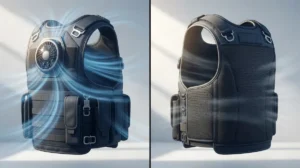
Ventilation systems with continuous airflow are superior for long shifts because they maintain steady cooling for 8-32 hours, while phase-change cooling packs only provide relief for about 60 minutes before fading in intense heat.
-
Hybrid cooling approaches combining ventilation vests (like BluHalo) with active fan systems (like Blufano) deliver optimal thermal regulation by providing constant airflow plus immediate cooling boosts without needing mid-shift ice pack replacements.
-
Body armor traps sweat against skin, raising heart rate and slowing cognition—ventilation systems solve this by creating air gaps that enable natural sweat evaporation, which is backed by research showing reduced physiological strain.
-
Law enforcement, military, and tactical professionals benefit most from thermal regulation gear; officers report noticeably better focus and reduced fatigue during 12-hour shifts in 95-degree heat when using proper cooling systems.
-
Cooling vests are prevention tools, not emergency equipment—they manage heat stress but cannot replace ice-water immersion and medical care for heat stroke symptoms like confusion or loss of consciousness.
-
Moisture-wicking undergarments paired with ventilation systems significantly enhance cooling effectiveness by supporting natural sweat evaporation, making them essential components of any thermal regulation strategy.
If you’ve ever finished a shift soaked in sweat with your heart still pounding an hour after you took your vest off, you already know why thermal regulation matters so much. Your body armor keeps you safe, but it also traps heat against your skin like a portable oven. That trapped heat builds up fast, especially during long shifts in the summer sun. The good news? You don’t have to just tough it out anymore.
Two main technologies help officers, soldiers, and first responders manage body heat under gear: air-moving ventilation systems and cooling packs made with phase-change materials (often the ice-pack style vests). Both aim to help your body cool down, but they work in very different ways. In this article, we’ll break down how each approach handles thermal regulation, look at the research behind them, and help you figure out which one (or combination) fits your job best. We’ll also share some real data from field studies so you know this isn’t just marketing talk—it’s backed by science.

What Is Thermal Regulation and Why It Matters Under Body Armor
Thermal regulation simply means how your body manages heat. Normally, sweat evaporates off your skin and cools you down. But when you’re wearing heavy, often non-breathable body armor, that sweat has nowhere to go. It just sits there, soaking your shirt and raising your skin temperature.
This trapped heat doesn’t just feel uncomfortable. It can raise your heart rate, increase how hard you feel like you’re working, and even slow down your thinking. According to the OSHA Heat Stress Guide, workers in hot environments face real risks including heat exhaustion and heat stroke, especially when wearing protective gear that limits natural airflow.
That’s exactly why personal cooling systems exist. They’re built to fight back against the heat that body armor traps, using either moving air, cooling materials, or both.
How Your Body Naturally Cools Itself
Your body has two main ways to lose heat: convection and evaporation. Convection happens when moving air carries heat away from your skin. Evaporation happens when sweat turns to vapor, pulling heat with it. Both processes need airflow to work well. Without airflow, sweat just pools instead of evaporating, and heat just sits instead of escaping.
Ventilation Systems: Moving Air to Beat the Heat
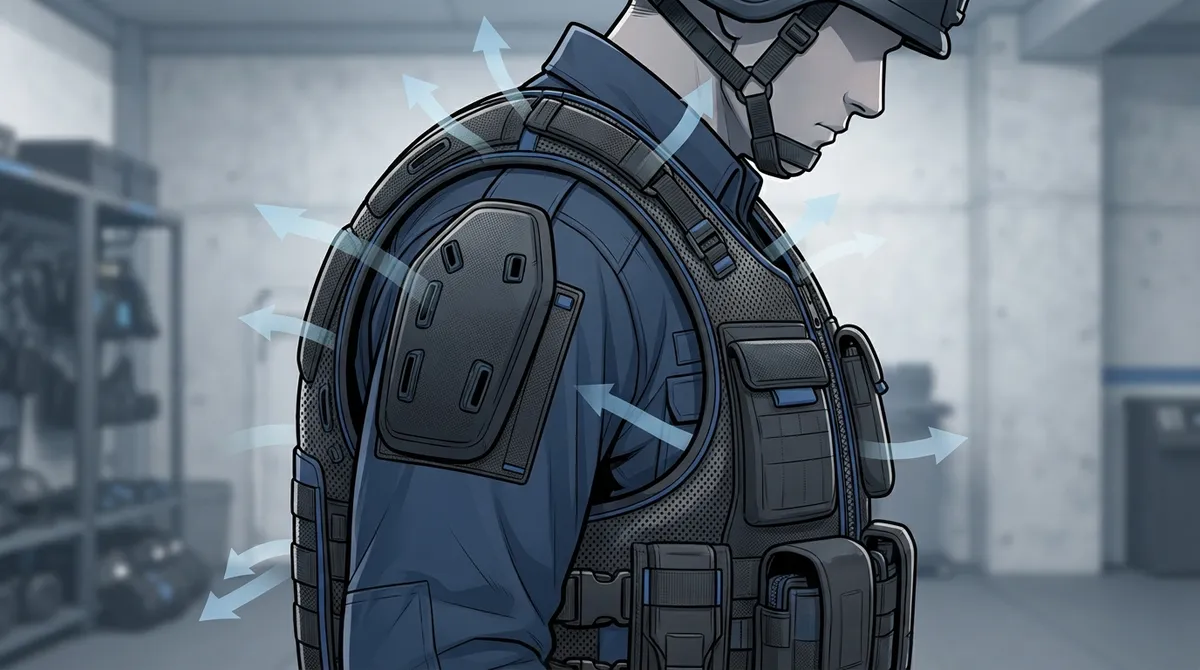
Ventilation vests, like the BluHalo ventilation vest, work by creating a small air gap between your skin and your body armor. This gap lets fresh air flow in and lets trapped heat and moisture escape. Some systems use a simple inflatable design, while others add battery-powered fans for constant airflow.
BluHalo, for example, was created by a Chicago police officer who got tired of sweating through 12-hour shifts in 95-degree heat. It weighs under 7 ounces and lifts your vest up to 1.5 inches off your body when inflated. That small gap makes a big difference, letting air move where it used to be trapped.
For those who want even more active cooling, Blufano takes things a step further. It’s a self-contained fan system with a patented air-redirect spout that slides under any style of body armor. It runs on a 10,000mAh power bank for 8 to 32 hours depending on the fan setting, and it even charges your phone or powers a built-in light. Many users combine both products for maximum cooling coverage, something we’ll dig into more below.
Benefits of Fan-Based Ventilation
- Provides continuous airflow instead of a one-time cooling burst
- Helps sweat evaporate instead of pooling against the skin
- Lightweight and doesn’t add much bulk under gear
- Can be adjusted on the fly depending on activity level
- Works well for long shifts where consistent comfort matters most
Cooling Packs and Phase-Change Materials: The Ice-Pack Approach
Cooling vests that use phase-change materials work differently. These vests have pockets filled with special gel packs that absorb heat as they change from solid to liquid. You freeze or chill the packs before your shift, then slide them into the vest.
This method can feel great at first, delivering a strong blast of cold against your skin. Research on hybrid cooling vests found torso cooling power of 67 watts for one design and 56 watts for another, with the phase-change effect lasting about 60 minutes. That’s helpful, but it also means the cooling fades as your shift goes on, especially in extreme heat.
Benefits of Phase-Change Cooling
- Delivers strong, immediate cooling right when you put it on
- Works well during rest breaks or recovery periods
- No batteries or fans needed, just pre-chilled packs
- Can be combined with ventilation systems for hybrid cooling
Comparing Ventilation Vests and Cooling Packs
So which one wins for thermal regulation? The honest answer is that both have their place, but they solve slightly different problems. Ventilation systems shine during long, active shifts where you need steady airflow. Cooling packs shine during short bursts of intense heat or recovery time. Let’s break it down in a simple table.
| Feature | Ventilation Vests (Fan-Based) | Cooling Packs (Phase-Change) |
|---|---|---|
| Cooling Duration | Continuous, 8-32 hours (Blufano) | About 60 minutes per use |
| Weight | Under 7 oz (BluHalo) | Varies, often heavier with gel packs |
| Best Use Case | Long shifts, active duty, patrol | Rest breaks, quick cooldowns |
| Maintenance | Recharge battery, inflate/deflate | Freeze packs before each use |
| Moisture Control | Excellent, moves air to dry sweat | Limited, doesn’t move air |
Field studies back up why ventilation matters so much for active professionals. A study on hybrid cooling vests in construction workers found major improvements in heart rate, thermal sensation, and perceived exertion when compared to no vest at all, with results showing strong statistical significance. Similar research on helicopter crews found that ventilated vests reduced increases in rectal temperature during simulated flights, and every subject in the study was able to complete the full session.
Why Hybrid Cooling Might Be Your Best Bet
Here’s a secret many gear experts already know: you don’t have to pick just one. Combining ventilation with cooling elements gives you the best of both worlds. The fan keeps air moving all shift long, while a quick cooling boost helps during the hottest moments or recovery breaks.
This is exactly why so many officers and tactical teams pair BluHalo with Blufano. BluHalo creates that critical air gap under your armor, while Blufano adds constant fan-powered airflow on top of it. Together, they tackle thermal regulation from every angle, keeping you cooler for longer without needing to swap out ice packs mid-shift.
Steps to Build Your Own Cooling System
- Start with a base ventilation layer like BluHalo to create airflow space under your vest.
- Add an active fan system like Blufano for continuous air movement throughout your shift.
- Use moisture-wicking undergarments to help sweat evaporate faster.
- Keep a backup cooling towel or pack handy for extreme heat days or breaks.
- Recharge your fan system nightly so it’s ready for your next shift.
Who Benefits Most from Better Thermal Regulation
Thermal regulation isn’t just a nice-to-have. For many professionals, it’s a safety issue. Let’s look at how different groups benefit from smart cooling gear.
Law Enforcement Officers
Patrol officers often wear body armor for 10 to 12 hours straight. Without airflow, that’s a long time to sit in trapped heat and sweat. Ventilation vests help officers stay alert and comfortable, which matters for both safety and performance on the job. Many departments are now recommending gear like this as part of standard body armor best practices.
Military Personnel
Soldiers deployed in hot climates deal with heavier gear and longer missions. Good thermal regulation can mean the difference between staying mission-ready and suffering from heat exhaustion mid-task. Ventilation systems give troops a lightweight way to manage heat without adding bulk to their load.
Security Professionals
Armed security guards often stand or patrol for hours without much movement, which can trap even more heat under their vests. A reliable cooling system helps them stay sharp during long shifts, whether they’re working an event or a stationary post.
Tactical and SWAT Teams
High-intensity operations demand peak performance, and overheating can slow reaction time fast. Teams that train hard in heavy gear need cooling systems that keep up with their pace, not slow them down.
Emergency Response Personnel
Firefighters and hazmat teams face some of the harshest heat conditions out there. Their protective gear is often less breathable than standard body armor, making thermal regulation even more critical for preventing heat exhaustion.
When Cooling Vests Aren’t Enough
It’s important to be clear about one thing: cooling vests are not a substitute for emergency treatment of severe heat illness. If someone shows signs of heat stroke, like confusion, very high body temperature, or loss of consciousness, ice-water immersion and emergency medical care are still the standard treatment. Ventilation and cooling vests are tools for prevention and comfort, not emergency response equipment.
Research Backing Ventilation for Thermal Regulation
Recent studies continue to support the value of ventilation for personal cooling. One study on body ventilation systems found that in hot, dry conditions, it significantly lowered core temperature, heart rate, skin temperature, and overall physiological strain. Another study focused on soccer recovery found that just 15 minutes of vest cooling reduced both core and skin temperatures compared to passive recovery alone.
Researchers are also testing newer materials, including carbon-based cooling vests and pressurized air systems, to push thermal management even further. This kind of ongoing research is why brands like BluHalo continue refining their designs, staying ahead of the curve as science evolves.
Choosing the Right System for Your Job
When picking a cooling system, think about your daily routine. Do you move around a lot, or do you stand still for long periods? Do you work in dry heat or humid conditions? Your answers should guide your choice.
| Work Environment | Recommended Approach |
|---|---|
| Long patrol shifts, moderate activity | Ventilation vest (BluHalo) for all-day comfort |
| High-intensity tactical operations | Active fan system (Blufano) for continuous airflow |
| Extreme heat, short bursts of activity | Hybrid approach combining both systems |
| Recovery periods between shifts | Phase-change cooling pack for quick relief |
You can browse the full lineup of gear designed for these exact situations in the shop, where you’ll find both individual products and bundle discounts.
Real Stories from People Who’ve Been There
Officers who’ve made the switch to better thermal regulation gear often say the same thing: they didn’t realize how much heat was affecting their focus until they felt what it was like without it. One officer described finishing a 12-hour shift in 95-degree weather feeling noticeably cooler and less drained than before. Reviews like these show up again and again, and you can check out more reviews from real users across different professions.
It’s also worth mentioning that comfort during downtime matters too. After a long, hot shift, recovery time is just as important as staying cool while working. Services like Mobile Area Massage of Tampa Bay can help relieve muscle tension built up from hours in heavy gear, giving your body a chance to fully reset before your next shift.
Final Thoughts: Which One Wins?
So, fans or ice packs? Honestly, the real winner is combining both. Ventilation systems handle the long haul, keeping air moving and sweat evaporating all shift long. Cooling packs offer a quick boost when you need it most, especially during breaks or recovery. Together, they create a complete thermal regulation strategy that keeps you cooler, drier, and more comfortable no matter what your job throws at you.
If you’re ready to stop sweating through your shifts and start feeling the difference real airflow makes, our team would love to help you find the right setup. Reach out to our team today and let’s get you geared up for a cooler, more comfortable shift.
FAQs
Q: How do ventilation vests regulate body temperature?
A: Ventilation vests create a small air gap between your skin and your body armor. This lets fresh air flow in, helps sweat evaporate, and lets trapped heat escape instead of building up against your body.
Q: What is the difference between a ventilation vest and a cooling vest?
A: Great question! Ventilation vests, like BluHalo, use air movement to help your body cool itself naturally. Cooling vests use phase-change materials that store cold energy, giving you a burst of chill that fades over time, usually around an hour.
Q: Do ventilation vests actually reduce heat stress?
A: Yes, and research backs this up nicely. Studies show ventilation and cooling vests can lower heart rate, reduce thermal sensation, and ease perceived exertion compared to wearing no cooling gear at all.
Q: Can ventilation vests be worn under body armor or PPE?
A: Absolutely, that’s exactly what they’re designed for. Vests like BluHalo attach directly to your existing gear with Velcro, sitting flat and unobtrusive until you need that extra airflow.
Q: How long does cooling from a ventilation vest last?
A: Fan-based systems like Blufano can run continuously for 8 to 32 hours depending on your fan setting, which makes them a wonderful choice for long shifts where you need steady comfort all day.