Key Takeaways
-
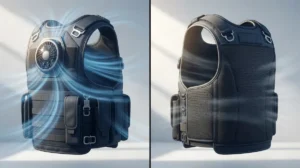
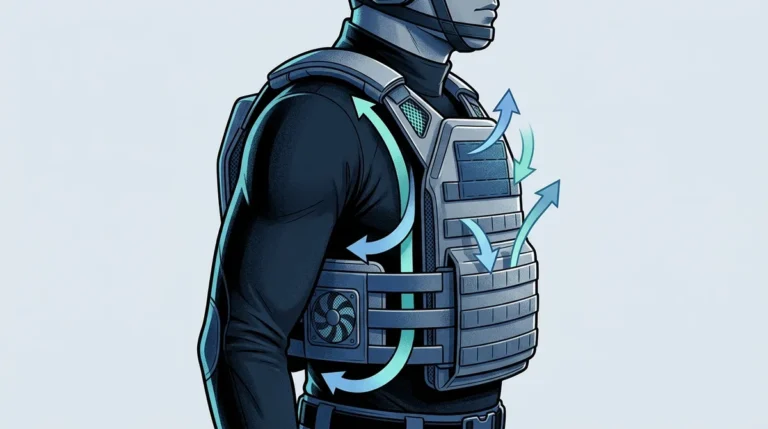
Create an air gap between your body and plate carrier using ventilation vests like BluHalo, which lifts armor 1.5 inches off your skin to allow air circulation and reduce heat/moisture buildup.
-
Upgrade to a moisture-wicking base layer (like 37.5® fiber technology) to decrease core temperature buildup by up to 26% compared to standard cotton shirts.
-
Install active fan systems like BluFano for continuous airflow during high-heat operations, with battery life lasting 8-32 hours depending on fan speed setting.
-
Add modular ventilation inserts or pontoons with Velcro attachment to create natural air channels and convection without permanently modifying your existing plate carrier.
-
Ensure proper plate carrier fit to eliminate compression of clothing and allow natural airflow gaps; pair with ventilation inserts for maximum cooling effect.
-
Combine multiple cooling strategies (base layer + ventilation vest + active fan) rather than relying on one solution alone for best results across different situations.
Wearing a plate carrier in the heat is no joke. Whether you’re on a 12-hour patrol, deployed in a hot climate, or running drills in summer, the heat buildup under your armor can wear you down fast. Sweat soaks through your base layer, hot air gets trapped, and before long, focus and energy start to fade. Sound familiar?
The good news is that learning how to cool down in a plate carrier doesn’t have to be complicated. In 2026, there are more smart, effective options than ever before — from simple passive airflow inserts to active fan-driven ventilation systems. This guide breaks down 7 proven strategies to help you stay cooler, drier, and sharper while wearing your plate carrier, no matter the conditions.
Ready to stop sweating through your shift? Let’s dive in.
Why Heat Builds Up Inside a Plate Carrier
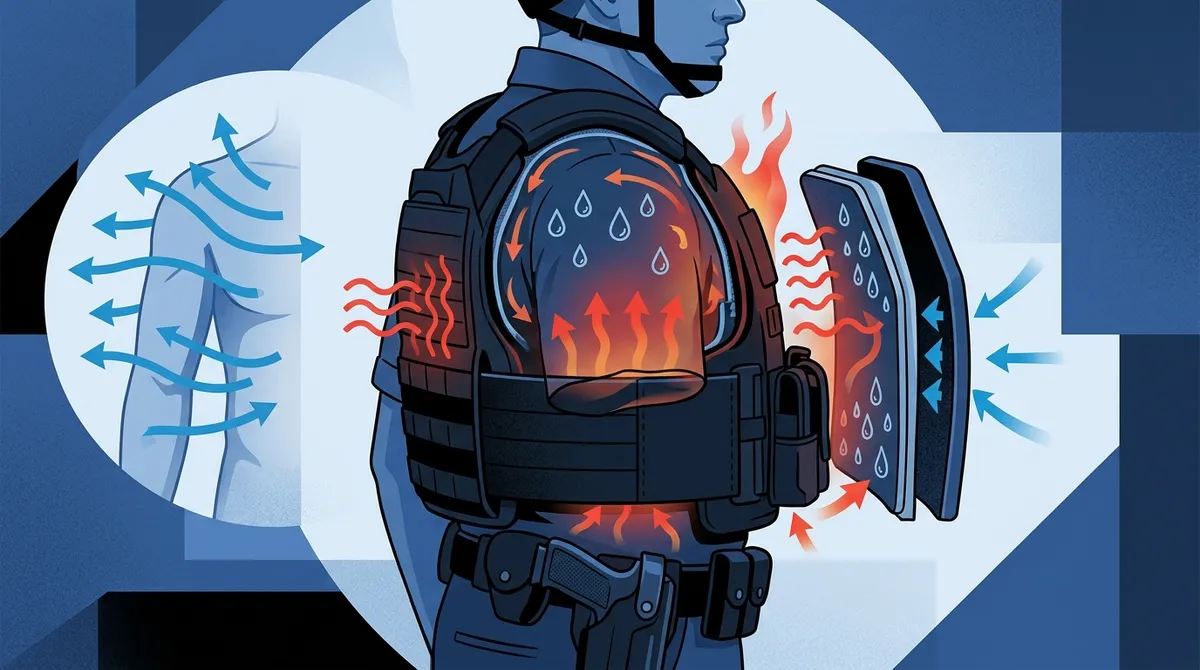
Before we jump into the solutions, it helps to understand the problem. A plate carrier sits tight against your body, creating a sealed pocket of air between the armor and your skin. Your body generates heat, that heat has nowhere to go, and moisture from sweat just sits there making everything worse.
According to the OSHA Heat Stress Guide, heat-related illness is a real risk for workers in heavy protective gear. For law enforcement officers who struggle with heat under body armor, this isn’t just discomfort — it’s a safety issue. The right cooling strategy can make a genuine difference.

7 Proven Ways to Cool Down in a Plate Carrier
1. Use a Ventilation Vest to Create an Air Gap
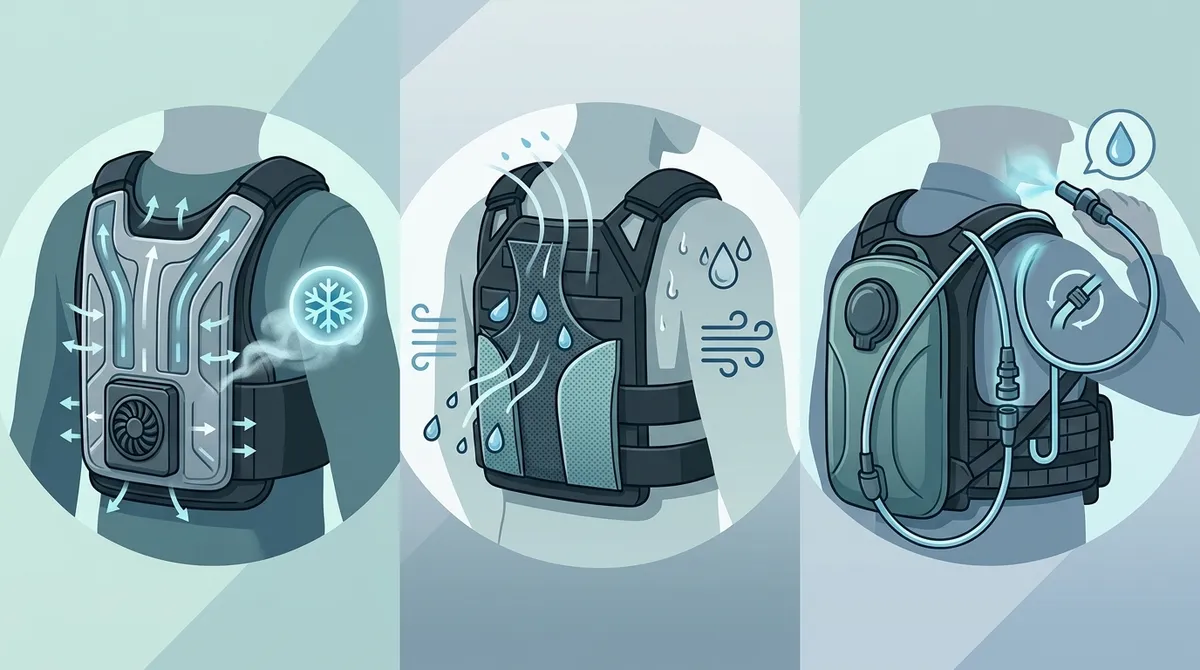
One of the most effective things you can do is create physical space between your body and your plate carrier. A ventilation vest like BluHalo does exactly this. It weighs under 7 ounces and lifts your armor up to 1.5 inches off your body when inflated. That gap allows air to circulate freely, pulling heat and moisture away from your skin.
BluHalo was created by a Chicago police officer who experienced firsthand how brutal long hot shifts in body armor can be. It attaches to your vest with Velcro, inflates on demand, and deflates flat when you don’t need it. It’s a simple, low-profile fix that officers regularly describe as a game-changer. You can learn how to use the BluHalo ventilation vest for maximum comfort to get the most from it.
2. Add an Active Fan System for Continuous Airflow
Passive airflow is great, but sometimes you need more power. An active fan system pushes fresh air underneath your armor continuously, giving you real cooling relief during intense activity or in high-heat environments.
The BluFano is a self-contained fan unit with a patented air-redirect spout that slides under any style of body armor. It runs for 8 to 32 hours depending on the fan setting, includes a built-in 10,000mAh power bank, and even has a forward-facing light for low-visibility situations. For missions or shifts where the heat just won’t quit, this level of active cooling is hard to beat. Check out the comparison of BluFano fan system vs. passive cooling to see which approach fits your needs best.
3. Install Ventilation Inserts or Pontoons
If you want a modular solution without permanently modifying your gear, ventilation inserts and pontoons are a smart choice. Products like ICEVENTS pontoons attach inside your plate carrier using Velcro and create air channels that promote natural convection. Hot air rises and escapes while cooler air is drawn in from below.
These inserts work with almost any plate carrier and require no tools or special modifications. They’re a great starting point if you’re just beginning to explore how plate carrier ventilation actually works.
4. Choose the Right Moisture-Wicking Base Layer
What you wear under your plate carrier matters just as much as what you put inside it. A high-quality moisture-wicking base layer pulls sweat away from your skin and helps it evaporate faster. This slows down how quickly your core temperature rises.
Technologies like 37.5® fiber, used in some Thermacore base layers, can decrease core temperature buildup by up to 26% compared to standard shirts. That’s a meaningful edge when you’re operating in the heat for hours. Check out the 9 best moisture-wicking vests for body armor comfort in 2026 for top picks this year.
5. Use Conductive Cooling Plates for Maximum Power
For extreme heat conditions, conductive cooling plates take things to the next level. Products like the ICEPLATE® Curve from Qore Performance are frozen water-filled plates shaped like standard ESAPI armor inserts. They deliver 140+ watts of cooling when frozen front and back, while also providing 50+ fluid ounces of hydration per plate.
This approach is especially useful for military personnel and tactical teams operating in desert or high-humidity environments. Want to explore more high-performance options? The best vest cooling systems for beating the heat in body armor covers a wide range of solutions at different price points.
6. Try an Inflatable Tactical System for Multi-Purpose Relief
Inflatable systems like the TIVS (Tactical Inflatable Vest System) serve double duty. They create an air gap for ventilation just like a ventilation vest, but they also absorb blunt trauma and add a layer of cushioning comfort. You inflate them on demand using a simple pump, and they deflate quickly for a low-profile fit when needed.
This kind of dual-purpose design is popular with security professionals and SWAT teams who need both comfort and performance in one package. Understanding the difference between passive vs. active tactical vest ventilation can help you decide which inflatable or fan-based approach makes more sense for your role.
7. Optimize Your Plate Carrier Fit and Setup
Sometimes the simplest fix is adjusting how your plate carrier fits. A carrier that’s too tight compresses your clothing against your body, eliminating any natural airflow. A carrier that’s too loose shifts around and causes friction and heat spots.
Proper fit creates small natural gaps that allow some air movement. Pair a well-fitted carrier with strategic placement of cooling inserts for maximum effect. Read through these 9 body armor fit and airflow tips for all-day comfort to fine-tune your setup.
Quick Comparison: Cooling Methods at a Glance
| Cooling Method | Best For | Duration | Ease of Use |
|---|---|---|---|
| Ventilation Vest (e.g., BluHalo) | Daily patrol, law enforcement | All-shift | Very easy |
| Active Fan System (e.g., BluFano) | Extended ops, high heat | 8–32 hours | Easy |
| Ventilation Inserts/Pontoons | Modular use, any carrier | All-shift | Very easy |
| Moisture-Wicking Base Layer | Everyday comfort boost | All-shift | Very easy |
| Conductive Cooling Plates | Extreme heat, military ops | Variable | Moderate |
| Inflatable Tactical Systems | SWAT, security, dual-purpose | All-shift | Easy |
| Fit Optimization | All users, baseline improvement | All-shift | Very easy |

How Active vs. Passive Cooling Compares
Not sure whether to go active or passive? Both approaches have their strengths. Here’s a simple breakdown to help you choose.
| Feature | Passive Cooling | Active Cooling |
|---|---|---|
| Power Required | No | Yes (battery) |
| Cooling Intensity | Moderate | High |
| Weight Added | Minimal | Low to moderate |
| Noise Level | Silent | Very low |
| Maintenance | Very low | Low (charging) |
| Best Use | Patrol, standard shifts | High-heat ops, SWAT |
For a deeper dive, the guide on passive vs. active law enforcement cooling gear lays out the full picture. Many professionals find that combining both approaches gives them the best results across different situations.
Key Benefits of Cooling Your Plate Carrier Properly
Here’s why investing in the right cooling solution pays off:
- Better focus: Overheating distracts you from the task at hand. Staying cool keeps your mind sharp.
- Reduced fatigue: Your body works less hard to regulate temperature, saving energy for when it counts.
- Lower health risk: Heat exhaustion and heat stroke are real dangers. Good airflow under armor reduces that risk significantly.
- More comfort on long shifts: Eight to twelve hours in body armor feels very different when you’re not soaked in sweat.
- Extended hydration: Some cooling systems, like conductive plates, even reduce water requirements by up to 50% compared to operating in full heat exposure.
For first responders and emergency personnel dealing with extreme conditions, the stakes are even higher. The guide on choosing first responder cooling equipment that works has targeted advice for those situations. You can also reference the Body Armor Standards from the National Institute of Justice for additional guidance on armor performance and safety considerations.
Common Mistakes to Avoid When Cooling Your Plate Carrier
Even with good gear, a few common missteps can undermine your cooling setup. Avoid these:
- Wearing a cotton base layer: Cotton holds moisture against your skin instead of wicking it away. Always opt for synthetic or performance fabrics.
- Ignoring proper fit: A carrier that’s too tight eliminates airflow entirely, no matter what inserts you add.
- Relying on one solution alone: Layering cooling strategies (base layer + ventilation vest + active fan) delivers the best results.
- Skipping maintenance: Clean your ventilation inserts and base layers regularly to keep them working at full effectiveness.
For a full rundown, check out 7 mistakes to avoid with a body armor ventilation system. Avoiding these errors can make a big difference in how well your cooling setup performs day to day.
Who Benefits Most from Plate Carrier Cooling Solutions
| User Type | Key Challenge | Recommended Solution |
|---|---|---|
| Law Enforcement Officers | Long patrol shifts in heat | BluHalo ventilation vest + moisture-wicking base layer |
| Military Personnel | Extreme heat, extended missions | Conductive cooling plates + active fan system |
| Security Professionals | Varied climates, extended wear | Inflatable inserts + ventilation vest |
| SWAT/Tactical Teams | High-intensity ops, heavy armor | BluFano active fan + ventilation inserts |
| Emergency Responders | Extreme heat, physical exertion | Full layered cooling system |
No matter your role, staying cool under armor is about more than just comfort. The team at Brain Buzz Marketing helped develop the digital strategy that brings these solutions to professionals who need them most — because getting the right information to the right people matters.
If you’re looking for personal guidance on recovery and wellness support alongside your gear setup, InCare offers resources that complement a holistic approach to occupational health and performance.
Conclusion: Stay Cool, Stay Sharp
Knowing how to cool down in a plate carrier is one of the most practical skills any tactical professional can have. From simple ventilation vests to powerful fan-driven systems, the options available in 2026 make it easier than ever to beat the heat under your armor. The key is finding the right combination that fits your role, your environment, and your daily routine.
Start with a solid base layer, add a ventilation vest or insert, and consider upgrading to an active system like BluFano for maximum cooling on demanding shifts. Small changes in your setup can have a huge impact on how you feel — and how well you perform — throughout the day.
Ready to find the perfect cooling solution for your plate carrier? Reach out to our team and we’ll help you build the ideal setup for your specific needs. You can also explore the full range of cooling options at the BluHalo shop to get started today.
FAQs
Q: What is the easiest way to cool down in a plate carrier without buying new gear?
A: The quickest no-cost fix is to optimize your plate carrier fit so it’s not sitting too tight against your body. Swapping your cotton undershirt for a moisture-wicking base layer is a super affordable upgrade that can noticeably reduce heat buildup and sweat accumulation during your shift.
Q: Can I add cooling to any plate carrier without modifying it permanently?
A: Absolutely! Products like the BluHalo ventilation vest and ICEVENTS pontoons attach with Velcro inside your existing plate carrier with zero permanent modifications. They’re modular, easy to remove, and compatible with virtually any plate carrier style on the market.
Q: How long does an active fan cooling system like BluFano last on a single charge?
A: The BluFano fan system runs between 8 and 32 hours depending on which fan speed setting you use. It also includes a built-in 10,000mAh power bank, so you can charge other USB devices while it keeps you cool — pretty handy for a long shift!
Q: Do plate carrier ventilation solutions work in cold weather too?
A: Yes, many ventilation systems are designed for year-round use. Vertical air channel designs and 3D mesh liners work through natural convection, and in cooler conditions they help manage moisture without overcooling. Some advanced systems in 2026 even offer dual-climate adaptability for both hot and cold environments.
Q: Is overheating in a plate carrier a real health risk or just uncomfortable?
A: It’s genuinely both! Overheating under body armor is a documented occupational health risk, and OSHA specifically identifies heat stress as a hazard for workers in heavy protective gear. Beyond discomfort, sustained heat buildup can lead to heat exhaustion or heat stroke, which is why investing in proper cooling solutions is a smart safety decision, not just a comfort upgrade.