Key Takeaways
-
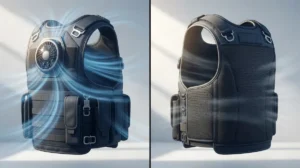
Heat buildup under body armor slows reaction time, clouds thinking, and drains energy faster—making tactical vest ventilation a mission-essential safety tool, not a luxury item for military personnel.
-
Tactical vests should create at least a half-inch gap between body and armor using 3D polyester mesh or high-strength polyethylene materials to enable consistent airflow that carries heat and moisture away from skin.
-
Passive systems like BluHalo work best for active patrol missions, while active fan systems like BluFano (8-32 hour runtime) suit stationary tasks; match your ventilation type to your specific mission profile for optimal performance.
-
360-degree airflow ventilation improves temperature regulation, reduces sweat pooling and skin irritation, extends safe wear time, and enhances focus by eliminating heat-related distractions during long operations.
-
Proper installation requires a moisture-wicking base layer, snug (not tight) strap adjustment, and regular maintenance of mesh/fan components; wearing the vest too loose loses the critical air gap it’s designed to create.
-
Popular solutions like BluHalo (under 7 ounces, on-demand inflation) and BluFano (built-in 10,000mAh power bank, forward light) can be bundled together for maximum flexibility across varying mission types and environmental conditions.
Wearing body armor in intense heat is no joke. Ask any soldier who has spent hours on patrol under a heavy plate carrier in 100-degree weather. The heat builds up fast. Sweat soaks through layers. Focus starts to slip. And that’s when things get dangerous. Tactical vest ventilation for soldiers is not just about comfort — it’s about staying sharp, staying safe, and staying mission-ready. In 2026, the solutions available are better than ever, and understanding your options can make a real difference in the field.
In this article, we’ll break down how tactical vest ventilation works, why it matters so much for military personnel, and what to look for when choosing the right system. Whether you’re active duty, in a support role, or outfitting a unit, this guide is for you.
Why Heat Is a Real Threat Under Body Armor
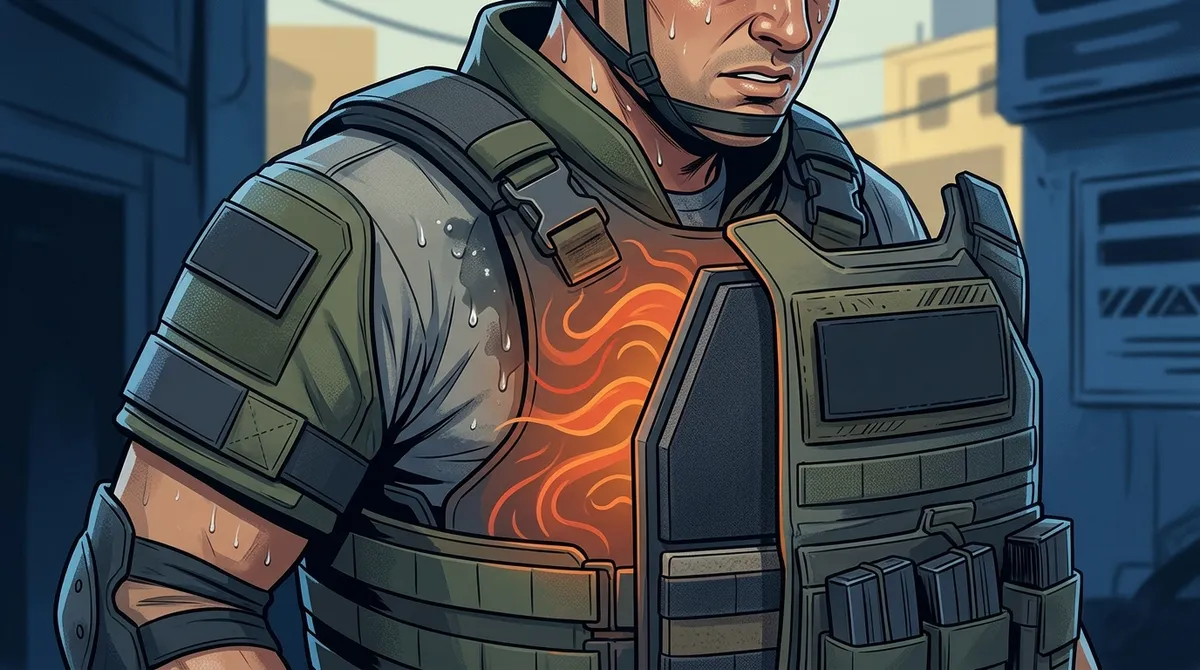
Body armor is designed to protect you. But it also traps heat. The plates and panels sit tight against your body, blocking natural airflow. There’s nowhere for heat or sweat to go. According to the OSHA Heat Stress Guide, heat exhaustion and heat stroke are serious risks for workers in hot environments — and soldiers in full kit face that risk every single day.
Heat buildup doesn’t just feel bad. It slows your reaction time. It clouds your thinking. It drains your energy faster. When you’re in a high-stakes situation, even small drops in performance can matter. That’s why professionals who wear body armor need proper ventilation as part of their gear setup — not as a luxury, but as a necessity.
How Tactical Vest Ventilation Actually Works
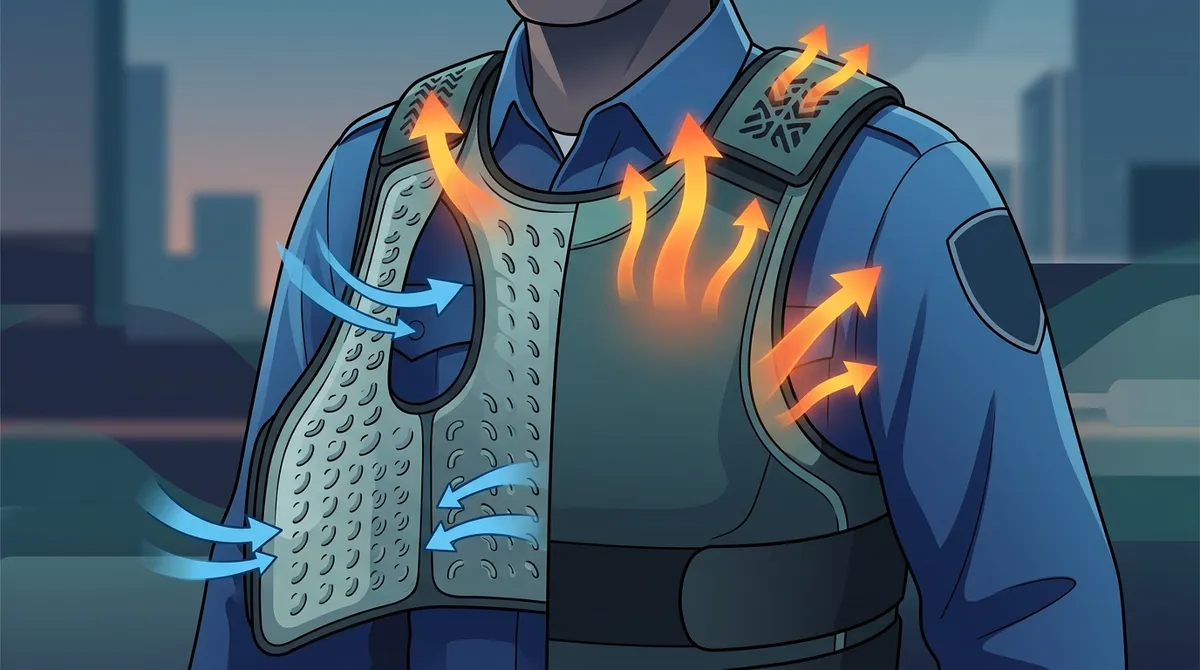
At its core, tactical vest ventilation creates a gap between your body and your armor. This gap allows air to move. Moving air carries heat and moisture away from your skin. The result? A cooler, drier wearing experience — even during long operations.
There are two main types of ventilation systems:
- Passive systems — These use physical spacers, mesh panels, or structured frames to create separation. Air moves naturally through the gap without any power source.
- Active systems — These use battery-powered fans to push or pull air through the gap. They deliver more consistent cooling, especially when you’re stationary or in low-wind environments.
You can learn more about how these compare in this breakdown of passive vs. active tactical vest ventilation to find out which approach fits your mission profile best.
Key Features to Look For in a Tactical Ventilation Vest
Not all ventilation vests are created equal. Here’s what matters most when you’re evaluating your options:
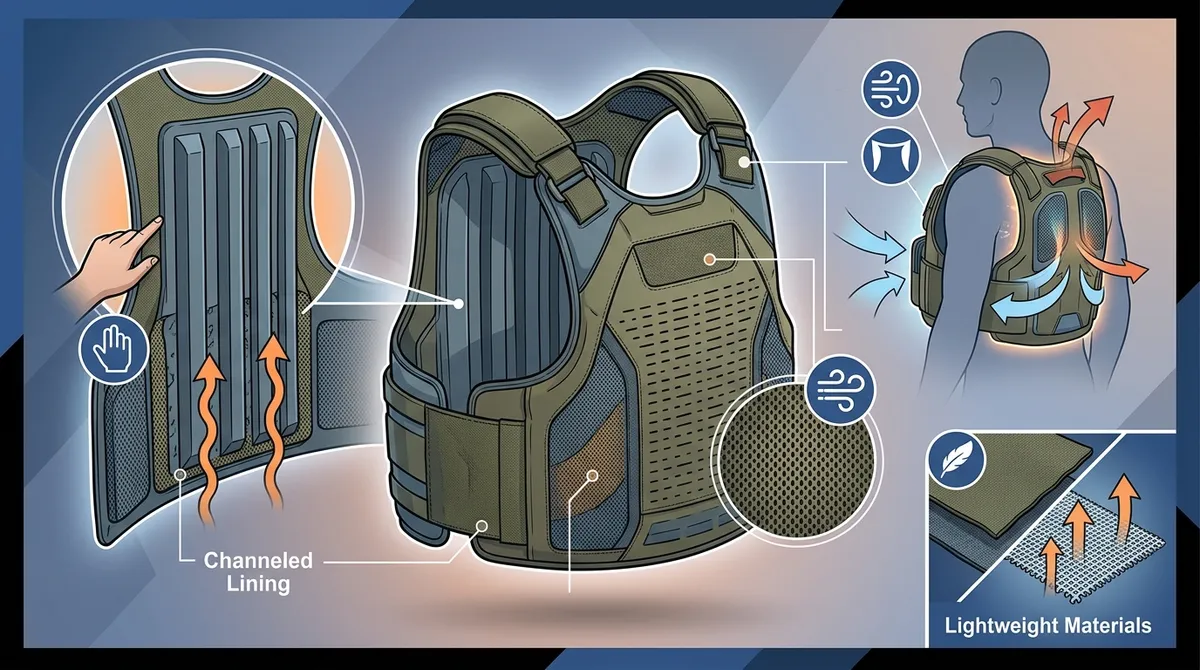
- Degree of separation — Look for vests that create at least a half-inch gap between your body and armor. Products like TacVent are designed to do exactly this, delivering constant passive airflow.
- Material quality — 3D polyester mesh with large perforations is ideal. It resists moisture absorption, stays structured under pressure, and keeps air circulating in all directions.
- Adjustability — A good ventilation vest should fit many body types. The MILITAUR Ventilation Vest, for example, features 4 points of adjustment for a personalized fit.
- Weight — Every ounce matters in the field. Look for lightweight options that don’t add unnecessary bulk to your kit.
- Modular vs. built-in design — Modular frames let you add or remove ventilation based on the mission. Built-in systems offer convenience. Each has its place depending on your role.
For a detailed guide on selecting the right gear, check out how to choose the right body armor ventilation vest in 2026.
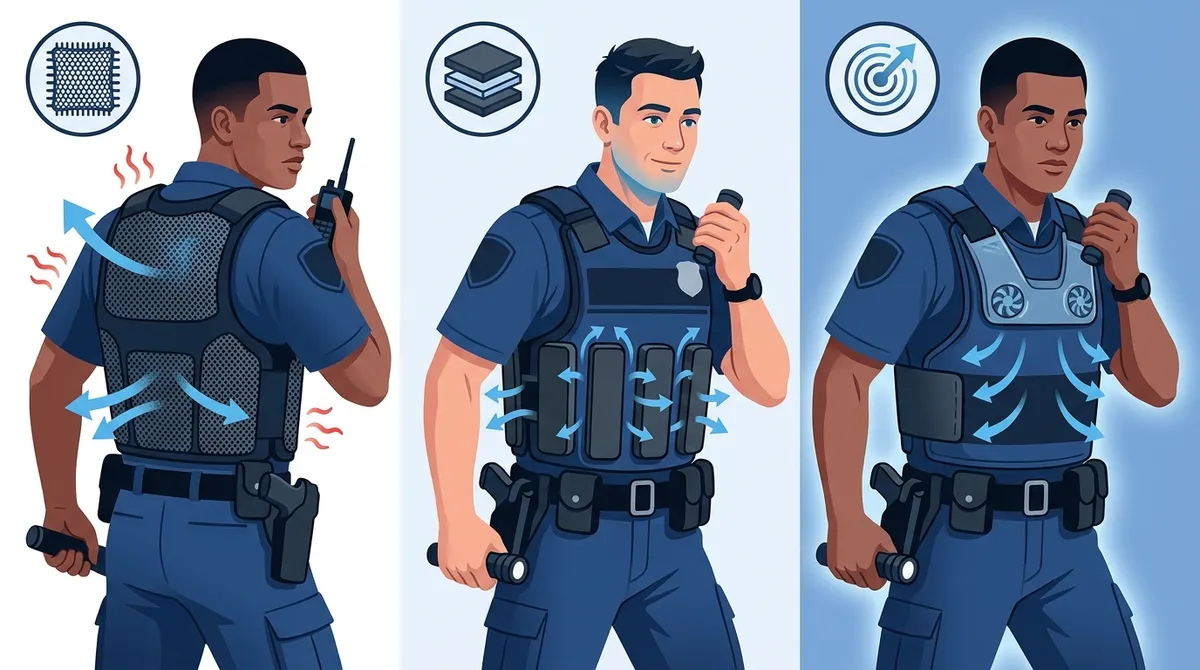
Comparing Popular Ventilation Approaches
Let’s take a look at how different ventilation approaches stack up against each other in real-world use.
| Ventilation Type | How It Works | Best For | Key Benefit |
|---|---|---|---|
| Passive Mesh Vest | Spacer layer creates air gap | Active movement, patrol | No power needed, lightweight |
| Modular Frame | Attaches to plate carrier, creates separation | Mission-specific use | Flexible, easy to remove |
| Active Fan System | Battery-powered fan circulates air | Stationary or low-movement tasks | Consistent, on-demand cooling |
| EVAP Technology Panel | Uses breathing motion to draw cool air in | Moderate activity levels | Passive but enhanced airflow |
Each system has strengths depending on your role and environment. Built-in vs. modular tactical gear ventilation is worth exploring in more depth if you’re still deciding between approaches.
Benefits of 360-Degree Airflow for Military Personnel
One of the gold standards in tactical vest ventilation for soldiers is 360-degree airflow. This means air circulates all the way around your torso — front, back, and sides. The Maxx-Dri Vest 3.0 is well-known for offering this full-coverage approach.
Here’s why full-coverage ventilation matters so much in military settings:
- Temperature regulation — Your body loses excess heat evenly across all contact points.
- Moisture reduction — Sweat evaporates instead of pooling, reducing skin irritation and rashes.
- Improved focus — When you’re not distracted by heat and discomfort, you can concentrate on your mission.
- Extended wear time — Soldiers can stay in kit longer without reaching a dangerous heat threshold.
- Reduced fatigue — Less heat stress means more energy reserves for critical tasks.
These benefits align closely with what the NIJ Body Armor Standards research highlights about comfort and performance when wearing protective gear over extended periods.
How to Wear a Ventilation Vest Under Body Armor
Wearing a ventilation vest correctly makes all the difference. Here’s a simple step-by-step guide:
- Start with a clean base layer — A moisture-wicking shirt underneath helps the system work even better.
- Put on your ventilation vest — Position it so it covers your torso fully, front and back.
- Adjust the straps — Shoulder and side straps should be snug but not tight. You need the vest to hold its shape and maintain the air gap.
- Layer your body armor on top — The ventilation layer should sit between your base layer and your plate carrier or soft armor.
- Check airflow before heading out — Move around to make sure you have full range of motion and the vest isn’t bunching or shifting.
If you’re using an active system, make sure it’s charged and secured before your shift or mission begins. Read more tips on how to stay cool under body armor with smart ventilation to get the most out of your setup.
Meet BluHalo and BluFano: Built for Warriors
When it comes to solutions designed with everyday heroes in mind, BluHalo and BluFano stand out from the crowd. BluHalo is a lightweight ventilation vest — weighing under 7 ounces — created by a Chicago police officer who understood the pain of overheating in body armor firsthand.
BluHalo inflates on demand to lift your vest up to 1.5 inches off your body, creating a real air gap that lets heat and sweat escape. When you don’t need it, just deflate it and it sits flat and undetectable. It attaches easily with Velcro and is made from double-layer high-strength polyethylene for durability in tough conditions. Officers report huge comfort improvements even during 12-hour shifts in 95-degree heat.
BluFano takes things a step further with an active fan system that delivers 8 to 32 hours of adjustable, fan-driven airflow depending on your setting. It features a built-in 10,000mAh power bank that can also charge other USB devices, plus a forward-facing light for low-light situations. It slides under any style of body armor and can be secured with an optional strap for hands-free convenience.
| Feature | BluHalo | BluFano |
|---|---|---|
| Cooling Type | Passive (inflatable air gap) | Active (fan-driven airflow) |
| Weight | Under 7 ounces | Self-contained unit |
| Battery Required | No | Yes (10,000mAh built-in) |
| Runtime | On-demand, indefinite | 8–32 hours per charge |
| Extra Features | Low-profile, Velcro attachment | USB charging, built-in light |
| Best For | All-day comfort, active patrol | Extended missions, low-movement tasks |
You can also bundle both products together for maximum cooling performance. Check out the BluHalo shop to see current pricing and bundle options.
Common Mistakes Soldiers Make With Ventilation Gear
Even the best ventilation system won’t help if it’s used incorrectly. Here are some mistakes to avoid:
- Skipping the base layer — A moisture-wicking layer beneath the ventilation vest dramatically improves performance.
- Wearing the vest too loose — If the ventilation layer shifts around, it loses the consistent air gap it’s designed to create.
- Ignoring maintenance — Mesh and fan systems need to be cleaned regularly to stay effective. Clogged materials reduce airflow.
- Choosing bulk over function — Heavy or bulky ventilation solutions can actually restrict movement and cause more fatigue.
For more on what to watch out for, take a look at 7 military body armor cooling system mistakes to avoid. Getting the basics right makes a big difference.
Ventilation Options Compared by Mission Type
| Mission Type | Recommended System | Why It Works |
|---|---|---|
| Active patrol (high movement) | Passive mesh vest or BluHalo | Lightweight, no power needed, moves with you |
| Checkpoint / observation post | Active fan system (BluFano) | Keeps air moving even when you’re stationary |
| Extended multi-day operations | Modular frame + active system combo | Flexibility to adapt based on conditions |
| Training exercises | Passive vest for low-cost, reliable cooling | Easy to wear, wash, and reuse |
Matching your ventilation solution to your actual mission type is a smart move. If you’re not sure where to start, you can always reach out to the team at BluHalo for personalized guidance based on your role and needs.
Final Thoughts: Stay Cool, Stay Combat-Ready
Tactical vest ventilation for soldiers isn’t a nice-to-have anymore — it’s a mission essential. Heat stress is a real threat. Discomfort kills focus. And fatigue costs lives. The good news? The technology available in 2026 is excellent, affordable, and easy to integrate into your existing gear setup.
Whether you go with a simple passive mesh system or upgrade to an active fan solution like BluFano, the right ventilation vest can transform how you feel during long, grueling operations. Explore your options, match the solution to your mission, and never let heat be the reason your performance slips.
Ready to find the right cooling solution for your body armor? Get in touch with our team and we’ll help you find the perfect ventilation system for your needs. You put yourself on the line every day — you deserve to be as comfortable and effective as possible while doing it.
FAQs
Q: What is the best tactical vest ventilation system for soldiers?
A: The best system depends on your mission type! For active patrol, lightweight passive options like the BluHalo ventilation vest work great. For stationary or extended tasks, an active fan system like BluFano delivers consistent, adjustable airflow for up to 32 hours. Bundling both gives you maximum flexibility.
Q: How does body armor ventilation reduce overheating for soldiers?
A: Ventilation vests create a physical gap between your body and your armor — usually at least half an inch. This gap lets air circulate, carrying heat and moisture away from your skin. The result is lower skin temperature, less sweat buildup, and a much more comfortable wearing experience even on long, hot missions.
Q: Are modular ventilation options better than built-in systems for military use?
A: It really depends on how you operate! Modular systems are great because you can add or remove them based on the mission, which keeps your kit versatile and lighter when ventilation isn’t needed. Built-in systems offer convenience since there’s nothing extra to manage. Many soldiers appreciate having both options available.
Q: What materials work best in tactical vest ventilation systems?
A: 3D polyester mesh with large perforations is one of the top-performing materials for ventilation vests. It holds its structure, resists moisture absorption, and keeps air flowing in all directions consistently. High-strength polyethylene, like what’s used in the BluHalo vest, is also excellent for durability and lightweight comfort.
Q: Can ventilation vests improve safety and focus for military personnel?
A: Absolutely — and it’s more important than many people realize! Heat stress slows reaction times and reduces mental clarity. By keeping your core temperature lower and reducing sweat buildup, a good ventilation vest helps you stay sharp, focused, and physically capable throughout your entire mission or shift.