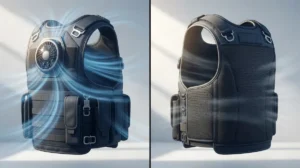
Key Takeaways
-
Heat trapped under body armor reduces cognitive performance and physical endurance according to OSHA guidelines, making under vest ventilation a safety issue beyond comfort for professionals relying on sharp decision-making.
-
Passive ventilation systems like IceVents use materials that are 90% air by volume and can withstand 5,000 pounds of load while maintaining full ventilation, making them ideal for everyday patrol without battery requirements.
-
Active fan systems such as Blufano provide 8-32 hours of runtime on a single charge with adjustable airflow settings, making them essential for high-intensity operations or extreme heat environments where passive cooling is insufficient.
-
Proper positioning of ventilation vests—extending to belly button level or higher and secured without bunching—is the single biggest factor determining cooling effectiveness and should be checked before each shift.
-
Combining passive inflatable vests like BluHalo (under 7 ounces, creates 1.5-inch standoff) with active fan systems provides both structural air gap and continuous airflow, offering maximum cooling for SWAT, military, and firefighting operations.
-
Real-world reports from professionals consistently show reduced fatigue, better focus, lower odor, and greater willingness to wear armor consistently, with officers noting significant comfort improvements during 12-hour shifts in 95-degree heat.
If you wear body armor for work, you already know the struggle. The heat builds up fast. Sweat soaks through your uniform. Your focus starts to slip. Whether you’re a police officer on a 12-hour patrol, a soldier in a desert environment, or a security professional working long shifts, heat trapped under your vest is a real problem — and it affects your performance and safety.
The good news? Under vest ventilation technology has come a long way. Today’s solutions are lightweight, effective, and designed by people who’ve lived the problem firsthand. In this guide, we’ll break down how under vest ventilation works, what technologies exist, and which products give you the best cooling relief on the job.

Why Heat Under Body Armor Is a Serious Problem
Body armor is designed to protect you. But it also traps heat and moisture against your body. There’s no airflow between the vest and your skin. That means sweat builds up, your core temperature rises, and fatigue sets in faster than it should.
According to the OSHA Heat Stress Guide, prolonged heat exposure reduces cognitive performance and physical endurance. For professionals who depend on sharp decision-making, this is more than just discomfort — it’s a safety issue. Heat stress can cause poor judgment, slower reactions, and in extreme cases, heat exhaustion.
The problem gets worse in summer months, high-humidity climates, or during physically demanding operations. The vest essentially acts like an insulating shell that holds heat in and prevents your body’s natural cooling system from working properly.
How Under Vest Ventilation Works
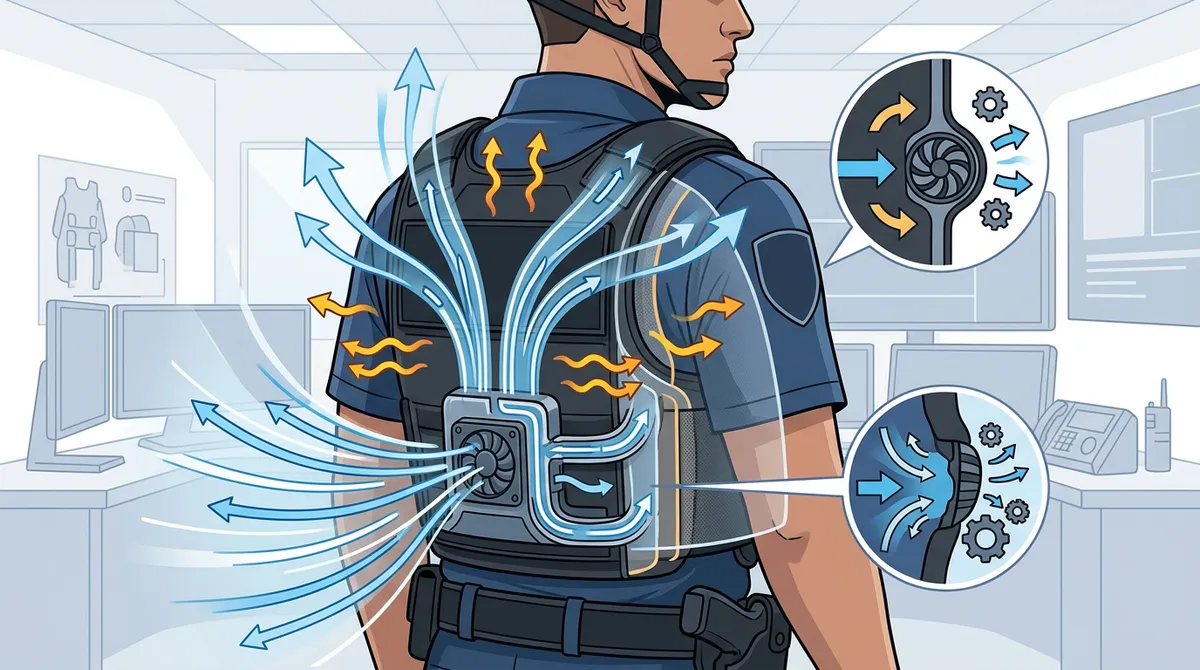
Under vest ventilation systems solve this problem by creating a gap between your skin and your armor. That gap allows air to circulate, sweat to evaporate, and heat to escape. Think of it like cracking a window on a hot day — even a small amount of airflow makes a huge difference.
There are two main approaches to under vest ventilation:
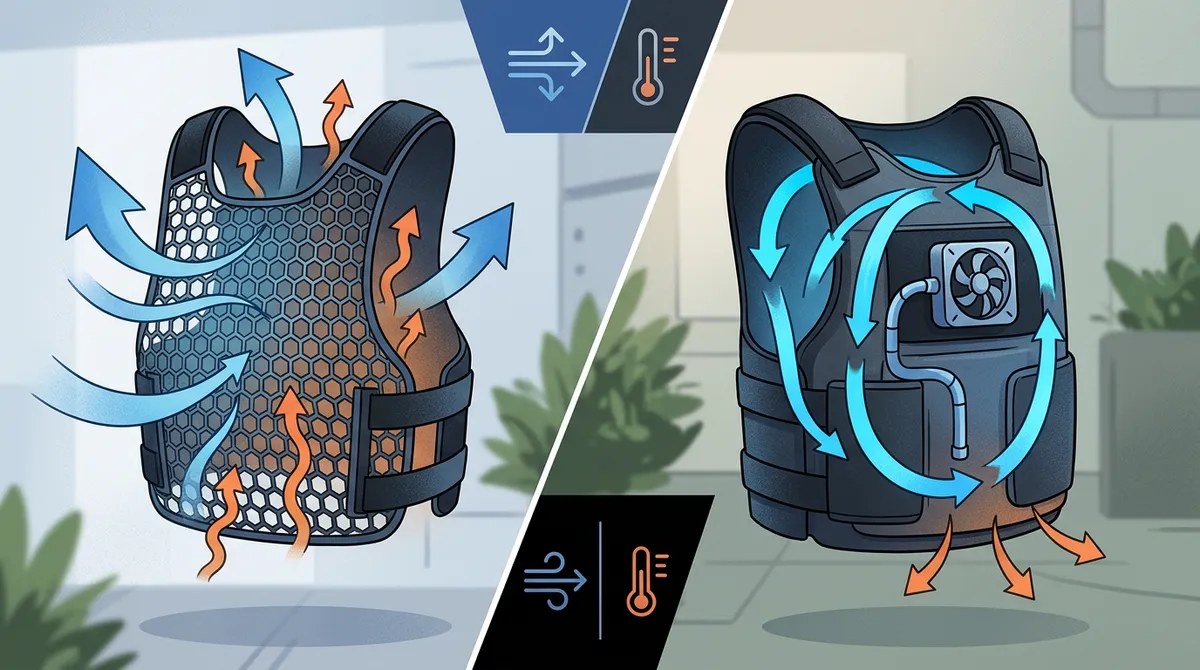
- Passive ventilation — Uses rigid materials, mesh structures, or air pockets to create a standoff space. No batteries or power needed. Air moves naturally through convection and body movement.
- Active ventilation — Uses fan-driven systems to push fresh, cool air under the vest continuously. More powerful cooling, with adjustable settings for different conditions.
Both approaches dramatically outperform wearing standard base layers under armor. Let’s look at the key technologies in more detail.
Key Technologies Used in Ventilation Vests
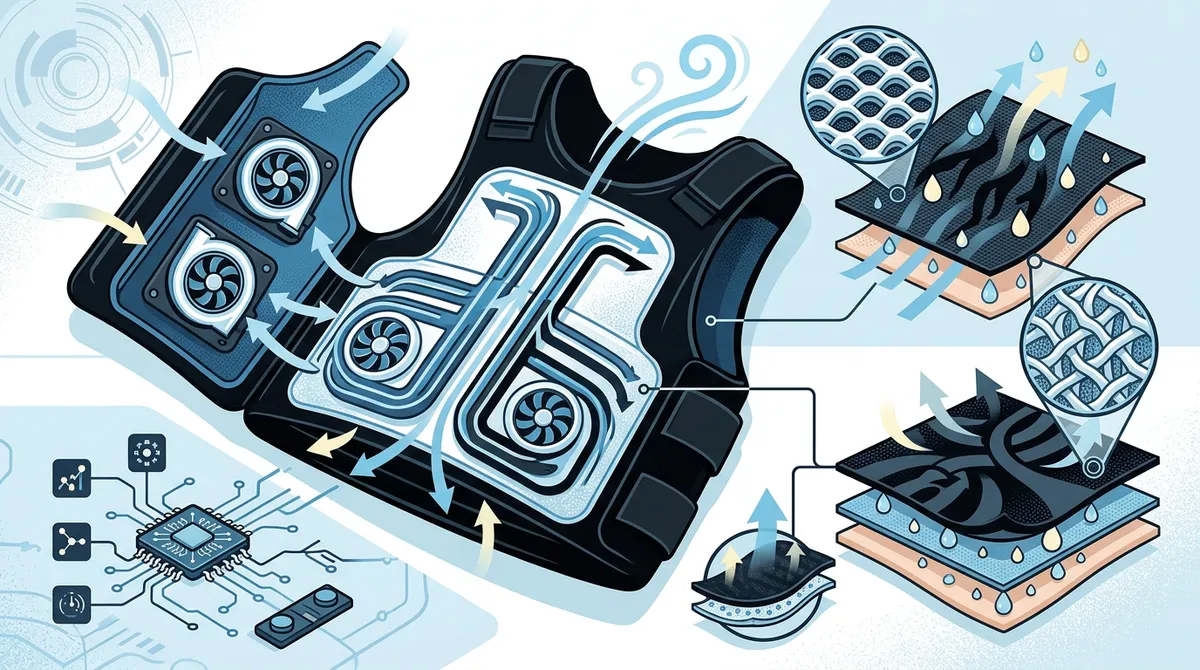
Modern under vest ventilation products use a range of advanced materials and engineering solutions. Here’s a quick breakdown:
| Technology | How It Works | Key Benefit |
|---|---|---|
| 3D Mesh / Rigid Polymer | Creates a physical standoff space between skin and armor | Constant passive airflow without power |
| Moisture-Wicking Fabrics | Pulls sweat away from skin to outer layers for evaporation | Reduces wetness and chafing |
| Phase-Change Materials (PCMs) | Absorbs body heat as material changes state | Actively lowers surface temperature |
| 37.5® Fiber Technology | Uses volcanic minerals and activated carbon to move moisture | Faster evaporative cooling |
| Fan-Driven Air Systems | Pushes fresh air under the vest with adjustable speed | On-demand active cooling |
| Inflatable Air Vest | Creates an air gap on demand using a pump | Low-profile, adjustable standoff space |
Each technology has its strengths. The right choice depends on your environment, the type of armor you wear, and how much cooling power you need during your shifts.
Passive vs. Active Cooling: Which Is Right for You?
Passive cooling is ideal if you want simplicity. Products like IceVents use a thermoplastic elastomer (TPE) cellular matrix that is 90% air by volume. This structure can withstand up to 5,000 pounds of load while still maintaining full ventilation. That means it won’t collapse under the weight of your plate carrier.
Active cooling gives you more control. Fan systems push air under your vest continuously. You can adjust the speed based on how hot you are. This is particularly useful during high-intensity operations or in extreme heat environments where passive airflow just isn’t enough.
Here’s a simple comparison to help you decide:
| Feature | Passive Ventilation | Active Fan Ventilation |
|---|---|---|
| Power Required | No | Yes (battery) |
| Cooling Intensity | Moderate | High |
| Weight | Very light | Slightly heavier |
| Best For | Everyday patrol, routine duty | High-intensity ops, extreme heat |
| Maintenance | Minimal (machine washable) | Charge battery regularly |
| Noise Level | Silent | Low hum |
Many professionals choose to use both. A passive ventilation vest for everyday use, combined with an active fan system during high-demand situations, gives you the best of both worlds.
Top Under Vest Ventilation Solutions Available in 2026
The market has grown significantly. Here are the most talked-about under vest ventilation options right now:
- BluHalo Ventilation Vest — Created by a Chicago police officer, the BluHalo is a lightweight inflatable vest worn under body armor. It weighs under 7 ounces and can lift your vest up to 1.5 inches off your body when inflated. Made from double-layer high-strength polyethylene, it provides on-demand cooling and lies flat when deflated.
- Blufano Active Fan System — The Blufano is an active cooling unit with a patented air-redirect spout that slides under any style of body armor. It runs for 8–32 hours on a single charge and includes a 10,000mAh power bank that can also charge your other devices. A forward-facing light adds hands-free illumination in low-light situations.
- Maxx-Dri Vest — A popular passive vest that creates 8mm of standoff space using rigid polymer channels. Lightweight and machine washable.
- IceVents — Modular pads made from TPE that attach inside your vest. Extremely lightweight (under 1 oz per pad) and provide omnidirectional airflow.
- TacVent — Creates a half-inch separation between skin and armor. Designed for passive airflow with minimal added bulk.
The BluHalo shop offers both the BluHalo vest and Blufano system individually or bundled together for maximum cooling performance at a discount. If you’re serious about staying cool under armor, the bundle is the smart choice.
How to Properly Wear an Under Vest Ventilation System
Wearing your ventilation vest correctly matters a lot. Poor positioning reduces airflow and limits the cooling benefit. Follow these steps for the best results:
- Put on your ventilation vest or pads first — Place the ventilation layer directly against your body or base layer before putting on your armor.
- Position it high enough — Vents should extend to belly button level or higher so hot air can escape upward and out from under the vest. If the vest covers the vent openings, hot air gets trapped.
- Secure it properly — Use Velcro attachments or optional straps to keep the ventilation system in place during movement. A shifting vest reduces airflow efficiency.
- Inflate or activate as needed — For inflatable systems like BluHalo, inflate before putting on your body armor. For fan systems like Blufano, slide the spout into position and turn on your preferred airflow setting.
- Check the fit before your shift — Make sure nothing is bunched or folded. A smooth, flat fit maximizes the airflow channel between your body and armor.
Proper positioning is the single biggest factor in how well your under vest ventilation system performs. Take a few extra minutes to get it right before you head out.
What to Look for When Choosing a Ventilation Vest
Not all under vest ventilation products are equal. Here’s what to check before you buy:
- Weight — Every ounce matters over a long shift. Look for products under 1 pound that won’t add fatigue.
- Compatibility — Make sure the system works with your specific type of armor, whether it’s a soft body armor vest, plate carrier, or duty belt setup.
- Durability — Look for materials that can handle daily use, sweat, and repeated washing without degrading.
- Cooling runtime — For active systems, battery life is critical. The Blufano offers up to 32 hours of runtime on low settings.
- Ease of use — You should be able to put on and adjust your ventilation system quickly, even in the field.
- Washability — Most quality ventilation vests are machine washable, which is essential for daily hygiene.
Meeting current Body Armor Standards is also something to keep in mind. Your ventilation system should work seamlessly with certified armor without affecting fit, coverage, or protection levels.
Real-World Benefits Reported by Professionals
Officers, soldiers, and security professionals who use under vest ventilation consistently report the same improvements:
- Less sweat buildup during long shifts
- Reduced fatigue and better focus throughout the day
- Lower odor from armor and base layers
- Faster cooling when transitioning from outdoor heat to air-conditioned vehicles
- Greater willingness to wear armor consistently (which directly improves safety)
One officer described using the BluHalo during a 12-hour shift on a 95-degree day and feeling significantly more comfortable compared to previous summers. That kind of real-world feedback matters. You can read more on the BluHalo reviews page to see what professionals in your field are saying.
Combining Products for Maximum Cooling
Many professionals find that layering solutions gives the best results. For example, using an inflatable passive vest like BluHalo to create an air gap, combined with the Blufano active fan system for continuous airflow, gives you both structural standoff space and active air circulation.
This combination is especially useful for SWAT teams, military personnel in high-heat deployments, or firefighters wearing heavy protective gear. You can learn more about how both products work together by visiting the BluHalo videos page, where real users demonstrate setup and performance.
The BluHalo ventilation vest is priced at $60.00, making it one of the most affordable passive cooling options on the market. The Blufano active fan system is available separately or bundled with BluHalo for a discount through the BluHalo website.
Final Thoughts: Don’t Ignore the Heat Under Your Vest
Heat under body armor isn’t just uncomfortable — it’s a performance and safety issue. Under vest ventilation technology gives you a practical, proven solution. Whether you go passive, active, or combine both, the difference in comfort and focus is significant.
The professionals who rely on body armor every day deserve gear that supports them, not slows them down. BluHalo and Blufano were designed with exactly that mission in mind — by people who’ve felt the heat firsthand and wanted a better answer.
Ready to feel the difference? Reach out to the BluHalo team to find the right under vest ventilation solution for your needs, or head straight to the shop to get started today. Your comfort on duty matters — and now you have the tools to protect it.
FAQs
Q: What is under vest ventilation and how does it work?
A: Under vest ventilation refers to systems — like vests, pads, or fan units — worn beneath body armor to create airflow between your skin and the armor. They work by creating a physical gap that lets heat escape and sweat evaporate, keeping you cooler and more comfortable during long shifts. It’s a simple concept that makes a huge difference when you’re out there working hard!
Q: Can I use an under vest ventilation system with any type of body armor?
A: Great news — most under vest ventilation systems are designed to work with a wide range of body armor styles, including soft body armor vests, plate carriers, and duty armor. Products like BluHalo and Blufano are specifically built to slide under any armor style without affecting fit or protection. Always check the product specs to confirm compatibility with your specific vest.
Q: How long does a fan-based ventilation system like Blufano last on a single charge?
A: The Blufano active fan system runs for 8 to 32 hours on a single charge, depending on the airflow setting you choose. It includes a built-in 10,000mAh power bank, so you can also use it to charge your phone or other USB devices while on duty — pretty handy! Lower settings give you longer runtime, which is perfect for full-day shifts.
Q: Do ventilation vests help reduce sweat and odor under body armor?
A: Absolutely! Under vest ventilation systems promote evaporative cooling, which means sweat is moved away from your skin and heat escapes instead of building up. Less trapped moisture means less odor and less chafing over time. Officers and security professionals who use these systems regularly report a noticeable reduction in sweat buildup and post-shift odor — a welcome bonus on top of the comfort benefits!
Q: Is the BluHalo ventilation vest comfortable to wear all day?
A: Yes, BluHalo is designed for all-day comfort! It weighs under 7 ounces and lies completely flat against your body when deflated, so you barely notice it’s there. When inflated, it lifts your vest up to 1.5 inches to create a cooling air gap. Officers have worn it through 12-hour shifts in extreme heat and reported significant comfort improvements — it’s built for the long haul.