Key Takeaways
-
Active ventilation systems using battery-powered fans can lower perceived temperature by 10-15 degrees in hot, dry climates and prevent heat stress that impacts job performance and safety.
-
Combining inflation-based spacing systems with active airflow creates maximum cooling by using inflation to lift the plate carrier 1-1.5 inches off your body, then filling that gap with forced air circulation.
-
Standard plate carriers trap air creating a microclimate that can be 15-20 degrees hotter than surrounding air; ventilation systems solve this by continuously replacing saturated, humid air with drier air to maintain evaporative cooling.
-
Active ventilation systems should run 8+ hours per shift on a single charge and include adjustable airflow controls, allowing you to match cooling power to activity level throughout your shift without constant battery anxiety.
-
Inflation systems like BluHalo weigh under 7 ounces and allow on-demand cooling with quick deflation for tactical situations, giving flexibility to switch between maximum cooling and minimal profile multiple times during a shift.
-
Proper maintenance of ventilation systems includes regular cleaning of intake/exhaust areas, battery management (avoid complete discharge cycles), and storing inflation systems partially deflated to extend material lifespan.
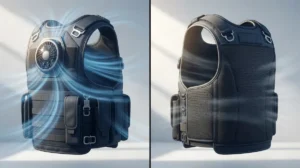
If you’ve ever worn a plate carrier during a long shift, you know exactly what happens: heat builds up fast, sweat soaks through your shirt, and discomfort becomes a serious distraction. Your body is working overtime trying to cool down, but that heavy armor traps everything against your skin. So how does plate carrier ventilation actually work to solve this problem? The answer lies in creating airflow beneath your protective gear—something that doesn’t happen naturally when body armor sits flush against your torso.
Plate carrier ventilation systems are designed specifically to move air under your vest, release trapped heat, and pull moisture away from your body. Whether you’re a police officer on patrol, a soldier on deployment, or a security professional working long hours, understanding how these systems function can transform your comfort level and job performance. Let’s break down exactly how plate carrier ventilation works and why it matters for anyone wearing body armor regularly.
The Science Behind Heat Buildup Under Body Armor
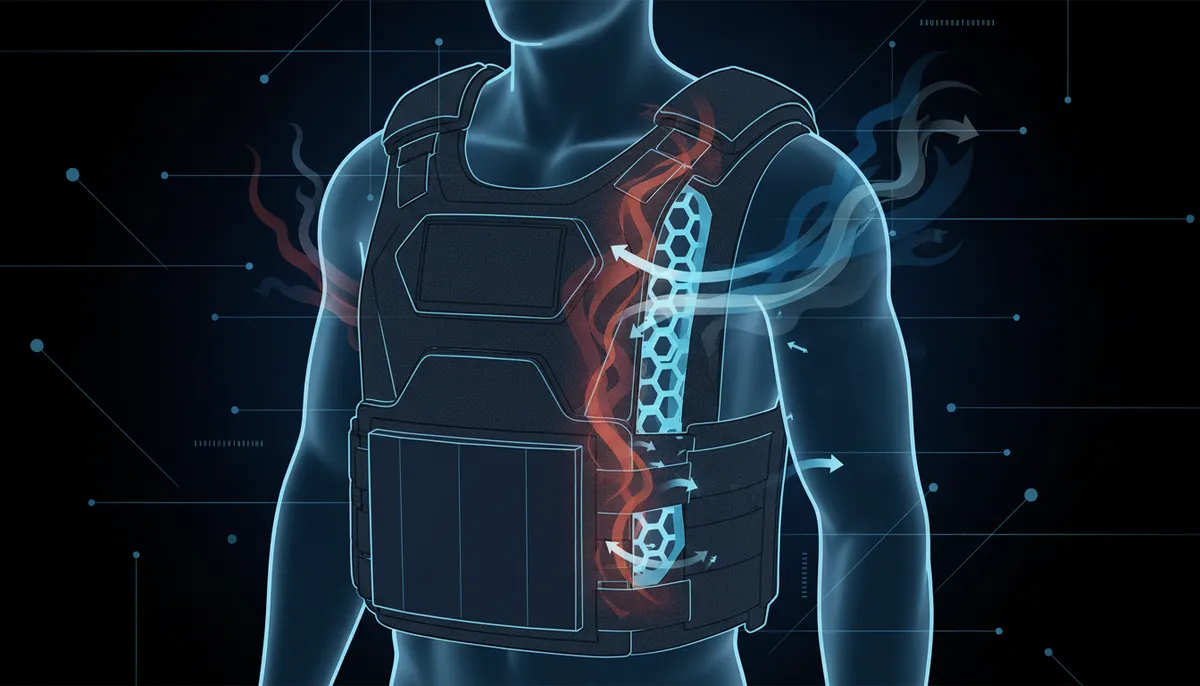
Your body naturally produces heat when you move, and it cools itself primarily through sweat evaporation. But when you strap on a plate carrier, you create a sealed environment where air can’t circulate. The vest acts like a barrier, trapping warm air and moisture against your chest and back. This means your natural cooling system can’t work properly.
Think about wearing a raincoat on a warm day—even if it’s not raining, you’ll overheat because the waterproof material doesn’t breathe. Plate carriers create the same problem, but worse, because they’re much heavier and cover more surface area. OSHA research shows that heat stress significantly impacts worker performance and safety, especially when protective equipment prevents normal cooling.
Why Standard Vests Don’t Breathe
Most plate carriers are built for protection, not comfort. They’re constructed from heavy-duty nylon, Cordura, or similar materials that prioritize durability and ballistic performance. These materials don’t allow air to pass through easily. Add ballistic plates (ceramic, steel, or composite), and you’ve got solid barriers both front and back that completely block airflow.
Between your body and those plates is where the real problem happens. That small gap fills with hot, humid air that has nowhere to go. Without active ventilation, temperatures in this microclimate can climb 15-20 degrees higher than the surrounding air temperature. That’s why a 75-degree day feels like 95 degrees under your vest.
How Ventilation Systems Create Airflow
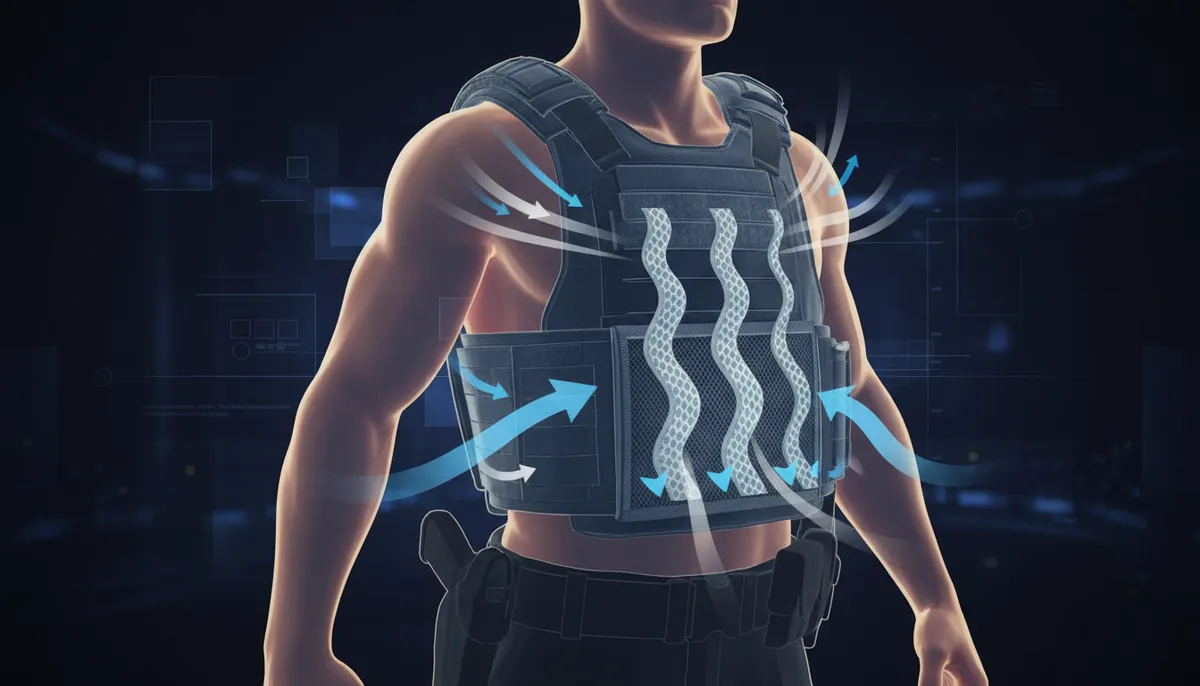
Plate carrier ventilation systems work by creating intentional air movement in that trapped space under your armor. There are two main approaches: passive systems and active systems. Each works differently, but both aim to break up that stagnant, hot air pocket.
| Ventilation Type | How It Works | Best For |
|---|---|---|
| Passive Systems | Use spacer materials or mesh to create air gaps | Moderate climates, lower activity levels |
| Active Systems | Use battery-powered fans to force air circulation | Hot environments, long shifts, high activity |
Passive Ventilation Methods
Passive systems don’t require power. They typically use spacer fabrics, mesh materials, or structured foam to create small air channels between your body and the plate carrier. These channels allow some air to move naturally when you walk or shift position. Think of them like the grooves in a running shoe sole—they don’t actively pump air, but they provide pathways for it to escape.
The downside is that passive systems depend on your movement and environmental conditions. If you’re standing still on a hot day with no breeze, you won’t get much benefit. They work better as supplements to cooling rather than primary solutions for serious heat management.
Active Ventilation Systems
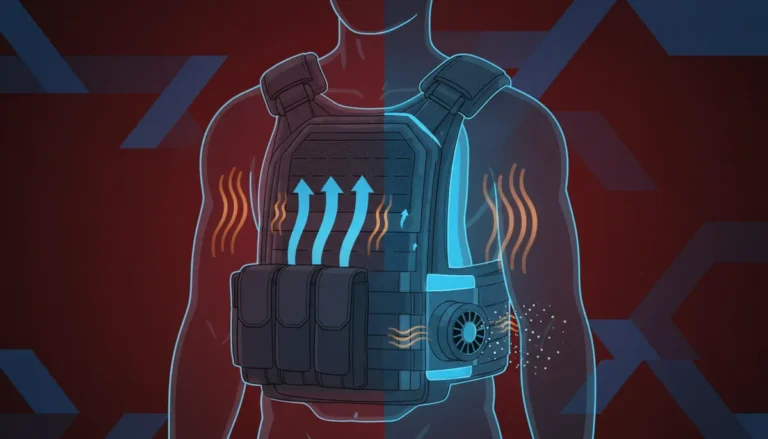
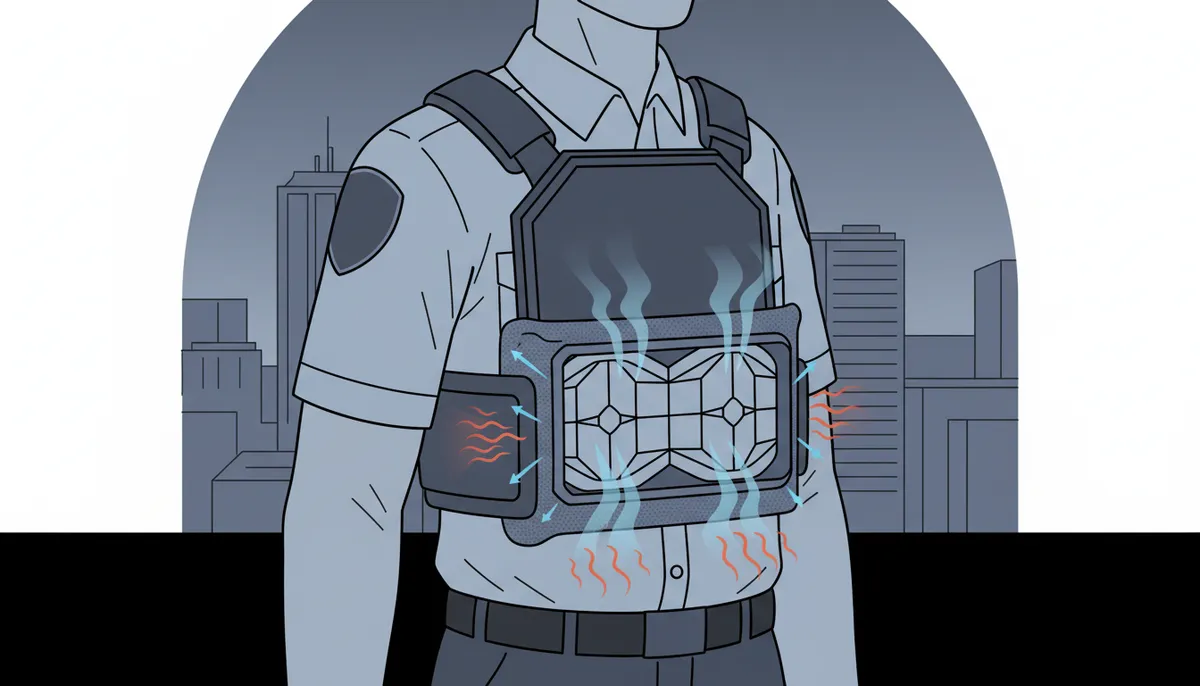
Active ventilation uses small, battery-powered fans to continuously move air under your plate carrier. These systems don’t wait for natural airflow—they create it. The fans pull fresh air from the environment and push it into the space between your body and the vest, then force hot, humid air out.
This continuous air exchange does three important things. First, it lowers the temperature of the air touching your skin. Second, it speeds up sweat evaporation by replacing humid air with drier air. Third, it prevents hot spots from developing in areas where the vest presses tightly against your body.
Blufano represents this active approach with a self-contained fan unit that slides under any style of body armor. Its patented air-redirect spout delivers adjustable airflow exactly where you need it, running for 8 to 32 hours depending on your cooling needs. The system includes a 10,000mAh power bank that both powers the fan and charges your devices, making it practical for full shifts without worrying about battery life.
The Role of Inflation and Spacing Technology
Another effective ventilation approach uses inflation to physically lift the plate carrier away from your body. When you create a larger air gap—even just an inch or so—you dramatically increase the space available for air to circulate. This works on the same principle as a tent: raising the roof creates more volume for air to move around.
Inflation-based systems typically use lightweight, durable materials that can be pumped up on demand and deflated when you need a lower profile. When inflated, they create a cushion of air that acts as both a spacer and an insulator, keeping the hot plate carrier surface away from your skin while allowing air to flow through the expanded space.
How BluHalo Uses Inflation for Cooling
The BluHalo ventilation vest weighs under 7 ounces but can lift your plate carrier up to 1.5 inches off your body when inflated. This creates an air gap that breaks the direct contact between your body and the hot vest material. You can inflate it with a small pump when you need cooling, then quickly deflate it with a button when you need to maintain a lower profile.
This cooling-on-demand approach gives you control over your comfort without permanently changing your plate carrier setup. The BluHalo attaches with Velcro to a clean vest surface, sits flat and unobtrusive when deflated, and is constructed from double-layer high-strength polyethylene for durability that holds up to daily duty use.
Combining Ventilation Systems for Maximum Cooling
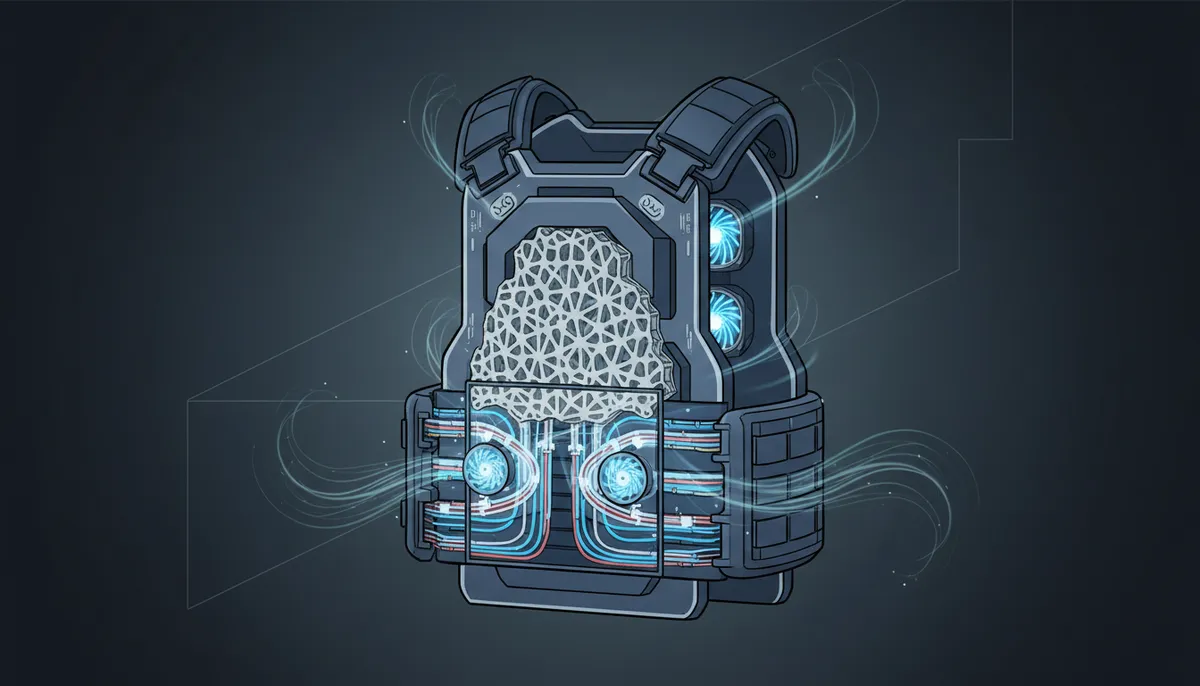
Here’s where things get interesting: you don’t have to choose just one approach. Combining an inflation system with active airflow creates a powerful cooling effect that addresses heat from multiple angles. The inflation creates the space, and the fan fills that space with moving air.
Many law enforcement officers and tactical professionals bundle both technologies for maximum relief during hot weather operations. The expanded air gap from inflation gives the fan more room to work with, and the forced airflow prevents that gap from just becoming a larger pocket of hot, stagnant air.
| Cooling Method | Primary Benefit | Works Best When |
|---|---|---|
| Air Gap Creation | Reduces direct heat transfer from vest to body | Combined with active airflow |
| Forced Air Circulation | Speeds sweat evaporation and heat removal | You have adequate air gap space |
| Combined Approach | Maximizes both spacing and air movement | Extreme heat or long shifts |
Customers who bundle BluHalo with Blufano get exactly this advantage—spacing technology plus active airflow in one integrated cooling solution. The discount on bundling makes it cost-effective to outfit yourself with both systems rather than trying to make do with just one approach.
What Happens to Moisture Management
Ventilation isn’t just about temperature—it’s also about controlling moisture. When sweat accumulates against your skin under body armor, it creates several problems beyond just feeling uncomfortable. Wet clothing loses its insulating properties, your skin can develop irritation or rashes, and bacteria thrive in that warm, damp environment.
Effective plate carrier ventilation addresses moisture by continuously replacing humid air with drier air. As fresh air flows in, it absorbs moisture from your skin and wet clothing, then carries that moisture away. This keeps your base layer drier and your skin healthier during long periods of wear.
The Evaporative Cooling Effect
When air moves across wet skin, evaporation accelerates. This is your body’s most effective cooling mechanism—when water changes from liquid to vapor, it absorbs significant heat energy from your skin. But this only works when there’s air movement to carry away the vapor and make room for more evaporation.
Without ventilation, the air under your plate carrier quickly becomes saturated with moisture. Once the humidity reaches 100% in that microclimate, evaporation stops completely. You keep sweating, but it just pools against your skin instead of cooling you. Active ventilation prevents this saturation by constantly exchanging saturated air for drier air, keeping the evaporative cooling process running efficiently.
Real-World Performance in Different Conditions
How well does plate carrier ventilation actually work when you’re on duty? The answer depends on several factors: ambient temperature, humidity levels, your activity level, and which ventilation approach you’re using. Let’s look at practical performance in common scenarios.
Hot, Dry Climates
In desert or arid environments, ventilation systems perform exceptionally well. The low humidity means sweat evaporates quickly once you get air moving. Even moderate airflow makes a significant difference when the air itself is dry. Users in these conditions often report feeling 10-15 degrees cooler within minutes of activating ventilation systems.
Hot, Humid Climates
High humidity makes cooling more challenging because the air can’t absorb as much moisture. However, ventilation still helps significantly by preventing complete saturation and by lowering skin temperature through convective cooling (heat transfer to moving air). The key in humid conditions is consistent, strong airflow rather than relying on evaporation alone.
Moderate Conditions with High Activity
Even on mild days, physical exertion generates substantial body heat. Running, climbing stairs, or wrestling during an arrest creates heat that builds rapidly under body armor. Active ventilation in these situations prevents overheating before it starts, maintaining comfort even as your activity level spikes.
| Environment | Challenge | Ventilation Strategy |
|---|---|---|
| Hot & Dry (desert, southwest) | Extreme heat, direct sun | Moderate airflow maximizes evaporation |
| Hot & Humid (southeast, tropical) | High moisture prevents evaporation | Strong, continuous airflow for convective cooling |
| Moderate temp, high activity | Body heat from exertion | On-demand cooling during activity spikes |
| Cool weather | Maintaining comfortable temperature | Low airflow prevents overheating without getting cold |
Installation and Daily Use Considerations
One practical question about plate carrier ventilation is how it fits into your existing setup. Most systems are designed to work with any style of plate carrier without requiring modifications to your armor or vest. This means you can add ventilation without buying new gear or changing your ballistic protection.
Installation typically involves attaching the ventilation device to the inside of your carrier (between the carrier and your body) using Velcro, straps, or clips. The positioning matters—you want the airflow or spacing to cover the areas where heat builds up most, usually across your chest and upper back.
Operating Your Ventilation System
Active systems with fans usually have simple controls—typically a power button and speed adjustment. You can run them continuously or activate them only during the hottest parts of your shift. Battery life varies by model and fan speed, but quality systems should run for at least a full work shift on a single charge.
Inflation systems like BluHalo let you pump them up when you need extra cooling, then deflate them for a lower profile during tactical situations or when moving through tight spaces. This flexibility means you’re not locked into one configuration—you adapt the system to your current needs throughout the day.
Maintenance and Longevity
Like any gear you use daily, ventilation systems need basic care to keep performing well. For fan-based systems, this means keeping the intake and exhaust areas clean so air can flow freely. Dust, lint, and debris can reduce airflow if allowed to accumulate around fan blades or air channels.
Battery maintenance matters too. Rechargeable systems should be charged regularly rather than allowed to completely drain repeatedly, which can shorten battery lifespan. Most modern systems use lithium-ion batteries that handle hundreds of charge cycles when cared for properly.
Cleaning and Storage
Ventilation vests should be wiped down regularly to remove sweat, oils, and dirt. Most can be cleaned with mild soap and water, then air-dried. Check manufacturer guidelines for your specific system, but generally, you want to avoid submerging electronic components while keeping the fabric or material surfaces clean.
When storing your system, keep it in a cool, dry place. For inflation systems, store them partially deflated to avoid constant stress on the material. For battery-powered systems, store with batteries at about 50% charge if you won’t be using them for extended periods.
Choosing the Right Ventilation System for Your Needs
Not all plate carrier ventilation systems are created equal, and what works best depends on your specific situation. Consider these factors when selecting a system:
- How many hours per day you wear your plate carrier
- The typical climate and temperature you work in
- Your activity level while wearing armor
- Whether you need tactical flexibility (ability to quickly adjust profile)
- Budget for initial purchase and any ongoing costs (batteries, replacements)
- Compatibility with your current plate carrier and gear setup
For officers working 8-12 hour shifts in hot climates, active ventilation systems deliver the most reliable cooling. The continuous airflow prevents heat buildup rather than trying to manage it after you’re already uncomfortable. Systems like Blufano that combine long battery life with adjustable airflow give you the flexibility to match cooling power to conditions throughout your shift.
If you want the option to enhance your current setup without committing to always running a fan, inflation-based spacing systems offer effective cooling that you control on demand. BluHalo’s lightweight design and quick deflation capability make it practical for situations where you might need to switch between maximum cooling and minimum profile several times during a shift.
What Officers Are Saying About Plate Carrier Ventilation
Real-world feedback from law enforcement and tactical professionals consistently highlights specific benefits from using ventilation systems. Officers describe being able to focus better on their work because they’re not constantly distracted by discomfort. They report less fatigue at the end of long shifts, especially during summer months.
Many note that they used to dread putting on their vest on hot days, but ventilation systems have made wearing body armor tolerable again. Some mention that their shirts stay drier, which means less frequent changes and less skin irritation. The common theme is that these systems solve a real problem that impacts both comfort and job performance.
Performance During Critical Incidents
Beyond daily comfort, some officers report that ventilation systems have helped during high-stress, physically demanding situations. When you’re chasing a suspect or involved in a physical confrontation, your body generates extreme heat quickly. Having active cooling already running can prevent rapid overheating that might otherwise impact your stamina and decision-making during critical moments.
Several testimonials from BluHalo users specifically mention 12-hour shifts in 95-degree weather becoming manageable, or being able to work actively without feeling like they’re overheating within the first hour. These real experiences from everyday heroes working in demanding conditions validate the practical value of proper plate carrier ventilation.
The Future of Body Armor Cooling Technology
As more professionals recognize the importance of thermal management under body armor, ventilation technology continues to evolve. Current systems focus on portability, battery life, and ease of integration with existing gear. Future developments may include even lighter materials, more efficient fans, and smarter systems that automatically adjust cooling based on body temperature or environmental conditions.
The National Institute of Justice recognizes that comfort and wearability impact compliance with body armor policies. When vests are more comfortable to wear, officers are more likely to wear them consistently, which directly affects officer safety. This connection between comfort and protection drives continued innovation in ventilation solutions.
Making Plate Carrier Ventilation Work for You
Understanding how plate carrier ventilation works is the first step—implementing it effectively is what actually improves your daily experience wearing body armor. The technology exists to solve heat and moisture problems that have plagued tactical professionals for decades. Whether you choose active airflow, spacing systems, or both, the key is selecting reliable gear that matches your specific work environment and usage patterns.
Start by assessing your biggest comfort challenges. Is it overall heat throughout the day? Moisture accumulation? Hot spots in specific areas? Your primary issue will guide you toward the most effective solution. Many professionals find that combining technologies—like pairing BluHalo’s inflation spacing with Blufano’s active airflow—delivers the comprehensive cooling they need to stay comfortable and focused through entire shifts in challenging conditions.
If you’re tired of suffering through hot days in your plate carrier, it’s time to explore what modern ventilation systems can do for you. The difference between sweating through your shift and maintaining comfortable, dry conditions under your armor is more than just a luxury—it’s about maintaining peak performance and staying safe while protecting others. Reach out to learn more about which ventilation solution fits your specific needs and how you can transform your daily comfort while wearing body armor.
FAQs
Q: How much cooler will I actually feel with a plate carrier ventilation system?
A: Most users report feeling 10-15 degrees cooler within minutes of activating ventilation systems, though exact results depend on climate, humidity, and activity level. The combination of air movement and moisture management creates noticeable relief even on extremely hot days.
Q: Can I use plate carrier ventilation with any style of body armor?
A: Yes, most ventilation systems are designed to work with any plate carrier without modifications. They attach using Velcro, straps, or clips and fit between your body and the carrier, making them compatible with different vest styles and ballistic plate configurations.
Q: How long do battery-powered ventilation systems run on a single charge?
A: Quality active ventilation systems typically run 8-32 hours depending on fan speed settings. Systems like Blufano include 10,000mAh power banks that provide full-shift coverage even on high settings, with the added benefit of charging your devices.
Q: Will ventilation systems add noticeable bulk under my plate carrier?
A: Modern ventilation systems are designed for low-profile wear. Inflation systems like BluHalo weigh under 7 ounces and sit flat when deflated, while fan units are compact and designed to fit unobtrusively in the space already present under body armor.
Q: Do plate carrier ventilation systems really help with moisture and sweat?
A: Absolutely. Active airflow prevents humidity saturation under your vest and speeds sweat evaporation, keeping your base layers drier. Many officers report significantly less shirt soaking and skin irritation after switching to ventilated systems, especially during summer months.