Key Takeaways
-
No official or independently measured decibel rating for BluFano has been published, so the 40 to 45 dB figure sometimes cited online is not a verified BluFano measurement; test it yourself.
-
To judge noise realistically, wear your full vest and layers, mount the fan as you would on shift, start on the lowest setting, and have a person a few feet away report whether they can hear it.
-
Lower speeds are quieter and longer-lasting: advertised runtimes are about 8 hours on high and up to 32 hours on low, though these are estimates, not independent test results.
-
If noise is loose or rattling, check that the unit is securely mounted and that straps, fabric, or debris aren't touching the fan or outlet; avoid opening the unit yourself.
You pull on your vest, clip in your fan, and head out for a long shift. Then you wonder: how loud is this thing going to be? If you work in law enforcement, security, or the military, noise matters. A fan that hums too much can pull your attention away from what counts.
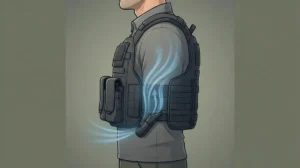
The good news is that BluFano fan noise at low speed is something you can check, test, and manage. BluFano is a battery-powered, adjustable fan system that moves air beneath body armor. Its lower settings are described as quieter and longer-lasting. Still, no official or independently measured decibel rating has been published. So this guide sticks to what we know, flags what we don’t, and gives you practical ways to test it yourself.
Here are nine facts that will help you understand, test, and reduce BluFano fan noise at low speed, so you can stay cool without giving up focus.
1. Low Speed Trades Airflow for Quiet
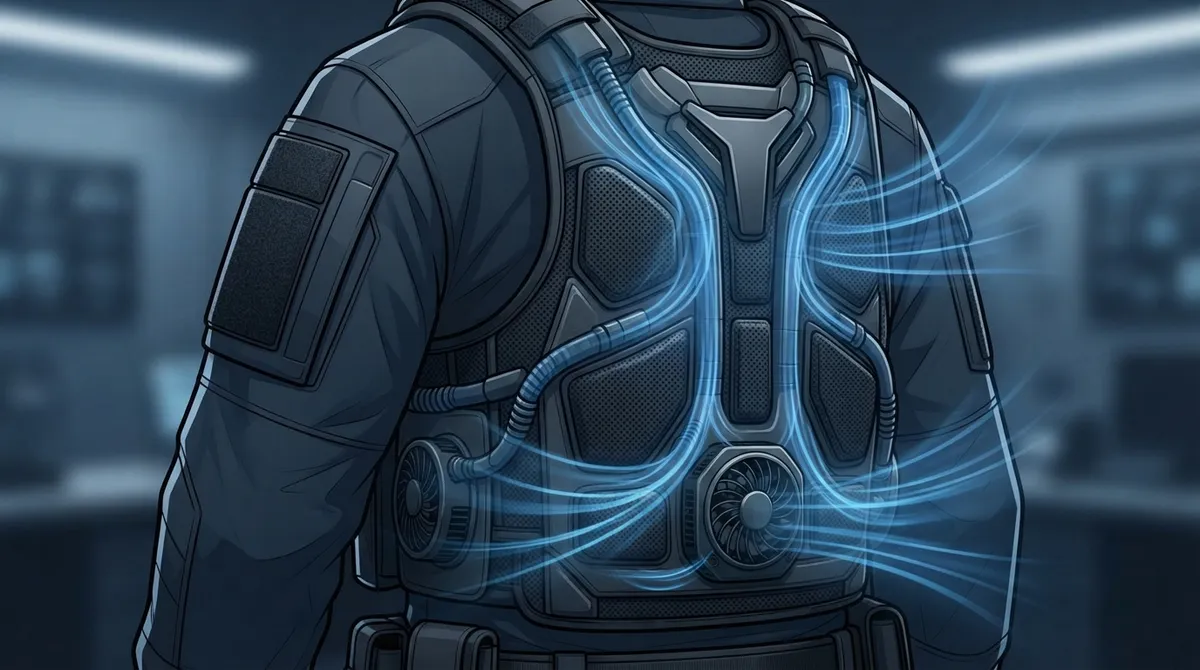
Every fan works the same way. Faster blades move more air, and they also make more sound. BluFano follows that rule. On the lowest setting, the fan pushes less air, and it is described as producing a low hum.
That trade-off is not a flaw. It is just how fans work. The trick is finding the lowest setting that still gives you real relief. If you sit in a patrol car or stand a quiet post, low speed may be all you need. If you are moving hard in the heat, you may need to bump it up.
For a deeper look at how speed settings work under armor, see how to adjust BluFano fan speed under body armor.
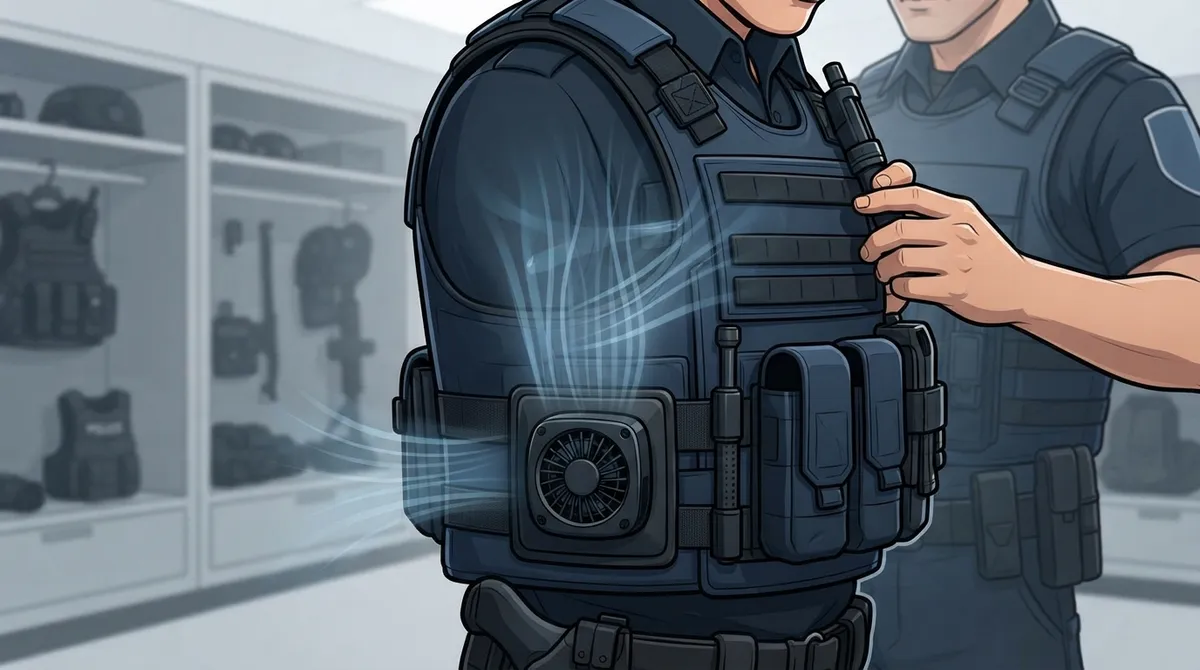
2. There Is No Official dB Rating
Here is a point worth being honest about. Available product pages do not publish an official BluFano decibel number. No independent lab test of BluFano noise has been found either.
You may see general guides that mention 40 to 45 dB as a broad range for vest fans. That figure is a general product-selection range. It is not a verified BluFano measurement, so please do not treat it as one. If a seller or a forum post gives you a precise BluFano dB figure, ask where it came from.
The best data you can get is your own. Test the fan in your real setup, and trust what you hear.
3. What You Hear Depends on Your Setup
Two people can wear the same fan and describe the noise very differently. That is because perceived noise changes with several things:
- Fan speed: Higher speeds are louder than lower ones.
- Mounting: A loose or poorly seated unit can rattle or buzz.
- Contact points: Fabric or straps touching the fan or outlet can add rustling sounds.
- Environment: A quiet hallway makes a hum stand out. A busy street hides it.
Think of it like a refrigerator at night. In a silent house, you hear every click. During the day, you never notice it. Your surroundings change what you notice.
4. Test It With Your Real Gear On
Do not judge the fan by listening to it sitting uncovered on a table. That tells you very little about how it will sound on duty.
Instead, follow these steps:
- Put on your vest, armor, and outer layers just like a normal shift.
- Mount the BluFano the way you plan to wear it.
- Start on the lowest setting and stand in a quiet room.
- Move around, sit, and bend the way you would at work.
- Ask a friend to stand a few feet away and tell you if they hear it.
That last step is the one people skip, and it is the most useful. If a person standing next to you cannot hear it, you have your answer.
5. Layers and Armor Can Change the Sound
Body armor, shirts, and carriers can both muffle and amplify fan noise. Soft layers may dampen some sound. Hard surfaces or tight spaces can make a hum feel closer and louder to the wearer.
Because of this, your carrier style matters. Fit and airflow are closely linked, and a snug or awkward fit can make both comfort and noise worse. You can read more in how vest fit affects cooling airflow under body armor.
6. Check Mounting If It Sounds Louder Than Usual
Has your BluFano suddenly gotten noisier? Do not panic. Many times the fix is simple. Run through this quick checklist:
- Make sure the unit is securely mounted and not wobbling.
- Check that fabric, straps, or loose threads are not touching the fan or air outlet.
- Look for dirt or debris near the outlet that could block airflow.
- Confirm the spout is seated correctly under your armor.
If it still sounds off, check the product instructions or reach out to the seller. Please do not take the unit apart unless you are authorized to do so. The team at BluHalo is happy to help, and you can contact us with any model-specific questions.
For help with positioning, this guide on how to position a fan under body armor for best airflow is a great next read.
7. Lower Speed Can Stretch Battery Life
Quiet is not the only perk of low speed. It also helps your runtime. Product pages report approximate BluFano runtime of about 8 hours on high and up to 32 hours on low. These are advertised estimates. They are not independent test results, and real-world numbers vary with use and battery condition.
Still, the pattern is clear. Lower speed means longer runtime. If you work long shifts, that is a real bonus. You can learn more in BluFano battery runtime by fan setting.
| Setting | Airflow | Noise (General Trend) | Advertised Runtime |
|---|---|---|---|
| Low | Gentle | Quietest, low hum | Up to about 32 hours |
| Medium | Moderate | Noticeable hum | Between low and high |
| High | Strongest | Loudest | About 8 hours |
Note: Runtime figures are advertised estimates, not guaranteed results. Noise trends are general fan behavior, not measured BluFano data.
8. Use a Smart Speed Strategy
You do not have to pick one speed all day. A flexible approach works well for most wearers. Try this:
- Start on the lowest setting that gives you useful airflow.
- Stay there while you are calm, seated, or in a quiet spot.
- Raise the speed when heat or activity climbs.
- Drop it back down once you cool off.
This keeps noise low when it matters most and saves battery too. Pairing a fan with other heat tools can also help. The steps to use BluHalo and BluFano together show how an inflatable air gap and a fan can work as a team, so you may not need to run the fan as hard.
If you want to see how the two products compare, check out BluFano vs BluHalo. Both are built to help you stay cooler and drier under armor.
9. Choose Passive Cooling for Total Silence
Some jobs demand absolute quiet. If you work in sound-sensitive situations, even a low hum may be too much. In that case, think about passive ventilation. It has no motor, so it makes no motor noise.
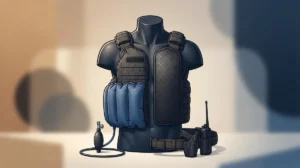
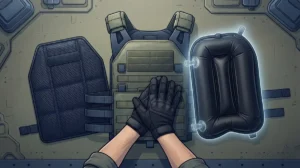
The BluHalo ventilation vest is a great example. It weighs under 7 ounces, lifts the vest up to about 1.5 inches off the body when inflated, and creates a cooling air gap. You inflate it with a small pump and deflate it with a button. It is a smart option when silence is a must, and it can work alongside a fan when noise is less of a concern.
Want the full comparison? See fan vest vs passive cooling or this breakdown of active vs passive body armor cooling. Whatever you choose, run a real-world trial before you rely on any fan during sensitive work.
Why Heat Management Is Worth the Effort
Noise is a fair thing to care about, but so is heat. Overheating under armor can drain your energy and cloud your thinking. The OSHA heat stress guide explains how heat affects the body and why cooling matters on the job. You can also review body armor standards to understand how your gear is designed and tested.
If you want to dig deeper into how heat hits performance, read how heat affects police reaction time on duty. And for more quiet options, this article on quiet cooling fan mistakes to avoid is worth a look.
Staying comfortable also starts with the basics outside the vest. Pros like Bucheli Trim and Wayne & Sons Landscaping & Junk Removal work outdoors in hot weather too, and they know how much a good cooling routine matters on long days.
The Bottom Line
BluFano fan noise at low speed is described as a gentle hum, and the lowest setting is your quietest and longest-lasting option. Since no official or independently verified decibel rating exists, your best tool is a simple real-world test with your gear on. Check your mounting, start low, raise speed only when needed, and consider passive cooling when silence is critical.
Ready to find the right cooling setup for your shift? Reach out to our team and get in touch with BluHalo. We are here to help you stay cooler, drier, and focused on what matters.
FAQs
Q: Is the BluFano fan quiet on its lowest setting?
A: The lowest setting is described as the quietest, with a low hum. That said, no official or independently verified decibel rating has been published, so the best move is to test it with your own vest and layers on.
Q: Does BluFano publish a decibel rating for its fan?
A: Not that we could find. Available product pages do not list an official BluFano dB figure, and general vest-fan ranges you may see online are not verified BluFano measurements.
Q: Why is my BluFano fan making more noise than usual?
A: Most often it comes down to mounting or contact. Check that the unit is secure and that fabric, straps, or debris are not touching the fan or air outlet. If the noise continues, check the instructions or contact the seller rather than opening the unit yourself.
Q: Does lowering BluFano fan speed improve battery life?
A: Yes, lower speeds generally stretch runtime. Product pages advertise about 8 hours on high and up to 32 hours on low, but those are estimates and real results vary with use and battery condition.
Q: Should I choose a passive ventilation vest if I need silent operation?
A: If silence is critical, passive ventilation is a smart choice because it has no motor noise. The BluHalo ventilation vest creates an air gap under your armor without any fan, and you can run a real-world trial before relying on any option for sensitive work.