Key Takeaways
-
Inflatable spacers offer adjustable lift: inflate for more gap on hot shifts, deflate for a slim profile when conditions are mild.
-
Mesh spacers are passive and fixed-thickness, with no pump or setup, but they cannot add lift as temperatures rise and add bulk on cool days.
-
A spacer only creates room for air; it does not force airflow, so real cooling depends on movement, weather, fit, and moisture-wicking base layers.
-
Most cooling data comes from manufacturers and there is no independent head-to-head lab test proving one spacer type always cools better.
-
Always test fit with your full kit, including belt and radio, and check mobility and concealment before committing to any spacer.
-
Never cut or alter body armor to add airflow; a spacer is a safer way to improve comfort without compromising protection.
If you wear body armor for a living, you already know the feeling. About two hours into the shift, your shirt is soaked, your back is hot, and your focus starts to slip. That is where a vest spacer comes in. But which type should you pick?
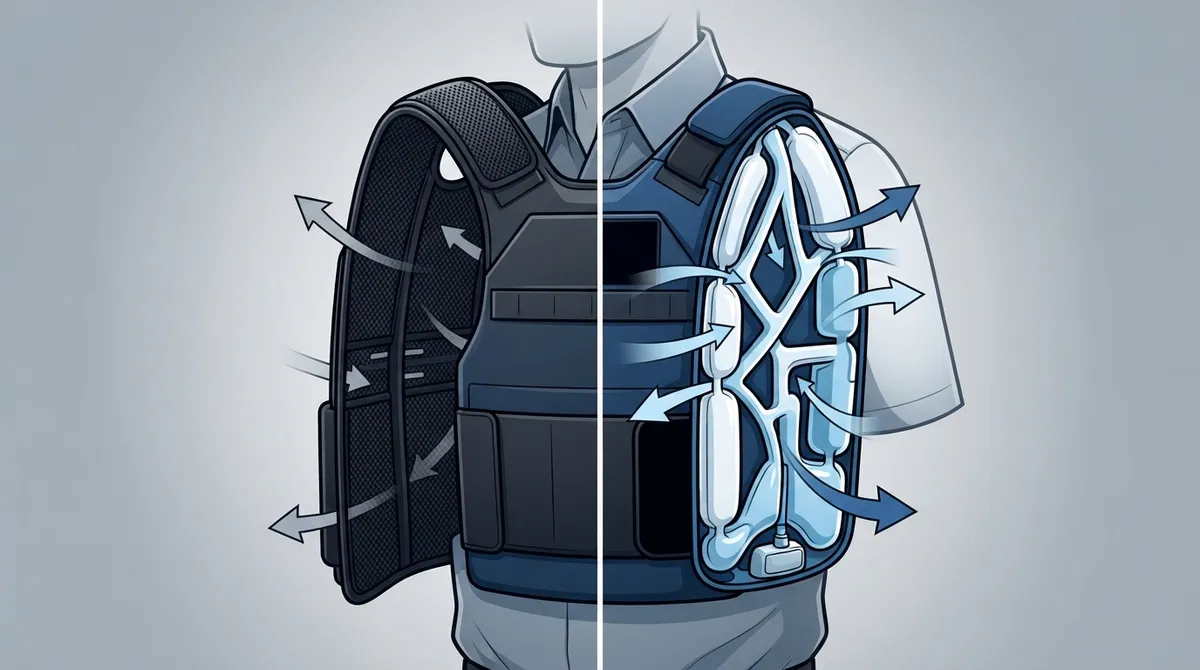
The big debate in the ventilation vest world is the inflatable vest spacer vs mesh spacer question. Both aim to create a little room between your body and your armor so heat and moisture can escape. They go about it in very different ways, though.
In this friendly guide, we will break down how each one works, where each one shines, and what to check before you buy. We will keep it simple and honest. We will also point out where the evidence is thin, because most of the info out there comes from the companies that make these products. Let’s dive in.
What Is a Vest Spacer, Exactly?
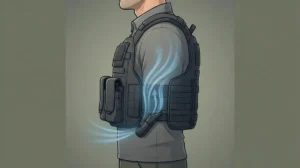
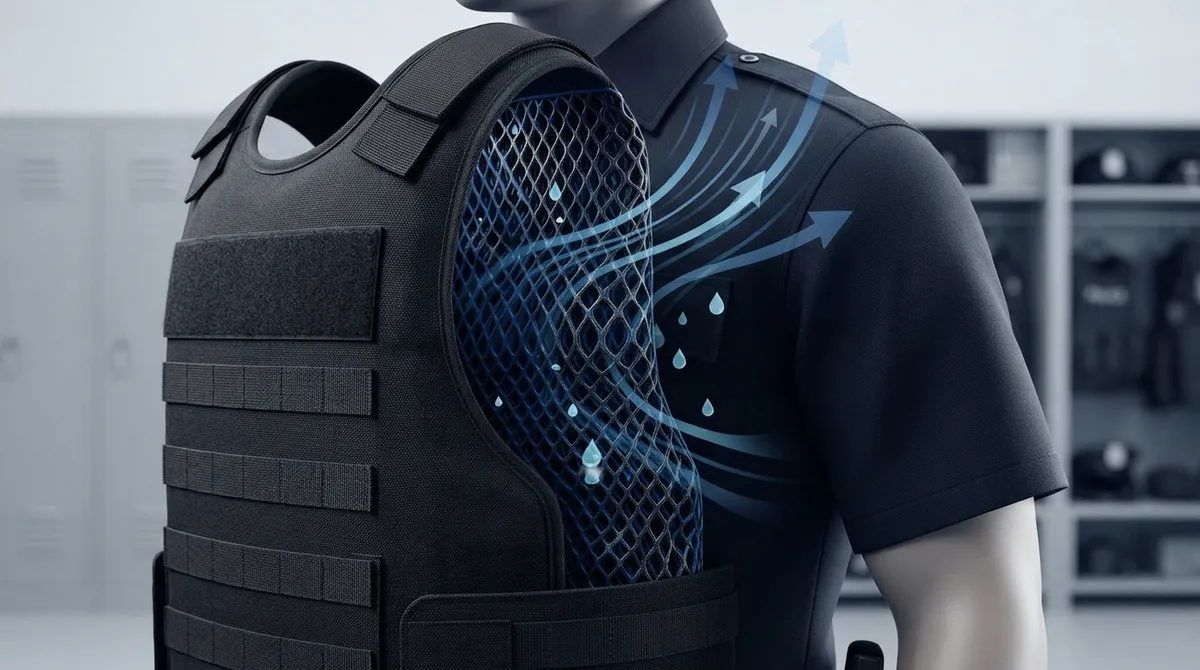
A vest spacer is a layer that sits between your body and your body armor carrier. Its job is simple. It lifts the armor slightly off your torso so air has somewhere to go.
Without that gap, your armor presses flat against your shirt. Sweat gets trapped. Heat has nowhere to escape. That is a big reason officers, soldiers, and security pros feel so cooked on hot days. You can read more about this problem in our guide on trapped heat vs. fresh air and why vests overheat you.
Spacers do not replace your armor. They also do not change how your armor protects you. They simply create room for air movement. Think of it like a little breathing space for your back and chest.
How an Inflatable Vest Spacer Works
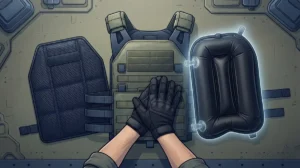
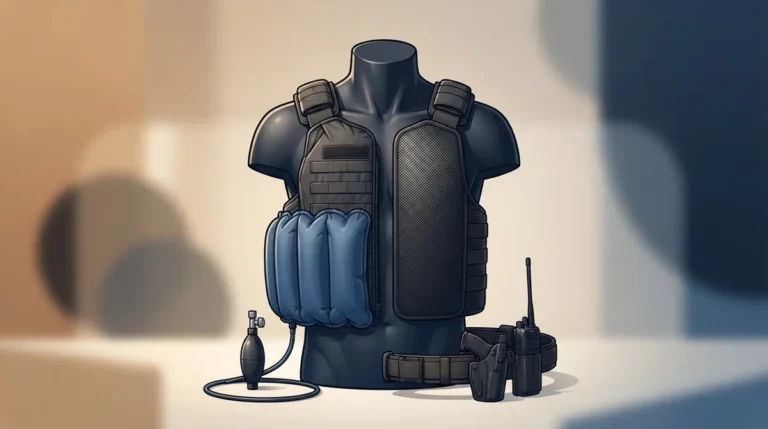
An inflatable spacer uses an air-filled structure to build the gap. You inflate it when you want more separation. You deflate it when you want a slimmer profile.
That adjustability is the main selling point. Some days are mild. Other days feel like a furnace. With an inflatable design, you can dial the gap up or down as conditions change.
The BluHalo ventilation vest is a good example. It weighs under 7 ounces and is built from double-layer, high-strength polyethylene. It attaches to a clean vest with Velcro. You inflate it with a small pump and release the air with a button. BluHalo states that it can lift the vest up to about 1.5 inches off the body when inflated. That is a manufacturer claim for that specific product, not a rule for every inflatable spacer.
Pros of Inflatable Spacers
- Adjustable lift: Add or remove space based on heat, activity, and comfort.
- Slim when deflated: It can lie flat when you do not need extra room.
- Cooling on demand: You choose when to create the gap.
- Lightweight: Many designs add very little weight to your kit.
Cons of Inflatable Spacers
- Extra step: You have to inflate it, which takes a moment.
- Care needed: Like any air-filled item, it should be handled with some care.
- Fit checks matter: More lift can change how your carrier sits.
Want to see how simple it can be? Check out our walkthrough on how to inflate and deflate BluHalo.
How a Mesh Spacer Works
A mesh spacer is a fixed-thickness layer, usually made from a three-dimensional fabric. It is passive. There is no pump and no inflation step. You put it in, and it stays the same thickness all day.
One search source describes a mesh spacer as roughly 8 mm thick. That is only one example, though. It is not a universal mesh standard, and thickness varies by product.
Because it is always there, a mesh spacer gives you a steady, predictable layer. Some people love that simplicity. There is nothing to remember and nothing to adjust.
Pros of Mesh Spacers
- Simple: No pumping, no valves, no setup each shift.
- Consistent: The same layer is there every time you suit up.
- Easy to understand: What you see is what you get.
Cons of Mesh Spacers
- Fixed thickness: You cannot add more lift when it gets hotter.
- Always present: It adds bulk even on cool days.
- Can hold moisture: Fabric layers may take time to dry out after a long shift.
For a deeper look at how these compare in real gear setups, see our post on BluHalo vs. mesh liners and which fits your armor better.
Inflatable Vest Spacer vs Mesh Spacer: Side-by-Side
Here is a quick comparison to help you see the main differences at a glance.
| Feature | Inflatable Spacer | Mesh Spacer |
|---|---|---|
| Adjustability | Yes, inflate or deflate | No, fixed thickness |
| Setup | Requires inflation | None, always ready |
| Profile when not needed | Can be deflated flat | Stays the same thickness |
| Consistency | Depends on inflation level | Same layer every time |
| Best for | Changing conditions, hot shifts | Users who want simple and passive |
| Example thickness claim | Up to about 1.5 in (BluHalo, product-specific) | About 8 mm (one example, not universal) |
A quick note on honesty here. Most of the data online comes from the companies selling these products. There is no independent, head-to-head lab test that proves one always cools better than the other. So treat any big cooling claim with a little healthy skepticism, including ours.
Which One Is Better for Different Jobs?
The right choice depends on your day. Let’s walk through a few common situations.
Patrol Officers
Patrol shifts swing from sitting in a hot cruiser to jumping out on a call. An inflatable spacer lets you add lift when you are in the car and deflate it if you need a slimmer fit. Many officers also pair spacers with other gear, as covered in our police officer summer gear essentials.
Military Personnel
Long missions in heat call for gear that does not add hassle. Some soldiers like a passive layer because it is simple. Others like having a gap they can control. Either way, the load, the climate, and the mission length all matter.
Security Professionals
Armed guards often stand for long hours in one spot. That means less natural airflow from movement. A spacer helps, but pairing it with active airflow can help even more.
Tactical and SWAT Teams
Heavy armor and high-intensity work create a lot of heat fast. Fit and mobility are critical here. Any spacer needs to work with your carrier without changing how your gear sits.
Emergency Response Personnel
Firefighters, hazmat teams, and EMS crews deal with extreme heat. A spacer can help with comfort, but it is not a full cooling plan. Check out our list of first responder gear picks that beat the heat for more ideas.
Does a Spacer Alone Guarantee Airflow?
Here is something worth knowing. A spacer creates room for air. It does not force air to move. Whether you actually feel cooler depends on movement, weather, fit, clothing, and how well your base layer manages moisture.
That is why many people add a fan system. An active fan pushes fresh air through the gap you created. Our Blufano fan system does exactly that. It has a patented air-redirect spout that slides under any style of body armor. It runs for 8 to 32 hours depending on the setting. It also includes a built-in 10,000mAh power bank and a forward-facing light.
Want the full story on this? Read our breakdown of active vs. passive body armor cooling. And if you want the strongest setup, see how BluHalo and BluFano work together. You can buy each product on its own or bundle them at a discount.
Fit, Concealment, and Mobility: What to Check
Added space changes how your armor sits. That is true for both spacer types. Before you commit, run through this checklist.
- Check your carrier’s fit guidance. Follow the manufacturer’s instructions for your specific carrier.
- Try it on with your full kit. Wear your belt, radio, and gear to see how everything sits.
- Test your mobility. Reach, bend, twist, and draw to make sure nothing feels restricted.
- Check concealment. If you wear armor under a uniform shirt, make sure the extra thickness does not show.
- Confirm compatibility. Not every spacer works with every carrier.
Never cut, alter, or modify your armor to add airflow. We explain why in our article on whether cutting holes in body armor actually helps with cooling. A spacer is a safer way to improve comfort without touching your protection.
Common Mistakes People Make
Picking the wrong spacer is easy to do. Here are a few mistakes worth avoiding.
- Assuming thicker always means cooler. More lift is not always better if it hurts your fit.
- Skipping the fit test. A spacer that looks great on paper may not play well with your carrier.
- Ignoring moisture. A spacer helps, but a good moisture-wicking base layer matters too.
- Trusting every cooling claim. Independent testing is limited, so look for honest, specific details.
Our post on 5 ventilation spacer for body armor mistakes to avoid goes deeper on this. For more spacer-focused comparisons, you can also read inflatable vs. mesh and which vest lift system wins.
Cleaning and Care
Both types need a little upkeep. Sweat and grime build up over time.
For an inflatable spacer, wipe it down with mild soap and water, and let it air dry before storing it. Keep it clear of sharp objects. For a mesh spacer, follow the maker’s washing guidance, since fabric layers can hold odor and moisture. Our tips on how to stop body armor from smelling like sweat can help you keep your whole setup fresh.
Staying cool matters for more than comfort too. Heat can affect focus and reaction time. The OSHA heat stress guide explains the risks of working in hot conditions, and the NIJ body armor standards are a good place to learn how armor is rated. For gear and contractor needs outside the vest world, 1 Contractor Solutions is another resource some teams use.
So, Which Should You Choose?
Here is the honest answer. Neither is the winner for everyone. It comes down to what you value.
- Choose inflatable if your days change a lot, you want adjustable lift, and you like a slim profile when you do not need the gap.
- Choose mesh if you want a simple, always-on layer with zero setup.
For most hot-weather users who want control, we think an inflatable design is the smarter pick. That is why BluHalo is our top recommendation. It gives you cooling on demand and a flat, low-profile fit when you do not need it. Pair it with Blufano for active airflow, and you get one of the most complete comfort setups for long, hot shifts.
You can also browse our guide to the best body armor ventilation options for 2026 to see how everything stacks up.
Final Thoughts
The inflatable vest spacer vs mesh spacer debate really comes down to adjustability versus simplicity. Inflatable gives you control. Mesh gives you set-it-and-forget-it ease. Both create room for air, and neither replaces certified armor or a properly fitted carrier.
The best move is to match your choice to your job, your climate, and your gear. And remember, a spacer plus active airflow tends to feel better than a spacer alone.
Ready to find your best fit? Have questions about sizing or compatibility? Get in touch with our team and we will gladly help you pick the right setup for your shift.
FAQs
Q: What is the difference between an inflatable spacer and a mesh spacer in a ventilation vest?
A: An inflatable spacer uses air to create a gap you can adjust, while a mesh spacer is a fixed-thickness fabric layer with no pump. Think of inflatable as adjustable and mesh as simple and always on.
Q: Does an inflatable spacer provide more airflow than a mesh spacer?
A: Not necessarily. A spacer only creates room for air, and real cooling depends on movement, weather, fit, and moisture control. There is no independent head-to-head testing, so be careful with big claims from any maker.
Q: Can an inflatable ventilation vest be deflated under body armor?
A: Yes. Products like BluHalo can be deflated with a button so they lie flat when you do not need extra space. Just check your carrier’s fit guidance first.
Q: Will a spacer affect the fit or concealment of my armor carrier?
A: It can, since added thickness changes how your carrier sits. Try it on with your full kit and test your mobility before you commit. Never alter your armor to make a spacer fit.
Q: Are ventilation vest spacers compatible with every body armor carrier?
A: Not always. Compatibility depends on your specific carrier and the spacer design. Check the carrier maker’s guidance, or reach out to our team and we will help you sort it out.