Key Takeaways
-
Always aim the fan outlet into the gap between your body and the armor, not outward or at a solid armor panel, so air can spread across your torso and carry heat away.
-
Place the fan so its outlet lines up with the ventilation layer's air channels; lower back, behind a back plate, or lower front are common starting points.
-
Lay the ventilation layer flat and keep fan intake and outlet clear of straps, shirts, and gear, since blocked openings make the fan nearly useless.
-
Never cut, alter, or reposition ballistic panels or let the fan and wires change plate coverage; confirm compatibility with your armor maker before wearing a new setup on duty.
-
Test the full setup at home or the station by moving, kneeling, and sitting in your vehicle to check for pressure points, shifting, and steady airflow before your first shift.
-
A fan helps but does not replace water, rest breaks, and heat illness precautions; it works best as one part of a broader heat-safety plan.
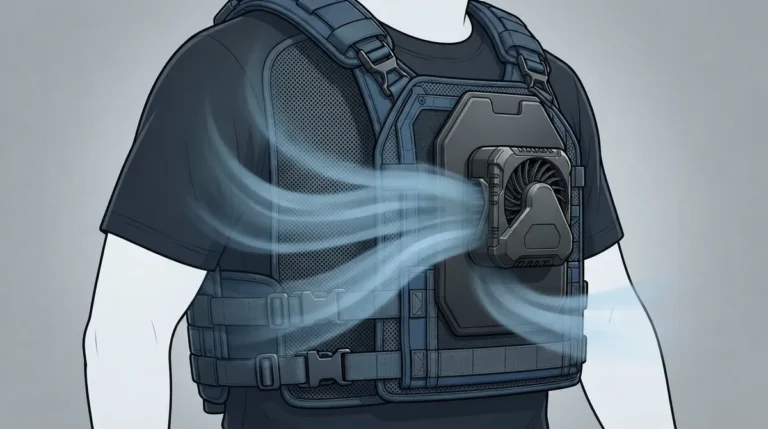
If you wear body armor for a living, you already know the feeling. Your shirt is soaked by mid-shift, the heat sits against your chest, and every minute feels longer than the last. A fan can help a lot, but only if it is placed the right way. A fan in the wrong spot just spins and does very little for you.
The good news is that how to position a fan under body armor is easier than it sounds. You need to get fresh air into the space between your body and the armor, keep that air moving, and make sure nothing about your setup changes how your armor protects you. In this guide, we will walk through the full process in plain steps. You will learn where the fan should sit, which way it should blow, how to test your setup, and what mistakes to skip.
Whether you are a patrol officer, a soldier, a security guard, a SWAT member, or a first responder, the basics are the same. Let’s get you cooler and more comfortable.
Why Fan Position Matters Under Body Armor
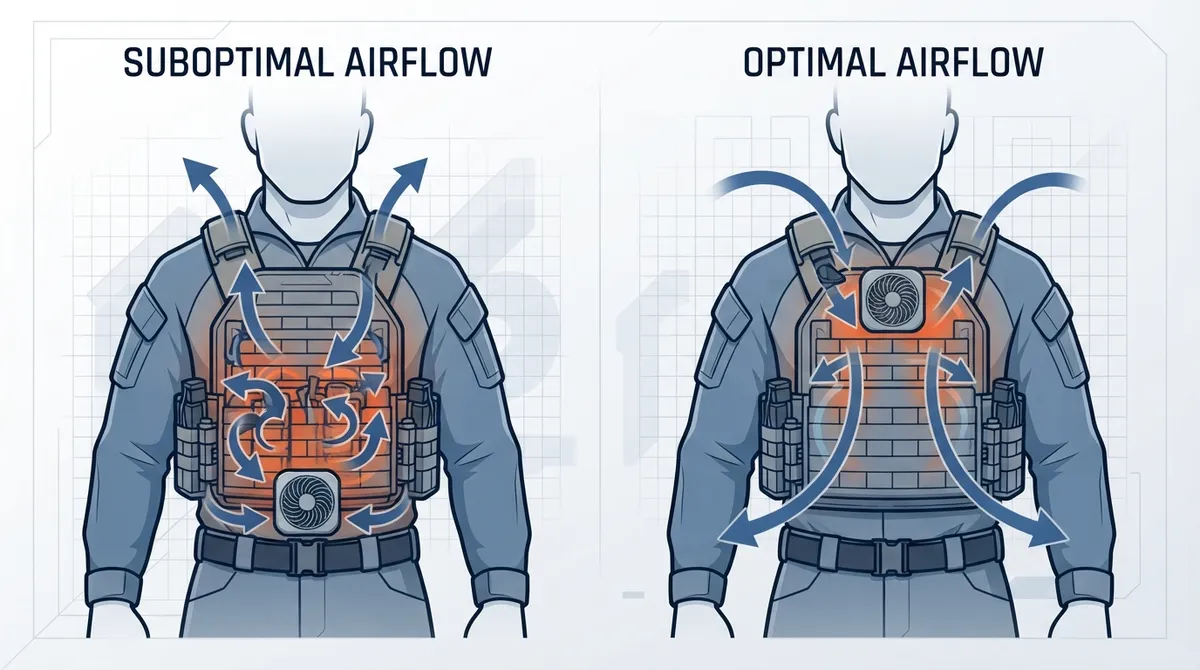
Body armor sits tight against your torso. That tight fit traps heat and sweat, and there is very little room for air to move. A fan only helps when it can push air into a space where that air can spread out.
Think of it like a window fan in a stuffy room. If the fan faces a wall, nothing changes. If it faces open space, air starts to flow. Under your vest, the “open space” is the gap created by a ventilation layer, mesh, or air channels.
Fan-driven airflow can help move warm, humid air away from your skin and support sweat evaporation. How well it works still depends on the outside temperature, humidity, your clothing, how hard you work, and how well the system fits. If you want a deeper look at the science, our guide on how an active cooling system works in ventilation vests breaks it down.
What the Research Says About Cooling Under Gear
NIOSH published a 2017 summary of research on cooling vests worn under personal protective equipment. In that work, people without cooling vests had significantly higher body temperatures and heart rates, and lost more weight during treadmill testing, than people wearing cooling vests. Participants also reported better heat sensation, lower perceived effort, and easier breathing with cooling vests. The summary did not give exact numbers, but the message is clear: cooling under protective gear makes a real difference.
The Golden Rule: Blow Air In, Not Out
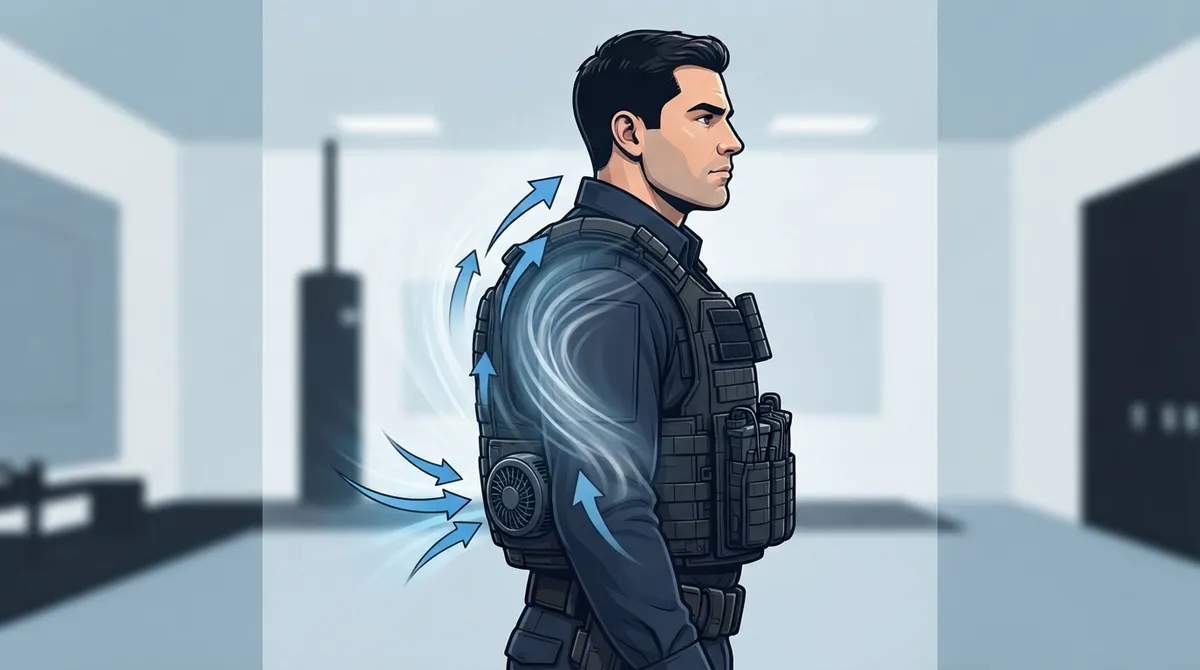
Here is the single most important rule. The fan should move air into the space between you and the armor. It should not blow outward into the carrier or away from your body.
Air that enters the gap can travel along channels or mesh and spread across your torso. Air that blows out just leaves. You want the air to linger and circulate where the heat builds up.
- Aim the outlet toward the ventilation channels, not at a flat wall of armor.
- Keep the intake clear so the fan can pull in fresh air.
- Let the air spread across your chest, back, and sides instead of blasting one small spot.
Start With the Right Base: Layer Order
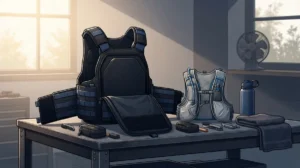
Before you place any fan, get your layers in the correct order. A common setup looks like this:
- Base layer shirt next to your skin, ideally moisture-wicking.
- Ventilation layer or spacer over the base layer.
- Body armor carrier on top.
The ventilation layer has raised mesh or channels that create room for air to move. Do not assume every fan can attach to every vest in the same spot. Always follow the instructions from your fan maker and your armor maker. For help picking the right layer, see how to choose the right body armor ventilation vest in 2026.
How to Position a Fan Under Body Armor: Step by Step
Follow these steps in order. Take your time the first round. After a few uses, it will feel automatic.
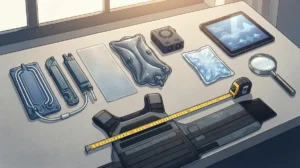
- Check your gear first. Make sure your armor, carrier, and ventilation layer are clean and in good shape. Charge your fan or power bank fully.
- Put on your base layer. A snug, moisture-wicking shirt works best. It moves sweat away from your skin so the fan can help it evaporate.
- Add your ventilation layer. Smooth it flat so the channels or mesh are not twisted or folded.
- Find your fan spot. Choose a place where the fan outlet lines up with the air channels. Many people use the lower back or lower front, since air can then travel upward across the torso.
- Point the outlet into the gap. The air should flow between your body and the armor, not sideways into a strap or panel.
- Secure the fan and battery. Use the strap, clip, or built-in hold that came with your system. Nothing should dangle or swing.
- Put on your armor carrier. Close it as you normally would. Confirm the fan does not push the armor out of place.
- Turn the fan on and feel the airflow. You should feel cool air moving across your torso within a few seconds.
Where to Place the Fan on Your Body
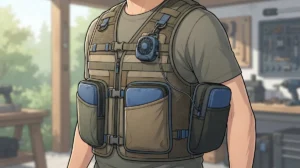
There is no single “right” spot for every person or every vest. One product’s instructions suggest centering the unit behind a trauma plate, while allowing front, back, top, or side placement as needed. A different commercial system uses three fan modules, two in front and one in back, but that is just one product’s design, not a universal rule.
Use this table as a starting point for common positions:
| Fan Position | Best For | Watch Out For |
|---|---|---|
| Lower back | Patrol, long driving shifts, standing work | Seat pressure when you sit; check comfort in the cruiser |
| Behind the back plate | Military and tactical use with a rigid plate | Bulk causing a pressure point |
| Lower front | Quick airflow up the chest | Duty belt or equipment blocking the outlet |
| Side placement | Wearers who need a flat back or front | Arm movement rubbing the unit |
Keep the Intake and Outlet Clear
A blocked fan is a useless fan. Armor panels, straps, shirts, and gear can all cover the openings without you noticing.
After you suit up, run through this quick check:
- Is the intake free of fabric or loose straps?
- Is the outlet pointed into the ventilation layer, not pressed flat against armor?
- Are your clothes tucked so they do not slip over the fan?
- Is any gear sitting right on top of the unit?
Also avoid placing a bulky unit where it creates a hard pressure point. If it digs into your ribs or spine when you sit or lean, move it. Comfort matters, because a fan you take off is a fan that is not helping.
Protect Your Armor and Your Fit
This part is serious, so let’s be clear. Your armor is there to protect you. Your cooling setup should never get in the way of that.
- Do not cut, alter, or reposition ballistic panels to make room for a fan.
- Make sure the fan, battery, wires, and ventilation layer do not change plate placement or coverage.
- Confirm the carrier still closes and holds the way it should.
- Check with your armor manufacturer if you are unsure about compatibility.
Choose a system built for under-armor use and made to fit your carrier. If you want to learn more about common errors, read our post on 7 body armor cooling fan mistakes you must avoid.
Why BluHalo and Blufano Make Positioning Simple
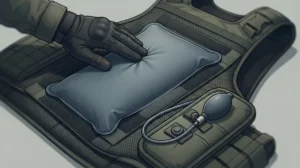
Positioning gets much easier when the gear is designed to work together. That is where BluHalo comes in. The BluHalo ventilation vest was created by a Chicago police officer who knew the struggle firsthand. It weighs under 7 ounces and lies flat when deflated. When you inflate it with the small pump, it lifts your vest up to about 1.5 inches off your body. That lift creates the air gap a fan needs to work well. A button deflates it fast when you do not need it.
Pair it with Blufano, and the setup is even simpler. Blufano is a self-contained, fan-driven unit with a patented air-redirect spout that slides under any style of body armor. You can secure it with an optional strap. It delivers adjustable airflow for 8 to 32 hours depending on the setting, and it has a built-in 10,000mAh power bank that can also charge USB devices. There is even a forward-facing light for low-light moments. Because the spout is built to feed air under your vest, you are not guessing about where the air goes.
Together, BluHalo creates the space and Blufano moves the air. For a closer look at how the two compare, see BluFano vs BluHalo: which vest cooling system is better, or browse the shop to see bundle options.
Test Your Setup Before You Go on Duty
Never trust a new setup on its first day at work. Test it at home or in the station first.
- Check the fit. Stand, turn, and reach. Nothing should pinch or shift.
- Test your range of motion. Raise your arms, twist, and bend like you would on shift.
- Try seated and kneeling positions. Sit in your vehicle seat if you can. Kneel and crouch.
- Feel for airflow. Make sure cool air still moves when you change positions.
- Check your equipment access. Confirm the fan does not block your radio, belt, or other gear.
- Check the battery. Note the charge level before and after a trial period.
If anything shifts, rubs, or gets in the way of equipment, stop and adjust. Keep checking airflow and battery charge during long shifts too.
Common Mistakes to Avoid
- Pointing the fan at solid armor. Air needs a channel to travel through.
- Skipping the ventilation layer. Without a gap, the fan has little room to work.
- Loose mounting. A fan that swings or slides will pull away from the channels.
- Ignoring comfort. A pressure point will make you pull the fan off.
- Forgetting the battery. A dead fan adds weight and gives no cooling.
For more detail on avoiding setup problems, our post on 7 mistakes to avoid with a body armor ventilation system is worth a read.
A Fan Is Not Your Only Defense Against Heat
Let’s keep it real. A fan helps you feel cooler and drier, but it is not a cure-all. It does not replace water, rest breaks, or learning to handle hot conditions over time. The OSHA heat stress guide lays out solid steps for staying safe in hot work settings, including hydration, rest, and knowing the warning signs of heat illness.
If you want a full plan, read how to prevent heat stress while wearing body armor. Also keep in mind that body armor itself must meet strict safety standards. The National Institute of Justice explains these in its body armor standards resources, so always keep your armor within its tested design.
Passive Spacer or Active Fan: Which Should You Use?
Passive spacer-mesh vests create an air gap without power. Active systems add a battery-powered fan to push air through that gap. Some products combine both. Here is a simple comparison:
| Feature | Passive Spacer Mesh | Active Fan System |
|---|---|---|
| Power needed | None | Battery or power bank |
| Airflow | Relies on body movement | Steady, adjustable |
| Best for | Mild heat, light activity | Long, hot shifts |
| Extra weight | Very light | Slightly more |
If you want the full breakdown, see passive vs. active tactical vest ventilation: which wins. For most people facing long, hot shifts, combining an air gap with a fan gives the best of both.
Final Thoughts and Next Steps
Learning how to position a fan under body armor comes down to a few simple ideas. Feed air into the gap, line the outlet up with the channels, keep the openings clear, protect your armor fit, and test everything before duty. Do those things, and you can turn a sweaty, draining shift into a much more comfortable one.
You do not have to figure it all out alone. BluHalo and Blufano were built by people who understand the job, and they work together to cool the area under your vest. Ready to feel the difference? Contact our team with your questions, and we will help you find the right setup for your armor and your shift. Need help getting more eyes on your own gear reviews or business content? SEO Rocket can help with that.
Stay safe, stay cool, and take care of yourself out there.
FAQs
Q: Where should a cooling fan sit under body armor?
A: Most people place it at the lower back, behind a back plate, or at the lower front so air can travel up the torso. The best spot is the one where the outlet lines up with your ventilation layer’s air channels and feels comfortable when you sit, kneel, and move. Always follow the fan and armor makers’ instructions.
Q: Should a fan blow air toward the body or toward the armor?
A: Aim it into the space between your body and the armor, so the air spreads across your torso. Blowing outward or straight into a solid armor panel wastes airflow. The goal is to keep fresh air moving where the heat builds up.
Q: Can a cooling fan or ventilation vest affect ballistic protection?
A: It can if it is set up the wrong way. A fan, battery, or wires should never shift your plates, change your coverage, or stop the carrier from closing right. Never cut or modify ballistic panels, and confirm compatibility with your armor maker before you wear a new setup on duty.
Q: Does a fan under body armor prevent heat stress?
A: A fan can help you feel cooler and drier by moving warm, humid air away and supporting sweat evaporation. It is not a replacement for water, rest breaks, getting used to the heat, or your agency’s heat illness steps. Think of it as one helpful tool in a bigger plan.
Q: Is a fan-powered ventilation vest better than passive mesh?
A: It depends on your day. Passive mesh needs no power and works well in mild heat, while an active fan gives steady, adjustable airflow for long, hot shifts. Many wearers like a combo, using an air gap from BluHalo with the powered airflow of Blufano for the strongest cooling.