Key Takeaways
-
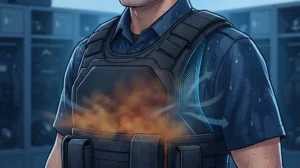
Heat raises core body temperature and reduces blood flow to the brain, slowing cognitive processing and reaction time during critical moments like traffic stops and foot pursuits.
-
Police dispatches increase by 2-57% on the hottest days, creating a dangerous scenario where officers face more calls while already experiencing heat-impaired judgment and slower decision-making.
-
Body armor creates a thermal trap by blocking airflow and preventing sweat evaporation, causing core temperature to rise faster than in non-armored individuals and triggering heat fatigue earlier in shifts.
-
Research shows heat impairs four key performance areas: attention/focus, reaction speed, decision-making accuracy, and emotional regulation—with arrests made on hot days more likely to be dismissed in court.
-
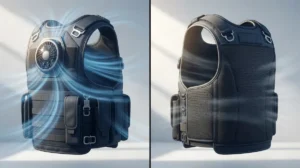
Ventilation vests like BluHalo and Blufano create airflow gaps under armor to enable sweat evaporation and heat escape, proven to keep officers cooler, sharper, and safer during long, hot shifts.
-
Heat stress effects are nonlinear, with sharp performance drops once temperatures exceed the 95th percentile threshold—a tipping point that comes faster for armored officers due to existing thermal load.
Picture this: it’s a sweltering summer afternoon, and you’re a patrol officer on hour ten of a twelve-hour shift. Your body armor is trapping heat against your skin. Sweat is pooling under your vest. Your head feels foggy, and your body feels slow. Sound familiar? If you wear body armor for a living, you already know that heat is more than just uncomfortable — it’s a real threat to your performance.
Research confirms what officers feel every day. Heat affects how fast you think, how well you decide, and how quickly your body moves. Understanding how heat affects police reaction time is not just an academic question. It’s a safety issue for you, your fellow officers, and the public you serve. And the good news? There are real, practical solutions that can help.
The Science Behind Heat and Slow Reaction Time
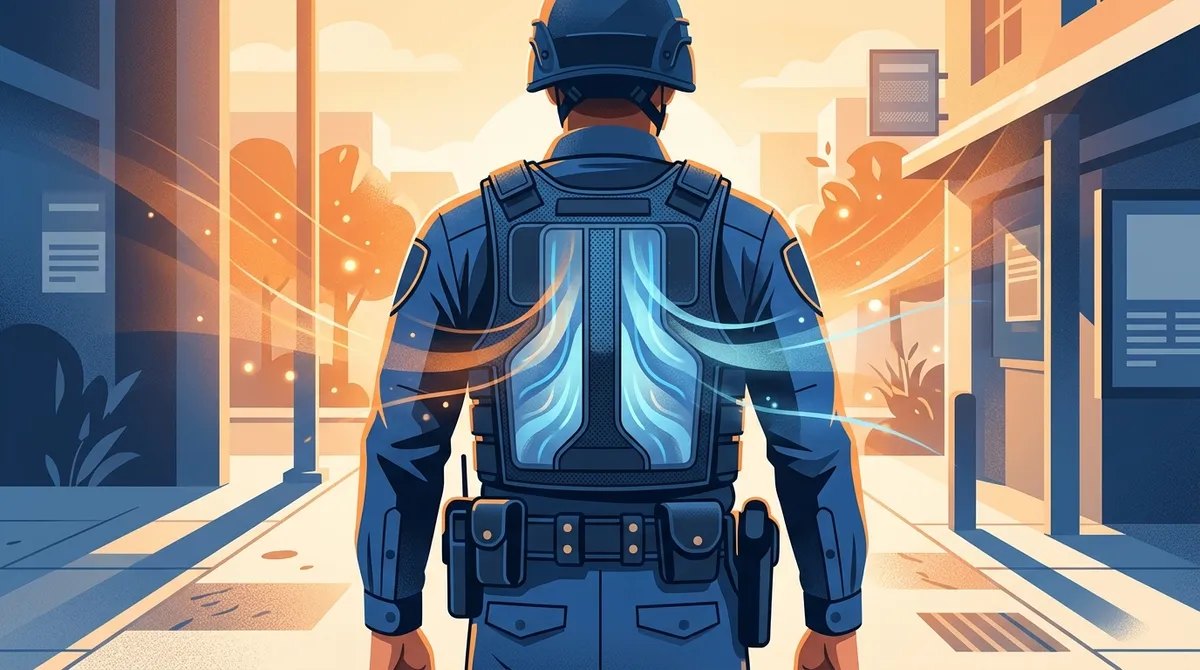
Heat stress starts the moment your core body temperature begins to rise. When you wear body armor, that process speeds up. The vest creates a barrier that traps heat against your torso. Your body works harder to cool itself, and that effort pulls energy away from your brain and muscles.
Research published in PNAS Nexus found that police make fewer arrests per reported crime on the hottest days. Arrests made on those hot days were also more likely to be dismissed in court. That suggests heat can impair judgment and decision quality in measurable ways. When your brain is working hard just to keep your body cool, there’s less mental energy left for the fast, clear thinking that law enforcement demands.
Heat affects four key areas of performance:
- Attention and focus — Heat makes it harder to concentrate on multiple things at once
- Reaction speed — Physical response time slows as core temperature rises
- Decision-making — Judgment and risk assessment become less accurate under thermal stress
- Emotional regulation — Heat makes it harder to stay calm during high-pressure moments
These effects matter most during the moments that count — traffic stops, foot pursuits, confrontations, and emergency calls. You can learn more about this in our article on 6 heat stress effects on police performance you must know.
What the Research Actually Shows
The data on heat and police performance is striking. A multi-city study covering 23 U.S. cities found that police incident risk on very hot days — days at or above the 95th percentile of daily maximum temperature — increased by anywhere from 3% to 57%, depending on the city. That’s not a small variation. It means on the hottest days, officers are dealing with significantly more incidents while already under physical strain.
A Boston study found that when daily maximum temperatures hit 90°F or above, police dispatches increased by about 2% during the warm season. A 10°F rise in temperature from 80°F to 90°F was linked to 1.016 times the expected number of daily police dispatches. More calls, more stress, more heat — all at the same time.
| Temperature Condition | Effect on Police Operations | Source |
|---|---|---|
| 95th percentile heat days | Incident risk increased 3%–57% across 23 U.S. cities | Multi-city emergency services study |
| 90°F or above (warm season) | Police dispatches ~2% higher in Boston | Boston dispatch study |
| 80°F to 90°F increase | 1.016× expected daily dispatches after adjustment | Boston dispatch study |
| Hottest days overall | Fewer arrests per crime; more arrests dismissed | Texas law enforcement study, PNAS Nexus |
It’s also worth noting that the impact of heat is nonlinear. That means things don’t get worse gradually in a straight line. Instead, performance drops sharply once temperatures cross certain thresholds. For police officers who struggle with heat under body armor, this tipping point can come faster than expected because the vest is already raising their body temperature before the air temperature even gets dangerous.
According to the OSHA Heat Stress Guide, workers in heavy protective gear face elevated risk of heat illness because their clothing limits the body’s ability to cool through sweat evaporation — a challenge every officer in a ballistic vest understands well.
How Body Armor Makes Heat Worse
Body armor is not optional for most law enforcement professionals. It saves lives every day. But it also creates a thermal trap. The panels sit flush against your torso, blocking airflow and preventing sweat from evaporating. Without evaporation, your body can’t cool itself efficiently.
During a foot pursuit or a tense confrontation, your body heat rises fast. Without a way to release that heat, your core temperature climbs. That’s when how heat affects police reaction time stops being a theoretical concern and becomes a real-world danger.
Here’s how body armor contributes to heat buildup:
- Panels press tightly against the torso, blocking natural airflow
- Sweat gets trapped against the skin instead of evaporating
- Moisture creates discomfort that distracts from situational awareness
- Core body temperature rises faster than in non-armored individuals
- Heat fatigue sets in earlier during long shifts
The Body Armor Standards from the National Institute of Justice focus on protective performance, but thermal comfort is increasingly recognized as a key factor in officer safety and performance. Gear that makes you overheat is gear that puts you at risk in a different way.
Heat Stress During High-Stakes Moments
Let’s talk about the moments that matter most. A traffic stop, a domestic call, or a foot pursuit — these are all situations where split-second reactions can change everything. Heat stress makes every one of these scenarios more dangerous.
When your body is fighting heat, your brain receives less blood flow. You may feel slower to process information or take longer to react to sudden movements. Your emotional regulation is also compromised, which can affect how you respond under pressure. These effects are especially concerning for tactical teams, SWAT units, and officers in high-activity roles who already carry heavier gear.
| Scenario | Heat-Related Risk | Why It Matters |
|---|---|---|
| Traffic stop | Slower situational awareness | Delayed recognition of threat cues |
| Foot pursuit | Faster physical fatigue | Reduced ability to sustain chase or control |
| Confrontation or use-of-force | Impaired judgment and emotional regulation | Decisions may be less accurate or proportional |
| Long patrol shift | Cumulative fatigue from heat exposure | Performance degrades over time, not just in spikes |
| SWAT or tactical operation | Heavy gear amplifies thermal load | Higher risk of heat illness during extended ops |
Reading about how heat affects the minds of law enforcement officers gives you a deeper look at the cognitive side of this issue. The mental toll is just as real as the physical one.
Practical Heat-Mitigation Strategies for Officers
The good news is that heat stress is manageable. You don’t have to just tough it out. Here are proven strategies that can help reduce the impact of heat on your reaction time and overall performance:
- Hydrate consistently — Dehydration speeds up heat stress dramatically. Drink water before you feel thirsty.
- Use vehicle AC strategically — Brief cool-down periods between calls help lower your core temperature.
- Wear moisture-wicking base layers — These move sweat away from the skin to help with evaporative cooling.
- Use a ventilation vest under your armor — This is one of the most effective tools available for managing heat under body armor.
- Schedule rest breaks in shade or AC — Even short breaks can reset your thermal load during long shifts.
Of these strategies, ventilation technology has made the biggest leap forward in recent years. You can explore how to prevent heat stress while wearing body armor for a full breakdown of your options.
How Ventilation Vests Address the Heat Problem
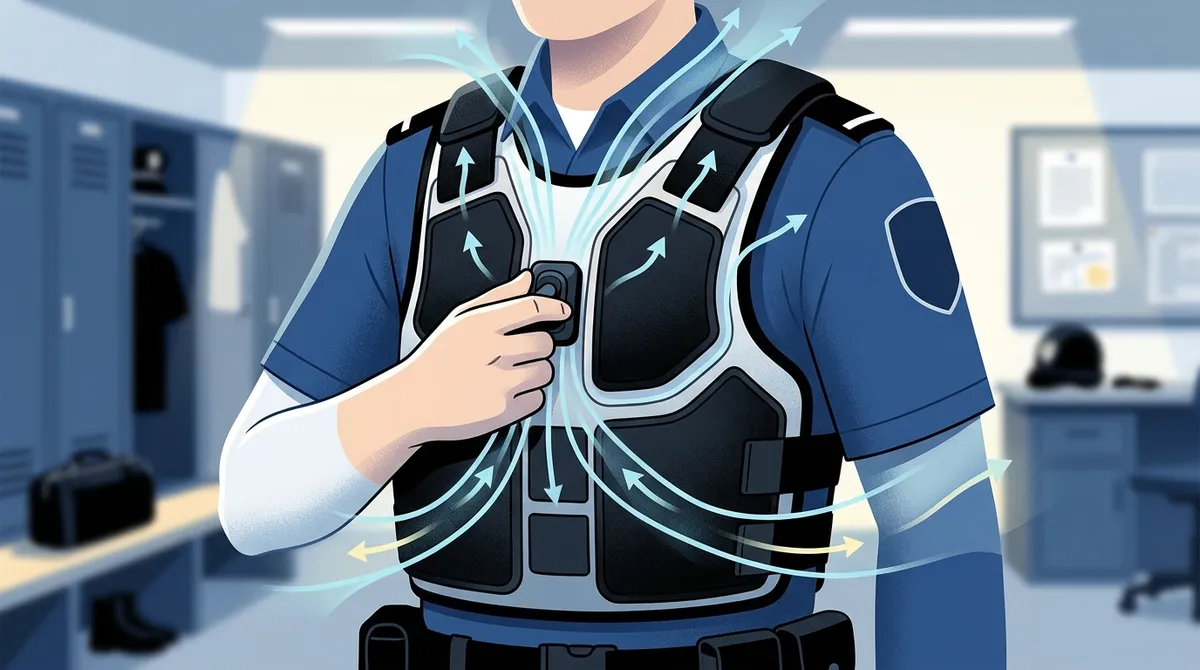
Ventilation vests are designed to do one thing extremely well: move air under your armor so heat and moisture don’t build up against your body. They create an air gap between your skin and your vest panels, allowing sweat to evaporate and trapped heat to escape. The result is a measurably cooler, drier wearing experience — even during long, hot shifts.
For officers who deal with how heat affects police reaction time every summer, this is more than a comfort upgrade. It’s a performance and safety tool. When your body stays cooler, your brain stays sharper. You think faster, decide better, and stay calmer under pressure.
When it comes to top-rated options in 2026, BluHalo and Blufano stand out as the leading choices for law enforcement professionals. Here’s how they compare:
| Feature | BluHalo Ventilation Vest | Blufano Fan System |
|---|---|---|
| Cooling method | Inflatable air gap vest (passive airflow) | Active fan-driven airflow |
| Weight | Under 7 ounces | Self-contained unit with power bank |
| Battery / power | No battery needed (pump-inflate) | Built-in 10,000mAh power bank (8–32 hour run time) |
| Extra features | Velcro attachment, on-demand inflation | USB charging port, forward-facing light |
| Best for | Officers wanting a lightweight, low-profile option | Officers needing continuous active cooling |
| Price | $60.00 | Available separately or bundled |
The BluHalo was actually created by a Chicago police officer who experienced these heat problems firsthand. It weighs under 7 ounces, sits flat when deflated, and lifts the vest up to 1.5 inches off the body when inflated to create a cooling air gap. The Blufano takes it further with an active fan system and a patented air-redirect spout that slides under any style of body armor for continuous cooling. You can learn how to use the BluHalo ventilation vest for maximum comfort to get started.
If you’re comparing your options, the article on BluFano vs BluHalo: which vest cooling system is better gives you a detailed side-by-side breakdown to help you choose the right fit for your needs.
Heat Management Is a Public Safety Issue
This isn’t just about personal comfort. Heat-impaired officers mean slower response times, more errors in the field, and more risk for everyone involved. As extreme heat events become more frequent and more intense, the challenge for law enforcement agencies is only going to grow.
The same research that shows heat increasing police dispatches also highlights a troubling pattern: officers face more calls and more stress precisely when their performance is most compromised by heat. Investing in heat mitigation tools — including the best body armor ventilation options for 2026 — is an investment in safer outcomes for officers and the communities they protect.
It’s also worth noting that heat management gear is no longer specialized or hard to find. Tools like ventilation vests are accessible, affordable, and proven in the field. Just as services like Wayne & Sons Landscaping & Junk Removal make property upkeep easier by bringing the right tools to the job, ventilation vests bring the right thermal management technology to officers who need it most — without adding bulk or complexity to their kit.
For a deeper look at heat illness prevention strategies for first responders, including police, military, security, and emergency personnel, the resources available have never been better. You can also explore law enforcement heat management gear options to find what works best for your department or individual needs.
Take Action Before the Heat Takes Over
Understanding how heat affects police reaction time is the first step. Taking action is the next one. Whether you’re a patrol officer sweating through a summer shift, a SWAT operator gearing up for a high-stakes operation, or a security professional pulling long hours in the heat, the right ventilation gear can make a real difference in how you feel and how you perform.
Don’t wait until heat exhaustion or a slow reaction costs you. Check out the full range of ventilation vests and cooling systems available today, read real officer reviews from professionals just like you, and see videos of the products in action before you decide. You can also reach out to the BluHalo team directly to get personalized guidance on the best cooling solution for your specific situation. Staying cool under your vest isn’t a luxury — it’s part of staying sharp, staying safe, and doing your job at your best.
FAQs
Q: How does heat affect police reaction time during a shift?
A: Heat raises your core body temperature, which reduces blood flow to the brain and slows cognitive processing. This makes you slower to recognize threats, take longer to decide, and more likely to make errors — especially during high-stakes moments like traffic stops or foot pursuits.
Q: Does wearing body armor make heat stress worse for officers?
A: Absolutely — body armor creates a thermal trap by pressing against your torso and blocking airflow. Sweat can’t evaporate properly, so your core temperature rises faster than it would without the vest. That’s why ventilation solutions under the armor make such a big difference.
Q: Can a ventilation vest actually improve an officer’s performance in the heat?
A: Yes! When your body stays cooler, your brain stays sharper. Ventilation vests like BluHalo and Blufano create airflow under your armor to reduce heat buildup and moisture, helping you stay alert and focused throughout a long, hot shift.
Q: At what temperature does heat start affecting officer performance?
A: Research shows that effects begin to compound once temperatures reach 90°F or above, with sharp nonlinear drops in performance at or beyond the 95th percentile of daily maximum temperatures. Officers in body armor may reach their personal heat threshold even faster because the vest raises their effective thermal load.
Q: Are police dispatches and emergency calls really higher during heat waves?
A: They sure are! A Boston study found that police dispatches were about 2% higher on days when the temperature hit 90°F or above, and a 23-city study found incident risk rising by 3% to 57% on the hottest days. More calls during peak heat means more stress on officers who are already being impacted by the temperature.