Key Takeaways
-
Confirm fit first: check the fan's dimensions, mounting method, connector type, and battery voltage against your actual vest and armor, and test the full setup while wearing your loaded duty gear.
-
Battery claims often refer to the lowest speed, so ask how long the fan runs at the speed you'll use and whether it will last a full 10- to 12-hour shift.
-
Don't compare airflow numbers across brands blindly; they may use different units, speed settings, and test methods, so treat supplier claims as a starting point.
-
Check the full airflow path under the vest, including whether intake and outlets stay clear when you sit, bend, or drive, since a seat back can block a poorly placed fan.
-
Weigh comfort over a full shift: consider the combined weight of fan and battery, whether it lies flat without digging into your ribs or back, and whether noise matters for your job.
-
A fan is a comfort aid, not a replacement for heat safety; keep up with hydration, rest breaks, and your workplace heat plan, and make sure any add-on never weakens armor protection.
Picture this: it’s a 95-degree afternoon, you’re twelve hours into your shift, and your armor feels like a wet wool blanket. You’ve probably thought about adding a fan under your vest. Good idea! But before you spend your hard-earned money, it pays to slow down and do some homework.
Not all fans are built the same. Some fit great. Some don’t fit at all. Some run all day, and some quit after a few hours. Knowing what to check before buying an under vest fan can save you money, frustration, and a lot of sweat.
This guide compares the two main paths for staying cool under armor: an active under vest fan and a passive ventilation option. We’ll walk through the key checks, line up the pros and cons, and help you pick the right gear for your job. Whether you’re a patrol officer, a soldier, a security guard, or a first responder, you’ll find simple tips here that you can use today.
Active Fan vs. Passive Vent: The Quick Version
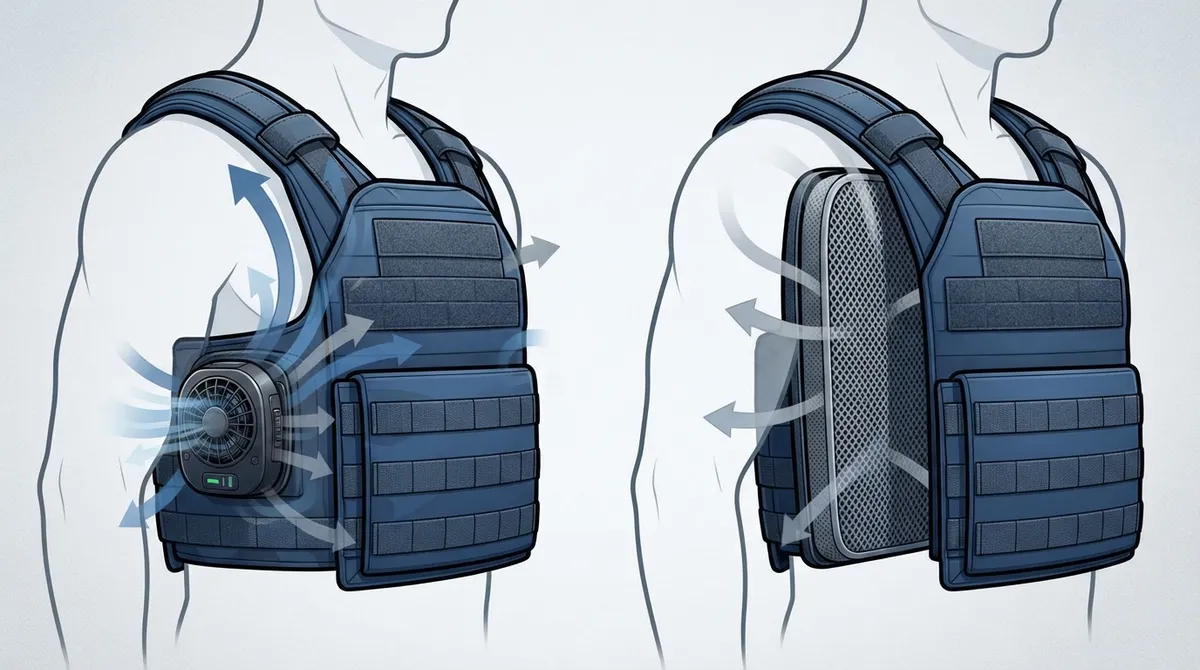
Let’s start with the big picture. An active system uses a battery-powered fan to move air. A passive system uses spacing or mesh to let air flow on its own, with no power needed.
Both can help. But they work in very different ways, and each one fits different jobs. Before you check any specs, decide which style matches how you work.
| Feature | Active Under Vest Fan | Passive Ventilation |
|---|---|---|
| Power needed | Yes, battery | No |
| Airflow | Moves air on demand | Relies on body movement |
| Works when still | Yes | Limited |
| Weight | Adds fan and battery | Usually lighter |
| Noise | Some fan sound | Silent |
| Maintenance | Charging needed | Very little |
If you spend a lot of time sitting in a patrol car, standing at a post, or working in tight spaces, an active fan often makes more sense. For more on this choice, see this breakdown of passive vs. active tactical vest ventilation.
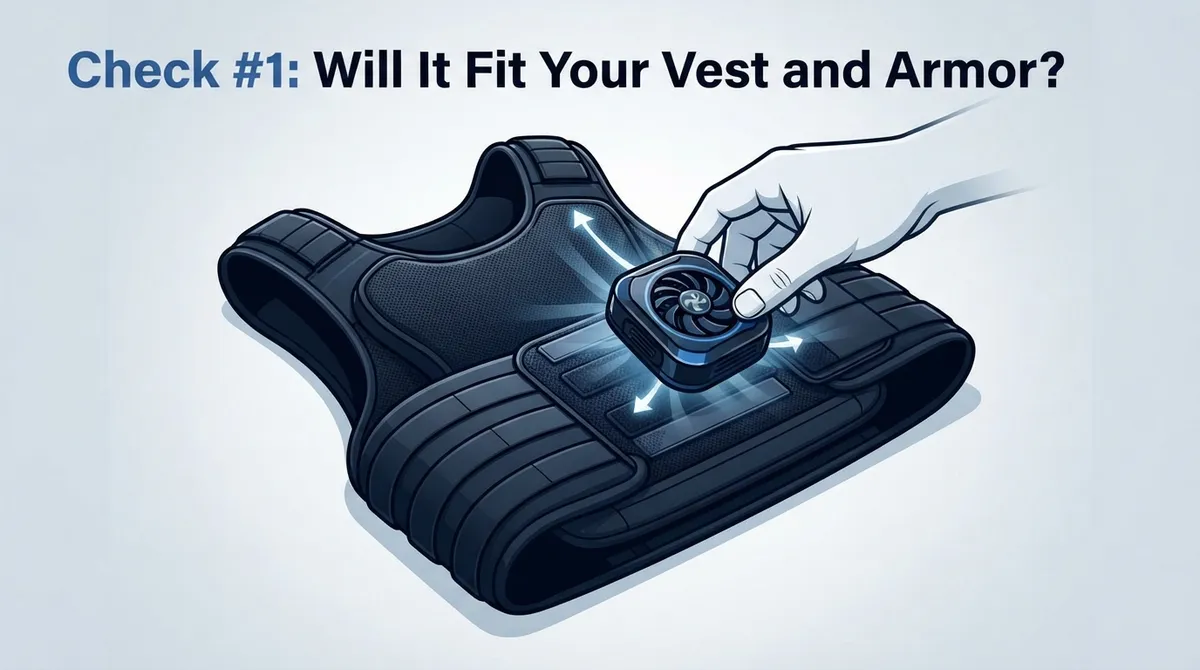
Check #1: Will It Fit Your Vest and Armor?
This is the biggest one. A fan that doesn’t fit your setup is just an expensive paperweight.
Fan units come in different sizes, shapes, and mounting styles. Do not assume a fan from one brand will work with another brand’s vest. Check these things first:
- Fan dimensions: Will it slide under your carrier without bulging?
- Mounting method: Does it use a strap, Velcro, or a clip?
- Connector type: Does the plug match the battery you plan to use?
- Battery requirements: What voltage and capacity does it need?
It helps to try the whole setup on while wearing your actual armor and duty belt. A fan that feels fine in a store can feel very different once your gear is loaded up.
The Blufano was built with this exact problem in mind. It uses a patented air-redirect spout that slides under any style of body armor, and an optional strap keeps it in place. That kind of universal fit is a big deal when you wear different carriers on different days.
Check #2: Look at the Whole Airflow Path
Here’s a mistake a lot of people make. They look at how strong the fan is, but they forget to ask where the air actually goes.
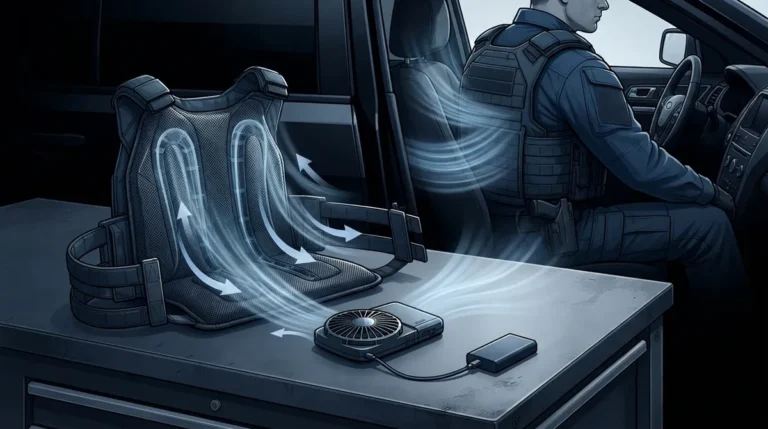
A powerful fan does you no good if the air can’t spread out across your torso. The fan’s intake and outlets must stay clear. Armor, straps, clothing, and even your posture can block them.
Ask yourself these questions:
- Where does the air enter the fan?
- Where does the air exit under the vest?
- Can the air travel across your chest and back, or does it just blow in one spot?
- Does the path stay open when you sit, bend, or drive?
That last one matters a lot. Many officers spend hours in the driver’s seat, and a seat back can squash a poorly placed fan. To understand how this works in detail, read about how air circulation under a bulletproof vest works.
Check #3: Compare Airflow Numbers the Smart Way
Spec sheets love big numbers. But those numbers can be tricky.
Airflow is often listed in cubic meters per minute (m³/min). For example, one major tool brand lists about 1.5 to 2.2 m³/min across its speed settings. A different supplier lists a maximum of 2.8 to 3.0 m³/min for its fan vest. At first glance, the second one looks stronger.
But here’s the catch: those numbers are not directly comparable. They may be tested in different ways, at different speeds, and with different garment designs. A number measured at maximum speed tells you little about everyday use.
Keep these tips in mind:
- Check which speed setting the airflow number describes.
- Compare numbers in the same units.
- Remember that garment design changes how much air reaches your skin.
- Treat supplier claims as a starting point, not a promise.
The best test is simple. Wear it, run it, and see how you feel after an hour in real conditions.
Check #4: Runtime at the Speed You’ll Actually Use
Battery life is where many fans let people down. A box might say “up to 8 hours,” but that number often refers to the lowest speed.
Runtime depends on fan speed, battery size, and how efficient the system is. For example, one tool maker reports about 13 hours of continuous use with an 18V, 5.0Ah battery in one setup. Another product lists up to 8 hours with a compatible battery pack. Both note that results change with the settings you pick.
Before you buy, check:
- How long does it run on the speed you expect to use most?
- How long does it take to recharge?
- Can you swap in a spare battery?
- Will the battery last through a full 10- or 12-hour shift?
If you work long shifts, you want a fan that matches your day. The Blufano runs 8 to 32 hours depending on the setting, and it has a built-in 10,000mAh power bank. It can even charge your USB devices when you need a boost. For more help on this topic, check out this guide on how to pick a vest fan with all-shift battery life.
Check #5: Comfort, Weight, and Noise
A fan that cools you but wears you out is not a win. Think about how it feels over a full shift, not just the first ten minutes.
Weight and Bulk
Every ounce counts when you’re already carrying armor, a duty belt, and tools. Look at the weight of both the fan and the battery. Make sure the unit sits flat and doesn’t dig into your ribs or back.
Noise Level
Some jobs need quiet. If you’re on a stakeout, a tactical team, or a protective detail, a loud fan can be a real problem. One supplier lists a fan vest at no more than 45 dB, but that’s a supplier claim and not an industry rule. Try to hear it in person if you can.
Freedom of Movement
Can you sit, bend, twist, and drive without the fan shifting around? Does it stay put when you run or climb? These are the moments when a bad fit shows up.
If weight is a worry, take a look at how much weight vest cooling gear adds before you decide.
Check #6: Durability and Care
Your gear takes a beating. Sweat, dust, heat, and daily wear are tough on electronics. Make sure the fan can handle your real work life.
- Sweat and dust resistance: Is it built for dirty, damp conditions?
- Operating conditions: What temperatures can it handle?
- Washing: Can you wash the garment parts? Do you need to remove the fan and battery first?
- Warranty: How long is the coverage?
- Parts and support: Can you get replacement parts and real help if something breaks?
Sweat can also affect your armor over time. If you want to know more, read about whether sweat damages body armor.
Check #7: Safety Comes First
Here’s an honest truth. A fan helps with comfort and heat management, but it’s not a cure-all. It should add to good heat-safety habits, not replace them.
The OSHA heat stress guide lists air movement and air-cooled garments among possible controls. But it also stresses hydration, rest breaks, and getting your body used to the heat. Your fan is one helpful tool in a bigger plan.
Also, remember that your armor must still do its job. Any add-on should never block or weaken your protection. The NIJ body armor standards are a good place to learn what your armor needs to stay certified and effective.
If you want to learn how heat builds up in the first place, see how to prevent heat stress while wearing body armor.
A Simple Pre-Purchase Checklist
Here’s a quick list you can screenshot and take shopping with you.
- Confirm the fan fits your vest, armor, and carrier.
- Check the connector, voltage, and battery type.
- Look at the full airflow path, not just fan power.
- Compare airflow numbers in the same units and speeds.
- Check runtime at your real-world speed.
- Ask about charging time and spare batteries.
- Test comfort while sitting, bending, and driving.
- Check weight, bulk, and noise.
- Review sweat resistance, washing steps, and warranty.
- Remember: a fan is a helper, not a replacement for heat safety.
Where BluHalo and Blufano Fit In
If you want a strong, proven option, it’s worth looking at the two products built by BluHalo. They were designed for people who wear armor for a living, and they tackle the problem in two smart ways.
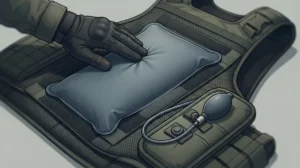
The BluHalo ventilation vest was created by a Chicago police officer who knew the struggle firsthand. It weighs under 7 ounces, lies flat when deflated, and lifts your vest up to about 1.5 inches off your body when inflated. That gap creates an air channel for cooling on demand. It attaches to a clean vest with Velcro and deflates with the push of a button.
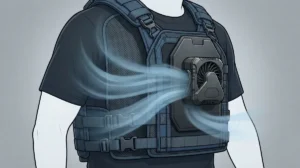
The Blufano is the active choice. It’s a self-contained fan system with adjustable airflow, a built-in 10,000mAh power bank, and a forward-facing light for hands-free use in low light.
Many people bundle the two together for the best cooling. You can see how they compare in this look at BluFano vs BluHalo, or read what real wearers say on the reviews page.
Active vs. Passive: Which One Should You Choose?
So, which side wins? It depends on your day.
Choose an active fan if you:
- Sit or stand still for long stretches
- Work in very hot or humid weather
- Need fresh air moving all shift long
Choose a passive option if you:
- Move around a lot and want zero batteries
- Need silence above all else
- Prefer the lightest, simplest setup
And here’s a fun thought: you don’t have to pick just one. Pairing a lift-style device with a fan gives you both an air gap and moving air. That’s the idea behind bundling BluHalo with Blufano. For more ideas, browse the full list of body armor cooling solutions for officers in 2026.
Final Thoughts
Buying an under vest fan doesn’t have to be hard. Start with fit, then check the airflow path, runtime, comfort, and durability. Treat spec sheet numbers with a little healthy doubt, and always test the full setup in real conditions.
Stay cool, stay sharp, and take care of yourself out there. If you’re ready to find the right cooling setup for your gear, you can contact the BluHalo team and get friendly, honest help picking the best fit for your job. And if you ever need a bright smile after a long, hot shift, our friends at Charming Smiles of Ocoee are a great local choice for dental care.
FAQs
Q: Will this under vest fan fit my body armor or plate carrier?
A: Not always, so check before you buy! Look at the fan’s size, mounting method, connector, and battery needs, and try it on with your real gear. A universal-fit design like the Blufano, which slides under any style of body armor, makes this much easier.
Q: How long will an under vest fan run on a battery?
A: It depends on the fan speed and battery size. Maximum runtime claims often describe the lowest setting, so always ask how long it runs at the speed you plan to use. The Blufano, for example, runs 8 to 32 hours depending on the setting.
Q: How much airflow should I look for in a vest fan?
A: There’s no single magic number. Airflow specs vary by brand, test method, and speed setting, so they can’t always be compared side by side. Focus on the full airflow path under your vest and test how it feels during a real shift.
Q: Can I wash my vest with the fan still in it?
A: In most cases, no. You’ll usually need to remove the fan and battery before cleaning the garment parts. Always check the maker’s care instructions and confirm what is washable before you buy.
Q: Is an under vest fan enough to prevent heat illness?
A: A fan is a great comfort aid, but it’s not a replacement for heat-safety basics. Keep drinking water, take rest breaks, and follow your workplace heat plan. Think of the fan as one helpful tool in a bigger safety toolbox.