Key Takeaways
-
Ask each manufacturer exactly which cooling method its vest uses (ice, phase-change, air circulation, or liquid) and how it performs in your specific heat and humidity conditions.
-
Request measured performance data with test conditions and whether an outside lab verified it, since 'keeps you cool' is only a claim and numbers are product-specific.
-
Map the full system before buying: power source, coolant or packs, recharge or swap process, and extra accessories, since hidden setup costs often exceed the sticker price.
-
Get written confirmation before pairing any cooling vest with a respirator, because NIOSH approvals cover complete supplied-air systems and some vest makers explicitly say their products are not respirator-approved.
-
Test fit, weight, noise, and comfort on a full hot shift through a trial period or return policy, since a short test on a cool day reveals very little.
-
Treat a cooling vest as one part of a heat safety plan, not a replacement for hydration, rest breaks, acclimatization, and awareness of heat illness signs.
Shopping for a cooling solution to wear under body armor can feel like a lot. Every brand says it will “keep you cool,” but those words don’t tell you much on a 95-degree shift. Smart buyers ask smart questions first.
Here’s the good news. You don’t need an engineering degree to size up a maker. You just need a short list of questions to ask a vest cooling manufacturer and a clear idea of how the main cooling styles differ. In this guide, we compare two common approaches: pack-based cooling (ice or phase-change inserts) and active airflow (fans and ventilation). Then we walk through the questions that matter most, whether you patrol a beat, guard a site, run tactical ops, or respond to emergencies.
Let’s make sure the vest you pick works as hard as you do.
Why the Right Questions Matter Before You Buy
Cooling gear is not one-size-fits-all. A vest that works well in a dry warehouse may struggle in humid air or under heavy armor. That’s why the term “ventilation vest” can mean different things from one brand to the next.
Some vests move air. Some use ice or phase-change packs. Others use water or evaporation. Each design has trade-offs in weight, run time, upkeep, and fit under armor. If you ask the right questions up front, you avoid wasting money on gear that fails when you need it.
It also helps to remember this: a cooling vest is one tool, not a full safety plan. Guidance from OSHA’s heat stress resources and NIOSH stresses hydration, rest breaks, and acclimatization. Cooling gear supports those habits. It does not replace them.
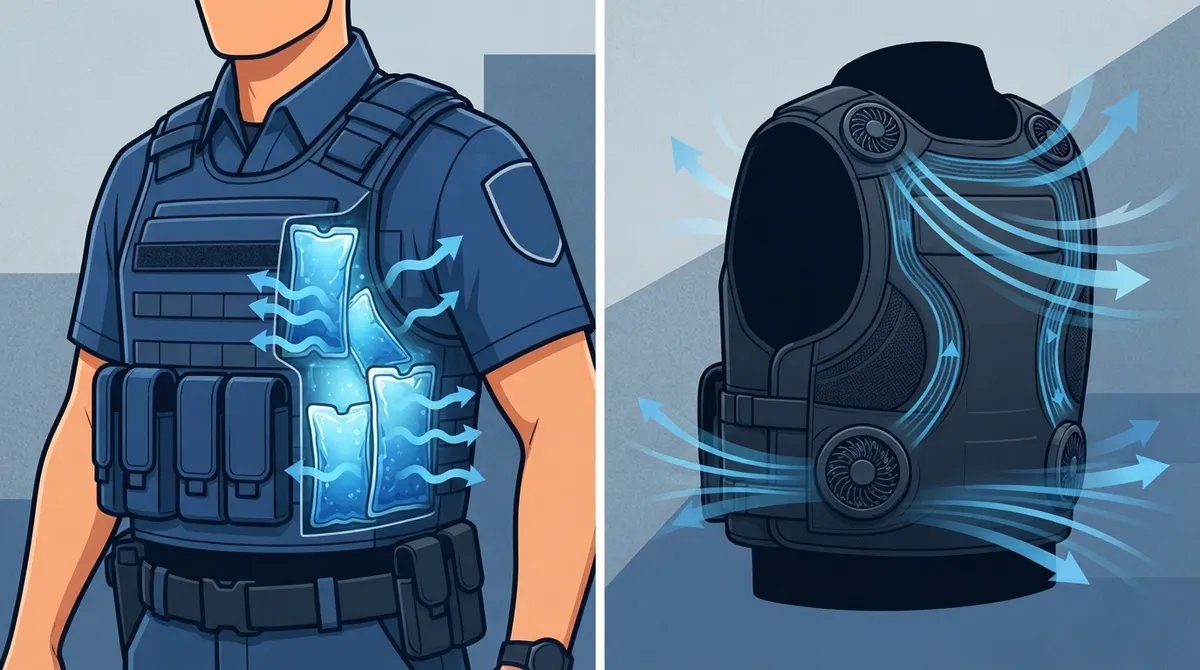
Pack-Based vs. Active Airflow: A Quick Comparison
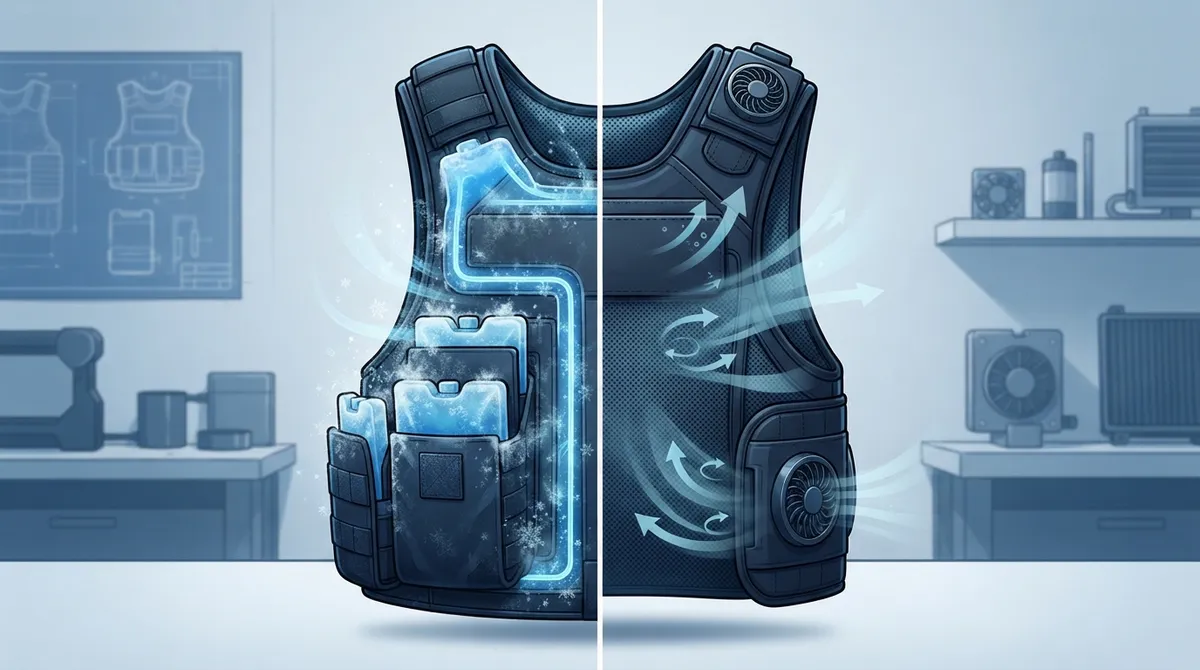
Before you call a manufacturer, know what you’re comparing. Here is a side-by-side look at the two most common styles for people who wear body armor.
| Feature | Pack-Based (Ice or Phase-Change) | Active Airflow (Fan or Ventilation) |
|---|---|---|
| How it cools | Absorbs heat from the body through contact | Moves air to carry away heat and moisture |
| Typical duration | Often about 2 to 4 hours before packs need swapping | Depends on battery and setting; can run much longer |
| Extra gear needed | Freezer or cooler, spare packs | Charger or power bank |
| Moisture control | Limited; can add condensation | Helps reduce trapped sweat |
| Weight under armor | Can be heavy and bulky | Often lighter and lower profile |
| Best for | Short, intense heat exposure with a place to recharge packs | Long shifts and all-day wear |
NIOSH material notes that cooling-pack vests may offer some relief for up to about four hours, with effective cooling often closer to two to three hours, depending on contact, clothing, and heat. OSHA’s Heat Stress Guide gives a similar 2 to 4 hour range for ice-pack cooling under moderate-to-heavy heat loads. Those are general numbers, not promises from any one brand. That’s exactly why you should ask each maker for its own test data.
For a deeper side-by-side, see our breakdown of ventilation vs. phase change cooling vests.
Question 1: What Cooling Technology Does the Vest Use?
This is the first of the questions to ask a vest cooling manufacturer, and it sounds basic. It isn’t. Many products carry similar names but work in very different ways.
Ask the maker to name the exact method: air circulation, evaporation, ice, phase-change, or liquid. Then ask how it performs in your real conditions. Your heat level, humidity, workload, and clothing layers all change the result.
A good manufacturer will answer plainly. If you get vague talk like “advanced cooling fabric,” keep digging. You can learn more about how active designs work in our guide on how an active cooling system works in ventilation vests.
Question 2: What Performance Data Can You Show Me?
“Keeps you cool” is a claim. Test results are proof. Ask for numbers, and ask how they were gathered.
Here is a short list of data points worth requesting:
- Cooling capacity, airflow, or temperature change that was measured
- The room or outdoor conditions during testing
- How long the cooling effect lasted
- Whether an outside lab verified the results
- Feedback from wearers in real duty settings
Keep in mind that numbers are often product-specific. One air-cooled vest brand, for example, lists 1,500 to 2,500 BTU per hour of cooling capacity. That figure belongs to that product, not to the whole industry. Compare apples to apples, and be wary of any number without test conditions attached.
Question 3: What Does the Full System Require?
This is where hidden costs show up. A vest may look affordable until you learn what it needs to run.
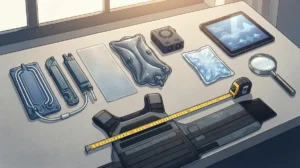
Ask the manufacturer to spell out the whole setup:
- Power or air source. Some air-cooled systems need compressed air at set pressure and flow, plus hoses and filters. Others run on a small battery.
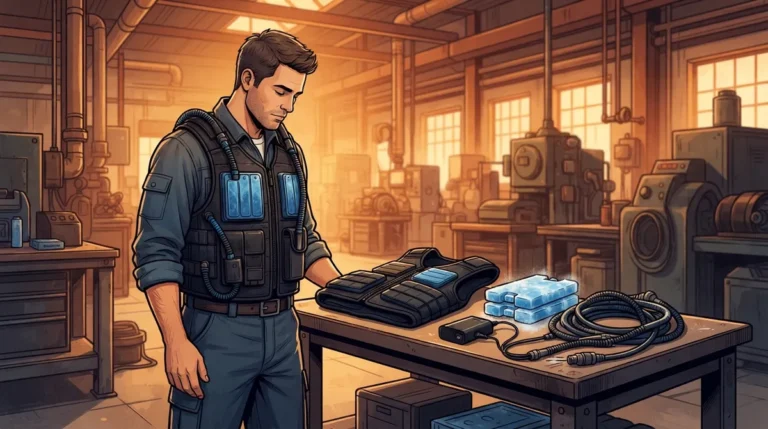
- Coolant or packs. Liquid systems need a pump and reservoir. Pack-based vests need a freezer and spare packs.
- Recharge or swap process. How long does it take, and where can you do it on a shift?
- Extra accessories. Straps, adapters, chargers, or mounts that cost more.
A self-contained design is often easier for patrol, security, and field work. No hoses. No tethers. That’s a big deal when you’re moving, climbing in and out of a vehicle, or working in tight spaces.
Question 4: Will It Work With My Other Gear?
Your vest does not live alone. It sits under body armor, next to a duty belt, and around radios, harnesses, and tools. Ask how the cooling product fits into that stack.
Be especially careful with respiratory gear. NIOSH notes that approvals apply to complete supplied-air respirator systems, and at least one maker states outright that its vest products are not approved as respirator systems. Never assume a cooling vest is cleared for use with a respirator. Ask for it in writing.
Also ask about armor type, carrier style, and whether the product sits under or over other layers. A cooling device that bunches up or shifts under your plate is more annoying than helpful. Our post on how vest fit affects cooling airflow explains why fit matters so much.
Question 5: How Does It Fit and Feel on a Long Shift?
Comfort decides whether you actually wear the thing. Ask about size range, adjustment, weight, and movement. Then ask about noise, cord routing, and whether it snags on tools or gets in the way when you draw, kneel, or run.
Look for answers on these points:
- Total weight when worn
- Profile when not in use (does it lie flat?)
- Noise level during operation
- How it attaches and whether it stays put
- Whether you can try it before you commit
Ask for a trial period or a return policy that lets you test in real work conditions. A one-hour try on a cool day tells you very little. A full hot shift tells you everything.
Question 6: How Do I Clean, Maintain, and Repair It?
Sweat, dust, and daily wear take a toll. Ask how the vest handles all of it.
Good questions include:
- What materials is it made from, and how durable are they?
- How do I wipe down or wash it without hurting performance?
- Are there parts I can replace myself?
- What is the warranty, and how fast is repair turnaround?
- How long is the expected service life?
Also confirm that cleaning won’t damage any protective features. A well-built product should come with clear care steps and responsive support. If a maker can’t tell you how to look after the gear, that’s a red flag.
Why BluHalo and BluFano Are Strong Answers
If you want a clear example of a maker who can answer these questions, look at BluHalo and BluFano. Both were built for people who wear armor every day.
BluHalo was created by a Chicago police officer who knew the problem firsthand. It weighs under 7 ounces and sits flat when deflated. When you want relief, you inflate it with a small pump to lift the vest up to about 1.5 inches off your body, creating a cooling air gap. A button deflates it fast. It attaches to a clean vest with Velcro and is made from double-layer, high-strength polyethylene.
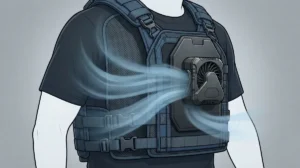
BluFano takes a different route with active airflow. It’s a self-contained fan unit with a patented air-redirect spout that slides under any style of body armor. It delivers adjustable airflow for 8 to 32 hours depending on the setting. A built-in 10,000mAh power bank runs the fan and can charge your USB devices. A forward-facing light adds hands-free help in low light.
Neither product needs a compressed-air line, a freezer, or a coolant pump. That keeps the setup simple. You can also bundle them for stronger cooling. Read our BluFano vs. BluHalo comparison to see which fits your duty, or browse the shop directly.
Question 7: What Proof and Support Does the Company Offer?
A trustworthy maker stands behind its product. Ask what certifications, test reports, and customer feedback they can share. Then ask about warranty terms, return rules, and how to reach a real person if something goes wrong.
Check the reviews page and watch product videos to see the gear in action. Real officer feedback about long, hot shifts is worth more than any slogan. Also review the NIJ body armor standards so you understand what your armor is rated for, and ask how the cooling product affects that setup.
Question 8: How Does the Vest Fit Into My Heat Safety Plan?
This last question is for you as much as the maker. A vest is a helpful add-on, not a cure-all.
NIOSH and OSHA point to several factors in heat burden: work rate, protective gear, hydration, acclimatization, temperature, humidity, radiant heat, and air movement. Cooling garments help manage some of these. They do not prove a task is safe on their own.
Pair your vest with water, rest breaks, and smart scheduling. Learn the warning signs of heat illness. Our guide on how to prevent heat stress while wearing body armor is a great place to start.
Quick Checklist: Questions to Take With You
Print this or save it on your phone before your next call:
- What cooling technology does the vest use?
- What test data and conditions back up your claims?
- What power, air, coolant, or packs does the system need?
- Will it work with my armor, harness, and other PPE?
- What is the weight, noise level, and fit range?
- Can I trial it on a real shift?
- How do I clean, maintain, and repair it?
- What warranty and support do you offer?
Final Thoughts: Choose Cooling That Keeps Up With You
Pack-based vests can help in short bursts, but they ask a lot of you: freezers, spare packs, and constant swapping. Active airflow keeps working through long shifts and cuts down on trapped sweat. For most people in armor, that makes ventilation the smarter pick.
The right questions to ask a vest cooling manufacturer will quickly show who is confident in their product and who is just selling a slogan. Take your time, ask for proof, and don’t be shy about testing before you buy.
Ready to talk through your gear and your conditions? Get in touch with the BluHalo team and find the cooling setup that fits your duty.
FAQs
Q: What are the most important questions to ask a vest cooling manufacturer?
A: Start with what cooling technology the vest uses and what test data backs it up. Then ask what power or packs it needs, how it fits with your armor and other PPE, and what cleaning, warranty, and support come with it.
Q: How long does a cooling vest actually keep you cool?
A: It depends on the type. NIOSH and OSHA note that ice or phase-change packs often last about 2 to 4 hours, while fan-based systems depend on battery and setting. For example, BluFano runs 8 to 32 hours based on the airflow level you choose.
Q: Can I wear a cooling vest with a respirator or other PPE?
A: Never assume it’s approved. NIOSH says approvals cover complete supplied-air respirator systems, and some makers state their vests are not respirator-approved. Ask the manufacturer for written confirmation before pairing gear.
Q: Should I trial a cooling vest before buying it?
A: Yes, if you can. A full shift in real heat tells you far more than a short test. Ask about trial periods and return policies so you can check fit, comfort, and cooling under your own gear.
Q: Does a cooling vest replace a heat stress prevention plan?
A: No. A vest is a helpful extra, not a substitute. OSHA and NIOSH guidance still calls for hydration, rest breaks, acclimatization, and awareness of heat illness signs.