Key Takeaways
-
Always check the fan speed setting (high, medium, or low) when comparing battery runtime claims, as the same battery can deliver 5 hours on high but 33 hours on low—making direct comparisons impossible without knowing the test conditions.
-
Match your battery capacity to your actual shift length and realistic fan speed usage, not just the lowest-speed maximum claim; an 8-hour shift on high requires a different battery than one on low.
-
Verify voltage and watt-hours rather than relying solely on amp-hour (mAh) ratings, since two batteries with identical mAh can have vastly different runtimes depending on voltage and battery model.
-
Confirm battery compatibility by checking voltage match, connector type fit, and manufacturer approval before purchasing, as incompatible batteries can damage gear or leave you stranded mid-shift.
-
Use removable battery and fan systems that allow you to pop out electronics before washing, making gear maintenance simpler and extending the lifespan of your cooling equipment.
-
Pair your fan vest with broader heat-safety habits like proper hydration, gradual acclimatization, and work-rest cycles, as cooling gear alone cannot prevent heat-related illness without these practices.
If you’ve ever counted down the hours on a hot shift, wondering if your gear would quit before you did, you’re in good company. Officers, soldiers, and first responders everywhere deal with the same frustration: a cooling fan that dies right when you need it most. The good news? Picking a vest fan with the right battery life isn’t guesswork once you know what to look for, and we’re here to walk you through it, step by friendly step.
A long battery life vest fan is exactly what it sounds like: a fan system built into or worn under body armor that keeps circulating air for hours, not minutes. It won’t turn your vest into an air conditioner, but it does help sweat evaporate and pushes trapped heat away from your skin. Understanding how these systems actually work, and how to judge their battery claims, will save you from disappointment mid-shift. Let’s get into it.
What Does “Long Battery Life” Actually Mean for a Vest Fan
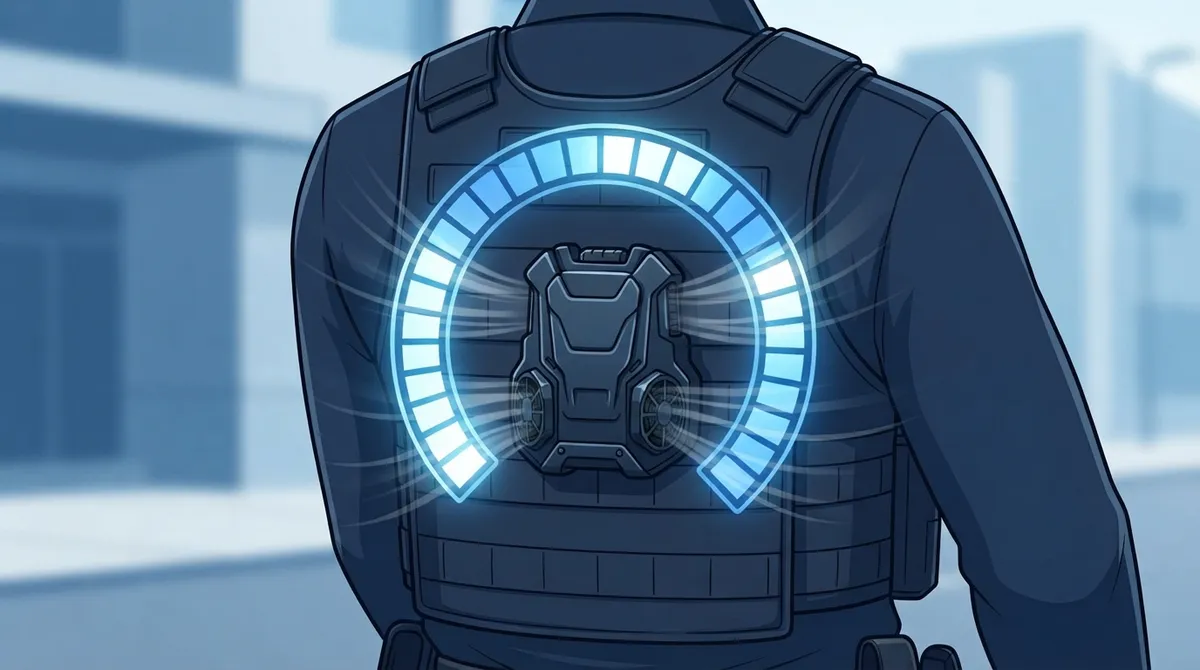
Here’s something a lot of buyers don’t realize: fan vests don’t chill the air like a mini fridge. They move air across your skin so sweat can evaporate faster. That’s a simple, effective form of cooling, but it depends on humidity, your workload, and the weather outside. On a dry day, moving air feels amazing. On a swampy, humid day, it still helps, just not quite as dramatically.
So when we talk about “long battery life,” we mean how many hours the fan can keep spinning before you need to recharge or swap batteries. That number changes a lot depending on a few key factors:
- Battery capacity and voltage (bigger numbers usually mean longer runtime)
- Fan speed setting (high, medium, or low)
- How efficient the fan motor and blades are
- The vest’s airflow design and how well it channels air
This matters because two products can advertise “long battery life” and mean very different things. One might run 5 hours on high. Another might stretch to 30 hours on low. Neither claim is wrong, but they’re not comparing apples to apples unless you know the settings and battery specs behind them.
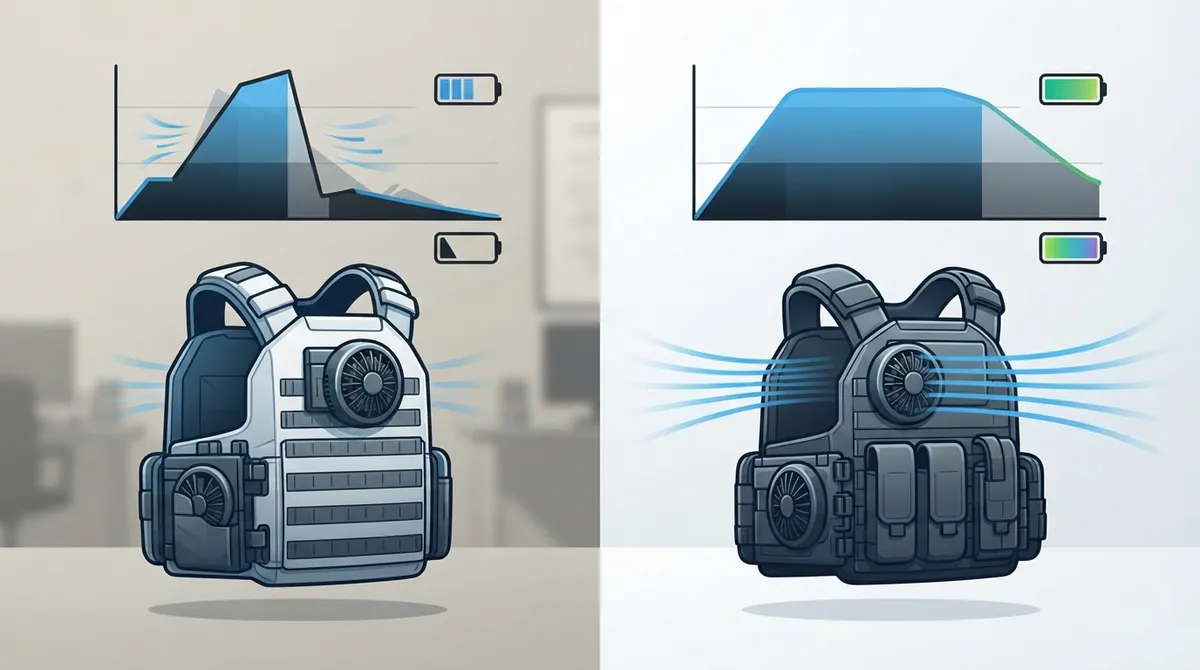
Why Runtime Numbers Can Be Confusing (A Real-World Example)
Let’s borrow an example from outside the ventilation vest world to show how tricky this gets. Makita, the power tool company, makes a fan jacket and publishes detailed battery runtime charts in its manual. With a 6.0Ah 18V battery, the jacket runs about 5 hours on high, 9 hours on medium, and 13 hours on low. Swap in a 14.4V 6.0Ah battery, and suddenly you get 8.5 hours on high, 16 hours on medium, and 21 hours on low. A different 6.0Ah 18V battery pairing in the same manual lists 13.5, 24.5, and 33 hours for high, medium, and low.
See the problem? Same brand, same “6.0Ah” label, wildly different runtimes depending on voltage and the exact battery model. This is exactly why you can’t just glance at a battery’s amp-hour rating and assume you know how long it’ll last. Voltage and watt-hours tell the real story, and mAh alone doesn’t give you a fair comparison across different systems.
| Battery Type (Example) | High Setting | Medium Setting | Low Setting |
|---|---|---|---|
| 18V 6.0Ah (Model A) | 5.0 hours | 9.0 hours | 13.0 hours |
| 14.4V 6.0Ah | 8.5 hours | 16.0 hours | 21.0 hours |
| 10.8V–12V 4.0Ah | 5.0 hours | 9.0 hours | 13.0 hours |
| 18V 6.0Ah (Model B) | 13.5 hours | 24.5 hours | 33.0 hours |
The takeaway here isn’t about that specific jacket brand. It’s a lesson for anyone shopping for a fan-powered vest: always ask what setting a runtime claim is based on, and compare products using the same fan speed whenever possible.
How to Match Battery Life to Your Shift Length
Now let’s get practical. You don’t need the biggest battery on the market. You need the right battery for how you actually work. Here’s a simple way to think it through:
- Figure out your typical shift length. Is it 8 hours? 12 hours? Longer during special deployments?
- Decide what fan speed you’ll realistically use most. If you’re constantly on high because of extreme heat, plan around that number, not the low-speed max claim.
- Check whether the runtime listed covers your full shift at your preferred setting, with some buffer for unexpected heat spikes.
- Consider a spare battery or a charging plan if your shift runs longer than the fan’s rated time on your usual setting.
- Factor in weight. A bigger battery might last longer, but it also adds bulk you’ll be carrying all day under your armor.
This is exactly why Blufano stands out. It’s built with an adjustable fan system rated for 8 to 32 hours depending on the setting, powered by a built-in 10,000mAh power bank. That range gives you flexibility: crank it up during peak heat, dial it back to stretch battery life during quieter stretches of your shift.
Battery Compatibility: What to Check Before You Buy
Not all batteries play nice with all fan units, even if the numbers look similar on paper. Before you commit to a system, run through this checklist:
- Voltage: Match the vest fan’s required voltage exactly, not just a close guess
- Amp-hour rating: Higher numbers generally mean longer runtime at the same voltage
- Connector type: Make sure the battery physically fits and locks into the fan unit
- Manufacturer compatibility: Confirm the maker explicitly approves that battery for that fan
Don’t assume batteries with similar mAh ratings are interchangeable across brands or products. Voltage and watt-hours are what actually determine performance, and mixing incompatible parts can damage your gear or leave you stranded with a dead fan mid-shift.
Removable Batteries and Fans Make Life Easier
One underrated perk of a good ventilation vest system is having a removable fan and battery. This makes washing your gear so much simpler. You just pop out the electronics, toss the rest in the wash, and reassemble once it’s dry. Never wash the battery or fan unit itself unless the manufacturer specifically says it’s safe. Always follow the product manual for charging, cleaning, and storage instructions to keep your gear working reliably shift after shift.
Comparing BluHalo and Blufano for Cooling Performance
At BluHalo, we know that battery life is only half the story. Airflow design matters just as much. That’s why we built two complementary products that work great alone or even better together.
| Feature | BluHalo | Blufano |
|---|---|---|
| Power Source | Manual pump, no battery needed | Built-in 10,000mAh power bank |
| Runtime | Cooling-on-demand, reusable anytime | 8–32 hours depending on fan setting |
| Weight | Under 7 ounces | Lightweight, self-contained unit |
| Best For | Quick, on-demand air gap and cooling burst | Extended fan-driven airflow all shift long |
| Bonus Features | Low-profile when deflated, Velcro attachment | Forward-facing light, USB device charging |
The BluHalo ventilation vest was designed by a Chicago police officer who got tired of sweating through 12-hour shifts in 95-degree heat. It lifts your vest about 1.5 inches off your body when inflated, creating an instant air gap, no batteries required. Meanwhile, Blufano uses its patented air-redirect spout and adjustable fan to keep fresh air moving under your armor for hours on end. Many of our customers actually bundle both products together at a discount to get on-demand lift plus continuous airflow.
Common Mistakes to Avoid When Choosing a Fan Vest Battery
We’ve seen plenty of well-meaning buyers make the same avoidable mistakes. Here’s what to watch for:
- Trusting the maximum runtime claim without checking the fan speed it was tested at
- Assuming all batteries with the same mAh rating perform equally
- Skipping the manual and missing important charging or care instructions
- Buying a battery that’s not officially compatible with the fan unit
- Forgetting that heavier batteries add weight and bulk under your gear
Avoiding these pitfalls means you’ll actually get the runtime you’re expecting, not an unpleasant surprise three hours into a long shift. For more guidance, check out our detailed breakdown on how to pick a cooling fan system for body armor.
Fan Vests Are One Piece of a Bigger Heat-Safety Plan
It’s tempting to think a great fan vest solves every heat problem, but it’s really one tool in a larger toolbox. The NIOSH heat stress guidance reminds us that environmental heat, workload, PPE burden, hydration, and acclimatization all play a role in how your body handles heat. A fan vest helps manage the PPE burden piece, but it works best alongside smart hydration habits, proper acclimatization, and reasonable work-rest cycles.
The OSHA Heat Stress Guide offers additional practical advice for anyone working in hot environments, and it’s worth a look if your department or team doesn’t already have a heat-safety plan in place. Pairing solid gear with solid habits is really the winning formula. For background on how body armor requirements factor into all this, the Body Armor Standards from the National Institute of Justice are a helpful reference point too.
Tips for Staying Cool All Shift Long
- Stay hydrated before, during, and after your shift, not just when you feel thirsty
- Give your body time to acclimate to hot weather gradually if possible
- Use your fan vest at a setting that matches your actual workload, not just the lowest or highest option
- Take advantage of shade, breaks, or vehicle AC when your schedule allows
- Keep a charged spare battery on hand during extreme heat days
Combining these habits with dependable gear like our shop’s ventilation vests and fan systems gives you the best shot at staying comfortable and alert, shift after shift, season after season.
Ready to Upgrade Your Cooling Setup
You deserve gear that keeps up with you, not the other way around. Whether you’re drawn to BluHalo’s instant on-demand lift or Blufano’s long-lasting adjustable airflow, both options are built by people who understand exactly what it feels like to sweat through a long, hot shift in heavy gear. We’d love to help you find the right fit for your needs, your schedule, and your budget. Feel free to reach out to our team with any questions, we’re always happy to chat gear, battery life, or anything in between. Here’s to staying cooler, drier, and more comfortable on every single shift ahead.
FAQs
Q: How long does a battery last in a fan cooling vest?
A: It really depends on the fan speed and battery size you’re using. Some systems, like Blufano, offer anywhere from 8 to 32 hours depending on your setting, so you can stretch battery life way out on low or crank up airflow when you need it most.
Q: What battery capacity do I need for an 8- or 12-hour shift?
A: Look for a runtime rating that comfortably covers your shift length at the fan speed you’ll actually use, not just the lowest setting’s maximum claim. If you expect to run on high most of the day, pick a battery that supports that speed for your full shift, plus a little buffer for safety.
Q: Does a fan vest run longer on low or medium speed?
A: Yes, lower speeds almost always stretch your battery life significantly compared to high settings. It’s a nice tradeoff to know about: dial it down during calmer moments and save the high setting for when you really need that extra airflow.
Q: Are fan-vest batteries interchangeable with power-tool batteries?
A: Not usually, and we’d gently caution against assuming so. Always check the manufacturer’s approved battery list and match voltage and connector type exactly before swapping anything in.
Q: Do fan-cooled vests help in humid weather or prevent heat illness?
A: Fan vests help sweat evaporate faster, which does provide real comfort relief, but they work best alongside good hydration, acclimatization, and rest breaks. They’re a helpful tool in your heat-safety toolkit, not a complete replacement for smart heat-safety practices.