Key Takeaways
-
Heat trapped under body armor raises core body temperature and triggers heat stress that can impair officer safety before discomfort is even felt, making ventilation vests critical for maintaining cognitive function and reaction times during duty.
-
Officers who stay cool maintain sharper mental alertness and faster reaction times in high-stakes situations, while overheating causes foggy thinking and slower responses that directly compromise operational safety.
-
Passive ventilation vests like BluHalo (under 7 oz, inflatable design) suit lightweight needs, while active fan systems like Blufano (8-32 hour battery) handle extended hot shifts—choose based on your specific environment and shift duration.
-
Common mistakes like dehydration, wearing cotton base layers, and ignoring proper vest fit can undercut cooling effectiveness even with quality gear; maintaining hydration and moisture-wicking fabrics are essential.
-
Ventilation vests prevent heat exhaustion and heat stroke by reducing core body temperature, which preserves physical stamina and energy for the job instead of wasting it on the body’s cooling processes.
-
Quality ventilation vests should offer 360-degree torso coverage, lightweight design, moisture management, compatibility with existing armor, and durability for daily wear—all features that enable sustained performance throughout a shift.
Picture this: it’s a scorching summer afternoon, your shift is only halfway done, and sweat is pooling under your body armor like a sauna you never signed up for. Sound familiar? If you wear protective gear on the job, you already know that heat is more than just an annoyance — it’s a genuine safety threat. The good news is that staying cool improves officer safety in measurable, real-world ways, and today’s ventilation vest technology makes that easier than ever.
In this article, we’re breaking down the honest comparison between staying cool under your gear versus pushing through the heat. We’ll look at what each approach does to your body, your focus, and your performance when it matters most. Whether you’re in law enforcement, military service, security, or emergency response, this one’s for you.

Why Heat Under Body Armor Is a Real Problem
Body armor does an incredible job protecting you from physical threats. But it also acts like a heat trap. The panels sit close to your body, blocking natural airflow and preventing sweat from evaporating. Over time, that trapped heat raises your core body temperature and sets the stage for heat stress.
According to the OSHA Heat Stress Guide, heat-related illness can begin even before a worker feels uncomfortable. For officers and first responders who can’t simply step away from duty, this risk is especially serious. Understanding how heat builds up is the first step toward doing something about it.
If you’ve ever wondered exactly why this happens, why police officers struggle with heat under body armor is worth a deeper read. The short answer: it’s a combination of restricted airflow, moisture retention, and prolonged wear that adds up fast.
Staying Cool vs. Overheating: A Side-by-Side Comparison
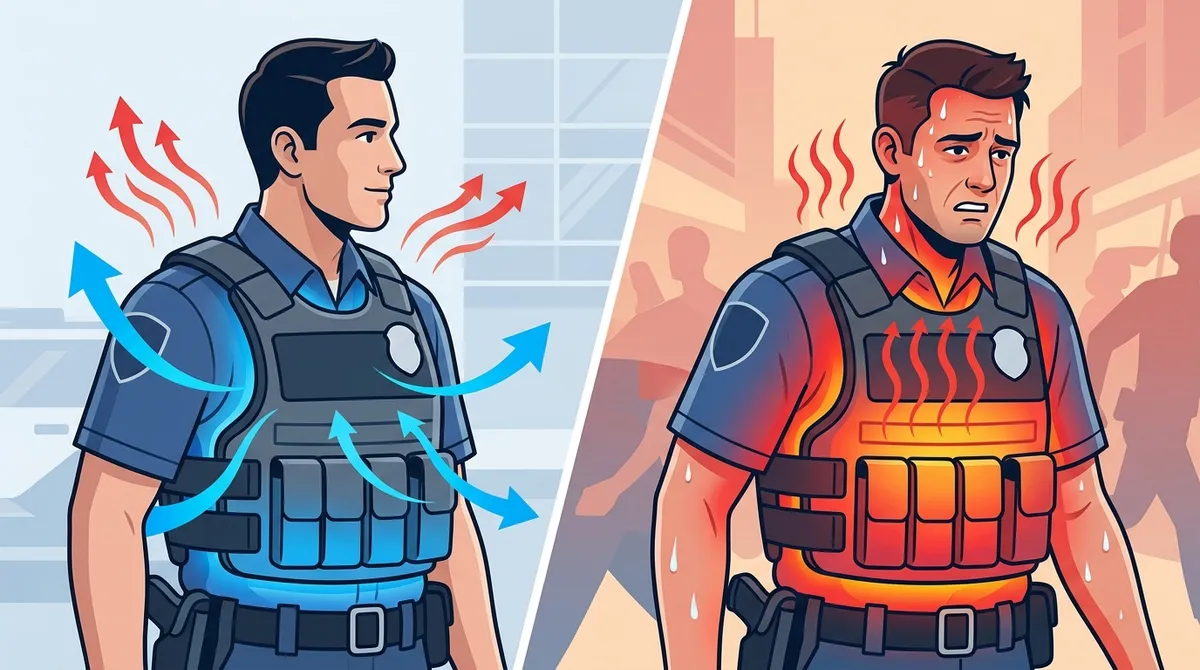
Let’s put both scenarios side by side so you can see exactly what’s at stake. The difference between an officer who manages body heat well and one who doesn’t can be dramatic — and the consequences go far beyond comfort.
| Factor | Staying Cool (Ventilation Vest) | Overheating (No Cooling Solution) |
|---|---|---|
| Core Body Temperature | Regulated and stable | Rises steadily during the shift |
| Mental Alertness | Sharper, better decision-making | Foggy thinking, slower reactions |
| Physical Stamina | Maintained throughout the shift | Depletes faster, fatigue sets in early |
| Sweat and Moisture | Managed and evaporated | Builds up and causes discomfort |
| Risk of Heat Illness | Significantly reduced | Increases over time |
| Comfort Level | Comfortable enough to focus on duty | Distracting and demoralizing |
| Operational Readiness | High throughout the shift | Declines as heat stress mounts |
The data tells a clear story. When staying cool improves officer safety, it’s not just about physical comfort — it’s about keeping your mind sharp and your body ready for whatever the job demands. You can dig deeper into this topic by reading about 6 heat stress effects on police performance that every officer should know.
Active vs. Passive Ventilation: What’s the Difference?
Not all cooling solutions work the same way. When shopping for relief under your body armor, you’ll come across two main types: active ventilation and passive ventilation. Understanding both helps you make the right choice for your situation.
Passive Ventilation Vests
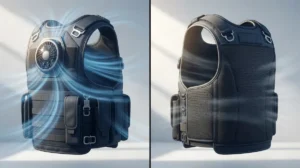
Passive vests use spacer mesh or structured fabric to create a physical air gap between your body and your armor. They don’t require power — they simply rely on design and natural airflow to let heat and moisture escape. Some models, like the BluHalo ventilation vest, use an inflatable design that physically lifts the armor away from your body by up to 1.5 inches, creating a cooling channel on demand.
BluHalo was actually created by a Chicago police officer who experienced the problem firsthand. It weighs under 7 ounces, attaches with Velcro, and deflates flat when you don’t need it. That kind of real-world design thinking makes a big difference on the job.
Active Fan-Driven Ventilation Systems
Active systems go a step further by using small fans to continuously push fresh air under your armor. The Blufano fan system is a great example — it features a patented air-redirect spout that slides under any style of body armor and delivers adjustable fan-driven airflow for 8 to 32 hours depending on your setting. It also includes a built-in 10,000mAh power bank and a forward-facing light for hands-free illumination.
For a full breakdown of how these two approaches compare, check out the passive vs. active tactical vest ventilation comparison.
| Feature | Passive Ventilation (BluHalo) | Active Fan System (Blufano) |
|---|---|---|
| Power Required | None (inflate manually) | Battery-powered |
| Airflow Type | Natural, through air gap | Continuous, fan-driven |
| Weight | Under 7 oz | Includes 10,000mAh power bank |
| Runtime | As long as inflated | 8–32 hours on a charge |
| Best For | Lightweight, low-profile needs | Extended shifts in high heat |
| Bonus Features | On-demand deflation | USB charging, forward-facing light |
Both options are solid. Your best choice depends on your specific environment and how long your shifts run. If you want both worlds, BluHalo and Blufano can be bundled together at a discount for maximum cooling performance. Browse the shop to see current bundle options.
How Staying Cool Directly Improves Officer Safety
Let’s connect the dots clearly. Here’s exactly how managing body heat translates to better safety on duty:
- Sharper Reaction Times: Heat slows cognitive processing. Officers who stay cooler respond faster in high-stakes moments. Studies show heat directly affects police reaction time — something no officer can afford to compromise.
- Better Decision-Making: A cooler core temperature supports clearer thinking. When you’re not distracted by discomfort, you can assess threats and situations more accurately. Learn more about how heat affects the minds of law enforcement officers.
- Reduced Fatigue: Heat causes your body to work harder just to cool itself. With a ventilation vest managing that load, your energy goes toward the job instead.
- Lower Risk of Heat Illness: Heat exhaustion and heat stroke are medical emergencies. Proper cooling is the most direct prevention strategy available, especially in environments where shade and breaks aren’t always possible.
- Sustained Physical Performance: Whether you’re on a foot patrol, in a tactical operation, or managing a crowd, physical stamina matters. Staying cool preserves it. For more on this, see how to prevent heat stress while wearing body armor.
Research from UMass Lowell and Army DEVCOM found that a microclimate cooling vest prototype improved cooling performance by 10% over previous benchmarks — a meaningful gain in environments where every degree matters. The Body Armor Standards research community increasingly recognizes thermal management as a critical component of officer survivability.
Who Benefits Most From Ventilation Vests?
The honest answer? Anyone who wears body armor for extended periods. But some groups feel the impact even more acutely.
- Patrol Officers: Long shifts in vehicles and on foot in summer heat are brutal. A ventilation vest can make those hours manageable and safer.
- SWAT and Tactical Teams: High-intensity operations with heavy armor demand peak physical output. Cooling support helps maintain that edge.
- Military Personnel: Deployed soldiers in hot climates face extended heat exposure with no relief in sight. For guidance on the right gear, see how to choose a military cooling vest that keeps you combat ready.
- Security Professionals: Event security, armed guards, and protective detail specialists often work in environments with no environmental control. Cooling vests are a practical solution.
- Emergency Responders: Firefighters and hazmat personnel face extreme thermal environments. The right gear matters enormously. Choosing emergency responder gear that keeps you cool is a topic worth exploring.
Just like Dental Theory focuses on precision and preventative care in their field, the best approach to officer heat safety is preventative — address the problem before it becomes a crisis, not after.
What to Look for in a Body Armor Ventilation Vest
Not all ventilation solutions are created equal. Here’s a quick checklist of features that actually make a difference:
- 360-degree or broad coverage to address heat buildup across the torso
- Lightweight design that doesn’t add bulk or restrict movement
- Moisture management through breathable or wicking materials
- Compatibility with your existing body armor style and fit
- Active or passive cooling options based on your duty environment
- Durability for daily wear and repeated use
For a detailed guide on selecting the right option, how to choose the right body armor ventilation vest in 2026 walks you through everything step by step. You can also check out real feedback from other professionals in the BluHalo reviews section.
Common Mistakes That Make Heat Worse
Even officers who invest in cooling gear sometimes undercut their own results. Here are the most common missteps to avoid:
- Skipping hydration: Cooling gear reduces heat buildup, but your body still needs water to regulate temperature. Dehydration speeds up heat stress even with a vest on.
- Wearing the wrong base layer: Cotton traps sweat and adds to the problem. Moisture-wicking fabrics help your ventilation vest do its job better.
- Ignoring fit: A ventilation vest that doesn’t sit correctly won’t create the air gap it needs to work. Take time to adjust and position it properly.
- Waiting too long to activate cooling: Don’t wait until you’re already overheating to use your vest. Start your shift cooled down and maintain it throughout.
For a broader list of pitfalls, 7 mistakes to avoid when choosing a cooling vest under body armor is a helpful read before you buy.
The Verdict: Staying Cool Wins Every Time
When you put the two options side by side, the answer is clear. Staying cool improves officer safety — physically, mentally, and operationally. Overheating under body armor isn’t just uncomfortable; it’s a hazard that compounds every risk you face on duty. Investing in a quality ventilation vest is one of the smartest, most practical steps any officer, soldier, or first responder can take.
The technology is here, it works, and it’s more accessible than ever in 2026. From lightweight passive options like the BluHalo to powerful active systems like the Blufano, there’s a solution for every duty environment and every budget. To explore your options and find what fits your needs best, reach out to the BluHalo team — they’re ready to help you find the right fit and keep you cooler, safer, and more effective on the job.
FAQs
Q: How do ventilation vests improve police officer safety?
A: Ventilation vests create an air gap between your body and your armor, which helps sweat evaporate and prevents heat from building up. When your core temperature stays regulated, you stay sharper, more alert, and less fatigued — all of which directly support safer performance on duty.
Q: Are active fan-based ventilation vests better than passive spacer vests?
A: It really depends on your specific needs! Active fan systems like Blufano deliver continuous powered airflow and are great for long, hot shifts, while passive designs like BluHalo are lightweight and require no power. Many officers find that using both together gives them the best of both worlds.
Q: Can ventilation vests help prevent heat exhaustion in officers?
A: Yes — ventilation vests are one of the most direct tools for reducing heat buildup under body armor, which is a leading cause of heat exhaustion in officers. Combined with good hydration and moisture-wicking base layers, a quality ventilation vest significantly lowers your heat illness risk.
Q: Can ventilation vests be worn under standard police body armor?
A: Absolutely! Most ventilation vests, including BluHalo and Blufano, are specifically designed to fit under standard body armor without adding significant bulk or restricting movement. They attach securely and are built for all-day duty use.
Q: What features should officers look for in a body armor ventilation vest?
A: Look for lightweight construction, broad torso coverage, moisture management, and compatibility with your specific armor style. Whether you go active or passive, a well-designed vest should feel comfortable, stay in place, and make a noticeable difference in airflow from the first time you wear it.