Key Takeaways
-
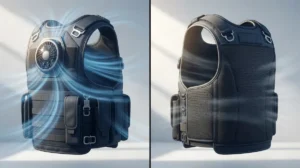
Law enforcement cooling vests create a physical gap between body and armor to allow heat escape and air circulation, reducing core temperature and lowering risk of heat exhaustion, heat stroke, and heat-related illness during long shifts.
-
Three main cooling vest types exist: passive ventilation vests using mesh spacers, inflatable vests like BluHalo that inflate on demand to 1.5 inches, and active fan-driven systems like Blufano with 8-32 hour battery life for powered cooling.
-
Key features to prioritize when selecting a cooling vest include adjustable fit, premium 3D polyester mesh material, lightweight construction under 7 ounces, compatibility with your specific body armor style, and ease of use in high-stress situations.
-
Cooling vests provide documented health benefits beyond comfort: reduced skin rashes and irritation from moisture, improved mental focus and alertness, decreased odor from sweat buildup, and longer shift endurance with less fatigue compared to wearing armor without ventilation.
-
BluHalo, invented by a Chicago police officer, costs around $60 and weighs under 7 ounces with no power needed, while Blufano offers active fan cooling for $150+ and runs 8-32 hours, allowing officers to choose based on shift length and climate needs.
-
Over 250,000 law enforcement and military personnel have adopted cooling vests, with real-world reports showing officers completing 12-hour shifts in 95-degree heat with dry uniforms and significantly reduced skin irritation compared to traditional body armor alone.
If you wear body armor every day, you already know the struggle. The heat builds up fast. Sweat soaks through your uniform. Your skin gets itchy and irritated. By hour four of a twelve-hour shift, you’re focused more on staying cool than staying sharp. That’s a real problem — and it’s one that a law enforcement cooling vest is designed to solve.
This article breaks down everything you need to know about cooling vests for officers and tactical professionals. We’ll cover how they work, what to look for, and which options are worth your attention in 2026. Whether you’re a patrol officer, a security professional, or part of a specialized tactical unit, this guide is for you.

The Real Cost of Overheating Under Body Armor
Body armor is non-negotiable for most law enforcement roles. But it comes with a serious downside: heat trapping. When armor sits tight against your body, it blocks natural airflow. Heat and moisture have nowhere to go. Your core temperature rises, sweat soaks your uniform, and your focus starts to slip.
This isn’t just uncomfortable — it’s a health and safety concern. According to the OSHA Heat Stress Guide, prolonged heat exposure can cause heat exhaustion, heat cramps, and even heat stroke. For officers working in warm climates or physically demanding situations, this risk is very real.
Beyond heat illness, officers wearing body armor commonly report:
- Excessive sweating that soaks through uniforms
- Skin rashes and irritation from constant moisture
- Persistent odor from sweat buildup
- Itching and clammy skin under the armor
- Mental fatigue caused by constant physical discomfort
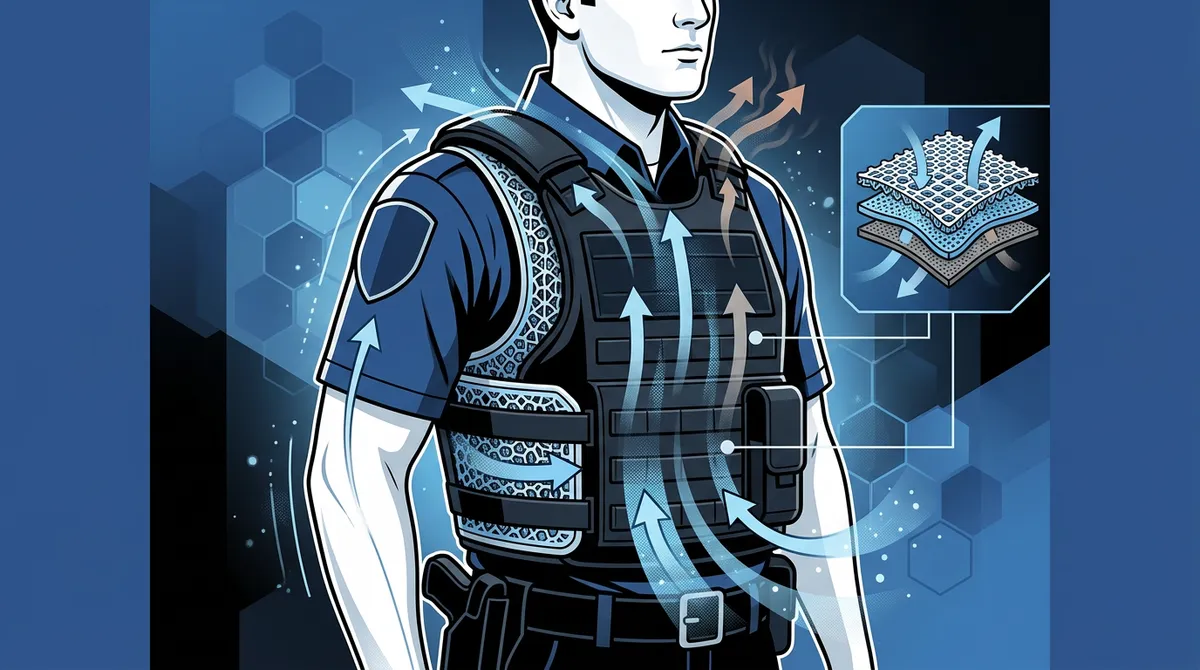
A good law enforcement cooling vest tackles all of these issues at once. It creates a layer of separation between your body and your armor, letting heat escape and fresh air circulate. The result? You stay cooler, drier, and more focused on what matters.
How Does a Law Enforcement Cooling Vest Work?
The core idea is simple: create space between your skin and your armor. When there’s no gap, heat gets trapped. When there’s a gap, air can move. And when air moves, you stay cooler.
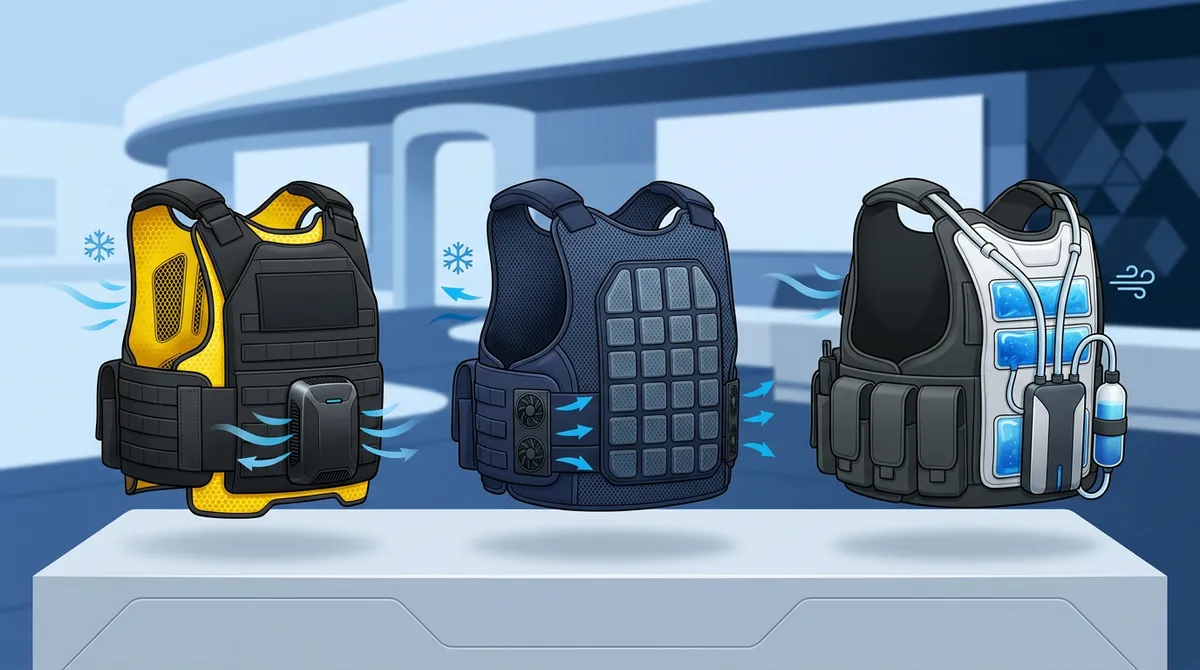
Different products use different methods to create this gap and boost airflow. Here’s a quick breakdown of the main types:
Passive Ventilation Vests
These vests use structural materials — like 3D polyester mesh or rigid spacer fabric — to physically lift your armor away from your body. They don’t use power or electronics. They simply create a gap that allows natural convection to pull heat away from your skin. Many use premium mesh with large perforations to maximize airflow in all directions.
Inflatable Cooling Vests
This is where BluHalo shines. The BluHalo vest was actually created by a Chicago police officer who was tired of overheating on duty. It sits flat and unobtrusive when deflated, then inflates on demand to lift your body armor up to 1.5 inches off your body. That gap creates a cooling air channel that dramatically reduces heat buildup. At under 7 ounces, it’s lightweight enough to wear all day without noticing it.
Active Fan-Driven Systems
Some systems go a step further with built-in fans. The Blufano is a great example. It’s a self-contained unit with a patented air-redirect spout that slides under any style of body armor. A control knob lets you adjust airflow, and the built-in 10,000mAh power bank runs the fan for 8 to 32 hours depending on the setting. It even has a forward-facing light for low-light situations. For officers on long shifts, this kind of active cooling makes a huge difference.
You can learn more about the differences between these approaches in this helpful guide on body armor ventilation for officers.
Key Features to Look For in a Cooling Vest
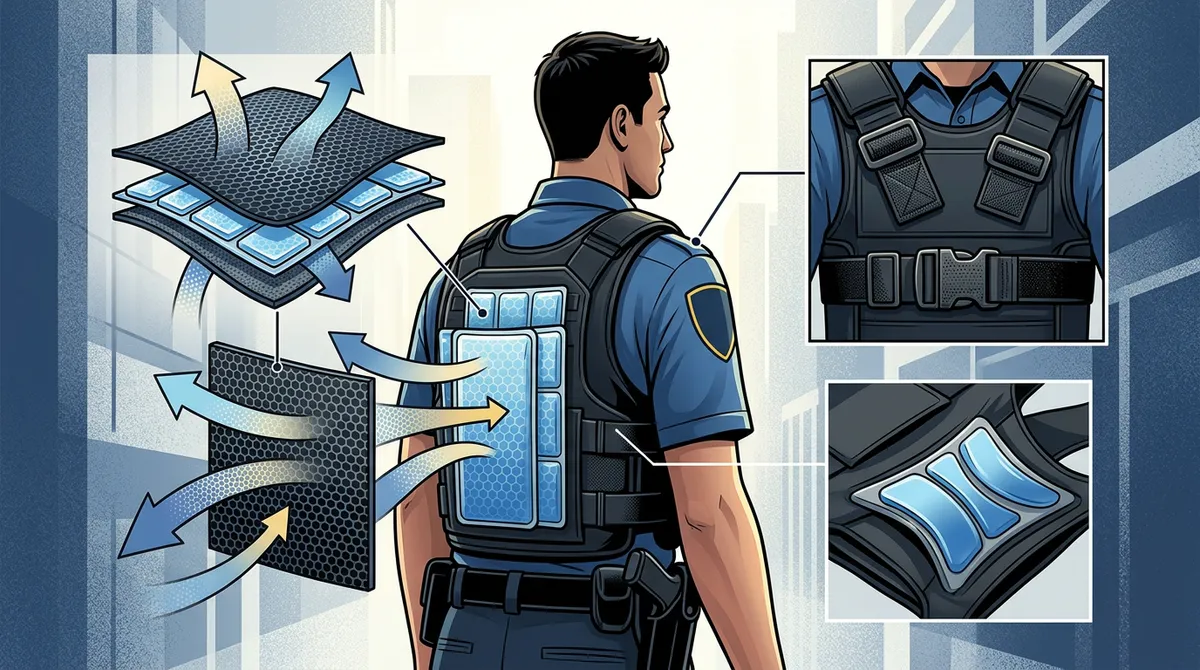
Not all cooling vests are created equal. Here are the features that matter most when choosing a law enforcement cooling vest:
- Fit and adjustability — Look for adjustable shoulder straps, side straps, and velcro attachments so the vest fits your body type and armor configuration correctly.
- Material quality — Premium 3D polyester mesh with extra-large perforations provides the best airflow and durability for daily use.
- Weight — Lighter is better. A vest that adds significant weight will slow you down and add to fatigue over a long shift.
- Compatibility — Make sure the vest works with your specific body armor style, whether that’s a concealable carrier, plate carrier, or tactical vest.
- Ease of use — In a high-stress environment, you need gear that works quickly and reliably. Look for simple mechanisms and durable construction.
Comparing Top Law Enforcement Cooling Vest Options in 2026
There are several solid options on the market right now. Here’s a comparison to help you decide what fits your needs best:
| Product | Type | Weight | Battery Life | Price Range |
|---|---|---|---|---|
| BluHalo Ventilation Vest | Inflatable passive | Under 7 oz | N/A (no power needed) | $60 |
| Blufano Fan System | Active fan-driven | Compact unit | 8–32 hours | Contact for pricing |
| Maxx-Dri Vest | Passive mesh | Lightweight | N/A | Mid-range |
| IceVents® Classic Pontoons | Passive spacer | Under 1 oz | N/A | $70 |
If you want to dig deeper into your options, check out this detailed breakdown of the best vest cooling systems for beating the heat in body armor.
Who Benefits Most from a Law Enforcement Cooling Vest?
These vests are built for anyone who wears protective gear for long periods. But some roles benefit more than others. Here’s a quick look:
| Role | Key Challenge | Best Cooling Solution |
|---|---|---|
| Patrol Officers | Long daily shifts in all weather | Passive or inflatable vest |
| SWAT / Tactical Teams | High-intensity ops with heavy armor | Active fan system |
| Security Professionals | Extended outdoor or indoor shifts | Lightweight passive vest |
| Military Personnel | Extreme heat environments on deployment | Active or hybrid cooling |
| Emergency Responders | High-heat conditions in protective gear | Fan-driven active system |
The optimal cooling for tactical vests guide goes into even more detail about matching the right solution to your specific role and environment.
Health Benefits of Wearing a Cooling Vest
The comfort benefits are obvious. But the health benefits of a good law enforcement cooling vest go deeper than just feeling less sweaty. Here’s what consistent use can do for you:
- Reduced risk of heat illness — Keeping your core temperature lower reduces the risk of heat exhaustion and heat stroke during physically demanding situations.
- Healthier skin — Less moisture means fewer rashes, less irritation, and a much lower chance of developing skin conditions from prolonged armor wear.
- Better mental focus — When you’re not constantly distracted by discomfort, you can focus on your job. Officers report significantly better alertness and decision-making when they’re not battling heat.
- Reduced odor — Less sweat means less bacterial growth, which means your gear stays fresher for longer.
- Longer shift endurance — Officers who use ventilation vests consistently report feeling less fatigued at the end of long shifts compared to before they started using one.
It’s worth noting that body armor standards set by the National Institute of Justice focus primarily on ballistic protection. Thermal comfort is a secondary consideration in most standards — which is exactly why officers need to take their own cooling solutions seriously.
Want to learn more about preventing heat-related problems on the job? This article on how to prevent heat stress while wearing body armor is a great resource.
Real-World Results: What Officers Are Saying
The proof is in the feedback from real users. Officers who have adopted ventilation vests consistently report dramatic improvements. Many describe arriving home from warm shifts with completely dry uniforms — something that would have been impossible before. Others highlight the reduction in skin irritation and the mental boost that comes with simply feeling comfortable during a long day.
The Maxx-Dri Vest, for example, has been adopted by over 250,000 law enforcement and military personnel since its invention by a veteran police officer. That kind of adoption doesn’t happen without real results. Similarly, BluHalo’s testimonials describe officers surviving 12-hour days in 95-degree heat without the usual suffering.
Want to see what officers are saying about BluHalo specifically? Check out the reviews page for honest feedback from real users in the field.
How to Choose the Right Cooling Vest for Your Needs
Choosing the right law enforcement cooling vest comes down to a few key questions:
- How long are your shifts? — Longer shifts benefit more from active fan systems with battery life. Shorter or more variable shifts may do fine with a passive vest.
- What’s your climate like? — Officers in hot, humid environments need maximum airflow and moisture management. Drier climates may require less aggressive solutions.
- What type of armor do you wear? — Some systems work better with concealable carriers; others are designed for plate carriers or tactical vests. Check compatibility before buying.
- What’s your budget? — Options range from around $60 for the BluHalo vest to higher-end active systems. Bundling BluHalo and Blufano together is an option for those who want maximum cooling at a discount.
For a full breakdown of how to match the right product to your situation, visit the guide on how to choose the right body armor ventilation vest in 2026.
Tips for Getting the Most Out of Your Cooling Vest
- Wear a moisture-wicking base layer underneath to help move sweat away from your skin faster.
- Adjust the straps properly so the vest sits evenly and maintains the right gap under your armor.
- Clean your vest regularly according to the manufacturer’s instructions to prevent odor and maintain airflow performance.
- If using an active fan system like Blufano, keep the power bank charged before each shift for maximum performance.
- Combine your cooling vest with good hydration and shade breaks during extreme heat conditions for the best results.
You can also explore this helpful overview of how to stay cool under body armor with smart ventilation for more practical tips.
Why BluHalo and Blufano Are the Smart Choice in 2026
Both BluHalo and Blufano were built by people who understand exactly what officers go through every day. BluHalo was invented by a Chicago police officer who lived the problem firsthand. That real-world experience shows in every design decision — from the lightweight construction to the on-demand inflation system to the durable polyethylene build.
Blufano takes things even further with active fan-driven cooling, a long-lasting power bank, and a design that fits under any style of armor. Together, they cover every scenario — whether you need simple passive airflow or powerful active cooling. You can browse both products and bundle options at the BluHalo shop.
Final Thoughts
Staying cool under body armor isn’t a luxury — it’s a performance and safety issue. A quality law enforcement cooling vest keeps you focused, protects your skin, reduces heat illness risk, and makes long shifts far more manageable. Whether you choose a passive inflatable option like BluHalo or an active fan system like Blufano, investing in better airflow under your armor is one of the smartest things you can do for your comfort and your career.
Ready to experience the difference for yourself? Reach out to the BluHalo team to find the right cooling solution for your specific needs — because staying cool on the job starts with the right gear.
FAQs
Q: How does a law enforcement cooling vest work under body armor?
A: A law enforcement cooling vest creates a physical gap between your body and your armor, allowing heat to escape and fresh air to circulate. Some vests use structured mesh materials for passive airflow, while others — like Blufano — use an active fan system to push cool air under your gear throughout your shift.
Q: Are law enforcement cooling vests compatible with all types of body armor?
A: Most ventilation vests are designed to work with a wide range of body armor styles, including concealable carriers, plate carriers, and tactical vests. Products like BluHalo and Blufano both feature flexible attachment systems that fit various armor configurations, so you’re covered no matter what you’re wearing.
Q: Can a cooling vest actually prevent heat-related illness for officers?
A: Yes — by reducing your core temperature and improving airflow, a quality cooling vest lowers your risk of heat exhaustion and heat stroke during long shifts or physically demanding situations. Combined with good hydration and regular breaks, it’s one of the most effective tools for managing heat stress on the job.
Q: How much does a law enforcement cooling vest cost?
A: Prices vary depending on the type of system. The BluHalo inflatable ventilation vest starts at $60, making it an affordable entry point for officers looking for immediate relief. Active fan systems like Blufano are priced higher but offer longer-lasting and more powerful cooling — especially valuable for extended or high-intensity shifts.
Q: How do ventilation vests reduce odor and skin irritation under body armor?
A: By improving airflow and reducing moisture buildup, ventilation vests prevent the warm, damp environment that causes bacterial growth, skin rashes, and persistent odor. Officers who use cooling vests regularly report significantly drier uniforms, healthier skin, and far less irritation — even on the hottest days.