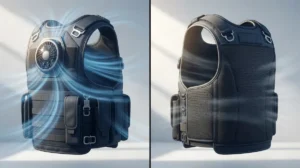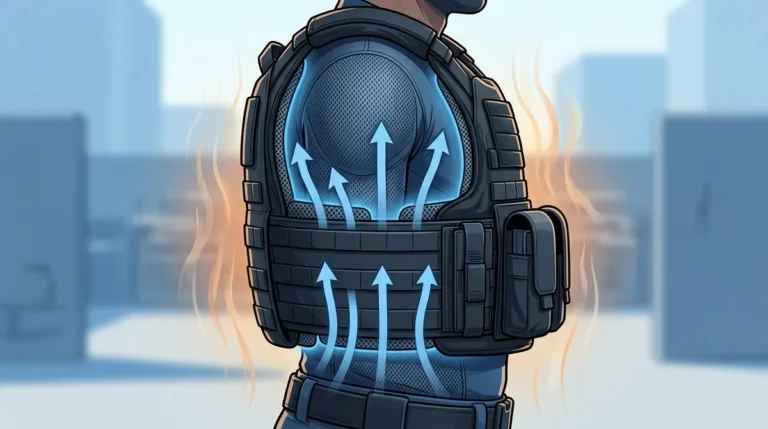
Key Takeaways
-
Proper armor fit is foundational for airflow — your vest must be snug but not compressing your torso, allowing you to take full deep breaths without restriction, as overly tight armor collapses air gaps and blocks ventilation entirely.
-
Switch to moisture-wicking base layers made from 3D mesh or specialized fabrics instead of cotton to pull sweat away from skin, reducing moisture buildup that traps heat under your armor.
-
Use inflatable ventilation vests like BluHalo that create a 1.5-inch air gap between your body and armor for passive cooling during active patrol, adding minimal weight while enabling hot air escape.
-
For stationary posts or extreme heat situations, active fan-assisted systems like BluFano push fresh air under the armor for stronger cooling and sustained relief during long, high-demand scenarios.
-
Activate ventilation systems early in your shift before overheating occurs, take scheduled shade breaks, and pre-cool in air-conditioned spaces before deployment to maximize the effectiveness of your ventilation gear.
-
Combine a proper-fitting vest with a moisture-wicking base layer and ventilation solution paired with smart habits like consistent hydration and regular fit checks to maintain airflow throughout long shifts.
If you wear body armor for long shifts, you already know the struggle. Heat builds up fast. Sweat soaks through your uniform. By midday, you’re uncomfortable, distracted, and drained. The good news? Learning how to improve airflow under body armor is easier than you think — and it can completely change how you feel on duty.
Whether you’re a patrol officer, a military professional, a security guard, or an emergency responder, the heat trapped beneath your vest is a real problem. It’s not just about comfort. Heat stress can slow your reaction time, reduce focus, and put your health at risk. According to the OSHA Heat Stress Guide, heat-related illness is a serious workplace hazard — especially for professionals working outdoors or in full gear.
In this guide, we’ll walk you through the best practical strategies to get more air moving under your armor. We’ll cover materials, fit, product solutions, and daily habits that make a real difference. Let’s get into it.
Why Airflow Under Body Armor Is So Hard
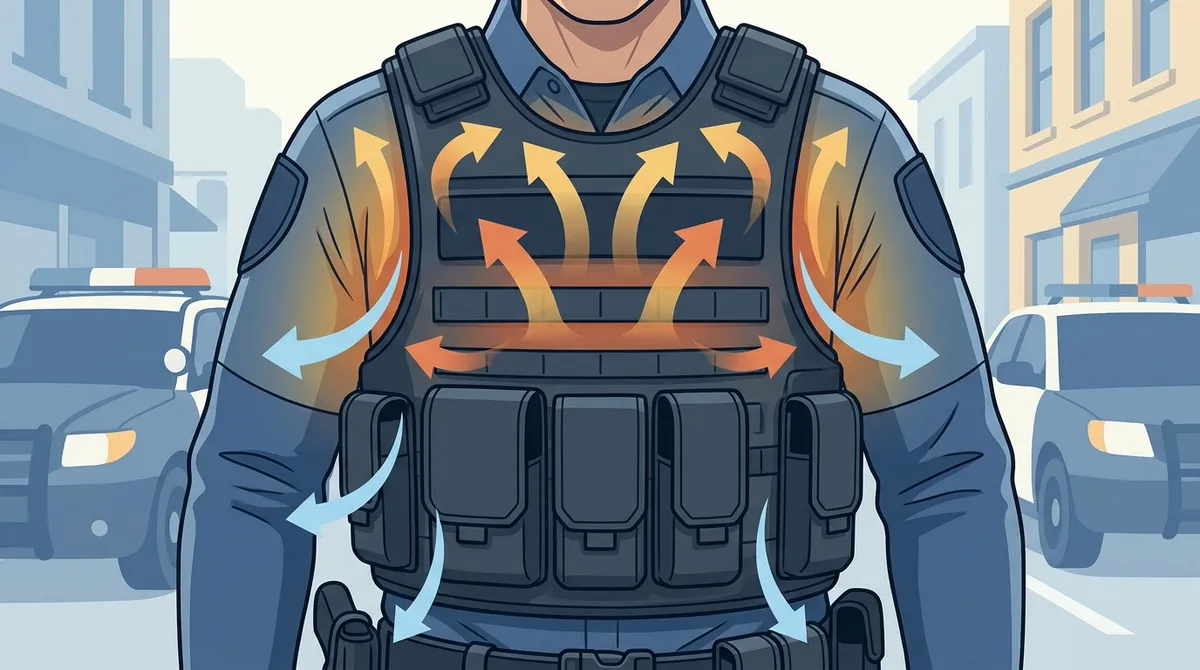
Body armor sits tight against your torso. That’s by design — it has to fit securely to protect you. But that tight fit also traps heat and moisture against your skin. There’s no natural pathway for hot, humid air to escape or fresh, cool air to get in.
When you move, generate body heat, and sweat, that moisture has nowhere to go. It builds up between your skin and the armor. Over time, this creates an uncomfortable, hot, and potentially unhealthy environment — especially during long shifts in warm climates.
The solution isn’t to loosen your armor. It’s to create a controlled air gap that lets air flow without compromising protection. That’s exactly what modern under-vest ventilation products are designed to do.
Step-by-Step: How to Improve Airflow Under Body Armor
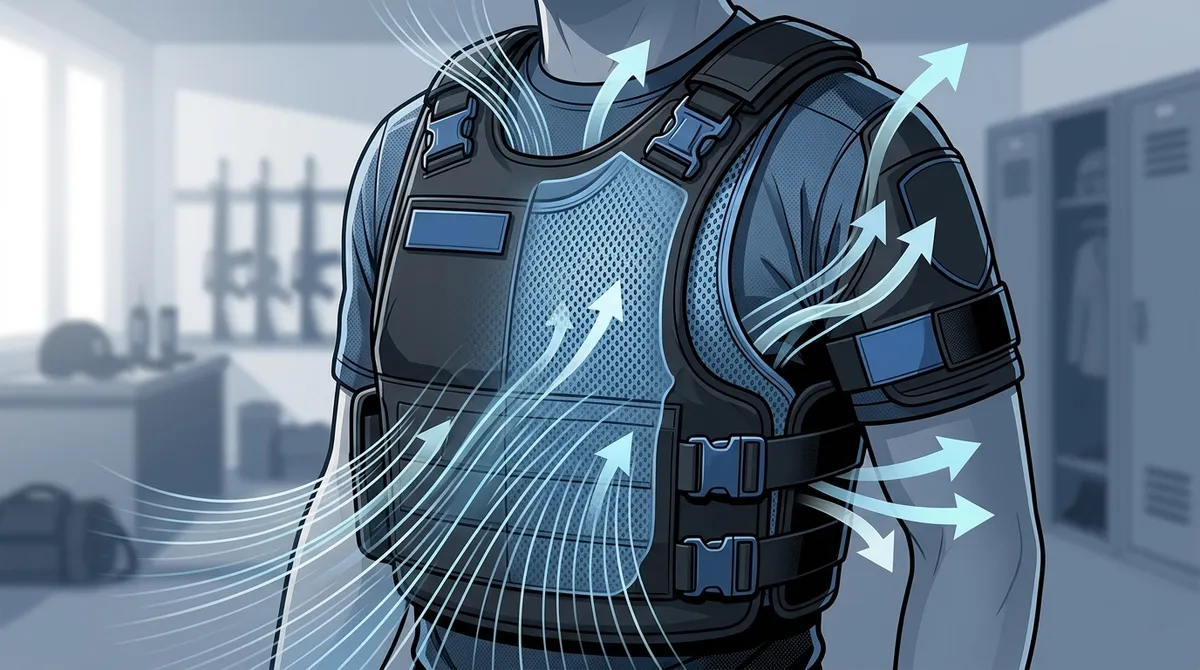
Here’s a practical approach to improving ventilation under your vest. Follow these steps in order for the best results.
- Check your armor fit first. Your vest should be snug but not compressing your torso. If it’s too tight, it collapses any air gap and blocks airflow entirely. If it’s too loose, it shifts around and adds friction. A proper fit is the foundation of everything else.
- Switch to a moisture-wicking base layer. Ditch the cotton undershirt. Use a 3D mesh or moisture-wicking fabric that pulls sweat away from your skin. This keeps you drier and reduces irritation during long wear.
- Add a passive ventilation layer. A ventilation vest with spacer materials creates physical separation between your skin and the armor. This small air gap is enough to let hot air escape and cooler air circulate in.
- Consider an active fan-assisted system for high-heat or stationary roles. If you work in extreme heat or spend time at a fixed post, an active fan system pushes air through more aggressively and provides stronger cooling relief.
- Use smart operational habits. Take shade breaks when possible. Use vehicle AC to pre-cool before stepping back out. Hydrate consistently. And activate your ventilation system before you start overheating — not after.
The Best Materials for Airflow Under Armor
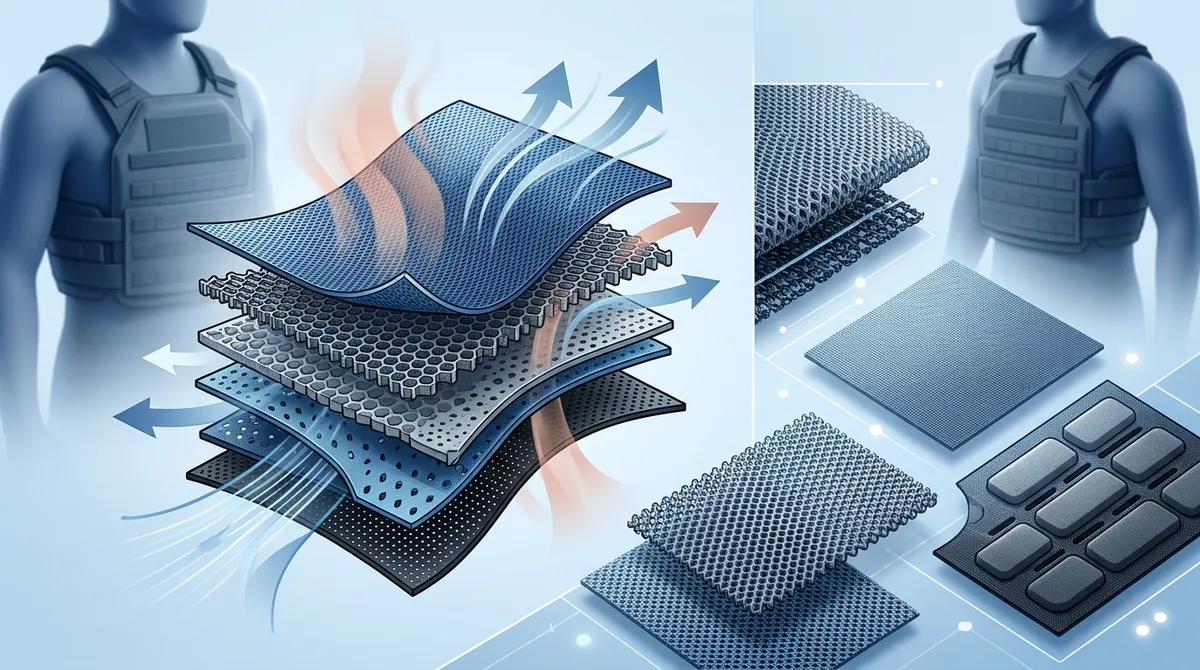
The materials touching your skin and sitting beneath your vest matter a lot. Here’s a quick comparison of the most common options and how well they work for airflow and moisture management.
| Material Type | Airflow | Moisture Wicking | Best For |
|---|---|---|---|
| Cotton | Poor | Poor (absorbs sweat) | Not recommended under armor |
| Standard Polyester | Moderate | Moderate | Light-duty wear in mild climates |
| 3D Mesh / Spacer Fabric | Good | Good | Passive ventilation layers |
| Inflatable Polyethylene | Excellent (creates air gap) | N/A (structural layer) | Ventilation vests like BluHalo |
| Fan-Assisted Systems | Excellent (active airflow) | Excellent | High-heat or stationary roles |
As you can see, the right layer depends on your role and environment. For most patrol officers and security professionals, a combination of a moisture-wicking base layer and a ventilation vest hits the sweet spot. You can learn more about the best moisture-wicking vests for body armor comfort in 2026 to find the right base layer for your needs.
Passive vs. Active Ventilation: Which One Is Right for You?
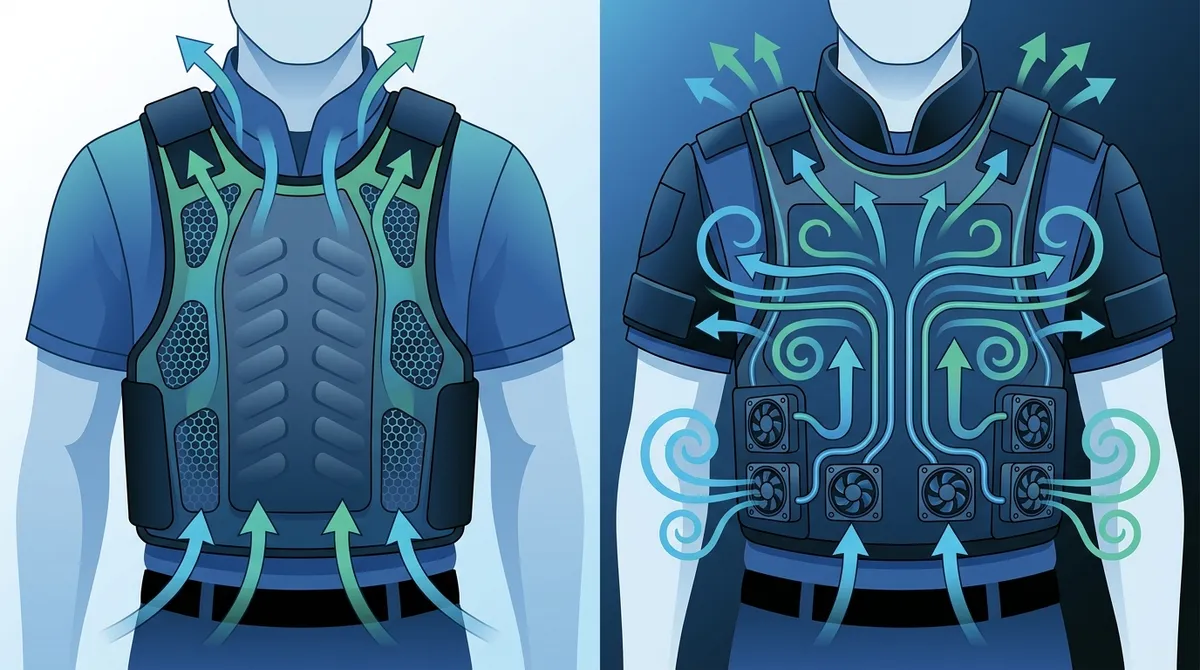
One of the most common questions people ask is whether passive or active ventilation works better. The honest answer: it depends on your job. Here’s a simple breakdown.
| Feature | Passive Ventilation | Active Fan-Assisted Ventilation |
|---|---|---|
| How it works | Creates a physical air gap using spacer materials or inflatable layers | Uses a battery-powered fan to push air under the armor |
| Best use case | Active patrol, physical movement, high-mobility roles | Stationary posts, extreme heat, high-demand tactical scenarios |
| Weight added | Very low (under 7 oz for some products) | Slightly more due to battery pack |
| Battery required | No | Yes (8–32 hours depending on setting) |
| Noise | Silent | Minimal fan noise |
| Product example | BluHalo Ventilation Vest | BluFano Fan System |
If you’re constantly moving on patrol, passive ventilation is often the better fit. If you’re working a fixed post or in extreme heat, active cooling gives you that extra edge. For a deeper dive into the comparison, check out passive vs. active tactical vest ventilation.
Meet the BluHalo Ventilation Vest
The BluHalo ventilation vest was created by a Chicago police officer who got tired of sweating through long, hot shifts. The result is a clever, lightweight solution that sits under your body armor and creates a real air gap — up to 1.5 inches — between your body and the vest.
Here’s what makes it stand out:
- Weighs under 7 ounces — you’ll barely notice it’s there
- Made from double-layer high-strength polyethylene for durability
- Inflates on demand with a small pump to lift the vest off your skin
- Deflates instantly with a button press for a flat, low-profile fit
- Attaches easily with Velcro — no complicated setup
- Priced at $60.00 — a smart investment for all-day comfort
Officers who’ve used it describe dramatic improvements in comfort during 12-hour shifts in 95-degree heat. It’s a simple, effective answer to the question of how to improve airflow under body armor. You can browse the BluHalo vest in the shop and see it for yourself.
Meet the BluFano Active Fan System
For those who want next-level cooling, the BluFano fan system takes things up a notch. It’s a self-contained, active airflow unit with a patented air-redirect spout that slides under any style of body armor.
The BluFano comes packed with features that professionals love:
- Adjustable fan-driven airflow for 8 to 32 hours depending on the setting
- Built-in 10,000mAh power bank — charges your USB devices too
- Forward-facing light for hands-free illumination in low-light situations
- Secured with an optional strap for stable positioning
- Works under any style of body armor
Users report faster cooling (especially when paired with a vehicle’s AC), reduced sweat buildup, and better focus during long, hot days. If you’re in a demanding role — SWAT, military, or EMS — the BluFano is worth a serious look. You can also compare BluFano vs. BluHalo to see which system fits your needs best.
Smart Daily Habits That Boost Airflow
Products help a lot, but your daily habits matter too. Here are a few simple practices that support better airflow under your armor every shift.
- Pre-cool before heading out. Spend a few minutes in an air-conditioned vehicle or building before starting your shift. Starting cool buys you time before heat builds up.
- Activate your ventilation early. Don’t wait until you’re soaked through. Turn on your fan system or inflate your ventilation vest at the start of the shift.
- Take scheduled shade breaks. Even 5 minutes in the shade helps your body reset its core temperature.
- Hydrate consistently. Your body cools itself through sweat. If you’re dehydrated, that system breaks down. Drink water regularly throughout your shift.
- Inspect your fit regularly. Over time, straps and panels can shift. A vest that’s too tight compresses your ventilation layer and cuts off airflow.
These habits work hand-in-hand with the right gear to keep you cooler and more focused all day. For a full list of tactics, check out 7 ways to stay cool under pressure in body armor.
How Fit Affects Airflow: What You Need to Know
Let’s talk about fit for a moment, because it’s one of the most overlooked factors. Body armor that fits correctly enhances the effectiveness of any ventilation solution. Armor that’s too tight compresses everything beneath it — including your ventilation layer — and makes airflow nearly impossible.
According to the Body Armor Standards from the National Institute of Justice, a properly fitted vest should allow normal movement without binding, while still covering the required protection zones. That snug-but-not-compressed fit is also the sweet spot for airflow.
Here are the key fit checkpoints to run through:
- The vest should sit flat against your torso with no folding or bunching at the sides.
- You should be able to take a full deep breath without the armor restricting your chest.
- Side straps should be firm but not digging in — they shouldn’t pinch or pull.
- When a ventilation layer is added, recheck all straps to make sure the fit remains secure without over-tightening.
Getting your fit right is a foundational step. For more guidance, read through these 9 body armor fit and airflow tips for all-day comfort.
Choosing the Right Solution for Your Role
Not every professional needs the same solution. Here’s a quick reference to help you match the right ventilation approach to your specific role.
| Role | Recommended Approach | Top Product Pick |
|---|---|---|
| Patrol Officer | Passive inflatable ventilation vest + moisture-wicking base layer | BluHalo Ventilation Vest |
| Military / Deployed Soldier | Active fan system for sustained cooling in extreme heat | BluFano Fan System |
| Security Guard (Fixed Post) | Active fan system with long battery life | BluFano Fan System |
| SWAT / Tactical Team | Lightweight passive ventilation to avoid added bulk | BluHalo Ventilation Vest |
| EMS / First Responder | Combination of both for versatility in varied environments | BluHalo + BluFano Bundle |
Bundling both the BluHalo and the BluFano together gives you the most flexibility — passive lift when you’re moving and active cooling when you need it most. It’s the maximum comfort setup for professionals who spend full days in their gear. You can explore the best body armor ventilation vests for 2026 to explore your options further.
Conclusion: Start Staying Cooler Today
Improving airflow under body armor isn’t complicated — but it does require the right approach. Start with a proper fit, upgrade your base layer, and add a quality ventilation solution like the BluHalo or BluFano. Pair your gear with smart daily habits, and you’ll feel the difference from the very first shift.
You work hard to protect others. You deserve to be comfortable while you do it. Whether you’re a patrol officer sweating through a summer shift or a soldier in a high-heat deployment, better airflow is within reach. Check out the full range of cooling solutions at Vest Ventilation and find the right fit for your role.
Ready to take the next step toward a cooler, more comfortable shift? Get in touch with our team — we’d love to help you find the perfect ventilation solution for your gear and your role.
FAQs
Q: What is the best way to improve airflow under body armor?
A: The best approach combines a proper vest fit, a moisture-wicking base layer, and a ventilation vest that creates an air gap between your skin and the armor. Products like the BluHalo inflatable ventilation vest can lift your armor up to 1.5 inches off your body, allowing hot air to escape and cool air to circulate in.
Q: Do ventilation vests actually work under body armor?
A: Yes, they really do! Ventilation vests create a physical separation between your skin and the armor, which gives hot, humid air a way to escape and allows cooler air to flow in. Officers who’ve used products like the BluHalo consistently report major comfort improvements — even during 12-hour shifts in extreme heat.
Q: Should a ventilation vest be worn under or over body armor?
A: A ventilation vest is worn underneath your body armor, sitting between your base layer and the armor panels. This positioning is what allows it to create the all-important air gap that improves cooling and reduces moisture buildup during long shifts.
Q: Are inflatable ventilation vests better than fan-assisted cooling systems?
A: Both work well — it just depends on your role! Inflatable vests like the BluHalo are lightweight and ideal for active patrol or high-mobility tasks. Fan-assisted systems like the BluFano are better for stationary posts or extreme heat because they actively push fresh air under the armor for stronger, sustained cooling.
Q: How tight should body armor be when using a ventilation vest?
A: Your armor should be snug enough to stay in place and provide full protection, but not so tight that it compresses the ventilation layer beneath it. A good rule of thumb is that you should be able to take a full deep breath comfortably — if the armor is restricting your breathing, it’s too tight and will block airflow.