Key Takeaways
-
Body armor traps heat because dense protective materials like Kevlar block airflow completely, and the snug fit seals off air gaps while preventing sweat evaporation, causing heat to build up hour after hour.
-
Trapped heat under body armor impairs performance by slowing reflexes, clouding thinking, and increasing fatigue risk; OSHA guidelines confirm heat illness can set in quickly when the body cannot cool itself properly.
-
Active ventilation systems with moving airflow consistently outperform passive spacers and mesh liners by creating sustained cooling regardless of external conditions or body stillness.
-
Inflatable ventilation vests like BluHalo create a 1.5-inch air gap that activates on-demand, while active fan systems like Blufano provide continuous 8-32 hour cooling with additional features like power banks and lights.
-
Law enforcement, military, security, and emergency personnel face different heat buildup risks based on their work environment; solutions should match specific job demands like prolonged sitting in patrol cars versus extended tactical operations.
-
Simple preventive steps including moisture-wicking base layers, pre-activation of cooling systems before symptoms start, and strategic use of AC or shade during breaks can significantly reduce heat stress complications.
Ever wonder why your vest feels like a personal sauna by hour three of your shift? You’re not imagining it. Body armor can trap serious heat against your skin, and understanding why is the first step to fixing it. Whether you’re a patrol officer baking in a squad car, a soldier on a desert deployment, or a firefighter suited up in gear, that trapped heat isn’t just uncomfortable. It can slow your reflexes, cloud your thinking, and put your safety at risk.
Here’s the good news: once you know how heat gets stuck under your vest, you can do something about it. This article breaks down exactly why body armor traps heat, compares it to what a smart ventilation system does differently, and shows you real solutions that everyday heroes are already using. We built BluHalo because we’ve lived this problem, and we want to help you solve it too. Let’s dig into the science, then get you cooler.
How Body Armor Traps Heat Against Your Skin
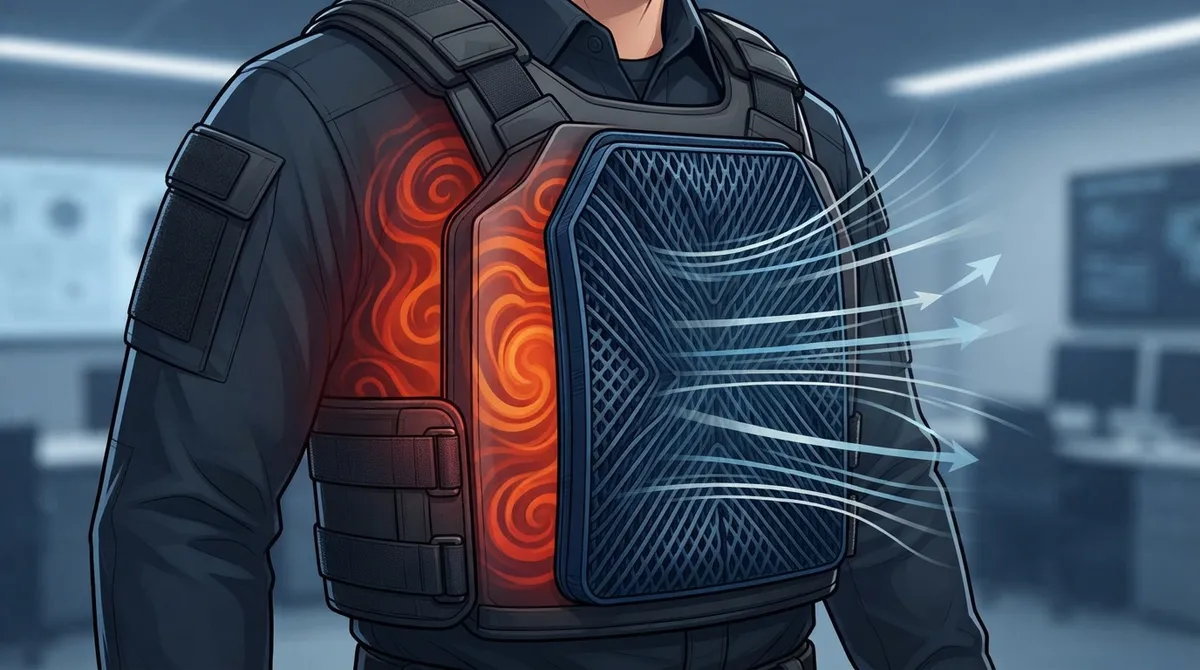
Body armor is designed to stop bullets and blades, not to breathe. That’s the tradeoff. The same tight weave and dense layers that protect you also block airflow completely. Your body naturally cools itself by sweating and letting air evaporate that moisture. When a vest presses tight against your torso, that process stops working.
Think of it like wrapping yourself in plastic wrap on a hot day. Your body still produces heat and sweat, but none of it can escape. The heat just builds up, layer after layer, hour after hour. This is why so many officers and soldiers describe body armor as feeling like a furnace by midday.
The Three Culprits Behind Heat Buildup
There are three main reasons body armor traps so much heat:
- Dense protective materials: Kevlar and ceramic plates block airflow by design, according to the Body Armor Standards set by the National Institute of Justice.
- Tight, close-body fit: A snug fit is needed for protection, but it also seals off any natural air gap between your skin and the vest.
- No moisture escape route: Sweat has nowhere to go, so it soaks your undershirt and stays trapped, making you feel even hotter.
Combine these three factors with a hot patrol car, a sunny rooftop, or a desert outpost, and you have a recipe for real trouble. The OSHA Heat Stress Guide notes that heat illness can set in fast when the body cannot cool itself properly, and body armor makes that cooling process much harder.
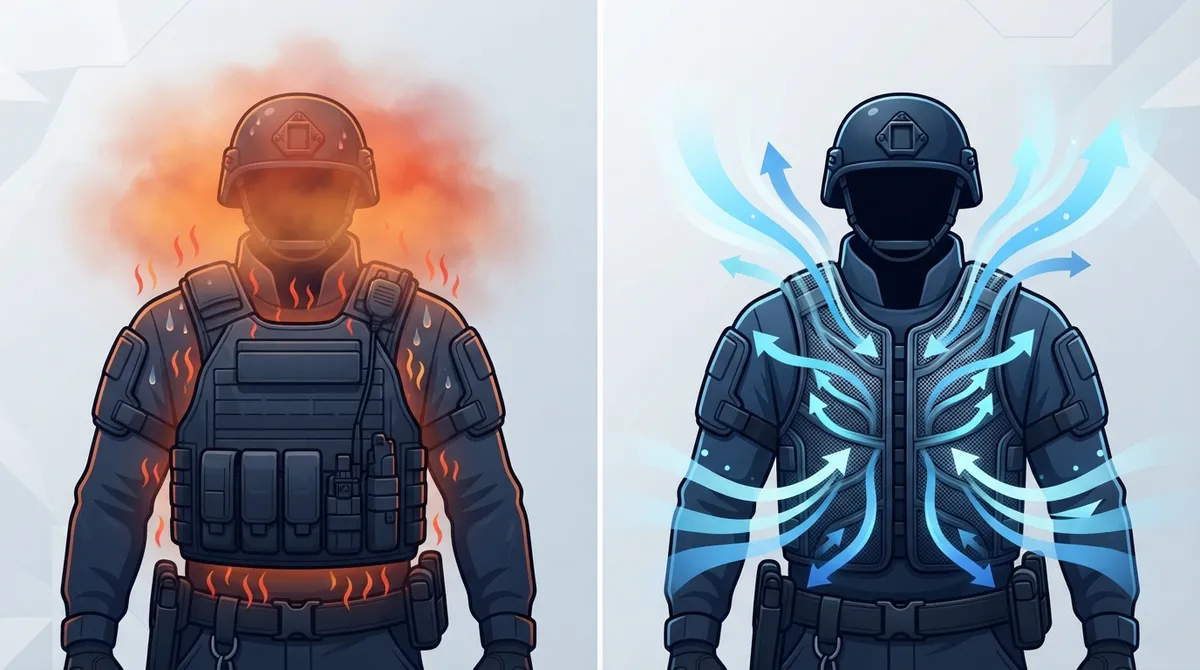
Trapped Heat vs. Ventilated Airflow: What’s the Difference?
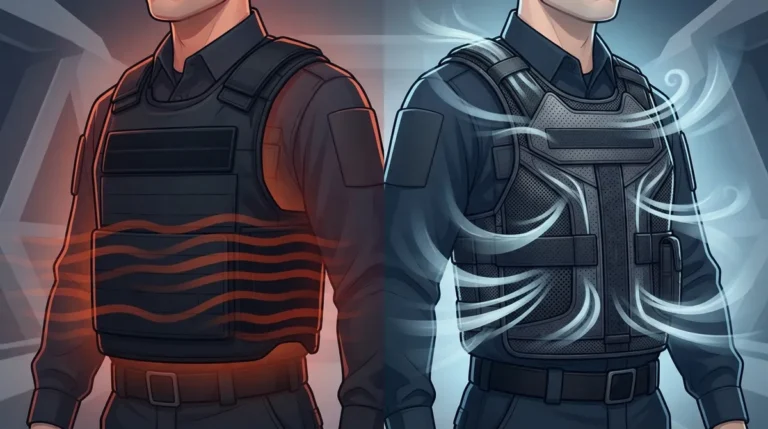
Let’s compare two scenarios side by side. In the first, you’re wearing standard body armor with nothing underneath but a t-shirt. In the second, you’re wearing the same armor with a ventilation vest system underneath. The difference is night and day.
| Factor | Standard Body Armor Alone | Body Armor With Ventilation Vest |
|---|---|---|
| Air Gap | None, vest sits flush on skin | Up to 1.5 inches of airflow space |
| Sweat Evaporation | Blocked, sweat pools on skin | Actively moved away from body |
| Heat Escape | Trapped against torso | Released through moving air |
| Comfort Over 12-Hour Shift | Steadily worsens | Stays manageable |
| Fatigue Risk | Higher due to heat stress | Reduced with cooler core temp |
This comparison shows why so many reviews from working officers highlight the difference a ventilation system makes. It’s not a small tweak. It changes how your whole shift feels.
Why This Matters for Different Professionals
Heat trapped under body armor doesn’t affect everyone the same way. Your job, environment, and gear all play a role in how bad the problem gets.
Law Enforcement Officers
Patrol officers often sit in hot cars, then jump out for foot pursuits or traffic stops. That mix of stillness and sudden exertion makes heat buildup worse. Many departments now recommend cooling solutions as standard duty gear, not just an extra.
Military Personnel
Soldiers wearing tactical plate carriers in desert or jungle climates face extreme heat on top of already heavy gear. Extended missions mean hours without relief, so trapped heat can quickly turn into a performance and safety issue. Proper heat management strategies are essential for combat readiness.
Security Professionals
Security guards often stand for long stretches in uniform, sometimes outdoors at events or entrances. Without airflow, that stillness lets heat build up fast under the vest.
Tactical and SWAT Teams
High-intensity operations mean heavier gear and faster heat buildup. When adrenaline and exertion combine with trapped heat, focus and reaction time can suffer at the worst possible moment.
Emergency Response Personnel
Firefighters and hazmat teams already work in extreme heat conditions. Adding a tight vest on top makes the trapped heat problem even more dangerous, increasing the risk of heat exhaustion.
Passive vs. Active Cooling: Which Approach Actually Works?
Not all cooling methods are created equal. Some rely on simple spacers or mesh panels, while others use active airflow systems. Here’s how they stack up.
- Passive spacers: These create a small gap between skin and vest but don’t move air on their own. They help a little but often aren’t enough in extreme heat.
- Mesh liners: These improve breathability slightly but still depend on outside air movement to work well.
- Active fan systems: These pull fresh air in and push hot, moist air out continuously, giving steady relief no matter how still you are.
- Inflatable ventilation vests: These create a real air channel between your body and your armor, letting air circulate on demand.
If you want to understand this comparison in more depth, check out our breakdown of passive versus active ventilation systems. The short version? Active systems consistently outperform passive ones when the heat really climbs.
Meet BluHalo: Built by an Officer Who Understood the Problem
BluHalo wasn’t designed in a lab by people who never wore a vest. It was created by a Chicago police officer who got tired of sweating through 12-hour shifts in 95-degree weather. That real-world frustration led to a simple, smart solution.
The BluHalo ventilation vest weighs under 7 ounces and sits flat when deflated, so it’s completely unobtrusive under your armor. When you need relief, a small pump inflates it in seconds, lifting your vest up to 1.5 inches off your body. That gap lets air move freely, sweeping away heat and moisture that would otherwise get trapped.
When you’re done, a quick-release button deflates it instantly so it lies flat again. It attaches to a clean vest with Velcro, making installation simple. Built from double-layer, high-strength polyethylene, it’s tough enough for daily duty use. Officers who’ve tried it describe major comfort improvements, especially during long, brutal summer shifts.
Blufano: Active Airflow for All-Day Relief
If you want continuous, fan-driven cooling instead of on-demand inflation, Blufano is our answer. This self-contained active airflow system slides under any style of body armor using a patented air-redirect spout. It delivers adjustable airflow for 8 to 32 hours depending on your fan setting.
Blufano also includes a built-in 10,000mAh power bank, so it charges your phone or radio while it cools you. A forward-facing light helps with hands-free illumination during low-light situations. Users report faster cooling, less sweat, and better focus, especially when paired with vehicle AC during patrol breaks. You can even bundle Blufano with BluHalo at a discount for maximum cooling coverage, available in our shop.
BluHalo vs. Blufano: Which One Fits Your Needs?
Both products solve the same core problem, but they work a little differently. Here’s a quick comparison to help you decide.
| Feature | BluHalo | Blufano |
|---|---|---|
| Weight | Under 7 ounces | Slightly heavier due to fan and battery |
| Cooling Method | Inflatable air gap | Active fan-driven airflow |
| Battery Life | No battery needed | 8 to 32 hours per charge |
| Bonus Features | Low-profile when deflated | Power bank and built-in light |
| Best For | Quick, on-demand cooling | Continuous, all-shift airflow |
Still not sure which one wins for your situation? Our detailed guide on BluFano vs BluHalo walks through real use cases to help you choose.
Simple Steps to Stop Heat Buildup Under Your Vest
You don’t have to accept trapped heat as part of the job. Here are steps you can take right now.
- Choose a ventilation system designed specifically for under-armor use, not a generic cooling pad.
- Wear moisture-wicking base layers to help manage sweat before it even reaches your vest.
- Take advantage of vehicle AC or shade during breaks to reset your core temperature.
- Inflate or activate your cooling system before heat symptoms start, not after.
- Stay hydrated throughout your shift, since dehydration makes heat stress worse.
For more detailed tips, our article on preventing heat stress while wearing body armor covers additional strategies worth trying.
Real Stories From the Field
We hear from officers, soldiers, and security professionals every week who’ve made the switch to active ventilation. One officer described working a 12-hour shift in 95-degree heat and, for the first time in years, not feeling completely drenched by lunch. A tactical team member mentioned staying sharper during a long standoff because his focus wasn’t split between the mission and his own discomfort.
These aren’t isolated cases. You can browse more firsthand accounts on our reviews page, or check out our videos showing exactly how the products work in real conditions.
The Bottom Line: Trapped Heat Is Solvable
Body armor traps heat because it’s built for protection, not breathability. That’s simply how the materials work. But you don’t have to suffer through it. With the right ventilation system, you can create the airflow your body needs to stay cooler, drier, and sharper on the job.
Whether you choose the lightweight, on-demand relief of BluHalo or the continuous active airflow of Blufano, you’re making a smart investment in your comfort and performance. Ready to stop sweating through your shifts? Reach out to our team today and let’s find the right cooling solution for you.
FAQs
Q: Why does body armor trap so much heat in the first place?
A: Body armor uses dense, tightly woven materials like Kevlar to stop bullets, and that same density blocks airflow completely. Since the vest sits snug against your skin, sweat and heat have nowhere to escape, so they just build up hour after hour. It’s honestly just physics working against you, but the good news is airflow solutions can fix it.
Q: Can a ventilation vest really make a difference under body armor?
A: Absolutely, and it’s not just marketing talk. Products like BluHalo create an actual air gap of up to 1.5 inches, letting fresh air move in and heat move out. Officers who’ve tried it consistently say their long shifts feel completely different once they add real airflow underneath their vest.
Q: How long does the Blufano cooling system last on a single charge?
A: Blufano can run anywhere from 8 to 32 hours depending on your fan speed setting, so you can adjust it to match your shift length. It also doubles as a power bank for your phone or radio, which is a nice bonus when you’re out in the field all day.
Q: Is trapped heat under body armor actually dangerous?
A: Yes, it can be more serious than just discomfort. Trapped heat raises your core temperature, and according to OSHA’s heat exposure guidelines, that can lead to fatigue, poor decision-making, and even heat exhaustion if it’s not managed properly. That’s exactly why active cooling gear matters so much for anyone wearing armor daily.
Q: Do I need to choose between BluHalo and Blufano, or can I use both?
A: Great question, and the answer is you can absolutely use both together. Many customers bundle them for maximum cooling coverage, combining BluHalo’s quick inflatable relief with Blufano’s continuous active airflow. It’s a fantastic option if you want the best of both worlds during especially brutal shifts.