Key Takeaways
-
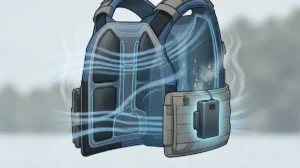
Correctional officer cooling vests create an air gap (1.5 inches) between your body and armor to allow natural airflow and reduce heat buildup—products like BluHalo weigh under 7 ounces and attach with Velcro to existing gear without compromising armor certification.
-
Passive air-gap systems and active fan systems (running 8-32 hours per charge) both work in humid prison environments, while evaporative cooling struggles in humidity, making fan or air-gap designs better choices for correctional facilities.
-
Heat stress is serious in correctional settings: 986 U.S. workers died from heat-related causes between 1992-2022, so cooling vests must be paired with hydration, rest breaks, and access to cooler areas—not used as a standalone solution.
-
Before bulk purchasing cooling vests for your facility, run a wear trial with a small group to confirm compatibility with your specific armor and duty belt setup, as fit varies significantly by officer body type and existing gear.
-
Recognize heat illness warning signs immediately—heavy sweating followed by dry skin, dizziness, confusion, muscle cramps, rapid heartbeat, or nausea—and prioritize cooling down and medical help over finishing the shift.
-
Avoid common mistakes: skipping wear trials, ignoring armor certification requirements, choosing based on price alone, and forgetting maintenance training for fan-based systems that require regular charging.
If you work inside a correctional facility, you know the heat is a different kind of beast. There’s no breeze in a cell block. The air gets thick, your armor traps every bit of warmth, and by hour six of your shift, your uniform feels like a sauna suit. You’re not alone in this. Thousands of correctional officers deal with this same sweaty, exhausting problem every single day, and the good news is that a correctional officer cooling vest can make a real difference.
This guide will walk you through exactly what these vests do, how they work under your armor, and what to look for before you buy one. We’ll also cover the science behind heat stress, because staying safe matters just as much as staying comfortable. Whether you’re a shift supervisor buying for your whole unit or an officer looking for personal relief, you’ll walk away knowing how to choose smart. Let’s get into it.
What Is a Correctional Officer Cooling Vest, Exactly?
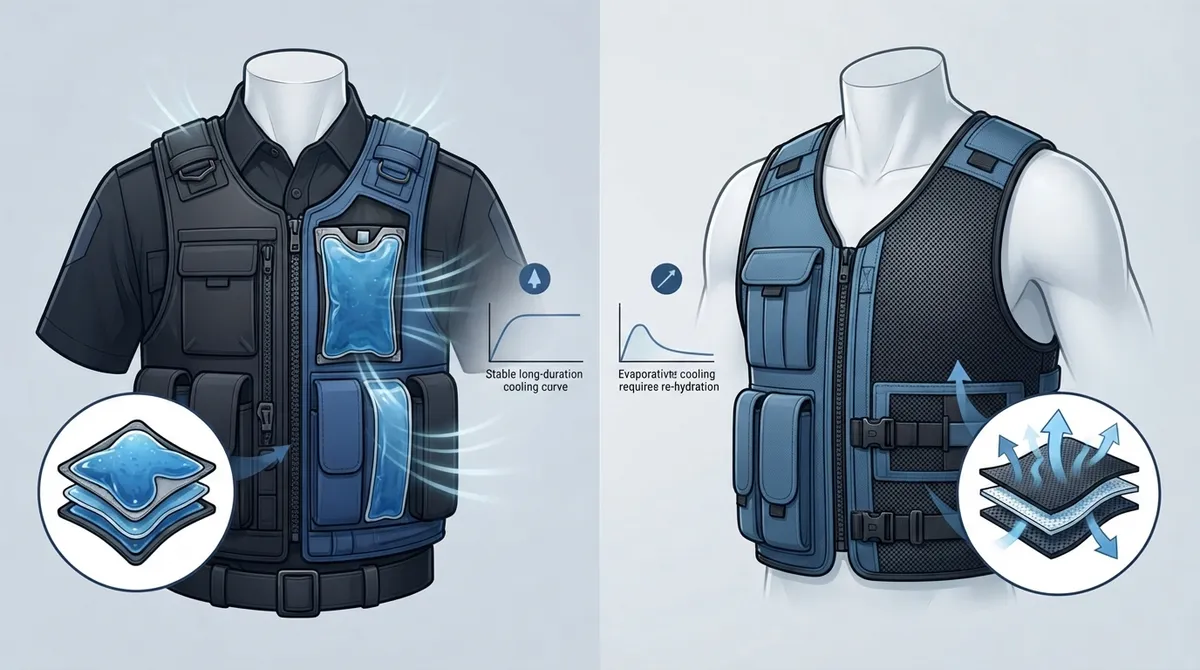
A correctional officer cooling vest is a lightweight layer worn under your body armor or stab-resistant vest. Its job is simple: reduce the heat and moisture that build up between your skin and your gear. Think of it as a tiny climate-control system tucked right where you need it most.
These vests don’t replace your armor. They work alongside it, creating space for air to move so sweat doesn’t just sit there soaking your shirt. For more background on this idea, check out our guide on how to prevent heat stress while wearing body armor.
Why Correctional Settings Are Especially Tough on Officers
Prisons and jails are often warm by design. Good airflow isn’t always a priority in facility architecture. Add thick walls, limited windows, and crowded units, and you get a recipe for constant heat buildup.
Now stack your body armor on top of that. You’re wearing a vest that already traps heat against your torso. Add a duty belt, radio, keys, and restraints, and there’s barely any room for air to escape. That’s exactly why officers need gear built specifically to fight this problem, not just general summer wear.
How Ventilation Vests Work Under Body Armor
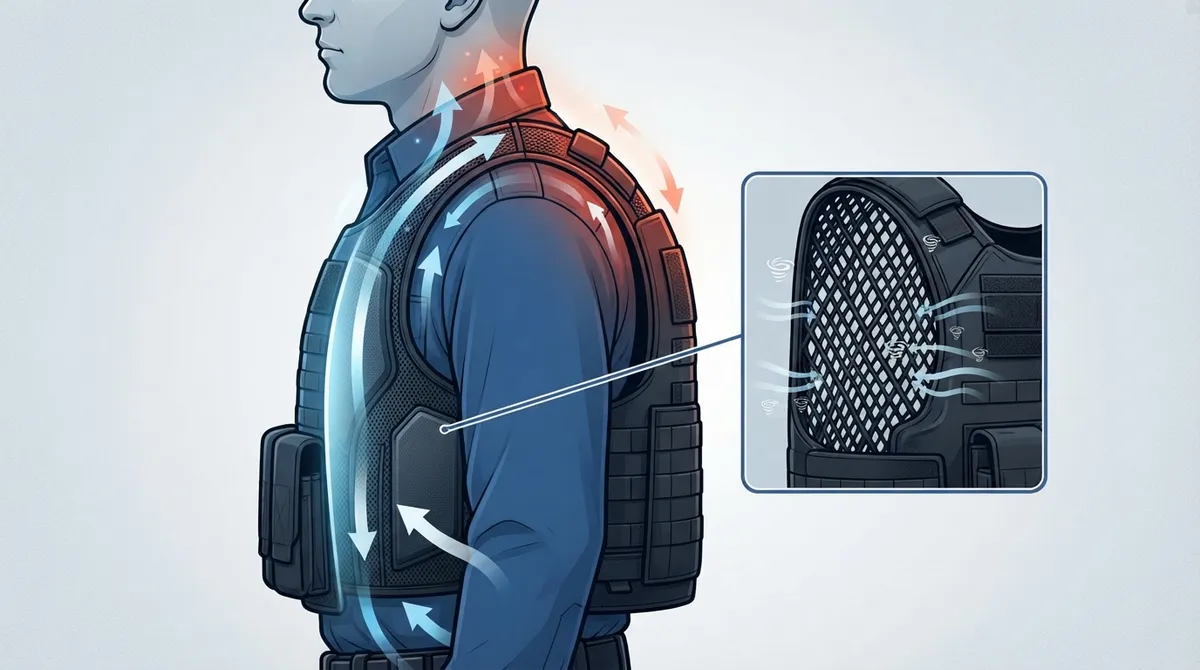
Cooling vests generally work in one of two ways: passively or actively. Understanding the difference helps you pick the right one for your shift.
- Passive systems create a small air gap or use spacer-mesh material. This lets air flow naturally between your body and your armor, without batteries or maintenance.
- Active systems use small fans to push air through channels under your vest. This gives you steady airflow, especially helpful in hot, humid units where passive airflow alone might not cut it.
- Evaporative and phase-change options use water or ice-pack inserts for short bursts of intense cooling, though they add weight and need regular recharging or freezing.
Each type has its place. Our article on passive vs. active body armor ventilation breaks down the pros and cons in detail if you want to dig deeper.
The BluHalo Approach: Cooling on Demand
Here’s where things get exciting for correctional officers who want something simple but effective. The BluHalo ventilation vest was actually designed by a Chicago police officer who got tired of sweating through 12-hour shifts.
It weighs under 7 ounces and lies completely flat when not in use. When you need cooling, you inflate it with a small pump, and it lifts your armor up to about 1.5 inches off your body. That gap lets air move freely, sweeping away heat and moisture. Need to deflate it fast? One button does the job. It attaches to your existing vest with Velcro, so there’s no need to buy new armor.
For officers who want more continuous airflow, Blufano is worth a look too. It’s a self-contained fan system with a patented air-redirect spout that slides under any style of body armor. It runs 8 to 32 hours depending on your fan setting, and it even includes a 10,000mAh power bank that can charge your phone. Some officers like pairing both products together for maximum relief during the hottest shifts.
Key Features to Look for in a Cooling Vest
Not every cooling vest is built the same. Before you buy one for yourself or your whole unit, run through this checklist.
- Fit compatibility: Does it work under your specific armor without shifting coverage or blocking retention gear?
- Weight: Heavier isn’t better here. You want something light enough that you forget it’s there.
- Maintenance needs: Passive systems need almost none. Fan systems need charging. Ice inserts need freezing.
- Durability: Correctional work is rough on gear. Look for materials that hold up to repeated washing, sweat, and daily wear.
- Noise level: If you’re using an active fan system, quiet operation matters in a facility where you need to hear everything around you.
- Battery life: For fan-based systems, check runtime against your typical shift length.
Our detailed breakdown on how to choose corrections officer vest ventilation covers even more specifics if you want a deeper dive before purchasing.
Comparing Cooling Technologies for Correctional Work
| Cooling Type | Power Needed | Best Climate | Maintenance | Weight |
|---|---|---|---|---|
| Passive air-gap (like BluHalo) | None (manual pump) | Any climate | Low | Under 7 oz |
| Active fan system (like Blufano) | Rechargeable battery | Hot and humid | Moderate (charging) | Light to moderate |
| Evaporative cooling | Water activation | Dry climates | Requires rewetting | Moderate |
| Ice/phase-change inserts | Freezing required | Short bursts, any climate | High (freezing between uses) | Heavier |
Steps to Choosing the Right Vest for Your Facility
Buying cooling gear for yourself is one thing. Choosing it for a whole shift or department is another. Here’s a simple process to follow.
- Assess your facility’s typical heat conditions. Is it humid year-round, or does it spike seasonally?
- Run a wear trial. Have a small group test the vest during real shifts before committing to a bulk order.
- Check compatibility with existing armor. Confirm the cooling layer doesn’t interfere with armor coverage or certification, referencing guidance from Body Armor Standards.
- Review maintenance requirements. Passive vests need almost none, while fan-based systems require charging routines.
- Factor in cost versus comfort gains. A one-time investment often beats replacing morale and productivity lost to heat fatigue.
If you want to see real reviews from officers who’ve already made the switch, our reviews page has plenty of honest feedback worth reading.
Cooling Vests Are Part of a Bigger Heat-Safety Plan
Here’s something important to remember: a cooling vest is a great tool, but it’s not a magic fix. Heat stress is serious, and it needs a full plan, not just one piece of gear.
According to NIOSH guidance, cooling garments should work alongside hydration, rest breaks, acclimatization, and access to cooler areas. The OSHA Heat Stress Guide echoes this, stressing that engineering and administrative controls matter just as much as personal cooling equipment.
The numbers back this up too. A Minnesota Department of Labor and Industry presentation from 2025 reports that 5 to 10 million U.S. workers face unsafe outdoor heat exposure every year. From 1992 through 2022, 986 U.S. workers died from heat-related causes on the job, an average of about 34 deaths annually. That’s a sobering reminder that heat isn’t something to brush off, even indoors in a correctional facility where temperatures can climb just as high.
Recognizing the Warning Signs
Every officer and supervisor should know the signs of heat illness. Catching it early can prevent a medical emergency.
- Heavy sweating followed by unusually dry skin
- Dizziness, headache, or confusion
- Muscle cramps, especially in the legs or abdomen
- Rapid heartbeat or shallow breathing
- Nausea or vomiting
If you or a coworker notice these symptoms, cooling down immediately and seeking medical help matters more than finishing the shift. Training your team to spot these signs early is just as important as the gear you wear.
Common Mistakes Facilities Make with Cooling Gear
Even with the best intentions, some agencies get this wrong. Here are a few pitfalls to avoid.
- Skipping the wear trial. What works for one officer’s body type might not work for another. Always test first.
- Ignoring armor certification. Adding a cooling layer should never compromise your armor’s protective rating.
- Choosing based on price alone. Cheap gear often breaks down fast under daily correctional use.
- Forgetting maintenance training. If officers don’t know how to charge or clean their gear, it won’t last.
- Treating the vest as a complete solution. Pair it with hydration and rest breaks for real results.
Our piece on mistakes to avoid with a body armor ventilation system goes into more detail on how to sidestep these issues.
Why Fit and Compatibility Matter So Much
In a correctional environment, your gear needs to work with everything else you carry. Radios, restraints, duty belts, keys — it all has to fit together without getting in the way.
A good cooling vest shouldn’t shift your armor’s coverage or block quick movement. This matters even more in emergency situations where seconds count. Before buying gear for your whole team, check out our guide on how to choose the right body armor ventilation vest to make sure fit and function line up with your daily routine.
Ready to Stay Cooler on Your Next Shift?
You deserve to get through your shift without feeling like you’re melting inside your gear. A correctional officer cooling vest can bring real relief, whether you choose a simple passive system like BluHalo or an active fan setup like Blufano. Both are designed with officers in mind, tested by real people who understand the job.
Take a look through our shop to compare options, or if you have questions about which system fits your facility best, feel free to reach out to our team for personalized guidance. Staying cool shouldn’t be complicated, and we’re here to help make it simple.
FAQs
Q: What is the best cooling vest for correctional officers wearing body armor?
A: It really depends on your shift and facility conditions, but many officers love the BluHalo for its simplicity and lightweight design. If you want continuous airflow through a long shift, Blufano’s fan system is a fantastic option too. Some officers even combine both for maximum comfort!
Q: Can a cooling vest be worn under a stab-resistant or ballistic vest?
A: Yes, that’s exactly what these vests are designed for. Products like BluHalo attach directly to your existing armor with Velcro, so there’s no need for special equipment changes. Just make sure to check compatibility with your specific gear before your first shift.
Q: How long do correctional officer cooling vests stay cool during a shift?
A: Passive systems like BluHalo work as long as you keep them inflated, with no time limit since there’s no battery involved. Active fan systems like Blufano can run anywhere from 8 to 32 hours depending on your fan speed setting, so you can match it to your shift length.
Q: Do cooling vests work in humid prison environments?
A: Passive air-gap systems and fan-powered vests both work well in humid settings because they physically move air rather than relying on evaporation. Evaporative cooling vests, on the other hand, tend to struggle in high humidity. That’s why many correctional facilities lean toward fan or air-gap designs.
Q: Will a cooling vest affect body-armor protection, fit, or certification?
A: A quality ventilation vest is designed to work alongside your armor without changing its protective coverage. Always confirm with your manufacturer’s guidelines and reference standards like those from the National Institute of Justice to be safe. When in doubt, run a wear trial before rolling it out facility-wide.