Key Takeaways
-
Heat stress impairs decision-making and reaction time for corrections officers, making ventilation systems a genuine safety concern—not just comfort—especially in indoor facilities with limited climate control where officers stand at posts for long periods.
-
Active ventilation systems like BluFano outperform passive mesh for corrections work, delivering continuous airflow for 8-32 hours per charge and better cooling during stationary posts compared to passive designs that rely on body movement.
-
Before purchasing any ventilation vest, verify compatibility with your stab-resistant armor to ensure certified coverage isn’t compromised, and confirm your facility permits the specific ventilation layer under your uniform.
-
Moisture-wicking materials and 3D spacer mesh designs prevent sweat saturation, chafing, and skin irritation that accumulate during 12-hour shifts—long-term health concerns for officers wearing armor daily.
-
BluHalo’s on-demand inflation vest (under 7 ounces, deflates flat) and BluFano’s active fan system (includes 10,000mAh power bank) are purpose-built for corrections environments and can be bundled for maximum cooling coverage.
-
Select ventilation solutions based on your specific role: active systems for cellblock/stationary officers, passive mesh for administrative roles, and bundles for intake/processing roles with variable activity levels.
If you work in a correctional facility, you already know the struggle. Long shifts, high stress, and body armor that traps heat like a furnace. By midday, you’re soaked in sweat, uncomfortable, and distracted. That’s where corrections officer vest ventilation comes in — and it’s a game-changer for anyone working in jails, prisons, or detention centers.
The good news is that you don’t have to suffer through another 12-hour shift feeling like you’re wearing a heat trap. Modern ventilation solutions are purpose-built for professionals like you. This guide will walk you through everything you need to know — from what ventilation vests actually do, to how to pick the right one for your role and environment.

What Is Corrections Officer Vest Ventilation?
Corrections officer vest ventilation refers to any cooling or airflow solution worn with or under body armor to reduce heat buildup during long shifts. These products don’t replace your armor — they work alongside it to improve comfort and breathability. Think of it as adding air conditioning to your gear without removing any protection.
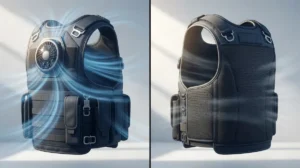
Ventilation systems for corrections use come in a few forms. Some are passive, using breathable mesh fabrics and 3D spacer materials to create an air gap between your body and the armor. Others are active, using small fans to push fresh air under your vest continuously. Both types target the same goal: keeping you cooler, drier, and more focused on the job.
If you want a deeper look at how these systems work, check out this helpful breakdown on what body armor ventilation is and why you need it.

Why Heat Is a Real Problem for Corrections Officers
Corrections officers face unique heat challenges. Unlike patrol officers who spend time outdoors where movement creates airflow, corrections staff often work indoors in facilities with limited climate control. You’re moving through cellblocks, standing at posts, and managing high-stress situations — all while wearing stab-resistant or multi-threat armor that blocks airflow entirely.
Heat stress is not just uncomfortable — it’s dangerous. According to the OSHA Heat Stress Guide, elevated body temperature can impair decision-making, reduce reaction time, and increase the risk of serious health events. For corrections officers managing volatile situations, that’s a genuine safety concern.
Excessive sweating also causes skin irritation and chafing under armor, which worsens over time. A proper ventilation system can reduce moisture saturation in your uniform, limit skin issues, and help you stay sharp from the first hour to the last.

Passive vs. Active Vest Ventilation for Corrections
Before choosing a product, it helps to understand the two main types of corrections officer vest ventilation available in 2026.
| Feature | Passive Ventilation | Active Ventilation |
|---|---|---|
| How it works | Mesh or spacer fabric creates air gap | Fan system pushes fresh air under armor |
| Power required | None | Battery or USB power source |
| Cooling effectiveness | Moderate — relies on body movement | High — continuous airflow regardless of activity |
| Profile under armor | Very low profile | Slightly more bulk, but minimal |
| Best for | Moderate heat, high-movement roles | Hot facilities, stationary posts, long shifts |
| Cost | Lower | Higher upfront, better long-term value |
For corrections officers who stand at posts or work in hot indoor environments, active ventilation usually wins. You can read a full comparison in this article on passive vs. active tactical vest ventilation.

How to Choose the Right Ventilation Vest for Corrections Work
Not all ventilation products are equal. Here’s a step-by-step process to help you find the best fit for your specific role.
- Check compatibility with your armor type. Corrections officers typically wear stab-resistant or spike-resistant armor. Make sure any ventilation layer you add doesn’t interfere with the armor’s certified fit, coverage area, or retention system. Refer to NIJ Body Armor Standards for guidance on certified protection levels.
- Consider your carrier style. Overt (external) carriers can often use mesh-lined or ventilated designs built into the carrier itself. Concealable systems usually rely on an undershirt-style cooling layer worn directly against the skin. Know which type your facility requires.
- Think about your environment. Do you work in a hot, poorly ventilated facility? Are you standing still for long periods? If so, an active fan system will serve you better than a passive mesh layer alone.
- Look for moisture-wicking materials. Even passive ventilation vests should include moisture-wicking fabrics. These pull sweat away from the skin so it can evaporate, reducing dampness and chafing over a full shift.
- Verify it doesn’t add excessive bulk. Corrections work requires mobility. A ventilation layer that adds too much bulk can affect your movement or the fit of your uniform. Look for low-profile designs that sit flat when not actively inflated or powered.
For more detailed guidance, the article on how to choose the right body armor ventilation vest in 2026 covers these steps in great depth.
Key Features to Look for in a Corrections Ventilation Vest
Once you understand your environment and armor type, here’s what to look for in a corrections officer vest ventilation product specifically.
- 3D spacer mesh or air-gap design: Creates physical separation between your body and the armor plate, allowing air to circulate passively even when you’re not moving much.
- Moisture-wicking inner lining: Pulls sweat away from skin and helps prevent the damp, heavy feeling that builds up during long shifts.
- Low-profile construction: Should sit flat under your carrier without creating pressure points or affecting coverage.
- Compatibility with stab/spike-resistant armor: Essential for corrections settings — the ventilation layer must not shift armor panels or reduce coverage in any way.
- Adjustable fit: Corrections officers come in all shapes and sizes. Adjustable straps or sizing options ensure a secure, comfortable fit that won’t slip during active situations.
- Durable construction: Your gear takes a beating. Look for ventilation products built from tough, washable materials that hold up through daily duty use.
Top Product Options: BluHalo and BluFano
When it comes to corrections officer vest ventilation, two standout products from BluHalo lead the pack in 2026.
The BluHalo ventilation vest is a lightweight, on-demand cooling solution worn under body armor. Created by a Chicago police officer, it weighs under 7 ounces and sits completely flat when deflated. When inflated, it lifts your armor up to 1.5 inches off your body, creating a cooling air gap that dramatically reduces heat and moisture buildup. It attaches easily with Velcro and can be deflated with a single button when you need a low profile. Officers working 12-hour shifts in 95-degree conditions have reported major comfort improvements with this product.
The BluFano fan system takes it a step further. It’s an active airflow unit with a patented air-redirect spout that slides under any style of body armor. It runs for 8 to 32 hours depending on your fan setting, includes a built-in 10,000mAh power bank, and even features a forward-facing light for low-light environments. For corrections officers who need continuous cooling without stopping to manage gear, BluFano delivers.
You can also bundle both products together for maximum cooling performance at a discount through the BluHalo shop.
Comparing Ventilation Solutions by Corrections Role
| Corrections Role | Environment | Recommended Solution | Key Benefit |
|---|---|---|---|
| Cellblock Officer | Hot, indoor, stationary | Active fan system (BluFano) | Continuous airflow on long posts |
| Intake/Processing | Busy, variable activity | BluHalo + BluFano bundle | On-demand cooling + active airflow |
| Perimeter/Yard | Outdoor, exposed to sun | BluHalo with mesh carrier | Air gap + natural breeze enhancement |
| Transport Officer | Vehicle-based, variable | BluFano (USB charge capability) | Charges devices + cools under armor |
| Administrative/Supervisor | Office + floor rounds | Passive mesh undershirt layer | Low-profile moisture management |
Important Considerations Before You Buy
There are a few things every corrections officer should check before adding a ventilation layer to their gear.
- Always confirm armor certification isn’t affected. Your ventilation product should not reduce the certified coverage of your stab-resistant or spike-resistant armor. When in doubt, check with your armor manufacturer.
- Check facility policy. Some facilities have specific rules about what can be worn under uniforms. Confirm your ventilation choice is permitted before purchasing.
- Talk to your equipment officer. If your facility issues body armor, your equipment officer may have approved solutions already on hand or can advise on what works with your specific carrier system.
For tips on avoiding common mistakes with ventilation gear, take a look at this resource on 7 mistakes to avoid with a body armor ventilation system.
How Ventilation Vests Improve Performance and Safety
It’s easy to think of vest ventilation as just a comfort upgrade. But the benefits go deeper than that. Research consistently shows that heat stress degrades cognitive function and physical response time — two things corrections officers cannot afford to compromise.
When you stay cooler, you stay sharper. Your decision-making improves, your reaction time stays fast, and your fatigue sets in later in the shift. That matters in a correctional environment where split-second decisions can affect the safety of staff and inmates alike.
Reducing moisture under your armor also protects your skin. Chafing and rashes from sweat-saturated gear are more than just uncomfortable — they’re a long-term health concern for officers who wear armor every single day. A quality ventilation layer helps prevent those issues before they start. Learn more about preventing heat stress on the job with this guide on how to prevent heat stress while wearing body armor.
Real-World Impact: What Officers Are Saying
Officers across law enforcement and corrections settings have shared how ventilation gear has changed their workdays. Common themes include feeling noticeably cooler within minutes of using an active cooling system, finishing long shifts without the exhaustion that comes from heat buildup, and being able to focus on the job instead of how uncomfortable they feel.
Products like BluFano have been praised for their ease of use — slide it under your armor, turn the knob, and you’re good for an entire shift. The built-in power bank is a bonus that officers in corrections settings especially appreciate, since charging devices during long shifts matters. You can see real feedback from users on the BluHalo reviews page.
Quick-Reference: Ventilation Features by Priority
| Priority Level | Feature | Why It Matters for Corrections |
|---|---|---|
| Must-Have | Armor compatibility (stab/spike-resistant) | Ensures protection isn’t compromised |
| Must-Have | Low-profile design | Won’t add bulk or restrict movement |
| Must-Have | Moisture-wicking fabric | Reduces sweat saturation and chafing |
| High Priority | Active fan system | Continuous cooling for stationary posts |
| High Priority | Long battery life (8–32 hours) | Covers full shifts without recharging |
| Nice to Have | Built-in power bank | Device charging during long shifts |
| Nice to Have | On-demand inflation/deflation | Flexibility to adjust cooling as needed |
Final Thoughts
Corrections officer vest ventilation isn’t a luxury — it’s a practical investment in your health, performance, and long-term wellbeing. You work hard in one of the toughest environments in law enforcement, and you deserve gear that works just as hard for you.
Whether you go with a passive mesh system, the on-demand BluHalo vest, the active BluFano fan system, or a combination of both, the key is choosing something designed for your specific role and environment. Don’t forget to verify armor compatibility and check your facility’s policies before making a purchase.
Ready to find the right solution for your shift? Reach out to the BluHalo team to get personalized recommendations based on your role, armor type, and work environment. You’ve got a tough job — your gear should make it a little easier.
FAQs
Q: What is a ventilation vest for corrections officers?
A: A ventilation vest for corrections officers is a cooling layer worn under or alongside body armor to improve airflow, reduce heat buildup, and manage moisture during long shifts. It doesn’t replace your armor — it works with it to keep you more comfortable and focused throughout the day.
Q: Can a ventilation vest be worn with stab-resistant corrections armor?
A: Yes! Most quality ventilation vests are designed to be compatible with stab-resistant and spike-resistant body armor commonly used in corrections settings. Just make sure the ventilation layer doesn’t shift your armor panels or reduce certified coverage — when in doubt, check with your armor manufacturer.
Q: How long does an active cooling system last on a single charge?
A: Products like the BluFano fan system can run anywhere from 8 to 32 hours on a single charge depending on your fan speed setting. That’s enough to cover a full 12-hour corrections shift with plenty of battery to spare — pretty impressive for a device that fits right under your vest!
Q: Does wearing a ventilation vest under armor really reduce sweating?
A: Absolutely — and noticeably so. Ventilation vests create an air gap between your skin and the armor, allowing heat and moisture to escape instead of getting trapped. Officers who use active fan systems like BluFano report significantly less sweat saturation and better overall comfort, especially on hot days or long indoor shifts.
Q: Are cooling vests allowed in correctional facilities?
A: In most cases, yes — but it’s always a good idea to check your facility’s specific uniform and equipment policies before purchasing. Passive ventilation undershirts and low-profile active systems are generally compatible with corrections uniforms and body armor carriers, but your equipment officer can confirm what’s approved at your facility.