Key Takeaways
-
Body armor can trap heat 20-25°F hotter than ambient air temperature, creating dangerous conditions where a 90°F day feels like 105-115°F under the vest, significantly impairing cognitive function and reaction time.
-
Heat stress under body armor causes measurable performance degradation including reduced mental sharpness, slower reaction times, increased fatigue, and higher risk of heat exhaustion or heat stroke.
-
Body armor blocks both natural cooling methods simultaneously—airflow over skin and sweat evaporation—creating a sealed humid microclimate that worsens during physical activity and longer shifts.
-
Ventilation solutions like BluHalo passive vests and Blufano active fan systems can reduce surface temperature by up to 23°F, delivering meaningful real-world improvements in comfort and safety during 10-12 hour shifts.
-
Combining passive ventilation (lightweight inserts under 1 oz) with active cooling (battery-powered fans for 8-32 hours) provides the most effective heat management for high-stress, extended-duration operations.
-
Proper hydration, moisture-wicking base layers, correct armor fit, and periodic cooling breaks significantly enhance any ventilation solution’s effectiveness in managing heat stress throughout your shift.
If you wear body armor for a living, you already know the feeling. It starts subtle — a little warmth spreading across your chest and back. Then, about an hour into your shift, you’re drenched in sweat, your focus starts to slip, and that protective vest feels less like safety equipment and more like a portable sauna. So just how hot does body armor get under real-world conditions? The honest answer might surprise you — and understanding it could change how you approach every single shift.
Body armor doesn’t just feel hot. It actively traps heat, blocks airflow, and creates a humid microclimate against your skin that makes your body work overtime to stay cool. Whether you’re a patrol officer, a soldier in a desert environment, or a security professional pulling a 12-hour shift, this heat buildup is more than uncomfortable — it’s a real threat to your health and performance. Let’s break down exactly what’s happening under that vest, and what you can do about it.
Why Body Armor Traps So Much Heat
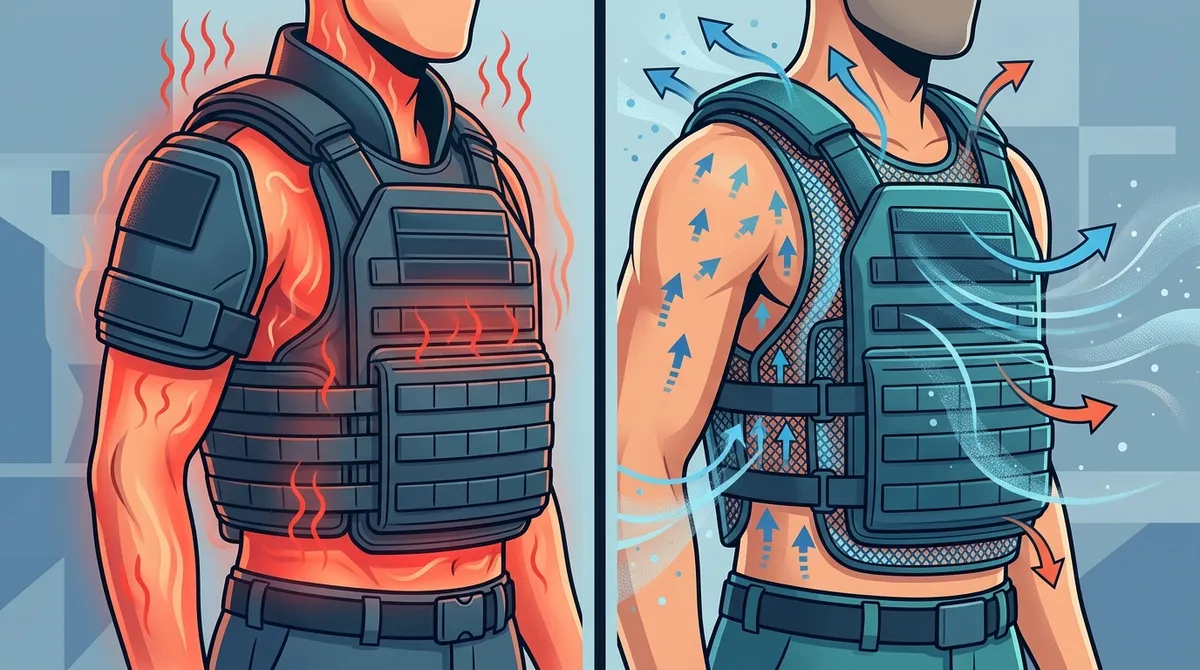
Your body naturally cools itself through two main methods: airflow over the skin and sweat evaporation. Body armor blocks both of these at once. The panels and carrier sit flush against your torso, cutting off nearly all convective airflow. At the same time, sweat has nowhere to go — it just pools against your skin and soaks into the carrier material. The result is a hot, wet, uncomfortable pocket of trapped heat that only gets worse as your shift goes on.
The thermal burden rises even faster during physical activity. When you’re running, responding to a call, or engaging in any kind of exertion, your body generates more metabolic heat. But since the armor limits your body’s ability to release that heat, it accumulates quickly. According to research on thermal comfort while wearing body armor, this combination of reduced convection and reduced evaporation is the primary driver of heat stress in armor wearers. You can also explore how to prevent heat stress while wearing body armor for more practical strategies.

How Hot Does Body Armor Actually Get?
Here’s where the numbers get real. Industry testing has shown that the surface of a body armor carrier — the material touching your skin — can run significantly warmer than ambient air temperatures. One manufacturer reported certified testing showing its ventilation material produced a 23°F cooler surface temperature compared to a standard carrier with no ventilation. That means without a solution, your armor surface could be running 23 degrees hotter than it needs to be.
In practical terms, if the outside temperature is 90°F, the trapped microclimate under your vest could feel far hotter than that. Some tactical product pages note that vent systems are designed for use in temperatures close to 100°F — which means the situation under unventilated armor in those conditions is genuinely dangerous. The OSHA Heat Stress Guide classifies work in high-heat conditions as a serious occupational hazard, and wearing body armor significantly amplifies that risk.
| Ambient Temperature | Estimated Under-Armor Temp (No Ventilation) | Risk Level |
|---|---|---|
| 70°F (mild day) | 85–90°F against skin | Low to Moderate |
| 80°F (warm day) | 95–100°F against skin | Moderate |
| 90°F (hot day) | 105–115°F against skin | High |
| 100°F+ (extreme heat) | 115°F+ against skin | Very High / Dangerous |
These are estimated ranges based on reported testing and real-world observations from armor wearers. The actual temperature can vary based on armor type, physical activity, humidity, and fit. Understanding why police officers struggle with heat under body armor can help put these numbers in perspective.
The Real Cost of Heat Buildup in Body Armor
Heat under your vest isn’t just about feeling uncomfortable. The consequences are serious and well-documented. Heat stress causes fatigue, reduces your cognitive sharpness, and slows your reaction time — all of which matter enormously when you’re working in a high-stakes environment. For a breakdown of how this affects officers on duty, see these 6 heat stress effects on police performance that you need to know about.
Here’s what heat buildup actually does to your body and performance:
- Increased fatigue: Your body burns extra energy trying to cool itself, leaving you tired faster.
- Reduced mental sharpness: Heat impairs decision-making, memory, and focus — even before you feel physically overheated.
- Slower reaction time: Studies link heat stress to slower physical and cognitive responses, which is dangerous in the field.
- Higher heat-illness risk: Prolonged exposure to high under-armor temperatures raises the risk of heat exhaustion and heat stroke.
- Discomfort and distraction: Even mild heat discomfort pulls attention away from the job and reduces overall effectiveness.
For a deeper look at how body armor performance standards relate to this issue, the NIJ Body Armor Standards provide important context on how armor is tested and rated — though thermal performance isn’t always a primary metric in standard testing.
Passive vs. Active Cooling: What’s the Difference?
Not all cooling solutions are created equal. When it comes to managing heat under body armor, there are two main approaches: passive and active cooling. Understanding the difference helps you choose the right solution for your needs. For a detailed comparison, check out passive vs. active body armor ventilation.
| Feature | Passive Cooling | Active Cooling |
|---|---|---|
| How it works | Spacer fabrics, vent panels, mesh materials create air gaps | Fan-driven airflow circulates fresh air under the vest |
| Power required | None | Battery powered |
| Cooling intensity | Moderate | High |
| Weight added | Very low (as little as 1 oz.) | Moderate (varies by system) |
| Best for | Mild to moderate heat, long shifts | High-heat environments, intense activity |
| Example products | IceVents®, spacer inserts | BluHalo + Blufano system |
Passive systems are lightweight and low-maintenance. Active systems deliver more powerful cooling, especially in extreme heat. Many professionals find that combining both approaches gives the best results. You can also explore passive inserts vs. active fans for body armor ventilation to find what suits your situation best.
A Look at Popular Body Armor Ventilation Options
The market for body armor ventilation has grown significantly in 2026. Here’s a quick look at some well-known options and how they compare, so you can make an informed choice. For an in-depth breakdown, check out the best body armor ventilation options for 2026.
| Product | Type | Approximate Weight | Approximate Price |
|---|---|---|---|
| IceVents® | Passive insert | <1 oz. | ~$70 |
| MaxxDri Vest 3.0 | Passive vest | 9 oz. | ~$100 |
| TacVent | Passive insert | 9 oz. | ~$35 |
| SKD Tactical Pontoons | Passive insert | 1.4 oz. | ~$20 |
| BluHalo Ventilation Vest | Active (inflatable air gap) | <7 oz. | $60 |
| Blufano Fan System | Active (fan-driven) | Compact | Available at vestventilation.com |
How BluHalo and Blufano Address the Heat Problem
BluHalo was created by a Chicago police officer who lived this problem every day. He knew what it felt like to be soaked in sweat after an hour on patrol in the summer heat. The BluHalo ventilation vest is worn under body armor and uses an inflatable design to lift the vest up to 1.5 inches off the body, creating a cooling air gap. It weighs under 7 ounces, attaches easily with Velcro, and can be inflated on demand or quickly deflated so it lies flat. Officers who’ve used it describe significant improvements in comfort during 12-hour shifts in 95°F weather.
For even more powerful cooling, the Blufano fan system takes things to the next level. This active airflow unit uses a patented air-redirect spout that slides under any body armor style. It delivers adjustable fan-driven airflow for 8 to 32 hours on a single charge, depending on the fan setting. It also includes a built-in 10,000mAh power bank and a forward-facing light for hands-free illumination. You can use BluHalo and Blufano together as a bundle for maximum cooling performance — a combination that many professionals say is genuinely game-changing for long, hot shifts. Read real reviews from officers and professionals who’ve made the switch.
How to Stay Cooler Under Body Armor: Practical Steps
Beyond choosing the right ventilation product, there are several habits and strategies that can help you manage heat under your armor more effectively. Here’s a simple, numbered approach to building a smarter cooling routine:
- Add a ventilation layer: Use a ventilation vest like BluHalo to create an air gap between your skin and the armor. This is the single most effective step you can take.
- Use an active fan system: For high-heat days or intense activity, pair your vest with an active fan system like Blufano to keep fresh air moving continuously.
- Stay hydrated: Drink water consistently throughout your shift, not just when you feel thirsty. Dehydration makes heat stress significantly worse.
- Wear moisture-wicking base layers: A breathable, moisture-wicking shirt under your armor helps move sweat away from your skin, reducing that sticky, uncomfortable feeling.
- Take cooling breaks when possible: Even a few minutes in an air-conditioned vehicle can significantly reduce your core temperature and improve comfort for the next stretch of your shift.
- Check your armor fit: Armor that’s too tight restricts airflow even further. Make sure your carrier fits properly and allows some natural movement. Learn more about body armor fit and airflow tips for all-day comfort.
For even more ideas, explore 10 tips for wearing body armor comfortably in heat. And if you’re wondering whether DIY solutions can help, there’s a helpful resource on DIY body armor cooling hacks that actually work.
It’s also worth noting that proper hydration and recovery matter just as much as the gear you wear. Even the best ventilation system works better when paired with good habits. For professionals looking for pool or outdoor relief during off-hours, resources like Panther Pools can be a great way to decompress and cool down after a long, hot shift.
Do Ventilation Vests Really Make a Difference?
This is the question everyone asks, and the answer is a clear yes — with one honest caveat. Ventilation vests significantly reduce heat and moisture buildup, but they don’t make body armor feel like a cool breeze. You’ll still feel warm during intense activity in high heat. What changes is the severity. Instead of feeling dangerously overheated and soaked in sweat, you feel manageable warmth with noticeably better airflow and less moisture against your skin.
The 23°F cooler surface temperature figure cited in independent testing is a meaningful real-world difference. Over the course of a 10 or 12-hour shift, that reduction in surface heat translates to less fatigue, better focus, and a lower risk of heat illness. For professionals whose safety and decision-making depend on staying sharp, that’s not a small improvement — it’s a significant one. Explore why body armor ventilation is a game changer for officers to understand the full picture.
Making the Right Choice for Your Situation
The best ventilation solution depends on your specific role, environment, and how much heat you deal with on a typical shift. Here are a few quick pointers to help you decide:
- Patrol officers in warm climates: The BluHalo vest paired with Blufano gives you on-demand cooling that works whether you’re in the car or on foot.
- Military personnel in desert conditions: An active fan system with long battery life is essential. Look for a solution rated for 8+ hours of continuous use.
- Security professionals on long shifts: A lightweight passive insert for everyday use, supplemented by active cooling on the hottest days, strikes a great balance.
- SWAT and tactical teams: High-intensity operations generate significant metabolic heat fast. Active cooling with a reliable power source is the best investment here.
- Emergency responders: Look for solutions that are easy to put on quickly and won’t interfere with your other protective gear. The right emergency responder gear for staying cool can make a real difference in the field.
If you’re still unsure which option is right for you, this guide on choosing the right body armor ventilation vest in 2026 walks you through every consideration step by step.
Final Thoughts: Don’t Let the Heat Win
Body armor can get dangerously hot — and that heat affects your safety, your performance, and your wellbeing on every shift. The good news is that effective solutions exist right now in 2026, and they’re more accessible and affordable than ever. Whether you start with a simple passive insert or invest in a full active cooling system like the BluHalo and Blufano combination, any step toward better ventilation is a step toward a safer, more comfortable, and more effective working life.
You put on that armor to protect yourself and others. It makes complete sense to make wearing it as manageable as possible. Don’t wait until the hottest day of the summer to figure out your cooling strategy — start now. Get in touch with our team at BluHalo to find the right ventilation solution for your specific needs, or head over to the BluHalo shop to explore your options today. You deserve to stay cool out there.
FAQs
Q: How hot does body armor actually get under a vest during a shift?
A: Great question! Under real-world conditions, the surface of body armor can feel 20°F or more hotter than the surrounding air temperature, creating a trapped, humid microclimate against your skin. On a 90°F day, the area under your vest could feel closer to 105–115°F, especially during physical activity. That’s why ventilation solutions are so important for anyone wearing armor through a long shift.
Q: Why does body armor trap so much heat and moisture?
A: Body armor sits flush against your torso and blocks two of your body’s main cooling methods — airflow over your skin and sweat evaporation. With nowhere for heat or moisture to escape, it builds up fast and just keeps getting worse as the shift goes on. It’s a bit like wearing a sealed sleeping bag in the sun, which is exactly why so many professionals are turning to ventilation vests for relief.
Q: Do ventilation vests really work under body armor?
A: They absolutely do! Certified testing has shown that ventilation materials can produce surface temperatures up to 23°F cooler than a standard carrier with no ventilation. That’s a meaningful real-world difference that reduces fatigue, improves focus, and lowers the risk of heat illness during long shifts. No cooling system eliminates heat completely, but the improvement is significant enough that most users say they can’t imagine going back.
Q: What is the difference between passive and active body armor cooling?
A: Passive cooling uses spacer fabrics, mesh panels, or inflatable air gaps to create space between your skin and the armor, allowing some natural airflow without any power source. Active cooling uses a battery-powered fan to continuously push fresh air under the vest, delivering stronger and more consistent cooling. Many professionals get the best results by combining both — a ventilation vest like BluHalo to create the air gap, plus a fan system like Blufano to keep air moving through it.
Q: Are body armor ventilation systems worth the investment?
A: For anyone wearing body armor regularly, especially in warm climates or during physical activity, ventilation systems are absolutely worth it. The health risks from heat stress — including fatigue, impaired decision-making, and heat illness — are real and well-documented. A quality ventilation system like BluHalo starts at just $60, which is a small price compared to the comfort, safety, and performance improvements you get on every single shift.