Key Takeaways
-
Even a 1.5-inch air gap between body armor and skin dramatically reduces heat buildup and improves cognitive function during long shifts, addressing OSHA-documented heat stress risks.
-
Passive insert systems like IceVents and MaxxDri offer lightweight, battery-free ventilation under 10 oz., making them ideal affordable entry points for patrol officers, though they’re less effective in extreme heat or low-movement situations.
-
Active fan systems like BluFano provide consistent on-demand airflow with 8-32 hours of battery life and adjustable speed settings, making them superior for high-heat tactical environments and high-intensity operations.
-
BluHalo inflatable vest creates a 1.5-inch air gap on demand with a manual pump, weighs under 7 oz., and maintains low profile when deflated—ideal for patrol officers needing flexibility without battery management.
-
Avoid cinching your carrier too tight, always cover both front and back panels, skip only one area, and verify product compatibility with your specific armor type before purchasing to maximize ventilation effectiveness.
-
Combining both passive (BluHalo) and active (BluFano) systems provides maximum flexibility, covering passive cooling throughout shifts while enabling emergency high-heat response when environmental conditions escalate.
If you wear body armor for work, you already know the feeling. An hour into your shift, heat starts building under your vest. Sweat soaks through your undershirt. Your focus starts to slip. Whether you’re a patrol officer, a soldier, a security professional, or a first responder, learning how to add ventilation to body armor can be a genuine game-changer for your comfort and performance.
The good news? In 2026, you have real options. Two main approaches dominate the market right now: passive insert systems and active fan-driven ventilation. Both aim to create airflow under your armor, but they work very differently. This guide breaks down exactly how each method works, how they compare side by side, and which one might suit your needs best.
Let’s dive in and find you some relief!

Why Ventilating Body Armor Matters So Much
Body armor is essential protective equipment, but it comes with a serious comfort problem. The material sits tight against your torso, trapping heat and blocking airflow. According to the OSHA Heat Stress Guide, prolonged heat exposure increases the risk of heat exhaustion, reduced cognitive function, and physical fatigue. For professionals making split-second decisions, that’s a serious concern.
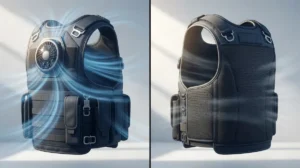
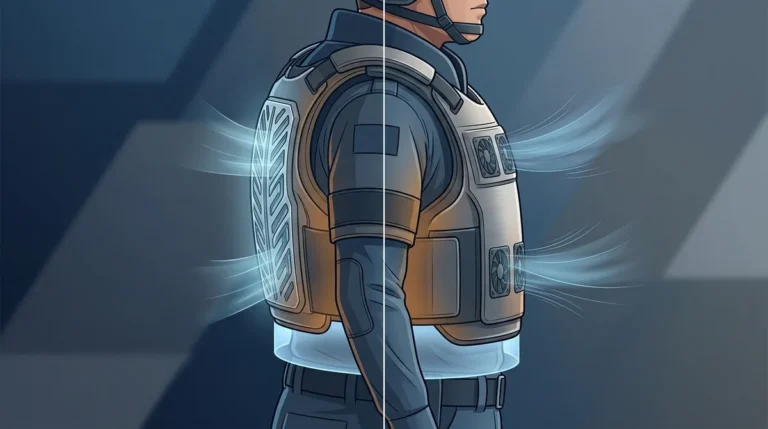
The core goal of any ventilation solution is simple: create an air gap between your body and the armor. This gap lets hot, humid air escape and allows cooler, fresh air to circulate. Even a gap as small as 1.5 inches can make a dramatic difference in how cool you feel over the course of a long shift. You can read more about this in our guide on how to improve airflow under body armor.
The Body Armor Standards from the National Institute of Justice focus on ballistic protection, but comfort and wearability are increasingly recognized as factors that affect whether officers actually wear their armor consistently. That matters for safety.
Method One: Passive Insert Systems
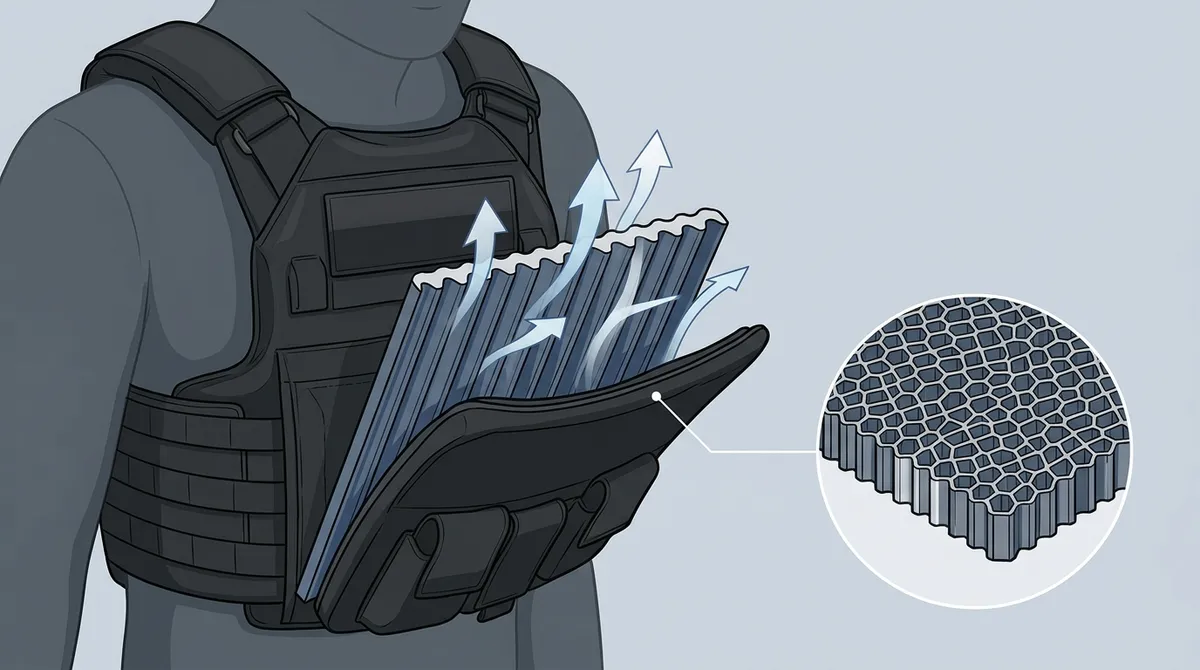
Passive inserts are lightweight panels, foam spacers, or mesh layers that you place between your body and the armor carrier. They don’t require batteries or power. Instead, they rely on physical structure to create an air gap and promote natural airflow as you move.
How Passive Inserts Work
Passive systems typically use one of two designs. The first uses channeled or structured foam with vertical air pathways built in. As you breathe and move, air flows through those channels, pulling moisture away from your skin. The second design uses a spacer mesh or inflatable layer that physically lifts the armor off your body, creating a measurable gap.
Some popular examples include:
- IceVents® – Weigh less than 1 oz. and can be placed on front, back, and shoulder areas
- MaxxDri Vest 3.0 – A 9 oz. universal torso ventilation solution worn like an undershirt
- TacVent – A 9 oz. panel system designed for front and back placement
- SKD Tactical Pontoons – Just 1.4 oz. and compatible with front and back use
- Body Armor Vent B-24 Retrofit Kits – Available in Full Sheet, Half Sheet, and Quarter Sheet sizes for custom fit
These products are designed as universal retrofit kits, meaning you can add ventilation to body armor you already own without replacing the armor itself. That’s a huge advantage for officers and soldiers who are issued specific gear.
Pros and Cons of Passive Inserts
| Advantage | Disadvantage |
|---|---|
| Lightweight (under 10 oz. for most options) | Relies on body movement for airflow |
| No batteries or charging required | Less effective in low-movement situations |
| Easy to install and retrofit | Limited cooling in extreme heat environments |
| Compatible with most armor types | No active moisture removal |
| Very affordable entry point | Cooling effect can be inconsistent |
For more details on how passive solutions compare to active systems, check out our full breakdown on passive vs. active body armor ventilation.
Method Two: Active Fan-Driven Ventilation Systems
Active ventilation systems use a powered fan to push or pull air through the space under your armor. These systems deliver consistent, on-demand airflow regardless of how much you’re moving. They’re particularly useful in high-heat environments where passive airflow alone just isn’t enough.
How Active Fan Systems Work
Active systems typically include a compact fan unit, a power source (usually a rechargeable battery), and a method of directing airflow under the armor. The fan slides or tucks into the vest opening and circulates fresh air continuously across your torso. You control the airflow speed based on how hot you feel.
A great example of this approach is the BluFano, an advanced fan system developed specifically for body armor ventilation. It features a patented air-redirect spout that slides under any style of body armor and can be secured with an optional strap. The built-in 10,000mAh power bank provides 8 to 32 hours of fan operation depending on your speed setting. It even includes a forward-facing light for hands-free use in low-light situations — a thoughtful touch for law enforcement and tactical teams working night operations.
Pros and Cons of Active Fan Systems
| Advantage | Disadvantage |
|---|---|
| Consistent airflow regardless of movement | Requires charging or battery management |
| Adjustable fan speed for personalized cooling | Slightly heavier than passive inserts |
| Effective in extreme heat environments | Higher upfront cost |
| Can accelerate cooling near vehicle AC vents | Mechanical component that can wear over time |
| Doubles as a USB charging bank | Requires occasional maintenance |
If you’re curious about how active cooling technology works at a deeper level, our article on how active cooling systems work in ventilation vests is a great next read.
The BluHalo Approach: Inflatable Air Gap Technology
There’s a third option worth highlighting because it’s genuinely unique. The BluHalo ventilation vest combines elements of both passive and active systems. It’s an inflatable vest worn under body armor that physically lifts the armor approximately 1.5 inches off your body when inflated, creating a passive cooling air gap. You inflate it on demand with a small pump and deflate it with a button press when you need a lower profile.
BluHalo was created by a Chicago police officer who understood firsthand the misery of overheating during long shifts. It weighs under 7 ounces, sits flat against the body when deflated, and is built from double-layer high-strength polyethylene for durability. Officers report significant comfort improvements even during 12-hour shifts in 95-degree weather. You can learn more about getting the most from it with our guide on how to use the BluHalo ventilation vest for maximum comfort.
Side-by-Side Comparison: All Three Approaches
| Feature | Passive Inserts | Active Fan (BluFano) | Inflatable Vest (BluHalo) |
|---|---|---|---|
| Weight | Under 10 oz. | Moderate | Under 7 oz. |
| Air Gap Created | Small, variable | Continuous airflow | Up to 1.5 inches |
| Power Required | None | Yes (10,000mAh battery) | Manual pump only |
| Cooling Consistency | Depends on movement | Very consistent | Consistent (passive gap) |
| Best For | Low-budget starter option | High-heat, active duty | Long shifts, patrol work |
| Universal Fit | Yes | Yes | Yes |
| Price Range | Low | Premium | $60 |
For a deeper look at how BluFano specifically stacks up against passive options, check out our detailed comparison on BluFano fan system vs. passive cooling.
How to Install Ventilation Under Your Body Armor: Step-by-Step
No matter which system you choose, the installation process follows a similar logic. Here’s how to add ventilation to body armor safely and effectively:
- Check your carrier’s compatibility. Most ventilation products work with plate carriers, concealable vests, chest rigs, and outer carriers. Verify your armor type before purchasing.
- Position the ventilation layer correctly. Center vent panels or vests on your torso and back. These are the areas where heat buildup is highest and where ventilation will have the most impact.
- Adjust your armor carrier fit. Wear the carrier snug but not overtightly cinched. Over-tightening kills airflow and defeats the purpose of your ventilation layer.
- Secure the ventilation system. For passive inserts, attach them using the provided Velcro or adhesive. For active fans like BluFano, use the strap system to hold the unit in place at the vest opening.
- Test the setup before your shift. Move around, sit down, and simulate typical duty movements. Make sure nothing shifts, pinches, or restricts natural breathing.
Following these steps helps ensure your ventilation system works as intended without compromising the fit or protection of your body armor. For more detailed guidance, our resource on body armor fit and airflow tips for all-day comfort is packed with practical advice.
Which Approach Is Right for You?
The best ventilation solution depends on your role, environment, and budget. Here’s a quick guide to help you decide:
- Law enforcement patrol officers working long shifts in moderate heat will find the BluHalo inflatable vest an excellent balance of affordability, comfort, and low profile.
- Military personnel deployed in extreme heat environments benefit most from active fan systems like BluFano, where consistent airflow is critical for mission performance.
- Security professionals working across varied climates may want to combine a passive insert with BluFano for maximum flexibility.
- SWAT and tactical teams engaged in high-intensity operations should prioritize active fan systems that deliver reliable cooling during peak physical exertion.
- Emergency responders dealing with extreme heat situations will benefit from the most robust active ventilation available, paired with moisture-wicking base layers for full heat management.
If you’re still weighing your options, our guide to choosing the right body armor ventilation vest in 2026 walks you through every factor worth considering. You can also explore our full shop to see both BluHalo and BluFano in one place.
For professionals who want the absolute best of both worlds, bundling BluHalo and BluFano together is the smart move. You get the inflatable air gap for passive cooling throughout your shift, plus the active fan system for those moments when the heat really cranks up. It’s a powerful combination that covers every scenario. Check out the best body armor ventilation options for 2026 to see how this combination ranks.
Common Mistakes to Avoid
Adding ventilation to your body armor is straightforward, but a few common errors can undermine your results:
- Cinching your carrier too tight — This collapses the air gap and eliminates airflow entirely.
- Skipping the back panel — Heat builds up equally in front and behind. Cover both zones for full relief.
- Forgetting to charge your active system — An uncharged BluFano is just extra weight. Build charging into your pre-shift routine.
- Choosing a system that’s incompatible with your armor style — Always verify fit compatibility before committing.
Our article on 7 mistakes to avoid with a body armor ventilation system covers these in even more detail. It’s worth a quick read before you finalize your setup. You can also explore how to prevent heat stress while wearing body armor for a broader look at keeping safe on the job.
Ready to Stay Cooler on Every Shift?
Heat under body armor is a real problem with real solutions. Whether you go with a lightweight passive insert, a powerful active fan system, or an innovative inflatable vest like BluHalo, taking steps to add ventilation to body armor is one of the smartest investments you can make in your daily comfort and long-term performance.
The professionals who wear this gear every day deserve to feel their best while doing it. The right ventilation system doesn’t just keep you cool — it keeps you sharp, focused, and ready for anything. Explore the BluHalo and BluFano systems and see which setup fits your duty requirements. And if you have questions about which product is right for your specific gear or environment, don’t hesitate to reach out to our team for personalized guidance — we’re here to help you find your coolest, most comfortable solution.
FAQs
Q: How do you add ventilation to body armor without affecting the fit?
A: Great news — you don’t have to choose between ventilation and a proper fit! The key is to wear your ventilation layer directly under the armor carrier and keep the carrier snug but not overly tightened. Systems like the BluHalo inflatable vest and passive foam inserts are designed to add airflow without altering the protective position of your armor.
Q: Does adding ventilation make body armor less secure or protective?
A: Not at all! Ventilation systems are worn under or alongside the armor carrier, not integrated into the ballistic panels themselves. Your armor’s protective capability stays fully intact. Just make sure your carrier is properly adjusted after adding any ventilation layer so everything sits correctly on your torso.
Q: What is the difference between foam vent panels and an inflatable cooling vest?
A: Foam vent panels use built-in air channels to guide airflow as you move, making them a passive, no-fuss option. An inflatable cooling vest like BluHalo physically lifts your armor off your body by up to 1.5 inches, creating a larger and more consistent air gap for passive cooling on demand. Both are great — the inflatable vest tends to provide more noticeable cooling relief during long shifts.
Q: How much air gap is actually needed under body armor for effective cooling?
A: Even a small gap makes a big difference! Research and product design in 2026 point to around 1.5 inches as an effective target for passive cooling under body armor. This gap allows hot, humid air to escape and fresh air to circulate naturally, significantly reducing heat buildup and sweat accumulation during extended wear.
Q: Can I install a ventilation system under any plate carrier or concealable vest?
A: Most modern ventilation products are designed as universal retrofit solutions, meaning they’re compatible with plate carriers, concealable vests, chest rigs, outer carriers, and backpacks. Always check the specific product dimensions and attachment method against your gear before purchasing, and you’ll likely find a great fit right away!