Key Takeaways
-
Core body temperature rises significantly above 85°F when wearing body armor due to blocked airflow and trapped moisture, creating a dangerous microclimate that increases heat illness risk substantially.
-
Heat stroke represents a medical emergency with symptoms including confusion, hot dry skin, and rapid pulse; heat exhaustion warning signs like dizziness and weakness require immediate cooling to prevent escalation.
-
Ventilation vests using active fan systems like Blufano reduce under-armor temperatures by 7.2-14.6°F and last 8-32 hours per charge, making them highly effective for extended shifts in hot conditions.
-
Chronic thermal stress from repeated heat exposure under armor causes cardiovascular strain, mental fatigue affecting decision-making, and metabolic disruptions that accumulate over time, not just during single hot shifts.
-
Practical prevention combines taking 5-10 minute breaks in air-conditioned spaces every couple hours, continuous hydration, moisture-wicking base layers, and monitoring for early warning signs like dizziness or excessive sweating.
-
Trapped sweat against skin causes rashes, chafing, and infections while dehydration compounds heat-related risks; without regular cooling breaks, overheating dangers multiply exponentially during extended wear periods.
Ever finish a shift with your shirt soaked through and your head pounding, wondering if it’s just the heat or something worse? You’re not imagining it. Body armor overheating dangers are real, and they affect thousands of officers, soldiers, and first responders every single day. The good news? You’re about to learn exactly what’s happening under that vest and how to fix it for good.
Whether you’re patrolling in July heat or standing post for hours in tactical gear, your body armor might be working against you. This friendly guide breaks down the science, the risks, and the smart solutions in plain language. No scary jargon, just real talk about staying safe and comfortable on the job.
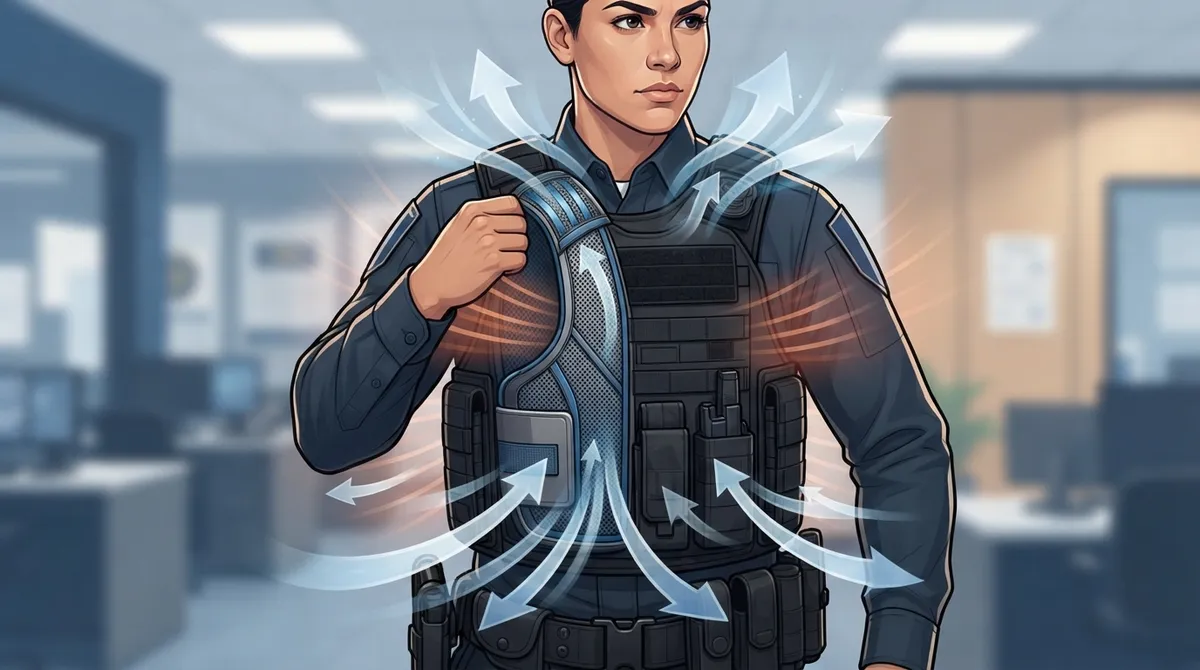
Why Body Armor Traps Heat in the First Place
Your body has a brilliant built-in cooling system. Sweat evaporates, air moves across your skin, and heat escapes. Simple, right?
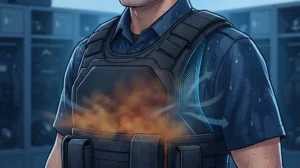
Body armor throws a wrench into that system. It creates a solid barrier that blocks airflow and traps moisture right against your torso. This forms what experts call a “microclimate,” a small pocket of hot, humid air that just keeps getting warmer the longer you wear your vest.
Think of it like wearing a plastic bag under your shirt. Sweat has nowhere to go. Heat has nowhere to escape. Your core temperature starts climbing, and that’s when things get risky.
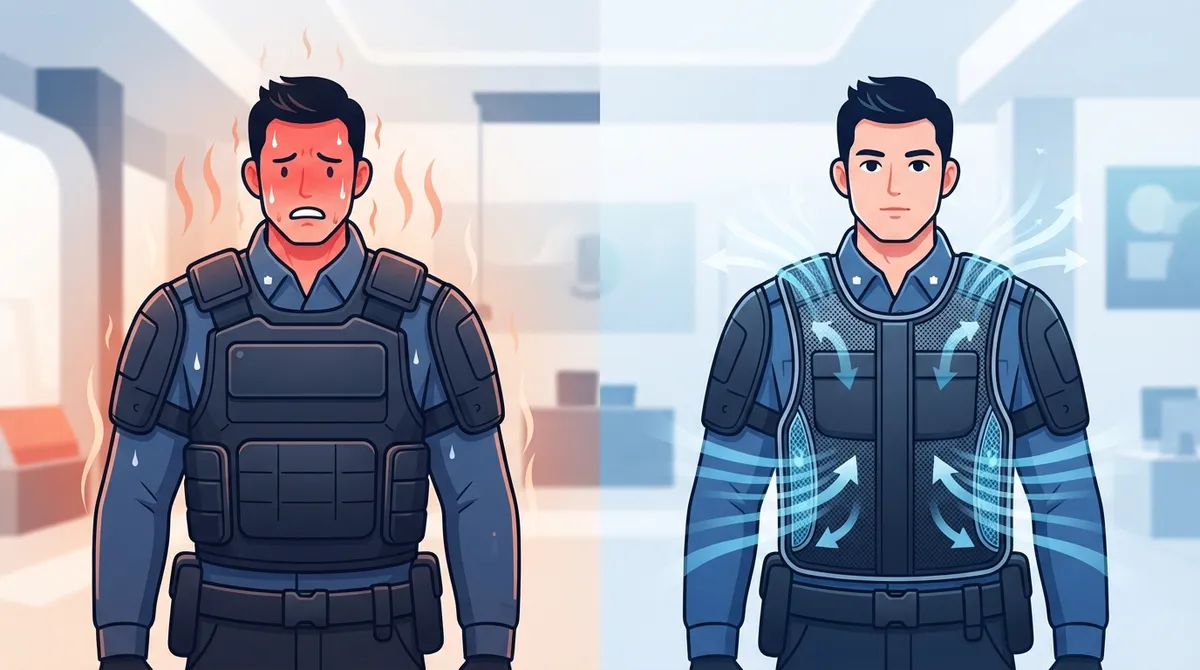
9 Body Armor Overheating Dangers You Need to Understand
Let’s walk through the real risks so you know exactly what you’re up against and why prevention matters so much.
1. Heat Exhaustion Symptoms Sneak Up Fast
Heat exhaustion often starts subtly. You might feel dizzy, weak, or unusually thirsty. Your heart rate climbs, and you may notice heavy sweating or clammy skin.
Left unchecked, these symptoms can escalate quickly, especially during long shifts in direct sun. Recognizing these early signs is your first line of defense.
2. Heat Stroke Is a Medical Emergency
Heat stroke is the dangerous next step after heat exhaustion. Your body’s cooling system fails completely, and core temperature spikes to dangerous levels.
Signs include confusion, rapid pulse, hot dry skin, and even loss of consciousness. This is a true emergency that requires immediate medical attention.
3. The 85-Degree Threshold Changes Everything
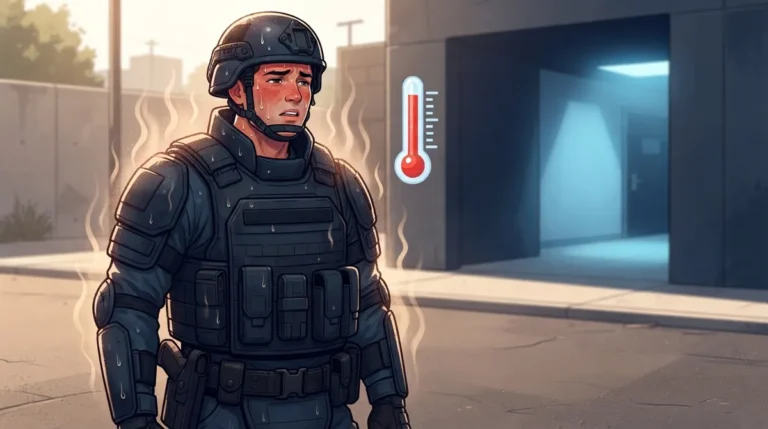
Research shows that once outdoor temperatures climb past 85°F while wearing body armor, the risk of heat-related illness increases significantly. That’s a lower threshold than most people expect.
Summer patrol shifts, outdoor security details, and tactical operations regularly push past this mark. If you’ve ever wondered why you feel wrecked by early afternoon, this is likely why.
4. Cardiovascular Strain Builds Over Time
Your heart works overtime when your body is trying to cool itself while trapped under armor. This added strain isn’t just uncomfortable, it’s genuinely hard on your cardiovascular system.
Over months and years of regular duty, this chronic stress can contribute to bigger health issues down the road.
5. Chronic Thermal Stress Wears You Down
It’s not just about single hot shifts. Repeated thermal stress from body armor can lead to metabolic disruptions, compromised immune response, and accelerated physical exhaustion.
Many officers report feeling constantly drained, even on cooler days, simply because their bodies never fully recover between shifts.
6. Mental Fatigue Affects Decision-Making
Overheating doesn’t just tire your body, it fogs your brain too. Heat stress can slow reaction times, cloud judgment, and reduce focus during critical moments.
For law enforcement and tactical teams, that split-second delay caused by heat fatigue can matter more than people realize.
7. Moisture Buildup Causes Skin Issues
Trapped sweat doesn’t just feel gross, it can lead to rashes, chafing, and skin infections over time. Constant moisture against your skin breaks down its natural protective barrier.
This is especially common in humid climates or during multi-day deployments where showering opportunities are limited.
8. Dehydration Risk Increases Without You Noticing
Heavy sweating under armor means you’re losing fluids faster than you might realize. Many people don’t drink enough water to keep up, especially during busy shifts.
Dehydration compounds every other risk on this list, making heat exhaustion and heat stroke even more likely.
9. Extended Wear Without Breaks Multiplies Every Risk
Skipping breaks might feel necessary when duty calls, but it dramatically increases your overheating risk. Your body needs regular chances to offload accumulated heat.
According to the OSHA Heat Stress Guide, trapped heat significantly increases the risk of heat-related illness during extended warm shifts, especially when protective gear is involved.
How Ventilation Vests Solve the Overheating Problem
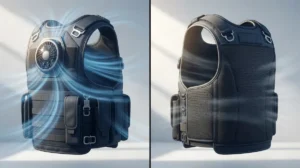
Here’s the good news. You don’t have to just accept these risks as part of the job. Ventilation vests create an air gap between your body and your armor, allowing continuous airflow that dramatically reduces heat buildup and moisture retention.
Real-world testing shows this approach works incredibly well. Products like TacVent can lower under-armor temperatures by 7.2 to 14.6 degrees Fahrenheit, which is a huge difference when you’re grinding through a 12-hour shift.
This is exactly the problem BluHalo set out to solve. Created by a Chicago police officer who understood the struggle firsthand, the BluHalo ventilation vest weighs under 7 ounces and inflates on demand to lift your armor up to 1.5 inches off your body. That small gap makes a massive difference in airflow and comfort.
Comparing Ventilation Approaches
| Cooling Method | How It Works | Temperature Reduction | Best For |
|---|---|---|---|
| Passive Mesh Spacers | Static air gap, no moving parts | Mild improvement | Light duty, budget-conscious users |
| BluHalo Inflatable Vest | On-demand inflation creates air gap | Significant, on-demand relief | Officers needing quick cooling-on-demand |
| Blufano Active Fan System | Battery-powered fan circulates fresh air | 7.2–14.6°F reduction (comparable testing) | Extended shifts, tactical operations |
| 360-Degree Ventilation Panels | Full-perimeter airflow, shoulders to sides | Strong overall reduction | All-day wear, high humidity climates |
Meet Blufano: Active Cooling for Serious Demands
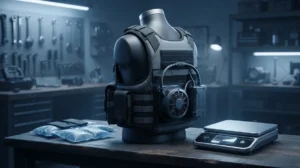
If passive airflow isn’t enough for your situation, Blufano takes things a step further. This self-contained, active airflow unit uses a patented air-redirect spout that slides under any style of body armor.
It delivers adjustable fan-driven airflow for 8 to 32 hours depending on your settings, which means it can easily last through even the longest shift. Plus, it includes a built-in 10,000mAh power bank that charges your other devices and a forward-facing light for hands-free visibility in low-light situations.
Officers who’ve made the switch report faster cooling, reduced sweat, and better focus during brutal summer days. For anyone comparing options, our detailed guide on Blufano’s fan system versus passive cooling breaks down exactly why active airflow often wins for demanding duty.
Simple Steps to Prevent Body Armor Overheating
You don’t need a complicated routine to stay safer out there. Here are practical steps you can start using today.
- Take regular breaks. Aim for 5 to 10 minutes in an air-conditioned space every couple of hours when possible.
- Loosen your vest during downtime. Even a slight loosening allows your body to release trapped heat faster.
- Invest in ventilation gear. A quality vest ventilation system like BluHalo or Blufano tackles the root problem directly.
- Stay hydrated all shift long. Don’t wait until you’re thirsty to drink water.
- Watch for early warning signs. Dizziness, excessive sweating, or confusion mean it’s time to cool down immediately.
- Choose moisture-wicking base layers. These help pull sweat away from your skin before it gets trapped.
Recognizing the Warning Signs: A Quick Reference
| Symptom Stage | Common Signs | Recommended Action |
|---|---|---|
| Early Heat Stress | Thirst, mild fatigue, light sweating | Hydrate, seek shade, monitor closely |
| Heat Exhaustion | Heavy sweating, dizziness, weakness, nausea | Remove gear if safe, cool down, drink water |
| Heat Stroke | Confusion, hot dry skin, rapid pulse, fainting | Call emergency services immediately |
Understanding proper armor fit also plays a role in prevention. The Body Armor Standards from the National Institute of Justice offer helpful guidance on selecting gear that balances protection with wearability.
Why This Matters More Than Ever in 2026
Summer temperatures keep climbing, and so does the demand placed on law enforcement, military personnel, and emergency responders. More departments are recognizing that comfort and safety go hand in hand, not against each other.
Choosing the right gear isn’t just about feeling better, it’s about performing better and staying healthier over a long career. If you’re ready to explore your options, our guide on choosing the right ventilation vest in 2026 walks through everything you need to know.
It’s also worth taking care of your overall wellness beyond just your gear. Staying on top of routine health checkups, including dental care with trusted providers like Charming Smiles of Ocoee, and physical recovery support from professionals such as West Florida Therapy, helps you stay resilient against the physical toll of demanding shifts.
Real Comfort, Real Testimonials
Officers who’ve switched to ventilation vests consistently describe the difference as night and day. Many mention surviving 12-hour shifts in 95-degree weather with far less sweat, fatigue, and discomfort than before.
You can browse genuine customer experiences on our reviews page or check out demonstration videos showing exactly how these systems work in the field on our videos page.
Bringing It All Together
Body armor overheating dangers are serious, but they’re also very manageable once you understand the science and have the right gear. Trapped heat, cardiovascular strain, and heat illness don’t have to be part of your daily grind.
Whether you choose the lightweight, on-demand comfort of BluHalo or the powerful active airflow of Blufano, you’re taking a real step toward staying cooler, safer, and sharper on duty. Both products can even be bundled together for maximum cooling performance, giving you flexible options no matter your role or climate.
Ready to stop sweating through your shifts and start feeling like yourself again? Get in Touch with Our Team today and let’s find the perfect cooling solution for your gear.
FAQs
Q: How does body armor cause heat stress and what are the dangerous symptoms?
A: Body armor blocks your body’s natural airflow and sweat evaporation, trapping heat and moisture against your skin. This leads to symptoms like dizziness, heavy sweating, confusion, and rapid heartbeat, which can escalate to serious heat exhaustion or heat stroke if not addressed quickly.
Q: What is the most effective way to prevent overheating while wearing body armor?
A: The most effective approach combines smart habits with the right gear. Taking regular breaks, staying hydrated, and using a ventilation vest like BluHalo or an active cooling system like Blufano can make a world of difference during long, hot shifts.
Q: How much can ventilation vests lower body temperature under armor?
A: Real-world testing shows ventilation panels can lower under-armor temperatures by 7.2 to 14.6 degrees Fahrenheit. That’s a genuinely noticeable difference when you’re stuck in gear for hours on end.
Q: Do ventilation vests work in hot environments above 85°F?
A: Absolutely, and that’s exactly when they matter most. Since heat illness risk jumps significantly once temperatures pass 85°F while wearing armor, ventilation vests are especially valuable during those tough summer shifts.
Q: What are the signs of heat exhaustion versus heat stroke when wearing body armor?
A: Heat exhaustion usually shows up as heavy sweating, weakness, and dizziness, while heat stroke is more severe with confusion, hot dry skin, and a rapid pulse. If you or a coworker show heat stroke signs, treat it as a medical emergency right away.