Key Takeaways
-
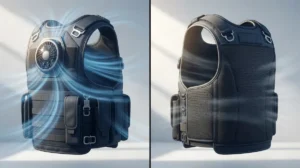
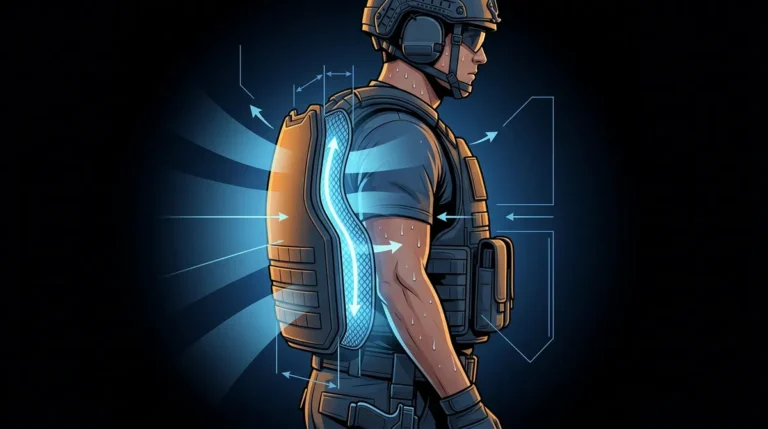
Ventilation vests create an air gap between armor and skin, reducing heat buildup that causes reduced focus, heat exhaustion, and dangerous medical emergencies for professionals wearing body armor daily.
-
BluHalo inflatable vest weighs under 7 oz, lifts armor 1.5 inches off body when inflated, deflates flat for low-profile use, and costs $60 — making it an affordable entry point for heat stress relief.
-
BluFano active fan system provides continuous cooling for 8-32 hours on a single charge, includes USB charging capability, and works in extreme heat or stationary situations where passive airflow is insufficient.
-
Choose passive ventilation (mesh, foam, or rigid frames under 3.3 oz) for moderate temperatures and active duty, or active fan systems for high-heat extended shifts — combining both approaches maximizes cooling performance.
-
Ventilation vests must maintain at least 0.75 inches of airflow separation and work with your specific vest type (concealable, plate carrier, or duty vest) without compromising armor fit or protective coverage.
-
Over 250,000 police officers, soldiers, and security professionals already use ventilation vests successfully, with users reporting better focus, less fatigue, and improved performance during 12+ hour shifts in extreme heat.
If you wear body armor every day, you know the feeling all too well. The heat builds up fast. Sweat soaks through your clothes. After a few hours, it becomes hard to focus on anything except how uncomfortable you are. A ventilation vest for body armor can change all of that. It creates a gap between your skin and your armor, letting air flow freely and keeping you cooler, drier, and more alert throughout your shift.
Whether you’re a police officer on patrol, a soldier on deployment, or a security professional working long hours, heat stress is a real and serious problem. The good news? There are proven solutions available in 2026 that work. This guide breaks down everything you need to know about ventilation vests for body armor — how they work, what to look for, and which options are worth your attention.

Why Heat Buildup Under Body Armor Is a Serious Problem
Body armor is designed to protect you. But it also traps heat and moisture against your body. The OSHA Heat Stress Guide explains that heat buildup can lead to reduced focus, heat exhaustion, and even dangerous medical emergencies. For professionals who already face high-pressure situations, that added physical stress is the last thing you need.
When armor sits directly against your body, it blocks natural airflow. Sweat can’t evaporate. Your core temperature rises. Over time, this fatigue creeps into your performance. A ventilation vest solves this by lifting the armor slightly off your body and letting air circulate underneath. It’s a simple idea with a big impact.
How a Ventilation Vest for Body Armor Works
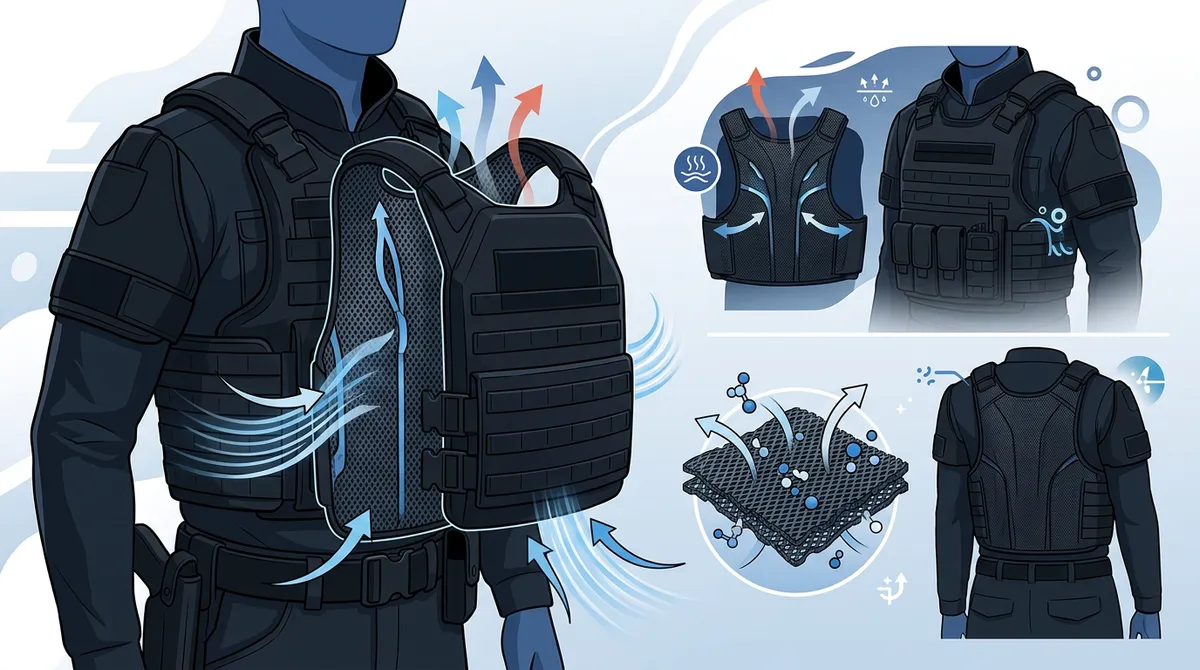
Most ventilation vests use one of two main approaches: passive airflow or active fan-driven cooling. Here’s a quick breakdown of each:
- Passive vests use spacer materials, mesh panels, or rigid frames to create a physical gap between the armor and your torso.
- Active systems use small battery-powered fans to push or pull air through that gap for continuous cooling relief.
- Hybrid options combine a lightweight vest or frame with a fan attachment for flexible, on-demand cooling.
- Inflatable designs like the BluHalo ventilation vest can be inflated to lift the armor up to 1.5 inches off the body, then deflated flat when not needed.
All of these designs share the same goal: keep hot, humid air from getting trapped against your skin. The method you choose depends on your work environment, how long your shifts are, and how much weight you can add to your kit.
Top Ventilation Vest Options Compared
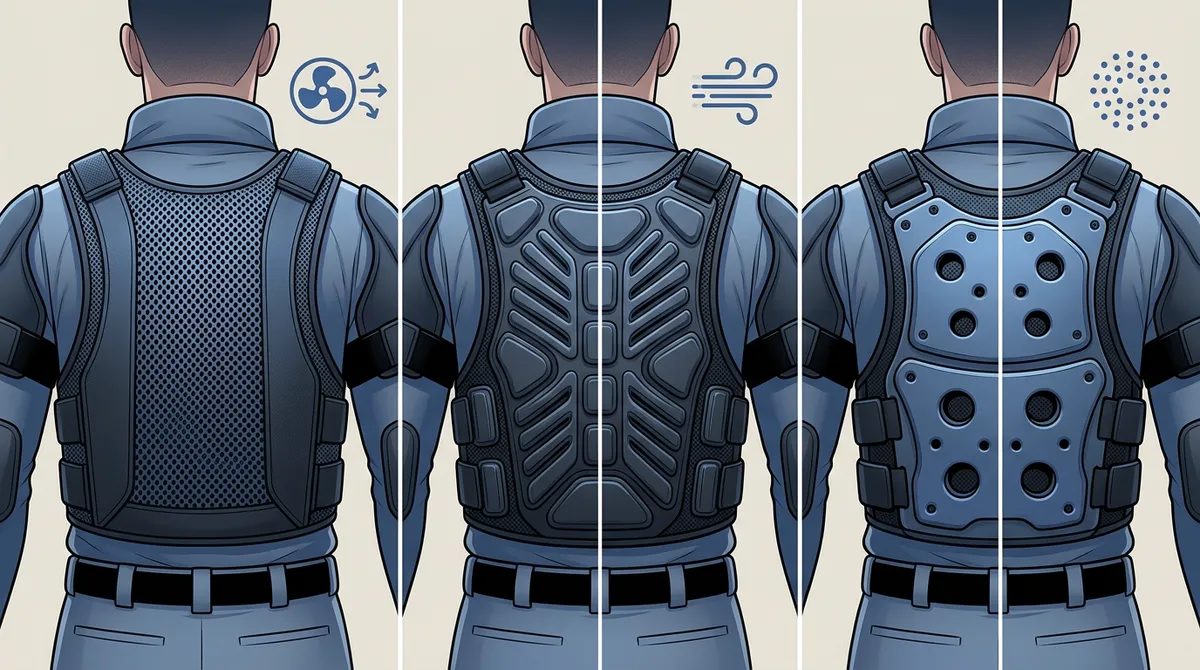
There are several solid products on the market in 2026. Here’s a side-by-side look at some of the most popular options:
| Product | Type | Weight | Key Feature | Best For |
|---|---|---|---|---|
| BluHalo | Inflatable vest | Under 7 oz | Cooling-on-demand, 1.5-inch air gap | Law enforcement, daily patrol |
| BluFano | Active fan system | Compact unit | 8–32 hr battery, USB power bank, built-in light | Long shifts, high-heat environments |
| Maxx-Dri Vest 4.0 | Passive mesh vest | ~9 oz | 360-degree airflow separation | All-day wearers, military and police |
| ICEVENTS® Panels | Foam/mesh panels | Under 1 oz | 90% air volume, antimicrobial | Minimalist setups, plate carriers |
| Vaucluse Frame | Rigid HDPE frame | 3.3 oz | 0.75-inch airflow gap, recyclable | Tactical, airsoft, paintball |
As you can see, each option has its strengths. The right choice depends on your specific needs. If you want a flexible, low-profile option with on-demand cooling, the BluHalo is hard to beat. If you need continuous active airflow for hours at a time, the BluFano fan system is a next-level upgrade worth exploring.

BluHalo: Cooling-On-Demand for Everyday Heroes
BluHalo was created by a Chicago police officer who got tired of overheating on long shifts. That real-world experience shows in the design. The vest weighs under 7 ounces, sits completely flat when deflated, and lifts your armor up to 1.5 inches off your body when inflated. That gap allows fresh air to circulate freely under your vest.
Attaching it is easy. You secure it to your vest with Velcro, inflate with a small pump, and deflate with the press of a button when you need a lower profile. It’s built from double-layer high-strength polyethylene, so it can handle the demands of daily duty use. Officers who’ve used it in 95-degree weather during 12-hour shifts describe it as a game changer. You can check it out in the shop — it’s priced at just $60.00.
BluFano: Active Fan Cooling for Extended Missions
For professionals who need continuous cooling over long periods, the BluFano takes things further. It’s a self-contained active airflow unit with a patented air-redirect spout that slides under any style of body armor. A control knob lets you adjust the fan speed, and the built-in 10,000mAh power bank can run the fan for 8 to 32 hours depending on the setting.
It also doubles as a USB charger for your devices and includes a forward-facing light for hands-free illumination. Users report faster cooling when combined with vehicle AC, less sweat, and sharper focus throughout their shifts. You can buy BluHalo and BluFano together as a bundle for maximum cooling performance under your gear.
Key Features to Look for in a Ventilation Vest
Not all ventilation vests are created equal. Here are the most important features to consider before you buy:
- Airflow design — Does it create a meaningful gap between armor and skin? Look for at least 0.75 inches of separation.
- Weight — Every ounce counts when you’re already carrying gear. Lighter is better, especially for all-day wear.
- Compatibility — Make sure it works with your specific vest type, whether that’s a concealable ballistic vest, a plate carrier, or a duty vest.
- Battery life (for active systems) — If you choose a fan-driven option, confirm the battery lasts through your full shift.
- Ease of use — You should be able to put it on, adjust it, and take it off quickly without fuss.
It’s also worth noting that the Body Armor Standards from the National Institute of Justice focus on protection levels — your ventilation solution should never compromise the integrity or fit of your armor.
Passive vs. Active Cooling: Which Is Right for You?
| Factor | Passive Ventilation | Active Fan-Driven Cooling |
|---|---|---|
| Weight | Very light (under 3.3 oz for frames) | Slightly heavier (includes battery/fan) |
| Cooling power | Good in mild heat with movement | Excellent even in extreme heat or stillness |
| Battery required | No | Yes (up to 32 hours on low setting) |
| Noise level | Silent | Minimal fan noise |
| Best environment | Moderate temps, active duty | High heat, long shifts, low-movement situations |
| Cost | Lower | Moderate to higher |
In most real-world scenarios, a combination of both works best. Start with a passive layer like BluHalo for baseline airflow, then add an active system like BluFano for those especially demanding days. You can learn more about both solutions at vestventilation.com.
Who Benefits Most from a Ventilation Vest for Body Armor?
The short answer: anyone who wears body armor regularly. But let’s be specific about who stands to gain the most:
- Police officers on patrol in hot climates or during summer months
- Military personnel in desert or tropical deployment environments
- Security professionals working long outdoor shifts at events or facilities
- SWAT and tactical teams who wear heavy plate carriers during high-intensity operations
- Emergency responders in protective gear who face heat stress as an occupational hazard
Over 250,000 police officers, soldiers, and security operators already use products like the Maxx-Dri Vest daily. That number continues to grow as awareness of heat stress risks increases. The demand for smarter, lighter, more effective cooling solutions has never been higher.
Do Ventilation Vests Work in Cold Weather Too?
This is a great question that many people overlook. The answer is yes — with some nuance. In cooler weather, ventilation vests with passive mesh designs allow you to regulate airflow simply by adjusting your outer layers. Inflatable designs like BluHalo can be partially deflated for minimal airflow, keeping the vest comfortable without overcooling.
Active fan systems like BluFano give you full control through the fan speed knob. On cooler days, you can turn the fan down or off entirely, while still benefiting from the slight separation the unit creates. This makes ventilation vests a year-round investment, not just a summer solution. You can read honest feedback from real users on the BluHalo reviews page.
How to Get Started with Ventilation for Your Vest
Getting started is easier than you might think. Here’s a simple process to follow:
- Assess your current discomfort. How many hours do you wear your vest? How hot does your work environment get? This helps you choose between passive and active options.
- Check vest compatibility. Most ventilation solutions work with standard duty vests and plate carriers, but double-check before purchasing.
- Start with a passive option. If you’re new to vest ventilation, a lightweight inflatable like BluHalo is a great starting point — low cost, low profile, big impact.
- Add active cooling if needed. If passive ventilation isn’t enough for your shift length or climate, upgrade with a BluFano fan unit.
- Watch real-world demos. Check out the BluHalo videos page to see how these products work in action before you commit.
If you have specific questions about which setup is right for your situation, don’t hesitate to reach out to the BluHalo team — they’re helpful, knowledgeable, and happy to point you in the right direction.
What Real Users Are Saying
The feedback from professionals who use these products speaks for itself. Officers describe surviving 12-hour shifts in 95-degree heat without the usual sweat-soaked misery. Soldiers report better focus and less fatigue during extended operations. Security professionals say they feel sharper and more alert during late-night shifts when temperatures are high.
More than 250,000 users rely on ventilation products daily. That kind of adoption doesn’t happen by accident — it happens because these solutions actually work. You can explore more detailed feedback on the about page to understand the story behind these products.
Final Thoughts
A ventilation vest for body armor isn’t a luxury. For anyone who wears protective gear professionally, it’s a tool that directly affects your safety, your focus, and your ability to do your job well. Heat and sweat are distractions you don’t need when your attention needs to be on the job in front of you.
Whether you go with a passive mesh design, an inflatable system like BluHalo, or a powerful fan-driven unit like BluFano, you’re making an investment in your own comfort and performance. The technology is affordable, lightweight, and proven. There’s no good reason to keep suffering through another hot shift when the solution is this accessible.
Ready to find the right cooling solution for your gear? Get in touch with the BluHalo team today — they’ll help you find the perfect fit for your needs and make your next shift a whole lot more comfortable.
FAQs
Q: What is the best ventilation vest for body armor in 2026?
A: It really depends on your needs! For a lightweight, on-demand option, the BluHalo inflatable vest is a fantastic choice at under 7 oz and just $60. If you need continuous active cooling for long shifts, the BluFano fan system runs for up to 32 hours and even charges your devices — a serious upgrade for high-heat environments.
Q: Will a ventilation vest affect how my body armor fits or protects me?
A: Great question — and an important one! A properly designed ventilation vest should not compromise your armor’s protective coverage. Products like BluHalo create a small air gap without shifting your vest out of its protective position. Always check that your armor still sits correctly after adding any ventilation layer.
Q: Can I use a ventilation vest for body armor with a concealable vest?
A: Yes, many ventilation vests and systems are designed to work with concealable ballistic vests as well as external plate carriers. The BluHalo, for example, attaches with Velcro and sits flat when deflated, making it very discreet under a concealable vest. Just make sure the added layer doesn’t affect the outer garment’s fit.
Q: How much does a good ventilation vest for body armor cost?
A: You don’t have to break the bank to stay cool! Entry-level options like simple mesh panels can cost under $30, while mid-range inflatable vests like BluHalo are $60. Active fan systems like BluFano cost more but offer premium, long-lasting cooling that many professionals find well worth the investment for daily duty use.
Q: Do ventilation vests for body armor work in hot and humid climates?
A: Absolutely — in fact, that’s where they shine the most! Humid environments are especially tough because sweat can’t evaporate naturally. Ventilation vests create airflow that helps moisture escape, reducing that sticky, overheated feeling. Active fan systems like BluFano are particularly effective in humid conditions because they actively move air rather than relying on natural convection.