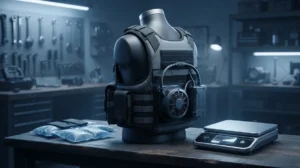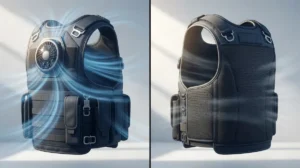
Key Takeaways
-
Active fan-driven systems like BluFano (8-32 hour battery life) significantly outperform passive ventilation for high-heat or long-shift scenarios, making them essential for law enforcement and tactical professionals working extended hours.
-
Ventilation vests that create an air gap between armor and body (e.g., BluHalo at under 7oz) offer on-demand, lightweight cooling without batteries—ideal for all-day patrol comfort and compatibility with both concealed and external carriers.
-
EVAP technology combining convection, evaporation, and active airflow reduces sweat buildup, odor, and heat rash risk more effectively than single-method cooling—representing the latest 2026 innovation in plate carrier cooling.
-
Combination cooling solutions pairing ventilation vests with active fans deliver maximum protection; professionals should assess shift length, environment temperature, and armor type before choosing between passive, active, or hybrid systems.
-
Phase-change cooling plates (ICEPLATE®, Bone Chiller) provide up to 5 hours of intense cooling for short tactical missions but require freezing prep and are heavier, making them best for missions under 6 hours rather than all-day wear.
-
Pre-cooling plates, staying hydrated, wearing moisture-wicking base layers, and maintaining anti-microbial ventilation gear are critical practices that maximize cooling system effectiveness and prevent heat-related performance degradation.
If you wear a plate carrier for work, you already know the struggle. Heat builds up fast. Sweat soaks through your uniform. Your focus starts to slip. After a few hours, staying sharp feels like a real battle — and the weather hasn’t even started helping. The good news? In 2026, the best cooling systems for plate carriers are better than ever, and choosing the right one can completely change how you feel on shift.
Whether you’re in law enforcement, the military, security, or emergency response, this guide breaks down your best options. We’ll walk you through how each system works, what makes one better than another, and — most importantly — how to pick the right fit for your daily mission. Let’s dive in.
Why Cooling Matters More Than You Think
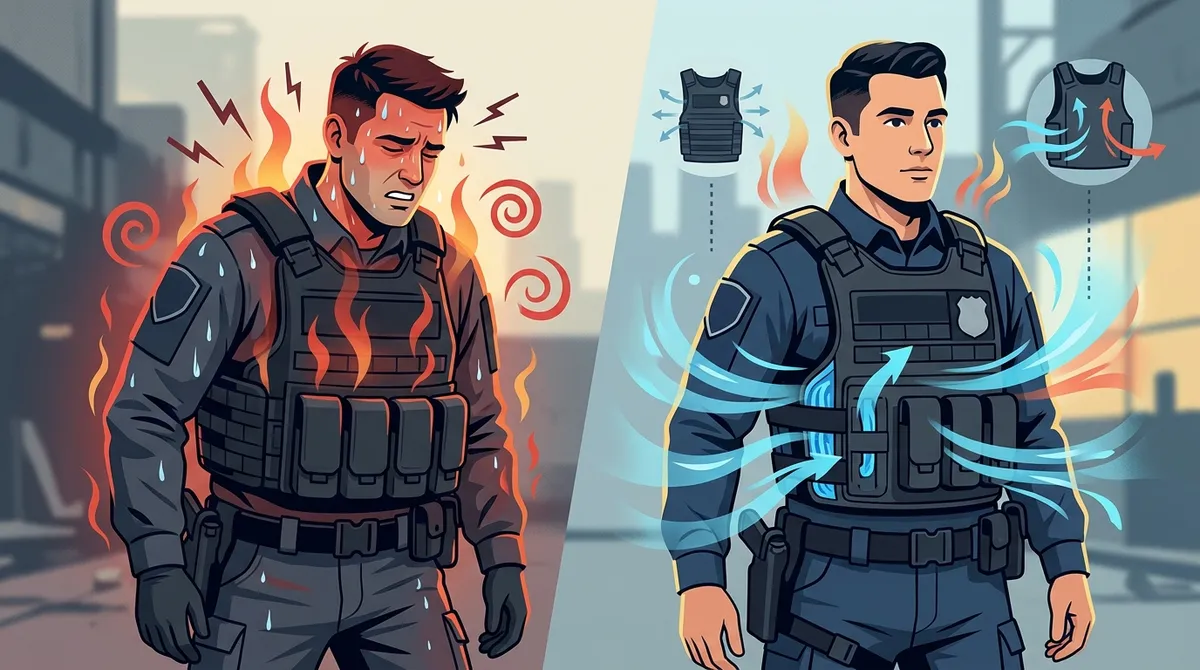
Body armor traps heat against your body like a blanket you can’t take off. The OSHA Heat Stress Guide makes it clear that working in hot conditions with heavy gear puts you at real risk for heat exhaustion and even heat stroke. For professionals who wear plate carriers every day, this isn’t just discomfort — it’s a safety issue.
The problem is simple: your plate carrier blocks natural airflow. Heat and moisture get stuck between the armor and your body with nowhere to go. Over time, this causes fatigue, irritation, and a dangerous drop in performance. That’s why preventing heat stress while wearing body armor should be a top priority for anyone gearing up daily.
The Three Main Types of Cooling Systems
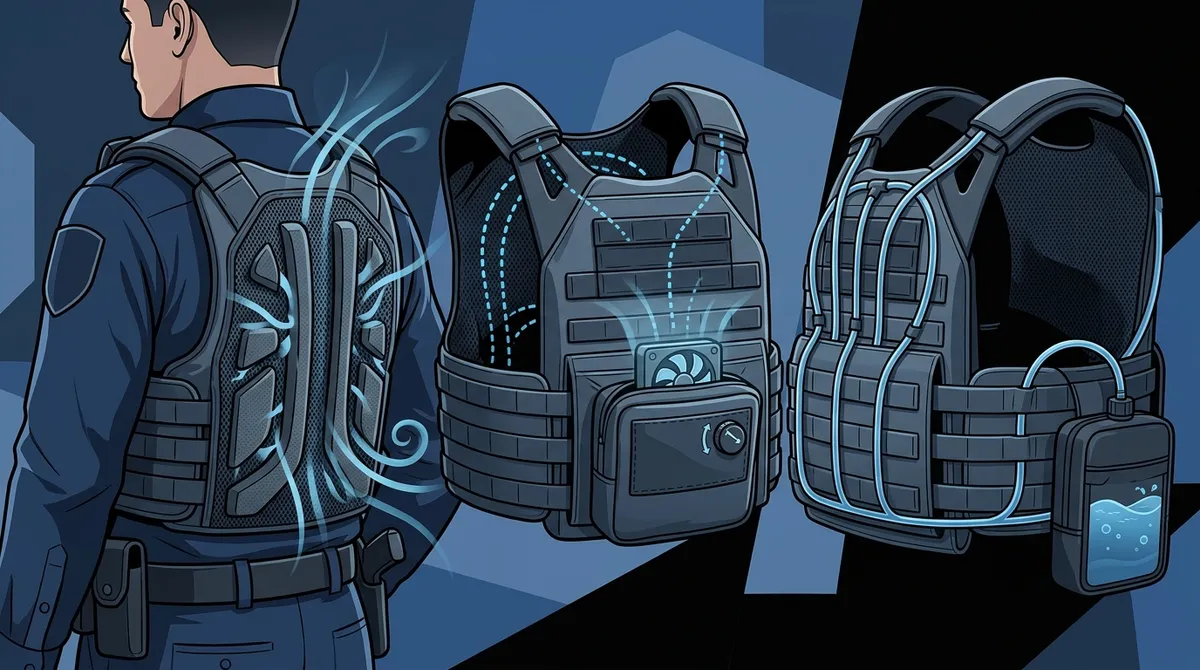
Before picking a system, it helps to understand what’s out there. There are three core categories of cooling solutions for plate carriers, and each one works differently.
1. Passive Ventilation Systems
Passive systems don’t use power. Instead, they create space between your body and your armor using 3D mesh liners, foam channels, or structured materials. This space allows natural airflow to move through as you walk or move.
Passive ventilation is low maintenance and lightweight. It’s a solid entry-level option for cooler climates or shorter shifts. However, on hot days or during intense activity, passive systems alone often aren’t enough. Check out the full breakdown at Passive vs. Active Tactical Vest Ventilation to see how these options compare side by side.
2. Active Fan-Driven Cooling Systems
Active systems use small fans to push fresh air under your plate carrier. These are far more effective than passive systems, especially in high-heat situations. They actively move air across your skin, which speeds up evaporation and pulls heat away from your body.
The BluFano fan system is one of the best examples of active cooling done right. It features a patented air-redirect spout that slides under any style of body armor. With a built-in 10,000mAh power bank, it runs for 8 to 32 hours depending on your fan setting. It even has a forward-facing light for low-light situations — a great bonus for tactical professionals. Learn how active cooling systems work inside ventilation vests to better understand the technology behind these powerful tools.
3. Conductive and Phase-Change Cooling
These systems use materials like ice packs or phase-change inserts to absorb heat directly from your body. Products like the ICEPLATE® Curve and Bone Chiller cooling plates fall into this category. They’re highly effective for short-duration missions, with some providing up to 5 hours of cooling relief at around 70°F ambient temperature.
The trade-off? They’re heavier and require prep time (like freezing). They also need to be replaced or refrozen during longer shifts. For a deeper look at options like these, visit Ventilation vs. Phase Change: Which Cooling Vest Wins?

Comparing the Best Cooling Systems for Plate Carriers
Here’s a quick comparison to help you make a smarter decision at a glance:
| Cooling System Type | How It Works | Duration | Best For | Power Required? |
|---|---|---|---|---|
| Passive Mesh Ventilation | Creates airspace for natural airflow | Continuous (no power) | Mild heat, short shifts | No |
| Active Fan Systems (e.g., BluFano) | Fan-driven airflow under armor | 8–32 hours | Long shifts, high-heat ops | Yes (battery) |
| Conductive Cooling (ICEPLATE®) | Ice or frozen inserts absorb heat | ~140+ watts when frozen | Short missions, tactical ops | No |
| Phase-Change Plates (Bone Chiller) | Material absorbs body heat | ~5 hours at 70°F | Patrol, standard shifts | No |
| Ventilation Vests (e.g., BluHalo) | Inflatable gap creation + airflow boost | On-demand, all shift | Daily duty, all climates | No (manual inflate) |
What Makes a Ventilation Vest a Smart Choice
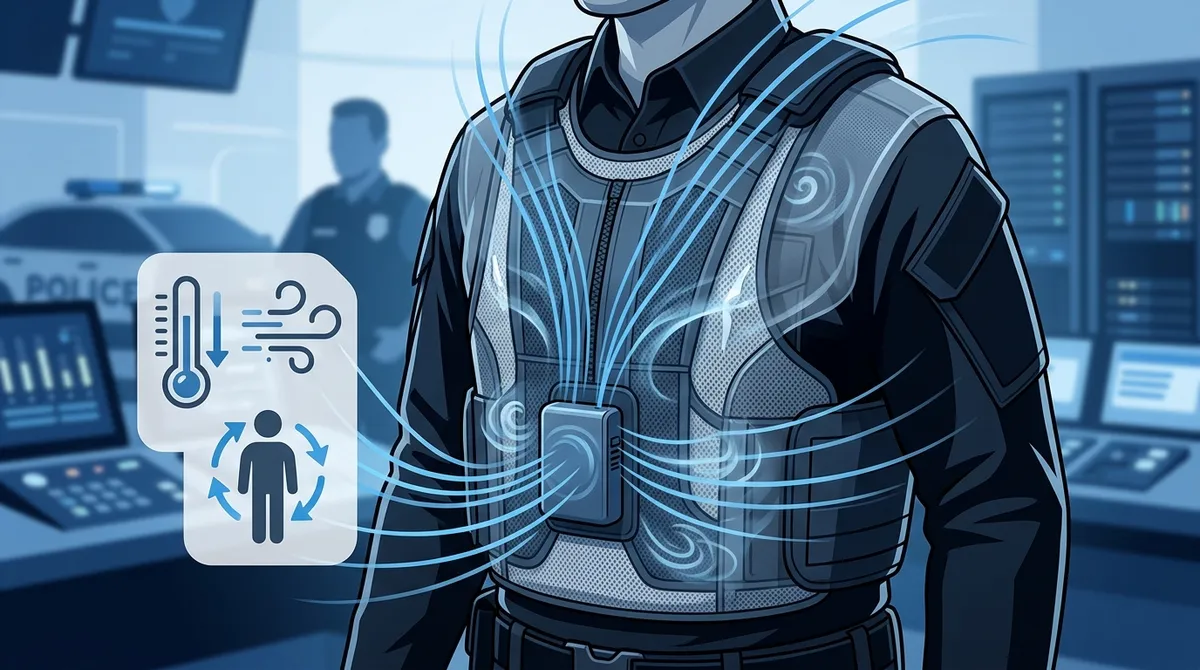
A ventilation vest sits between your body and your plate carrier. It creates a gap that lifts your armor off your skin, allowing air to move freely. This is the foundation of vest ventilation technology, and it’s one of the most practical solutions available today.
The BluHalo ventilation vest was actually invented by a Chicago police officer who was tired of overheating on long shifts. It weighs under 7 ounces, attaches with Velcro, and inflates on demand to lift your armor up to 1.5 inches off your body. When you don’t need it, press a button and it deflates flat. That’s comfort you can control, right when you need it.
Modern ventilation vests like BluHalo also feature anti-microbial properties and high-grip technology to keep the vest from shifting under your plate carrier. For professionals who need all-day comfort, this is a huge deal. Learn more about the details at how to use the BluHalo ventilation vest for maximum comfort.
Key Features to Look for in a Plate Carrier Cooling System
Not all cooling systems are built the same. Here’s what to look for when shopping for the best option:
- Compatibility: Does it work with your specific plate carrier — concealed or external?
- Battery life or duration: How long will it keep you cool on a full shift?
- Weight: Every ounce counts. Look for lightweight designs that don’t add burden.
- Ease of use: Can you adjust or activate it quickly without removing your armor?
- Moisture management: Does it wick sweat away and help prevent heat rash?
- Durability: Will it hold up to daily tactical use in demanding environments?
The guide to choosing the right body armor ventilation vest in 2026 goes deeper on each of these factors if you want a full breakdown before buying.
Cooling System Performance by Profession
Different jobs have different needs. Here’s a simple breakdown of which cooling solution tends to work best for each type of professional:
| Profession | Top Cooling Priority | Recommended System |
|---|---|---|
| Law Enforcement / Patrol Officers | All-day comfort on patrol | BluHalo + BluFano combo |
| Military / Deployed Personnel | Sustained cooling in extreme heat | Active fan + conductive hybrid |
| SWAT / Tactical Teams | Performance during high-intensity ops | Active fan systems (BluFano) |
| Security Professionals | Low-profile, long-duration relief | Ventilation vest (BluHalo) |
| Emergency Responders | Heat prevention in extreme environments | Combination passive + active system |
How to Choose the Right Cooling System Step by Step
Ready to make your decision? Follow these steps to find the best cooling system for your plate carrier setup:
- Assess your environment. Are you working in extreme summer heat, moderate climates, or variable conditions? High heat demands active or combination cooling.
- Check your shift length. Shifts under 6 hours may work fine with phase-change cooling. Longer shifts need active or ventilation-based systems that last all day.
- Consider your armor type. Some systems slide under concealable vests; others attach to tactical plate carriers. Make sure your chosen system is compatible before buying.
- Decide on power source preference. Fan-driven systems need charging. If that’s a concern, a passive ventilation vest like BluHalo gives you on-demand cooling without a battery.
- Factor in weight limits. Military and SWAT operators often have strict weight requirements. Look for ultra-lightweight options that won’t compromise your loadout.
- Think about combination solutions. Pairing a ventilation vest with an active fan system gives you the most complete cooling coverage. Many professionals bundle BluHalo and BluFano together for maximum results.
For more guidance, check out how to choose the best ballistic vest cooling solution for a complete look at making the smartest purchase for your situation.
EVAP Technology and What It Means for You
One of the most exciting developments in 2026 is patent-pending EVAP (Enhanced Ventilation and Airflow Performance) technology. This system combines three cooling mechanisms at once: convection, evaporation, and active air movement. The result is significantly more effective cooling than any single method can provide on its own.
EVAP-based designs use vertical air channels with horizontal vent holes to force moisture upward and out from under your armor. This reduces sweat buildup, cuts down on odor, and dramatically lowers your risk of heat rash. It’s the kind of innovation that’s raising the bar for what the best plate carrier ventilation solutions can actually do.
You can also review the latest Body Armor Standards from the National Institute of Justice to understand how gear compatibility and safety requirements affect which cooling add-ons are approved for duty use.
Cooling System Specs at a Glance
| Product / System | Cooling Output / Capacity | Weight | Duration | Unique Feature |
|---|---|---|---|---|
| BluHalo Ventilation Vest | Up to 1.5″ armor lift for airflow gap | Under 7 oz | On-demand, all shift | Inflatable on-demand design |
| BluFano Fan System | Adjustable fan-driven airflow | Compact unit | 8–32 hours | 10,000mAh power bank + light |
| ICEPLATE® Curve | 140+ watts when frozen | Under 12 oz empty | Mission duration | Dual hydration + cooling function |
| Bone Chiller Cooling Plate | Sustained cooling relief | Standard plate weight | ~5 hours at 70°F | Fits standard plate carrier pockets |
Pro Tips for Getting the Most From Your Cooling System
- Pre-cool before your shift. If you use conductive cooling, freeze your plates overnight for maximum effectiveness from the moment you suit up.
- Stay hydrated. No cooling system replaces proper hydration. Drink water consistently throughout your shift to support your body’s natural cooling process.
- Layer smart. Wear a moisture-wicking base layer under your ventilation vest to help pull sweat away from your skin before it builds up.
- Maintain your gear. Clean your ventilation vest regularly to preserve anti-microbial properties and keep airflow channels clear.
- Use your vehicle’s AC strategically. BluFano users report that running the fan while near an AC vent dramatically speeds up cooling between calls or during breaks.
For even more expert tips, explore 9 body armor fit and airflow tips for all-day comfort and 7 proven ways to cool down in a plate carrier fast.
Conclusion
Finding the best cooling systems for plate carriers doesn’t have to be complicated. Start with your environment, your shift length, and your comfort priorities — then match those to the right technology. Whether you go with a passive ventilation approach, an active fan system, or a combination of both, the goal is the same: stay cool, stay focused, and stay safe.
If you’re ready to take your comfort to the next level, the BluHalo and BluFano product lineup is a great place to start. These were designed by professionals who know exactly what it feels like to overheat in body armor — and who were motivated enough to do something about it. Don’t let heat slow you down. Reach out to the BluHalo team today and find the cooling solution that’s right for your mission.
FAQs
Q: What is the difference between active and passive cooling systems for plate carriers?
A: Passive cooling systems use materials like 3D mesh or foam channels to create natural airflow without any power source — great for milder conditions and shorter shifts. Active cooling systems use battery-powered fans (like the BluFano) to actively push fresh air under your armor, making them far more effective during long shifts or in extreme heat. Think of passive as a breeze and active as your own personal air conditioner under your vest!
Q: Can ventilation cooling systems be used with both concealed and external plate carriers?
A: Yes! Most quality ventilation systems — including the BluHalo ventilation vest — are designed to be compatible with both concealed body armor and external plate carriers. The key is to choose a slim, low-profile system that doesn’t add bulk or interfere with how your armor fits and functions. Always check the product specs to confirm compatibility with your specific carrier style.
Q: Do cooling systems for plate carriers really help prevent heat-related injuries?
A: Absolutely — and this is important! Prolonged heat exposure under body armor is a real risk for law enforcement, military, and security professionals. Cooling systems that improve airflow, reduce sweat buildup, and lower skin temperature can significantly reduce the risk of heat exhaustion and heat stress. Pairing a good cooling system with proper hydration gives you the best protection on hot shifts.
Q: How long does an active fan cooling system like BluFano last during a shift?
A: The BluFano fan system can run for anywhere between 8 and 32 hours of continuous operation, depending on which fan speed setting you use. Its built-in 10,000mAh power bank powers the fan and can even charge other USB devices — making it a versatile tool for long shifts. For most patrol officers and security professionals, a single charge easily covers a full day’s work.
Q: What is the best cooling system for high-intensity tactical operations?
A: For high-intensity missions where performance is critical, an active fan-driven system like BluFano is your best bet thanks to its continuous airflow and long battery life. For shorter operations in extreme heat, combining a ventilation vest (like BluHalo) with a conductive cooling plate can deliver powerful results quickly. Many tactical teams use a combination approach to cover all their bases.