Key Takeaways
-
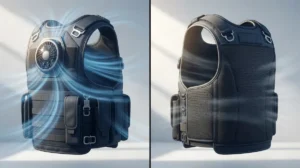
Active cooling devices (fan-driven or inflatable) significantly outperform passive options in extreme heat and stationary conditions, with systems like Blufano offering 8-32 hours of runtime and BluHalo providing on-demand 1.5-inch air gaps.
-
Excessive heat under body armor impairs judgment and reaction time according to OSHA guidelines, making cooling devices critical safety equipment for law enforcement and military personnel on long shifts.
-
Passive cooling devices like Maxx-Dri 4.0 reduce surface temperatures by 23°F without batteries or maintenance, making them ideal for moderate climates and officers seeking low-profile, lightweight solutions.
-
BluHalo’s inflatable design weighs under 7 ounces and deflates flat for discretion, while Blufano adds a 10,000mAh power bank and built-in light, offering different advantages for various duty roles.
-
When selecting a cooling device, prioritize airflow performance (test data), vest compatibility, weight under 7 ounces, one-handed operability, and battery life matching your shift duration.
-
Active cooling devices are essential for patrol officers working 12+ hour shifts in 95°F+ heat, while passive devices suffice for moderate climates and officers prioritizing simplicity and zero maintenance.
If you wear body armor for a living, you already know the feeling. It’s hot, sweaty, and uncomfortable — especially during long shifts in warm weather. Heat builds up fast under a bulletproof vest, and there’s nowhere for it to go. That’s why body armor cooling devices have become so popular among law enforcement, military personnel, and security professionals in 2026.
But here’s the thing — not all cooling devices work the same way. Some use passive airflow. Others use active fan systems. Choosing the wrong one means you’re still sweating through your shift and losing focus when it matters most. So let’s break it all down and figure out which type of body armor cooling device actually delivers results for people who need it most.
According to the OSHA Heat Stress Guide, excessive heat exposure impairs judgment, slows reaction time, and increases the risk of serious health events — all risks that can be life-threatening for officers and soldiers in the field.
What Is a Body Armor Cooling Device?
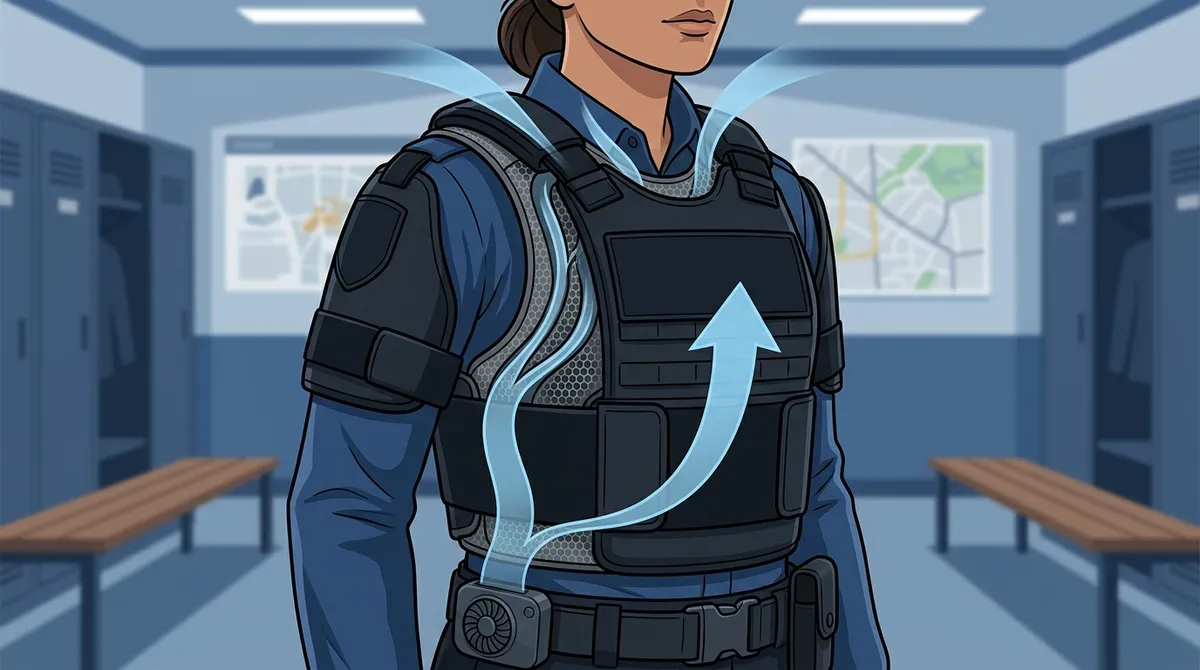
A body armor cooling device is any accessory worn under or with a ballistic vest to reduce trapped heat and sweat. These products don’t make your armor stronger. Instead, they focus on one job: keeping you more comfortable so you can stay focused and safe. You can learn more about the basics in this helpful guide on what body armor vent is and why you need one.
There are two main categories of body armor cooling devices:
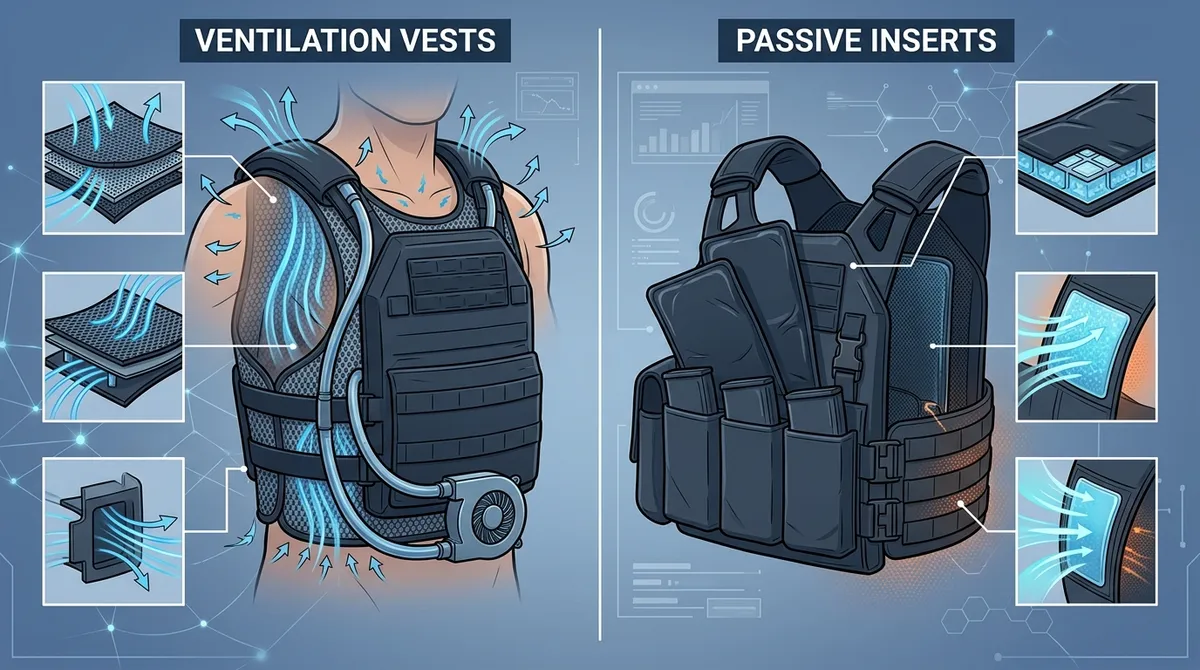
- Passive cooling devices — These include mesh inserts, 3D polymer spacers, and ventilation channels that create a gap between your body and the armor to allow airflow.
- Active cooling devices — These use fans, air pumps, or inflatable chambers to actively move air beneath your vest for ongoing cooling relief.
Both types aim to solve the same problem. But they go about it in very different ways. Let’s look at the most popular products on the market and see how they stack up in a real body armor cooling device review.
Popular Body Armor Cooling Devices Compared
Here’s a quick overview of the most talked-about products in 2026, including both passive and active options:
| Product | Type | Key Feature | Best For |
|---|---|---|---|
| BluHalo Ventilation Vest | Active (inflatable) | Creates up to 1.5″ air gap on demand | Law enforcement, long shifts |
| Blufano Fan System | Active (fan-driven) | 8–32 hours of fan airflow, 10,000mAh power bank | Daily duty use, military, security |
| Maxx-Dri 4.0 | Passive (3D mesh) | Redesigned polymer spacing, surface temp 23°F cooler | Officers wanting a no-charge solution |
| Body Armor Vent (EVAP) | Passive (channels) | Vertical air channels, evaporation-based cooling | Hot climate patrols |
| Armadillo Dry | Passive (mesh vest) | Mesh fabric reduces sweat and odor | Comfort-focused wearers |
As you can see, the field is diverse. But the real question in any body armor cooling device review is: does it actually work in the real world? Let’s go deeper into each category.
Passive Cooling Devices: What You Need to Know
Passive devices have been around the longest. They work by creating physical separation between your body and the armor plate or carrier. This small gap allows air to naturally circulate, which helps sweat evaporate and reduces surface temperature.
The Maxx-Dri 4.0 is one of the most well-known passive options. Its redesigned 3D polymer structure creates a standoff layer under your carrier. According to the manufacturer, medical testing found the Maxx-Dri material produced surface temperatures 23°F cooler than a control group. That’s impressive for a completely passive system — no batteries, no charging, no maintenance. You can read more about passive vs. active tactical vest ventilation to understand the trade-offs in more detail.
Body Armor Vent uses their EVAP Technology™, which features vertical air channels to move hot, humid air out and draw cooler air in through breathing and natural body movement. This approach works well when you’re on the move. But if you’re stationed in one spot on a hot day, airflow slows to a trickle.
Here’s a summary of passive cooling pros and cons:
- ✅ No batteries required
- ✅ Lightweight and low profile
- ✅ Compatible with most ballistic vests
- ❌ Performance drops when you’re standing still
- ❌ Cannot move air in high-heat, low-movement conditions
- ❌ Limited cooling in very hot or humid environments
Passive devices are a solid starting point, especially for officers in moderate climates or those looking for a simple, maintenance-free solution. But if you’re working a 12-hour shift in 95°F heat, you may find yourself wanting more. That’s where active cooling devices really shine.
Active Cooling Devices: The Next Level of Comfort
Active cooling devices use mechanical means to move air. This is a game-changer for people who deal with extreme heat on a regular basis. Instead of waiting for your movement to create airflow, active devices bring the airflow to you — whenever you need it.
This category is where BluHalo and Blufano stand out from the crowd. Both products were created specifically for everyday heroes — police officers, soldiers, and security professionals — who need real, reliable cooling throughout their entire shift.
BluHalo Ventilation Vest: On-Demand Cooling Relief
The BluHalo is an inflatable ventilation vest worn under body armor. It weighs under 7 ounces, which means you won’t even notice it’s there. When you need cooling, you inflate it with a small pump to create an air gap of up to 1.5 inches between your body and the armor. That gap is everything — it allows fresh air to circulate where heat and sweat were once completely trapped.
Deflate it in seconds with a single button press, and it lies flat again — totally discreet. The BluHalo is made from double-layer high-strength polyethylene, so it’s built to handle the demands of daily duty. Officers who tested it on 12-hour shifts in summer heat reported significant comfort improvements. You can see real feedback on the BluHalo reviews page from officers describing it as a total game-changer on hot days.
Blufano Fan System: Continuous Airflow, All Shift Long
The Blufano takes active cooling even further. It’s a self-contained fan-driven system with a patented air-redirect spout that slides under any style of body armor. Once secured with the optional strap, you simply adjust the control knob and let the fan do its work. The Blufano runs for 8 to 32 hours on a single charge depending on fan speed — more than enough for even the longest shift.
What makes Blufano especially smart is its built-in 10,000mAh power bank. It powers the fan AND can charge your USB devices at the same time. There’s also a forward-facing light for low-light situations — useful for anyone who works nights or conducts building searches. If you want to compare these two excellent options side by side, check out this detailed BluFano vs. BluHalo comparison guide.
Here are the top reasons active cooling devices outperform passive ones in extreme conditions:
- Consistent airflow — Active devices move air regardless of your movement or the ambient conditions.
- Faster cooling — Fan systems lower skin surface temperature more quickly, especially when used with vehicle AC or nearby ventilation.
- Moisture management — Continuous airflow evaporates sweat before it soaks into your uniform or causes skin irritation.
- Mental performance — Staying cooler means staying sharper. According to Body Armor Standards from the NIJ, comfort and performance are directly linked to officer safety outcomes.
Head-to-Head Feature Comparison
Let’s put the key features of passive and active body armor cooling devices side by side so you can make a quick and informed decision:
| Feature | Passive Devices (e.g., Maxx-Dri) | Active Devices (e.g., BluHalo / Blufano) |
|---|---|---|
| Requires power | No | Yes (battery-powered or manual pump) |
| Cooling when stationary | Limited | Excellent |
| Profile under armor | Low | Very low (especially BluHalo when deflated) |
| Sweat reduction | Moderate | High |
| Compatible with most vests | Yes | Yes |
| Best for extreme heat | Moderate | Yes |
| Ease of use | Very simple | Simple with minor setup |
If you’re still unsure which approach suits your situation best, the guide on how to choose the best ballistic vest cooling solution walks you through every major decision point.
Who Should Choose Which Device?
Different professionals have different needs. Here’s a quick breakdown to help match the right body armor cooling device to the right person:
| Professional Role | Recommended Device Type | Top Pick |
|---|---|---|
| Patrol Officer (daily wear) | Active (inflatable or fan) | BluHalo or Blufano |
| Military (extended missions) | Active (long battery life) | Blufano (8–32hr runtime) |
| Security Guard (outdoor posts) | Active or passive hybrid | BluHalo for flexibility |
| SWAT/Tactical Teams | Active (low profile) | BluHalo (deflates flat) |
| First Responder (EMS/Fire) | Passive or active | Maxx-Dri or BluHalo |
For officers looking for specific guidance on shift-long performance, the article on how to get effective body armor heat relief all shift long is a great read. And if you’re a first responder dealing with extreme conditions, check out how to choose emergency responder gear that keeps you cool.
Key Factors to Look for in Any Body Armor Cooling Device Review
When reading any body armor cooling device review, don’t just look at the marketing claims. Here’s what you should actually evaluate before you buy:
- Airflow performance — Does it actually move air effectively? Look for test data or real-user feedback.
- Fit and compatibility — Does it work with your specific vest or carrier? Most quality products fit most vest styles, but always double-check.
- Weight and profile — A cooling device that adds bulk defeats the purpose. Look for lightweight, low-profile designs like the BluHalo (under 7 oz).
- Ease of use on duty — Can you adjust or operate it with one hand? Is it quiet? Does it require tools? Simplicity matters in the field.
- Battery life (for active devices) — Make sure it lasts as long as your shift. The Blufano runs up to 32 hours, which covers most duty cycles.
Want to dive even deeper? The guide on how to choose the right body armor ventilation vest in 2026 covers every factor in detail. You can also explore the full range of cooling options at the BluHalo shop.
The Verdict: Which Body Armor Cooling Device Wins?
Passive devices like the Maxx-Dri 4.0 are reliable, affordable, and require zero maintenance. If your climate is moderate or you just need a basic comfort boost, they’re worth every penny. The 23°F surface temperature reduction is genuinely impressive for a product with no moving parts.
But if you work long shifts, deal with extreme heat, or simply want the most effective cooling relief available, active devices win every time. The BluHalo and Blufano from BluHalo (Vest Ventilation) lead this category. The BluHalo gives you on-demand cooling with a clever inflatable air gap. The Blufano delivers hours of continuous fan-driven airflow with bonus features like a power bank and built-in light. Together, they form a powerful combination that no passive insert can match. You can even learn how to use the BluHalo ventilation vest for maximum comfort to get the most out of your purchase from day one.
No matter which product you choose, the most important thing is that you take action. Heat stress is real, it affects your performance, and it can be dangerous. You deserve to feel comfortable doing your job. Your safety and focus shouldn’t be compromised by equipment discomfort.
Ready to find the right body armor cooling device for your needs? Reach out to our team — we’re happy to help you find the perfect fit for your role, your vest, and your environment.
FAQs
Q: What is a body armor cooling device?
A: A body armor cooling device is an accessory worn under or with a ballistic vest to reduce trapped heat and sweat. It can be a passive mesh insert that creates an air gap, or an active system like a fan or inflatable vest that actively moves air beneath your armor. Either way, the goal is simple — keep you cooler and more comfortable on duty!
Q: Do body armor cooling vests really work?
A: Yes, they absolutely do! Passive devices like the Maxx-Dri have been shown to reduce surface temperatures by up to 23°F, while active devices like the BluHalo and Blufano deliver continuous airflow that significantly reduces sweating and heat buildup. Real officers have reported major comfort improvements, especially during long, hot shifts.
Q: Which body armor cooling device is best for police officers?
A: For daily patrol use, the BluHalo ventilation vest is a top choice — it’s lightweight (under 7 oz), completely discreet when deflated, and creates a powerful air gap on demand. If you want continuous fan-driven cooling all shift long, the Blufano fan system is a fantastic upgrade that even charges your devices while keeping you cool!
Q: Can you wear a body armor cooling device under a plate carrier?
A: Absolutely! Most quality cooling devices, including the BluHalo and Blufano, are designed to be compatible with virtually all body armor styles, including plate carriers. They’re built to be low-profile and unobtrusive so they don’t interfere with your armor’s fit, protection level, or your range of motion.
Q: What is the difference between a cooling vest and a ventilation insert for body armor?
A: A ventilation insert (like the Maxx-Dri) is a passive spacer that creates an air gap to allow natural airflow under your armor. A cooling vest (like the BluHalo or Blufano) is an active solution that uses inflation or fans to force air circulation regardless of your movement. Active vests generally provide more reliable cooling in extreme heat conditions.