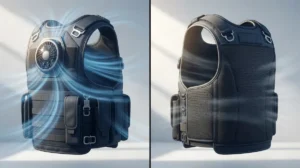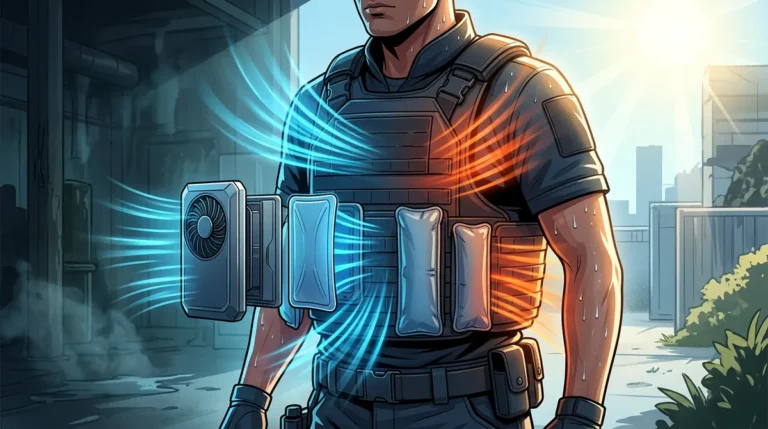
Key Takeaways
-
Heat stress under body armor reduces concentration, slows reaction time, and increases fatigue—making cooling systems critical for high-stakes professionals to maintain performance and safety.
-
Active fan-driven systems like Blufano deliver 8-32 hours of runtime with adjustable airflow, while passive systems like BluHalo weigh under 7 ounces and create on-demand air gaps without battery dependency.
-
BluHalo inflatable vest and Blufano fan system can be retrofit onto existing armor without modifications, and combining both solutions provides layered cooling for varied environmental conditions.
-
Phase-change materials (Thermacore®) and graphene-based systems maintain core body temperature around 99.5°F passively, while ICEPLATE® Curve delivers 140+ watts of active cooling when frozen.
-
Passive ventilation works best during movement, while active fan systems excel in static or humid conditions—choose based on your shift length, work environment, and armor style compatibility.
-
Proper cooling reduces water consumption needs by up to 50% in hot climates and helps prevent heat exhaustion, skin rashes, and dangerous heat stress recognized by OSHA guidelines.
Wearing body armor on a long, hot shift is no joke. Heat builds up fast, sweat soaks through, and before long, you’re distracted and uncomfortable. If you’ve ever finished a 12-hour patrol feeling like you stepped out of a sauna, you know exactly what we mean. The good news? Ballistic vest cooling technology has come a long way, and there are real, effective solutions available right now in 2026.
Whether you’re a patrol officer, a soldier on deployment, or a security professional working outdoor events, managing heat under your vest isn’t just about comfort. It’s about staying sharp, staying safe, and doing your job well. Heat stress is a real occupational hazard, and the OSHA Heat Stress Guide makes it clear that prolonged heat exposure can lead to serious health risks. The right cooling system can make a meaningful difference in your day.
In this guide, we’ll walk you through the main types of ballistic vest cooling solutions, how to pick the right one for your needs, and why investing in proper ventilation under your armor is one of the smartest moves you can make for your health and performance.
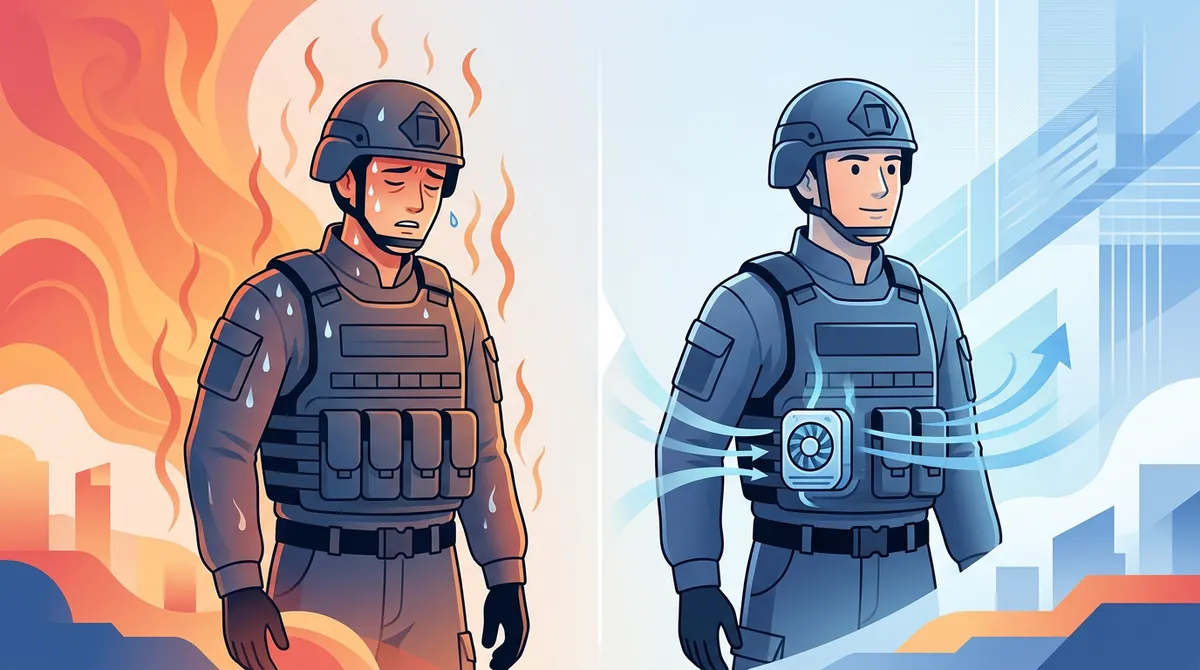
Why Ballistic Vest Cooling Matters
Body armor is built to protect you, but it comes with a trade-off. It traps heat close to your body. Traditional vests leave little to no airspace between the armor and your skin. That means sweat has nowhere to go and heat can’t escape. Over time, this creates a miserable, distracting experience.
The effects go beyond discomfort. Heat stress reduces concentration, slows reaction time, and increases fatigue. For professionals in high-stakes environments, that’s a serious problem. According to Body Armor Standards from the National Institute of Justice, armor must meet rigorous protection standards, but thermal management is increasingly being recognized as a key factor in real-world wearability.
Thankfully, the ventilation vest industry has developed smart, practical solutions to tackle this problem head-on. Let’s look at what’s out there.
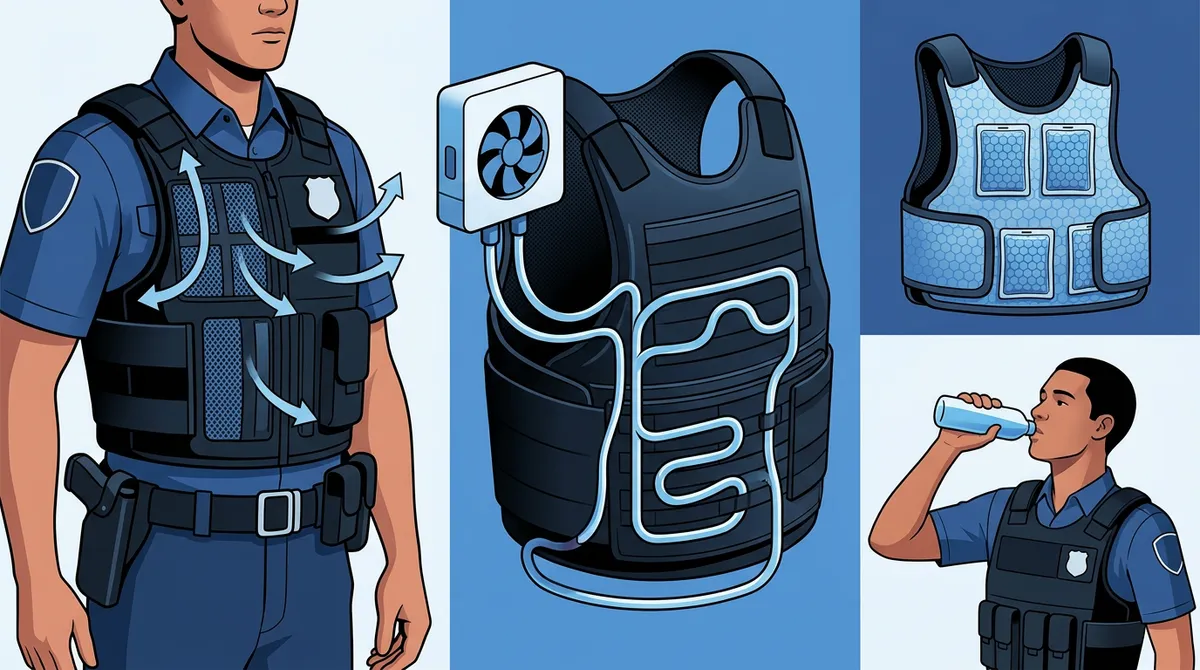
Types of Ballistic Vest Cooling Systems
There are several main categories of cooling technology used with body armor today. Understanding how each one works will help you make the best choice for your situation.
1. Passive Ventilation Systems
Passive systems don’t use power. They rely on airflow channels, mesh linings, and materials that help move heat away from your body naturally. Think of these like a breathable base layer designed specifically to work with your armor.
- Mesh linings: Found in vests like the CoolMAX design, these channel heat away from the skin. The CoolMAX Ballistic Level IIIA vest weighs just 1.76kg total for front and back panels, making it a lightweight option.
- Air channels and foam inserts: Products like the ICE Retro Fit Kit use foam-filled vertical channels and horizontal vent holes to push fresh air in and move sweat out.
- Advanced materials: Graphene, aluminum, and phase-change materials (PCM) are used in systems like Thermacore® to create a “heat highway” that pulls warmth away from your body.
2. Active Fan-Driven Systems
Active systems use battery-powered fans to push or pull air under your armor. These are more powerful than passive options and can provide consistent cooling even when you’re standing still or working in humid conditions.
The Blufano ventilation system is a great example. It’s a self-contained unit with a patented air-redirect spout that slides under any style of body armor. It delivers adjustable fan-driven airflow for 8 to 32 hours depending on the fan setting. It also includes a built-in 10,000mAh power bank so you can charge other devices on the go.
3. Inflatable Air Gap Vests
These are worn under your armor and create a physical gap between your skin and the vest. This gap lets air circulate freely, dramatically reducing heat buildup.
The BluHalo ventilation vest is a standout here. It was created by a Chicago police officer who knew firsthand how miserable long hot shifts could be. The BluHalo weighs under 7 ounces and lifts your vest up to 1.5 inches off your body when inflated, creating a cooling air gap on demand. When you don’t need it, just deflate it with a button and it lies completely flat.
4. Phase-Change and Ice-Based Cooling
Some solutions use frozen materials or phase-change substances to actively pull heat away from your body. The ICEPLATE® Curve, for example, acts as a frozen water bottle shaped to fit like a ballistic plate. When frozen, it delivers 140+ watts of cooling from the front and back plates combined.
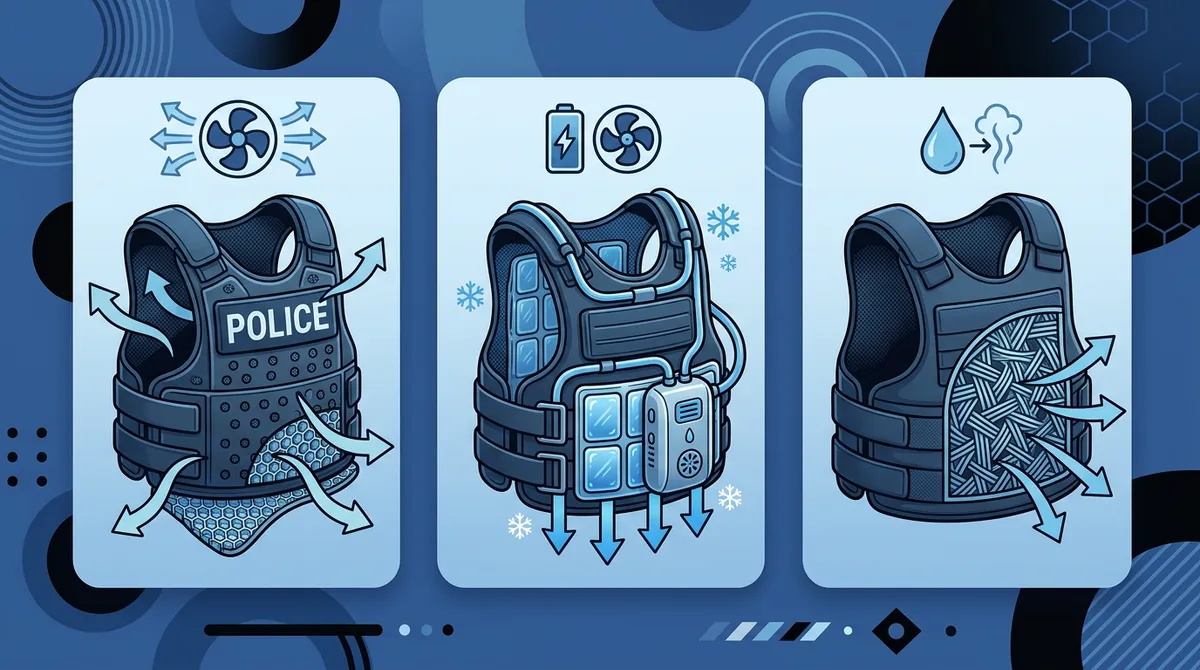
Comparison of Key Ballistic Vest Cooling Technologies
| Technology | Type | Duration | Best For | Weight Impact |
|---|---|---|---|---|
| BluHalo Ventilation Vest | Inflatable air gap | All-day use | Law enforcement, daily wear | Under 7 oz |
| Blufano Fan System | Active fan-driven | 8–32 hours | Security, extended shifts | Compact unit |
| CoolMAX Mesh Lining | Passive ventilation | Continuous | Covert vest wearers | 1.76kg total vest |
| Thermacore® PCM System | Passive material-based | Continuous | High-heat environments | Minimal |
| ICEPLATE® Curve | Ice/phase-change | Hours per freeze | Military, tactical teams | Under 12 oz empty |

How to Choose the Right Cooling Solution for Your Role
Not every cooling solution fits every situation. Here’s a simple step-by-step approach to help you decide what’s right for you.
- Identify your main challenge. Is it excessive sweating, heat rashes, or just general overheating? Knowing your biggest pain point helps narrow down your options.
- Consider your work environment. Are you indoors with AC breaks, or outdoors in full sun for hours? Active systems help more in static or humid conditions. Passive systems work great when you’re moving around.
- Think about your shift length. A 4-hour shift has different demands than a 12-hour one. Battery-powered systems like Blufano offer 8 to 32 hours of runtime, which covers even the longest shifts.
- Check your armor style. Some cooling solutions work under covert vests, while others are designed for plate carriers or modular tactical setups. Make sure the system you choose is compatible with your gear.
- Set your budget. Options range from affordable passive inserts to more advanced powered systems. The BluHalo vest starts at just $60, making it an accessible entry point for anyone looking to improve comfort.
Features to Look For in a Ballistic Vest Cooling System
When you’re shopping around, here are the most important features to consider. Not all products are created equal, so knowing what matters most will save you time and money.
- Airflow consistency: The system should provide steady airflow, not just a quick burst when you first put it on.
- Moisture management: Look for solutions that actively move sweat away from your skin to prevent rashes and odor buildup.
- Low profile: Your cooling system shouldn’t add bulk or make your armor fit differently. The BluHalo lies completely flat when deflated, so you won’t even notice it.
- Durability: Gear used in law enforcement and tactical settings takes a beating. Look for products built from high-strength materials designed for daily duty use.
- Ease of use: If it’s complicated to set up or adjust, you won’t use it. Simple controls and easy attachment systems are a must.
Cooling Performance Comparison by User Type
| User Type | Top Challenge | Recommended Solution | Key Benefit |
|---|---|---|---|
| Patrol Officers | All-day sweat buildup | BluHalo Ventilation Vest | On-demand cooling, ultra-lightweight |
| Military Personnel | Extreme heat in deployment | ICEPLATE® + passive mesh | High wattage cooling + hydration |
| Security Professionals | Long shifts in heat | Blufano Fan System | 8–32hr battery, USB charging |
| SWAT/Tactical Teams | High-intensity ops with heavy armor | Active fan + air gap combo | Consistent airflow under load |
| Emergency Responders | Extreme heat exposure | Phase-change materials + fan | Rapid heat dispersion |
Tips for Getting the Most Out of Your Vest Cooling System
Even the best cooling system works better when you use it right. Here are some practical tips to maximize your comfort on the job.
- Layer smartly: Wear a moisture-wicking base layer under your cooling vest. This helps move sweat away from your skin even faster.
- Stay hydrated: Cooling technology reduces heat stress, but it doesn’t replace water. Drink regularly throughout your shift.
- Use your vehicle’s AC: Many Blufano users report that using the fan system while in a vehicle dramatically speeds up the cooling process during breaks.
- Clean your gear regularly: Sweat and bacteria build up quickly. Regular cleaning prevents odor and extends the life of your cooling system.
- Combine solutions when possible: Pairing a passive system like BluHalo with an active fan like Blufano gives you layered cooling that works in more conditions.
What the Research Says About Vest Cooling in 2026
The science behind ballistic vest cooling has advanced significantly. Thermacore®, developed by Ace Link Armor, won the PCI AW Defence & Security PPE Innovation Award in 2026 for its approach to heat management in body armor. It uses graphene, aluminum, and phase-change materials to maintain core body temperature at around 99.5°F, which is impressive for a fully passive system validated in AITEX lab trials.
Meanwhile, research from the US Military shows that water consumption drops by 50% in temperate versus hot climates. Solutions that help create a cooler microclimate under armor, like ICEPLATE® and the active fan systems from BluHalo’s ventilation product lineup, may help reduce the physical burden on personnel in the field.
You can explore more real-world use cases and product comparisons in our product videos and read what other officers and professionals have to say in our customer reviews section.
Pros and Cons of Active vs. Passive Cooling
| Feature | Active (Fan-Driven) | Passive (Material/Air Gap) |
|---|---|---|
| Power required | Yes (battery) | No |
| Cooling intensity | High | Moderate |
| Weight | Slightly more | Very light |
| Best in static conditions | Yes | Less effective |
| Best in motion | Yes | Yes |
| Cost | Higher | Lower |
| Maintenance | Battery charging | Minimal |
Ready to Stay Cooler Under Your Armor?
You don’t have to suffer through another hot shift feeling miserable under your vest. With the right ballistic vest cooling system, you can stay focused, comfortable, and at the top of your game. Whether you start with the simple and affordable BluHalo ventilation vest or go all-in with the Blufano fan system, there’s a solution that fits your needs and your budget. You can even bundle both together for maximum cooling performance at a discount through the BluHalo online shop.
Every hero who wears body armor deserves to be comfortable doing it. The right cooling solution isn’t a luxury. It’s a smart investment in your health, your focus, and your ability to serve effectively. Have questions about which system is right for you? Reach out to our team and we’ll help you find the perfect fit for your gear and your role.
FAQs
Q: What is the best ballistic vest cooling solution for patrol officers on long shifts?
A: For patrol officers working long, hot shifts, the BluHalo ventilation vest is a fantastic starting point. It weighs under 7 ounces, lifts your vest to create a cooling air gap, and lies completely flat when deflated — so you barely know it’s there. Pair it with the Blufano fan system for even more relief on those brutal summer days!
Q: Can I add a cooling system to my existing body armor without replacing it?
A: Absolutely! Most ballistic vest cooling solutions are designed to work with existing armor, not replace it. Products like the BluHalo vest and Blufano fan system are retrofit-friendly and can be worn under or alongside your current gear without any modifications.
Q: How long does an active fan-based cooling system last on one charge?
A: Active fan systems like the Blufano can run anywhere from 8 to 32 hours depending on the fan speed setting you choose. The built-in 10,000mAh power bank also doubles as a USB charger for your other devices, which is super handy during extended shifts.
Q: Is ballistic vest cooling technology safe and approved for duty use?
A: Yes! Most ballistic vest cooling solutions are designed specifically for law enforcement and military use, meaning they go through rigorous testing for durability and compatibility with standard armor. Always check that your cooling system doesn’t interfere with the protective performance of your vest — look for products built and tested for daily duty use.
Q: Does ballistic vest cooling really help reduce health risks from heat stress?
A: It really does make a meaningful difference. Reducing the heat and moisture trapped under your armor lowers your risk of heat exhaustion, skin rashes, and fatigue. The OSHA Heat Stress Guide highlights how prolonged heat exposure can be genuinely dangerous, and proper cooling solutions are a practical way to manage that risk while staying protected.