Key Takeaways
-
Yes, many low-profile cooling accessories fit concealed body armor, but fit depends on the specific product and your carrier, so always check both makers' instructions before buying.
-
Cooling accessories create a thin air gap so heat and sweat can escape; they do not replace armor or change its ballistic protection.
-
Concealed armor traps heat quickly and leaves little room, so slim, flat designs work best. Bulky pads can ride up or print through a uniform shirt.
-
Test the full setup before duty by sitting, bending, twisting, and reaching your radio, holster, and cuffs to confirm nothing bunches or blocks access.
-
Never cut, drill, or modify certified armor or its carrier to make an accessory fit; follow the manufacturer's guidance instead.
-
Cooling gear supplements water, rest breaks, and heat monitoring but does not replace them, and agencies may require approval for added equipment.
You wear your armor because the job demands it. But somewhere around hour six of a hot shift, that vest starts feeling like a heated blanket. So here is the big question many officers and security pros ask: can cooling accessories fit concealed body armor? The short answer is yes, with a few smart checks.
Concealed armor is slim by design. It has less room than an external carrier, so every extra layer matters. The good news is that low-profile ventilation gear is built for exactly this problem. It creates a thin air channel between you and your armor so heat and sweat can escape.
In this guide, we will walk you through how to pick, test, and fit a cooling accessory the right way. We will also cover what to avoid, so your armor still sits properly and stays hidden under your shirt. Let’s get you cooler without giving up comfort or safety.
Can Cooling Accessories Fit Concealed Body Armor?
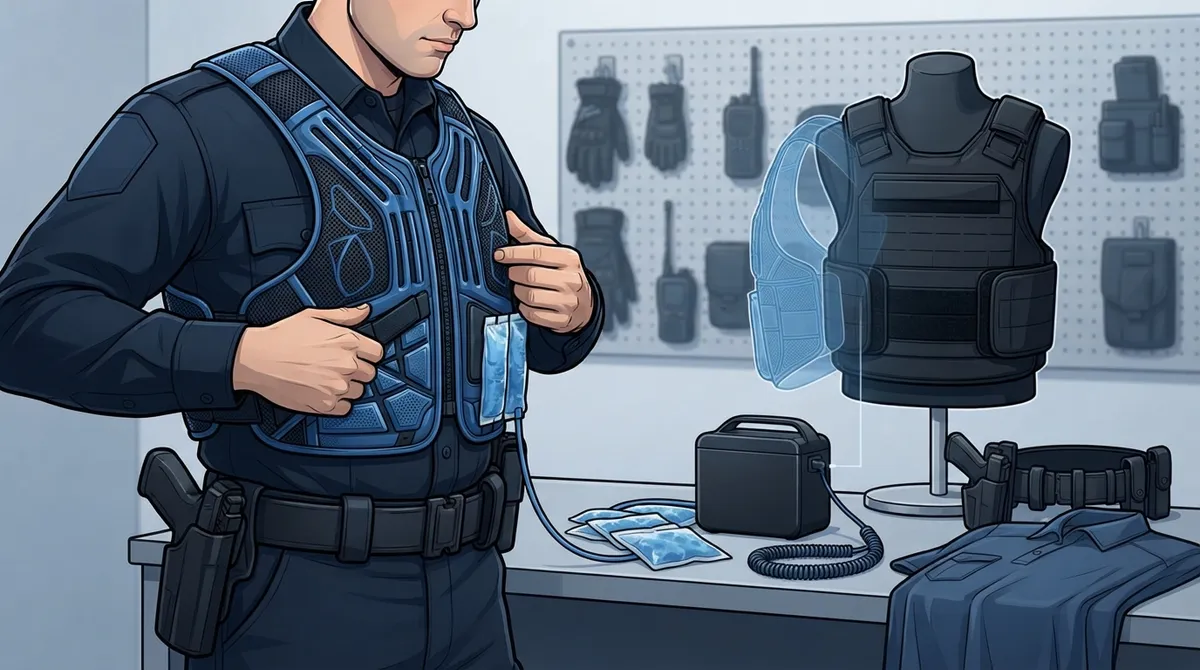
Yes, many can. Low-profile ventilation vests, spacer layers, and armor-vent panels are made to be worn with concealed armor. But fit depends on the product and your carrier. There is no universal rule that works for every setup.
Cooling accessories do not replace your armor or change how it protects you. They simply make a small gap or airflow path so trapped heat and moisture can move out. That is why placement and thickness matter so much.
Here is what to keep in mind before you buy anything:
- Check the maker’s instructions. Each product has its own wear position. Follow it exactly.
- Protect your armor’s fit. The added layer must not shift coverage or change where the panels sit.
- Stay concealed. Bulk, seams, and straps can show through a uniform shirt.
- Keep gear access clear. Your belt, radio, and weapon must stay easy to reach.
For a deeper look at how this kind of gear works, see our guide on what vest ventilation is and why you need it.
Why Concealed Armor Is Harder to Cool
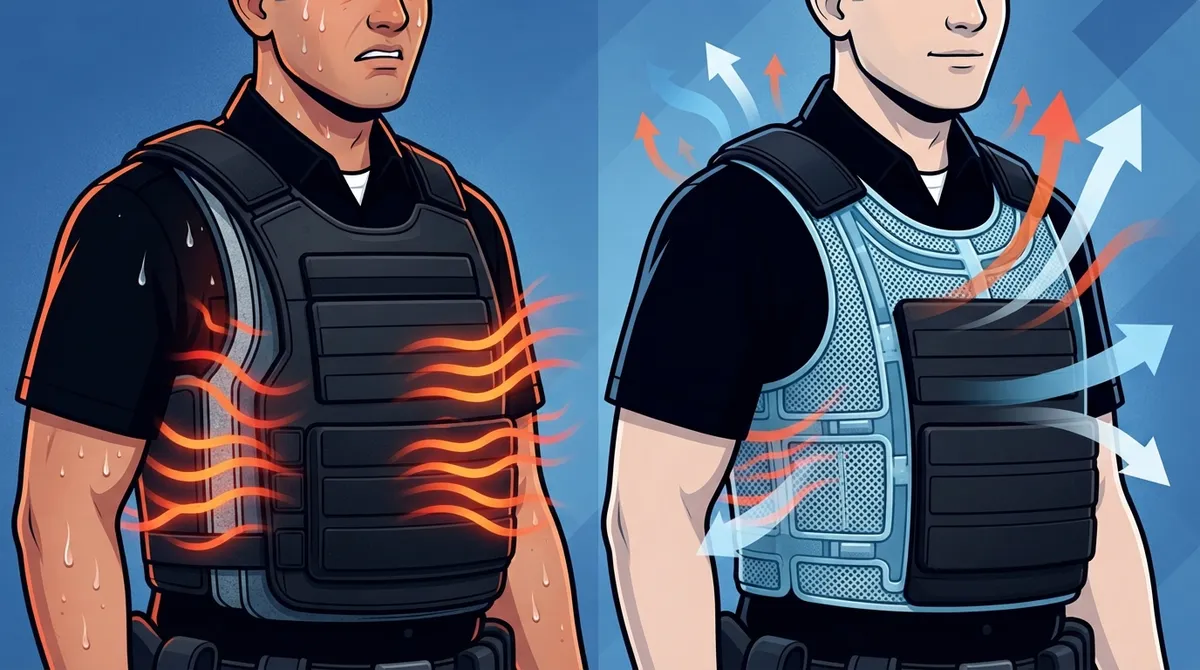
External carriers have straps, pockets, and a bit of space. Concealed armor sits snug against your torso under a shirt. That tight fit is great for staying low-key, but it traps heat and sweat fast.
There is also less room to add anything new. A thick pad that works fine on a plate carrier could make a soft vest ride up, bunch, or print through your shirt. That is why slim, flat designs work best here.
Heat is not just about comfort, either. The OSHA heat stress guide reminds workers that heat illness is a real risk, and protective gear can raise that risk. Cooling gear is a helpful tool, but it works best alongside water, rest, and good habits. You can learn more in our post on how to prevent heat stress while wearing body armor.
Types of Cooling Accessories That Work With Concealed Armor
Not all cooling gear plays nicely under a shirt. Some types are better suited to concealed setups than others. Here is a quick comparison to help you sort through the options.
| Accessory Type | How It Works | Concealment | Best For |
|---|---|---|---|
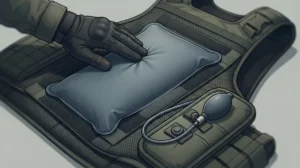
| Inflatable ventilation vest (like BluHalo) | Lifts armor off the body to create an air gap on demand | Very good when deflated; flat and low profile | Patrol officers and security staff on long, hot shifts |
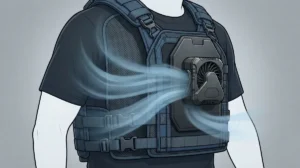
| Active fan system (like Blufano) | Moves fresh air under the armor with a small fan | Good; slides under the armor with a slim spout | Anyone needing constant airflow all shift |
| Passive spacer or mesh layer | Adds a thin air channel with no moving parts | Good, but can add bulk | Low-heat days and light duty |
| Phase-change or ice packs | Cools by absorbing heat, then warms up | Fair; can be bulky and wet | Short, intense heat bursts |
If you want to compare these styles in more depth, read our breakdown of passive vs. active cooling under body armor.
How to Fit a Cooling Accessory Under Concealed Armor
Ready to try it? Follow these steps. Take your time, because a good fit makes a big difference in comfort and in how well the gear works.
- Read both sets of instructions. Look at the cooling accessory guide and your armor maker’s guidance. Note any warnings about layering or attachment.
- Start with a clean, dry setup. Wipe down your armor carrier. If the accessory attaches with hook-and-loop fasteners, a clean surface helps it hold.
- Place it in the right spot. Many ventilation products go between your shirt and your armor, not against bare skin. Follow the maker’s exact placement.
- Keep your armor in its normal position. The top edge, side coverage, and bottom edge should sit just as they did before you added the accessory.
- Dress as you normally would. Put on your uniform shirt, belt, and duty gear. Check for bulges or lines at the chest, back, and sides.
- Move around. Sit, stand, bend, twist, and get in and out of a patrol car. Make sure nothing rides up, pinches, or blocks your gear.
- Check your equipment access. Practice reaching your radio, holster, and cuffs. Nothing should feel blocked or awkward.
- Test it before duty. Wear the full setup on a short, low-risk outing first. Fix any issues before a real shift.
One important note: do not cut, drill, or modify certified armor or its carrier to make something fit. Always follow the manufacturer’s guidance. You can read the official body armor standards from the National Institute of Justice to understand why armor should stay intact.
Why BluHalo Is a Great Fit for Concealed Armor
If you want a cooling accessory that respects the slim profile of concealed armor, BluHalo is a top pick. It was created by a Chicago police officer who knew the struggle of overheating in a vest firsthand.
Here is what makes it a smart choice for concealed setups:
- Lightweight. It weighs under 7 ounces, so you barely notice it.
- Low profile. When deflated, it lies flat and unobtrusive under your armor.
- Cooling on demand. A small pump inflates it, lifting the vest up to about 1.5 inches off your body to create a cooling air gap.
- Quick release. Press a button and it deflates, so it is flat when you do not need it.
- Tough build. It uses double-layer, high-tensile polyethylene made for daily duty.
- Simple attachment. It sticks to a clean vest with Velcro.
Because you control when it inflates, you can keep a slim look while walking into a building or meeting, then add airflow when you are back in the car or on a hot street. Want to see it in action? Our guide on how to use the BluHalo ventilation vest for maximum comfort walks through the setup.
Add Active Airflow With Blufano
For constant, hands-free cooling, pair your setup with Blufano. This self-contained fan system uses a patented air-redirect spout that slides under any style of body armor. An optional strap keeps it secure.
Blufano gives you adjustable airflow that can run anywhere from 8 to 32 hours depending on the setting. It also has a built-in 10,000mAh power bank that powers the fan and can charge your USB devices. A forward-facing light adds hands-free illumination in low-light moments.
Many officers use BluHalo to create the air gap and Blufano to move fresh air through it. Together, they give strong cooling relief. You can buy them separately or bundle them at a discount. To compare the two, check out BluFano vs BluHalo: which cooling vest fits you.
Common Mistakes to Avoid
Even great gear can disappoint if it is set up wrong. Watch out for these common slip-ups:
- Covering the accessory with another shirt. Some makers warn that extra layers can block airflow.
- Wearing it in the wrong position. Some products are made to go over a shirt and under armor, not against skin.
- Assuming universal fit. Always check that the product matches your carrier and armor type.
- Skipping the movement test. A setup that feels fine standing may bunch when you sit.
- Ignoring hydration and rest. Cooling gear helps, but it does not replace water, breaks, or heat monitoring.
Our article on 7 mistakes to avoid when choosing a cooling vest under body armor goes deeper on these.
Cooling Gear Is a Helper, Not a Fix-All
It is worth saying clearly: cooling accessories are not ballistic protection. They do not replace certified armor. They also do not replace smart heat habits like drinking water, taking breaks, and getting used to the heat over time.
Government safety experts at NIOSH list cooling vests and air-cooled garments as possible extra controls for heat exposure at work. How well they work depends on your job, your gear, and the weather. So treat cooling gear as one tool in a bigger toolbox.
If your agency requires approval for added gear, check with your supervisor or armor provider first. That keeps you compliant and protected.
Quick Pre-Duty Checklist
Before you head out, run through this short list:
- Armor sits at the correct height and coverage
- No visible lines or bulges under your shirt
- Free movement when sitting, bending, and twisting
- Easy access to your duty belt and gear
- Accessory placed per the maker’s instructions
- Batteries charged and pump or fan tested
- Water and rest plan ready for the shift
Final Thoughts
So, can cooling accessories fit concealed body armor? Yes, when you choose a slim, well-designed product and fit it the right way. Look for low-profile gear, follow the maker’s directions, and test everything before duty. Your comfort, focus, and safety all benefit when you stay cooler.
BluHalo and Blufano were built for people just like you, from patrol officers to security pros and first responders. If you are ready to stay cool on your next hot shift, reach out to our team and we will help you find the right setup for your armor.
FAQs
Q: Can I wear a ventilation vest under concealed body armor?
A: Yes, many low-profile ventilation vests are made for this. Just follow the maker’s placement steps and check that your armor still sits in the right spot. A slim option like BluHalo lies flat when deflated, so it stays easy to hide.
Q: Will a cooling accessory change the fit or coverage of my armor?
A: It should not if you pick a thin product and place it correctly. Always check that your armor’s top, sides, and bottom edges stay where they belong. If anything shifts, adjust or try a slimmer accessory.
Q: Can a cooling vest make my armor show through my shirt?
A: It can if the accessory is bulky or has thick seams. Choose a flat, lightweight design and test your full uniform in the mirror. Sit, stand, and move around to spot any bulges before duty.
Q: Do cooling accessories replace hydration and rest breaks?
A: No, and that is an important point. Cooling gear is a helpful add-on, but you still need water, rest, and heat monitoring. Think of it as one tool that works best alongside smart habits.
Q: How do I know if a cooling accessory is compatible with my armor?
A: Start by reading the instructions from both the accessory maker and your armor provider. Then test the full setup while moving, sitting, and reaching for your gear. If your agency requires approval for added equipment, check with them first.