Key Takeaways
-
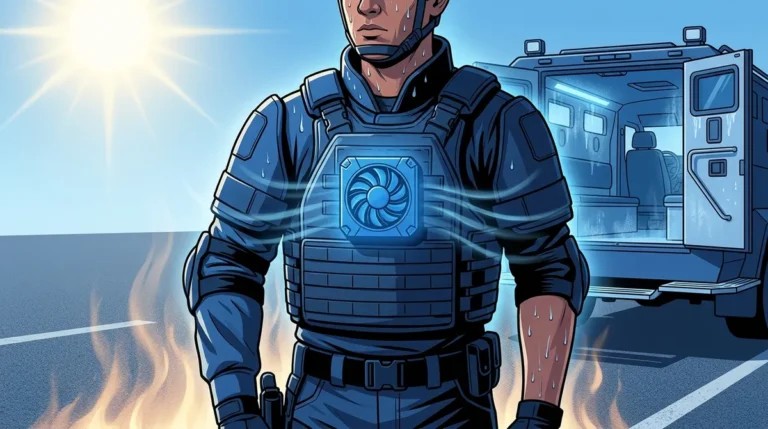
Over 9,200 people are hospitalized annually in the U.S. from heat-related illness, with first responders at high risk due to heavy gear trapping heat and causing fatigue, slower reaction times, and dangerous heat exhaustion.
-
Active fan-driven ventilation vests like Blufano provide 8-32 hours of continuous cooling for long shifts, outperforming phase-change vests (1-4 hours) and evaporative options that fail in humid environments.
-
Match cooling equipment to your specific needs: identify heat exposure level, shift length (phase-change for 4-hour events, active ventilation for 12-hour patrols), and ensure NIJ certification compatibility with body armor.
-
Top lightweight options include BluHalo (passive inflatable, under 7 oz, $60) for on-demand cooling and Maxx-Dri Vest (360° breathable, no power required) for officers wanting zero-power solutions.
-
Maximize cooling effectiveness by pre-cooling before shifts, maintaining hydration, using vehicle AC between calls, and wearing moisture-wicking base layers to move sweat away from skin.
-
Inspect ventilation gear before each shift, choose machine-washable materials with anti-bacterial fabric, and verify fan/pump mechanisms function properly to ensure safety and hygiene during extended wear.
If you wear body armor or heavy protective gear on the job, you already know the struggle. Heat builds up fast. Sweat soaks through your uniform. And after a few hours, that discomfort starts to mess with your focus. For law enforcement officers, firefighters, military personnel, and emergency responders, staying cool isn’t just about comfort — it’s about staying sharp and safe. Choosing the right first responder cooling equipment can make a huge difference in how you perform during long, hot shifts. The good news? There are more effective options available in 2026 than ever before, and this guide will walk you through everything you need to know to make the best choice for your situation.

Why Heat Management Matters for First Responders
Heat stress is a serious, real-world risk. According to recent data, over 9,200 people are hospitalized in the U.S. every year due to heat-related illness. First responders are among the most vulnerable, because they wear heavy, heat-trapping gear — often in extreme conditions — for hours at a time. The OSHA Heat Stress Guide makes it clear that managing body temperature in high-heat environments is critical for worker safety and performance.
When heat gets trapped under your body armor, your core temperature rises. That leads to fatigue, slower reaction times, and even dangerous heat exhaustion. This is exactly why quality first responder cooling equipment isn’t a luxury — it’s a necessity. Preventing heat stress while wearing body armor should be a top priority for every officer, soldier, and emergency responder.
Types of First Responder Cooling Equipment
Not all cooling gear works the same way. Before you spend your money, it helps to understand the main categories so you can match the solution to your specific needs.
1. Ventilation Vests (Active Airflow Systems)
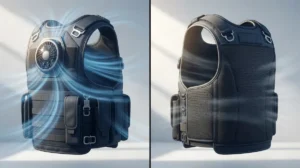
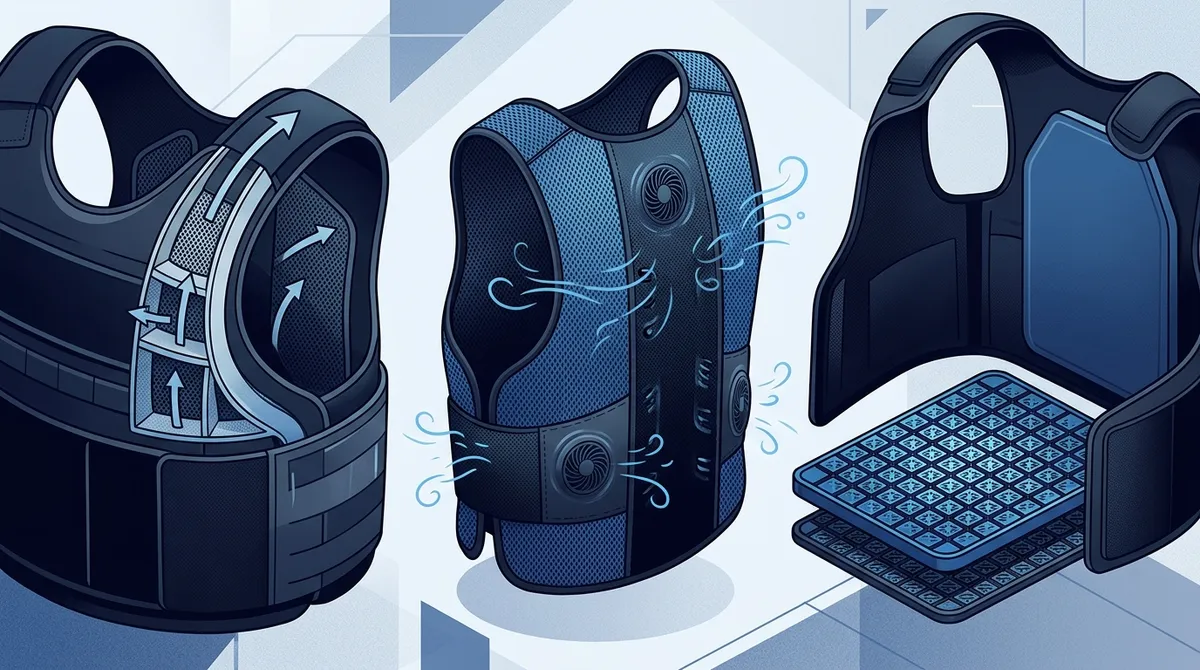
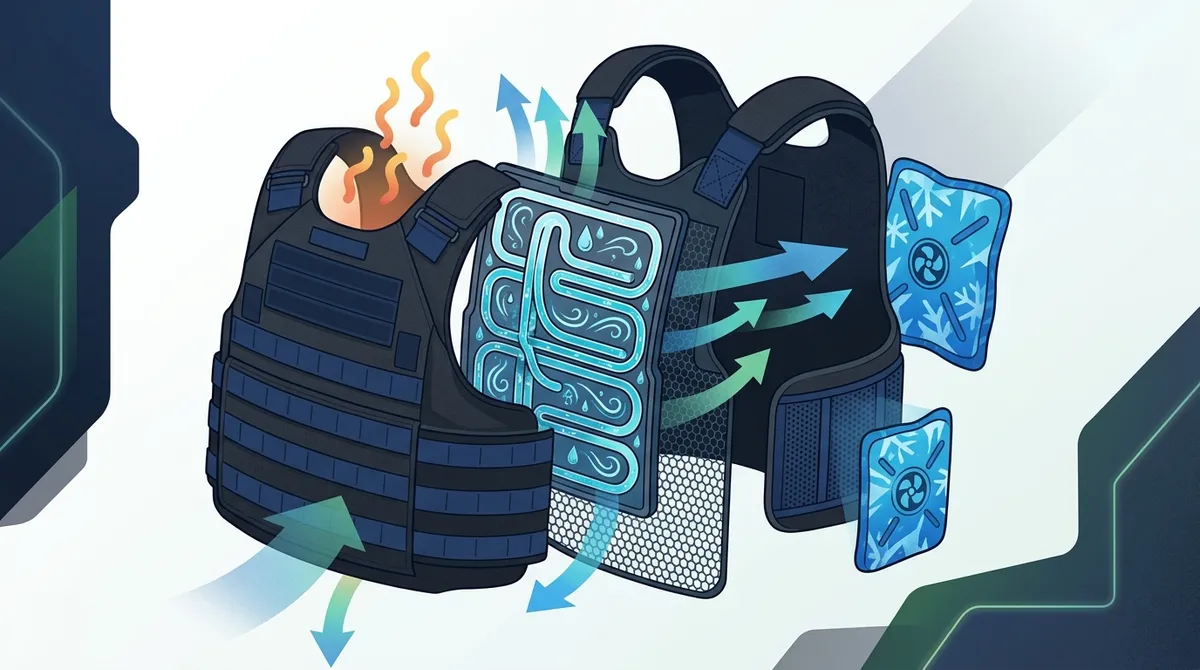
Ventilation vests are worn under body armor and work by creating an air gap between your body and the armor. This gap allows heat and moisture to escape instead of building up against your skin. Some ventilation vests use passive design (breathable fabric that encourages natural airflow), while advanced models like Blufano use active fan-driven airflow to push fresh air under your vest continuously.
2. Phase-Change Cooling Vests
Phase-change vests use special materials that absorb body heat as they change from solid to liquid. Products like PhaseCore Cooling Vests from First Line Technology offer long-lasting, gentle cooling without power. They typically provide 1–4 hours of cooling before needing to be recharged. These are great for controlled environments but can be bulky under tight-fitting armor.
3. Evaporative Cooling Products
Evaporative cooling towels and inserts activate with water or sweat. They cool the body as moisture evaporates from the surface. These are lightweight and simple, but their effectiveness depends heavily on humidity. In high-humidity environments, evaporative cooling is much less effective.
4. Passive Breathable Vest Liners
Passive vest liners (like the Maxx-Dri Vest from 221B Tactical) use structured, breathable fabric to create space between the body and armor. They weigh only ounces, require no power, and offer full 360° ventilation. They don’t actively cool, but they significantly reduce heat buildup during regular activity.
| Cooling Type | How It Works | Cooling Duration | Best For | Requires Power? |
|---|---|---|---|---|
| Active Ventilation (Fan-Driven) | Fans circulate air under armor | 8–32 hours | Long shifts, patrol, security | Yes (rechargeable) |
| Passive Ventilation Vest | Air gap via inflatable or structured design | All day (on-demand) | All-day wear, low-profile use | No |
| Phase-Change Vest | Absorbs heat via material phase change | 1–4 hours | Short missions, pre-cooling | No (needs recharging) |
| Evaporative Cooling | Moisture evaporation draws heat away | 1–3 hours | Dry, hot climates | No |
How to Choose the Right Cooling Equipment Step by Step
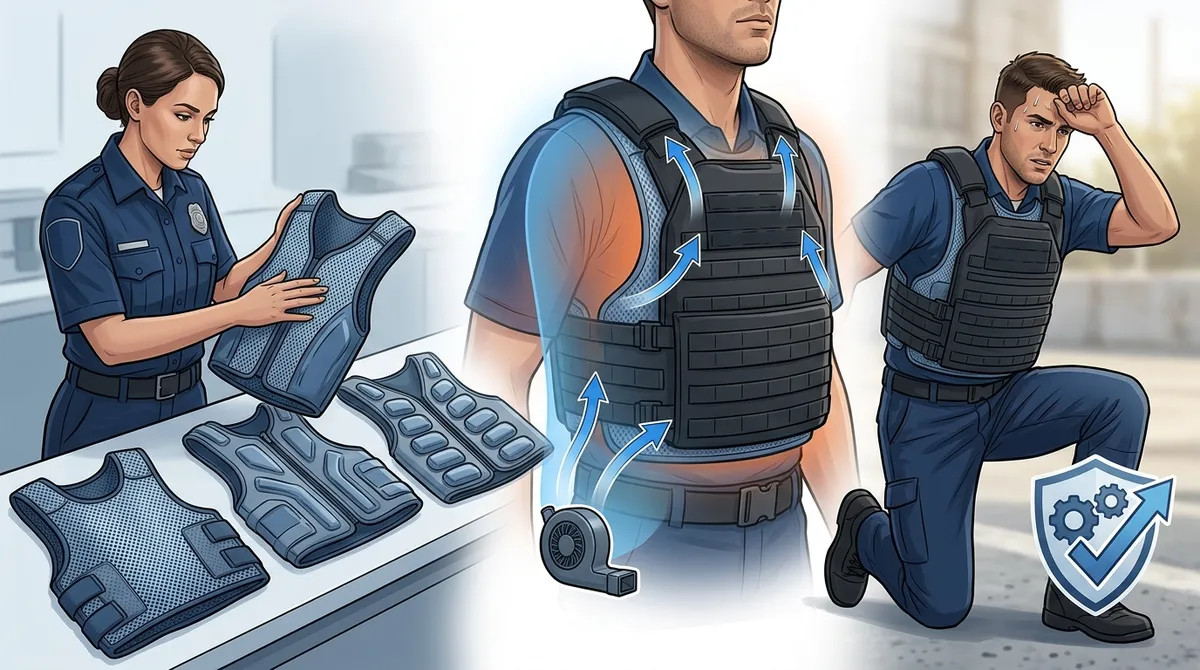
With so many options out there, here’s a simple process to find the right fit for your role and environment. Choosing the right body armor ventilation vest in 2026 comes down to a few key factors.
- Identify your heat exposure level. Do you work indoors, outdoors, or in extreme heat like a fire scene? Your environment determines how aggressive your cooling solution needs to be.
- Consider your shift length. A phase-change vest might be fine for a 4-hour event. But for a 12-hour patrol shift in summer heat, you need something that lasts all day — like an active ventilation system.
- Think about fit under your PPE. Any cooling gear you choose must fit comfortably and safely under your body armor without compromising protection or adding too much bulk.
- Check for certification and safety standards. For law enforcement and tactical use, look for products that meet Body Armor Standards from the National Institute of Justice (NIJ). This ensures your cooling gear doesn’t compromise your ballistic protection.
- Evaluate maintenance and durability. You want gear that’s machine-washable, durable enough for daily use, and easy to maintain in the field.
Key Features to Look for in a Cooling Vest
Not every cooling vest is built the same. Here’s what to look for when evaluating your options as a first responder:
- Lightweight design: The best cooling vests add minimal weight. The BluHalo ventilation vest, for example, weighs under 7 ounces — you barely notice it’s there.
- Low profile: Your cooling gear should sit flat and unobtrusive under armor, not add bulk that slows you down or creates friction.
- Long battery or cooling life: For active systems, look for at least 8 hours of runtime. Blufano offers 8–32 hours depending on the fan setting, making it ideal for full-day shifts.
- Easy activation: You shouldn’t need to fiddle with complicated controls in the field. Look for simple on/off controls or inflation mechanisms you can operate quickly.
- Breathable, anti-bacterial fabric: This helps prevent odor and keeps the vest hygienic during extended wear.
- Machine-washable materials: Easy cleaning is a must for gear worn during high-sweat activity.
Top Cooling Options for First Responders in 2026
Here’s a quick comparison of leading first responder cooling equipment options to help you evaluate what’s available on the market today.
| Product | Type | Key Feature | Best For |
|---|---|---|---|
| BluHalo Ventilation Vest | Passive ventilation (inflatable) | On-demand cooling air gap, under 7 oz, $60 | Police, security, everyday patrol |
| Blufano Fan System | Active fan-driven ventilation | 8–32 hrs runtime, 10,000mAh power bank, built-in light | Long shifts, tactical teams, military |
| Maxx-Dri Vest (221B Tactical) | Passive breathable liner | 360° ventilation, NIJ certified, lifetime warranty | Officers wanting no-power solution |
| PhaseCore Vest (First Line Technology) | Phase-change cooling | Patented phase-change materials, long-lasting gentle cooling | Short missions, pre-cooling |
For officers and first responders who want the best of both worlds, combining the BluHalo ventilation vest with the Blufano fan system gives you passive and active cooling in one setup. You can explore bundled options at the BluHalo shop to maximize your comfort on every shift.
Ventilation Vests vs. Other Cooling Solutions: Which Is Better?
Many first responders ask whether a ventilation vest is worth it compared to other options. The answer depends on your mission profile. Body armor ventilation is a game changer for officers who work long shifts in high heat — and here’s why.
Phase-change vests are great for short bursts of cooling, but they require regular recharging and can feel heavy. Evaporative options are simple but don’t work well in humid climates. Ventilation vests — especially active systems like Blufano — provide continuous airflow without the limitations of phase-change or evaporative methods. And unlike ice vests or cooling towels, they don’t melt, dry out, or require a cooler nearby. For professionals who spend Helpinghands-insurance LLC covering long outdoor operations or physically demanding shifts, having reliable cooling gear is just as important as having the right insurance coverage for your peace of mind.
Tips for Getting the Most Out of Your Cooling Equipment
Once you’ve chosen the right gear, here are a few tips to maximize its performance:
- Pre-cool before your shift: Start your shift in a cool environment to give your body a lower baseline temperature before heading into the heat.
- Stay hydrated: Cooling equipment works best when your body is well-hydrated. Drink water consistently throughout your shift.
- Use your vehicle’s AC strategically: Many Blufano users report using vehicle AC to rapidly cool down under their armor between calls. The fan system redirects that cool air directly under the vest.
- Inspect your gear regularly: Check your ventilation vest before each shift to make sure it’s functioning properly — especially if it has mechanical components like fans or pumps.
- Layer smartly: Wear moisture-wicking base layers under your cooling vest to help move sweat away from your skin and improve overall comfort.
Looking for even more detailed guidance? Check out this helpful resource on the best vest cooling systems for beating the heat in body armor and learn what body armor ventilation is and why you need one.
Who Benefits Most from First Responder Cooling Equipment?
While all professionals in protective gear can benefit, some roles especially need dedicated cooling solutions:
- Police officers on patrol: Long shifts in patrol vehicles and on foot in summer heat create serious heat stress risks. Optimal cooling for tactical vests is a must-have for every officer.
- SWAT and tactical teams: High-intensity operations with heavy gear demand the most from cooling technology. Active systems like Blufano are ideal here.
- Military personnel in deployment: Soldiers operating in desert or tropical environments with full kit need reliable, long-lasting cooling that doesn’t depend on external resources.
- Security professionals: Armed guards and protective detail specialists who wear body armor in public environments benefit greatly from low-profile, quiet ventilation systems.
- Firefighters and hazmat teams: While their gear requirements differ, ventilation solutions under their protective layers can help manage heat during rehab periods and lower-intensity operations.
If you’re still trying to figure out the right system for your specific role, this guide on choosing the best police vest ventilation system is a great starting point. You can also read real reviews from fellow first responders who’ve already made the switch to smarter cooling gear.
Conclusion
Choosing the right first responder cooling equipment doesn’t have to be complicated. Start by understanding your heat exposure level, shift length, and what fits safely under your protective gear. Prioritize solutions that are lightweight, durable, and effective for the long haul. Whether you go with a passive ventilation vest like the BluHalo for on-demand comfort or step up to the active fan power of Blufano for all-day cooling relief, investing in quality cooling gear is one of the smartest decisions you can make for your health, safety, and performance on the job.
Ready to find the perfect cooling solution for your situation? Get in touch with the BluHalo team and let us help you stay cool, comfortable, and at your best — no matter what the shift throws at you.
FAQs
Q: What is the best cooling equipment for first responders wearing body armor?
A: For most first responders, active ventilation vests offer the best all-day performance. Products like BluHalo (passive, on-demand inflation) and Blufano (active fan-driven airflow for 8–32 hours) are top choices because they fit under body armor without adding bulk and provide continuous heat and moisture relief during long shifts.
Q: How long does first responder cooling equipment last on a single shift?
A: It depends on the type! Phase-change vests typically last 1–4 hours before needing recharging. Active fan systems like Blufano can run for 8–32 hours depending on the fan speed setting — more than enough for most full-day shifts. Passive ventilation vests like BluHalo work on-demand all day without any power at all.
Q: Do ventilation vests work under all types of body armor?
A: Yes! Most quality ventilation vests are designed to work under soft body armor, plate carriers, and tactical vests. The BluHalo vest and Blufano fan system both feature slim, flexible designs that fit under virtually any style of body armor without affecting ballistic protection or comfort.
Q: Is first responder cooling equipment NIJ certified?
A: Some ventilation and cooling vests carry NIJ certification, like the Maxx-Dri Vest. When choosing cooling equipment to wear under ballistic armor, always verify that the product is compatible with certified body armor and doesn’t affect its protective rating. BluHalo’s products are designed to complement, not compromise, your armor’s protection.
Q: How do I maintain my first responder cooling vest?
A: Most ventilation vests are easy to maintain — look for machine-washable materials and anti-bacterial fabric for the best hygiene. Inspect your gear before each shift, clean it regularly per the manufacturer’s instructions, and check any fan or pump mechanisms to make sure they’re functioning properly before heading out.