Key Takeaways
-
Heat stress under body armor impairs judgment and reduces reaction time; investing in cooling solutions is a performance necessity, not a luxury, for officer safety during long shifts.
-
Active systems (fan-powered, $60-$150+) excel in humid/hot climates with 8-32 hour battery life, while passive systems (mesh/pontoons, $20-$100) work better in dry heat with zero maintenance required.
-
BluHalo ventilation vest ($60, under 7oz) offers on-demand inflation for real-time cooling with low profile, making it the most affordable active option for daily patrols.
-
Check armor compatibility, weight impact, and battery life before purchasing; common mistakes include choosing by price alone and ignoring fit with your specific armor type.
-
Even a small 0.5-1.5 inch air gap creates dramatic cooling difference; passive mesh vests and active fan systems both work by enabling heat escape through convection, reducing core temperature by 7-14 degrees.
-
For shifts over 8 hours in heat, active systems with reliable battery performance outperform passive options; read real officer reviews and prioritize your specific climate and pain points.
If you wear body armor on duty, you already know the struggle. Heat builds up fast. Sweat soaks through your uniform. And after a few hours, all you can think about is getting that vest off. It’s uncomfortable, distracting, and in some cases, it can even be dangerous. Heat stress is a real risk for officers working long shifts in hot weather, and it deserves a real solution.
The good news is that the market for top vest cooling products for police has grown significantly in 2026. From passive mesh layers to active fan-powered systems, there are more options than ever to keep you cool under your armor. But not all products are created equal. Knowing what to look for — and what actually works — can save you money and a lot of sweaty misery.
This guide breaks down everything you need to know about choosing the right vest cooling solution for your needs, your climate, and your budget. Let’s dig in.

Why Heat Under Body Armor Is Such a Big Problem
Body armor is designed to protect you — but it also traps heat like a greenhouse. The ballistic panels sit tight against your body, blocking airflow and preventing sweat from evaporating. According to the OSHA Heat Stress Guide, heat exposure can impair judgment, reduce reaction time, and cause serious health issues. For an officer on patrol, that’s a real operational concern.
The problem isn’t just comfort. When your core temperature rises, your focus drops. You fatigue faster. And over the course of a 10- or 12-hour shift, that physical toll adds up. That’s why investing in quality cooling solutions under your vest isn’t a luxury — it’s a smart performance decision.
Understanding why police officers struggle with heat under body armor is the first step toward finding the right fix.
The Two Main Types of Vest Cooling Products
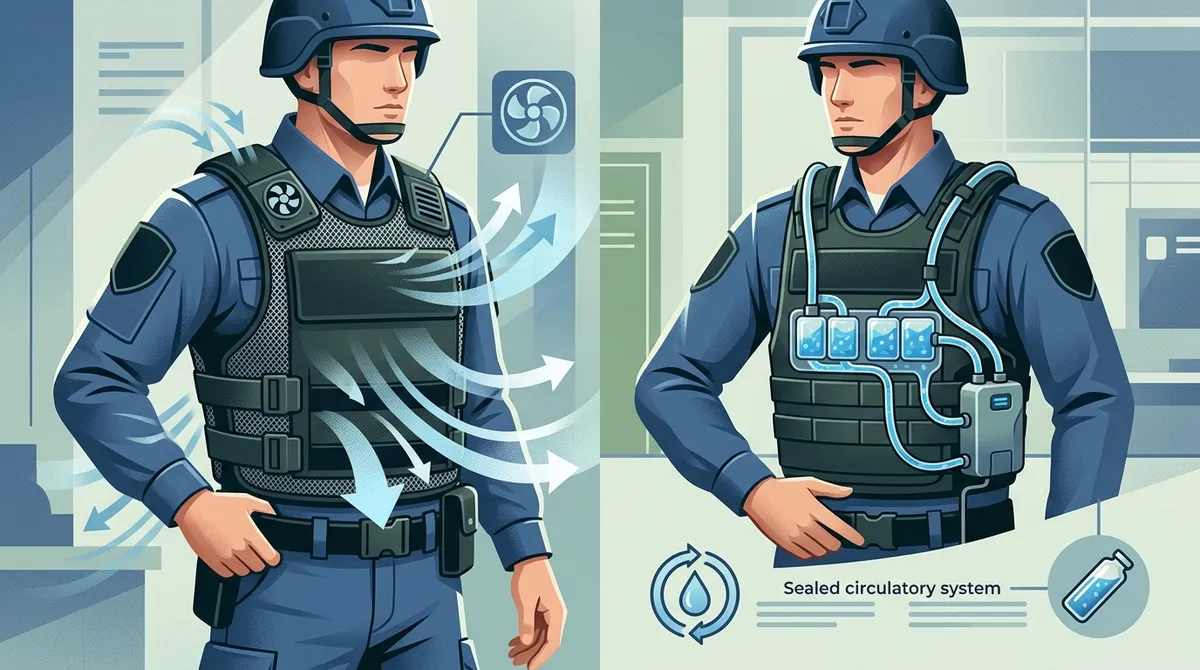
Before you start shopping, it helps to understand the two core categories of vest cooling products available today. Each works differently and suits different situations.
Passive Ventilation Systems
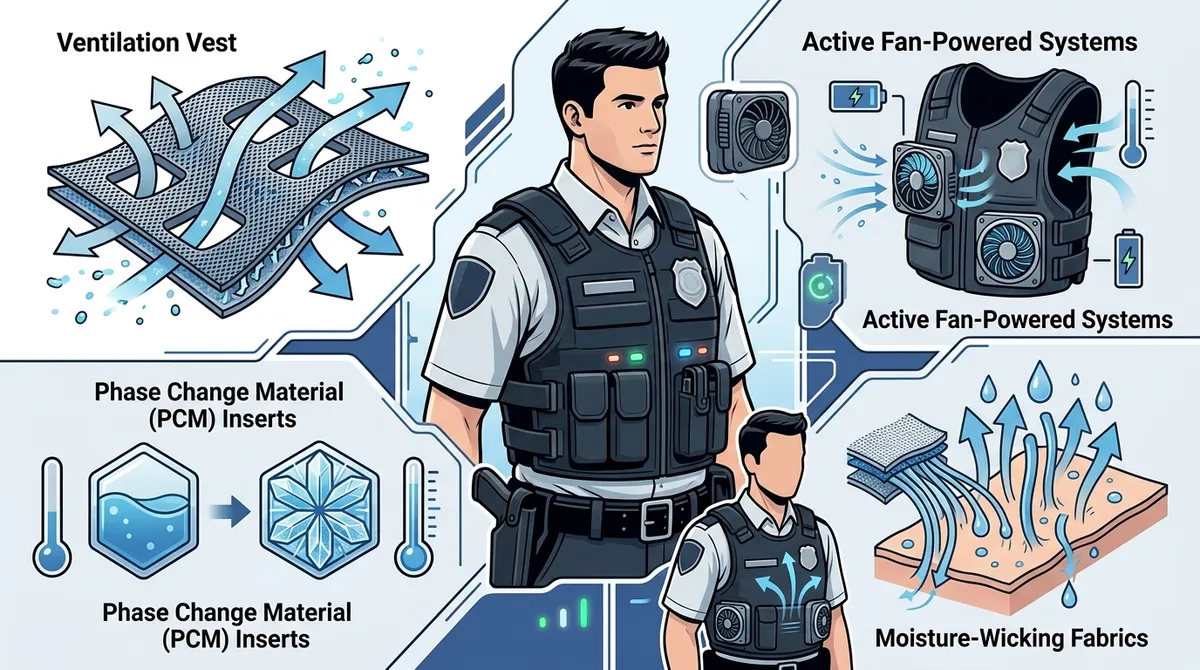
Passive systems don’t use any power. Instead, they create physical separation between your body and the armor using mesh, foam ridges, or rigid pontoon structures. This air gap allows heat to rise and escape while letting some ambient air circulate. They’re lightweight, silent, and require no charging.
Examples include separation mesh vests, pontoon-style inserts, and structured spacer layers. Products like the 221B Tactical Maxx-Dri Vest 3.0 (about $100) and SKD Tactical Pontoons (around $20) fall into this category. You can explore a full breakdown in this passive vs. active cooling comparison for body armor.
Active Ventilation Systems
Active systems use a fan or airflow mechanism to push fresh air under your vest continuously. These are more powerful and more effective in high-heat environments. They require a battery or power source, but modern units can run for 8 to 32 hours on a single charge.
Active systems are especially useful during summer patrols, traffic control in direct sun, or any situation where ambient air temperature is already high. You can learn more about how these systems work in this guide on active cooling technology in ventilation vests.
Key Features to Look for in a Police Vest Cooling Product
Not every cooling vest or system works for every officer. Here’s what you should evaluate before buying:
- Weight: Every ounce matters on a duty belt. Look for lightweight options — some passive vests weigh under 1 oz.
- Profile: Bulky systems can change how your armor fits. Choose low-profile designs that sit flat under your vest.
- Coverage area: Full-torso coverage provides more airflow than smaller spot inserts.
- Compatibility: Make sure the product works with your specific armor style — soft armor, plate carrier, or outer carrier.
- Battery life (for active systems): Look for at least 8 hours of runtime to cover a full shift.
- Ease of use: You need something you can operate quickly, even in the field.
For a deeper dive, check out how to choose the best police vest ventilation system with a step-by-step breakdown.
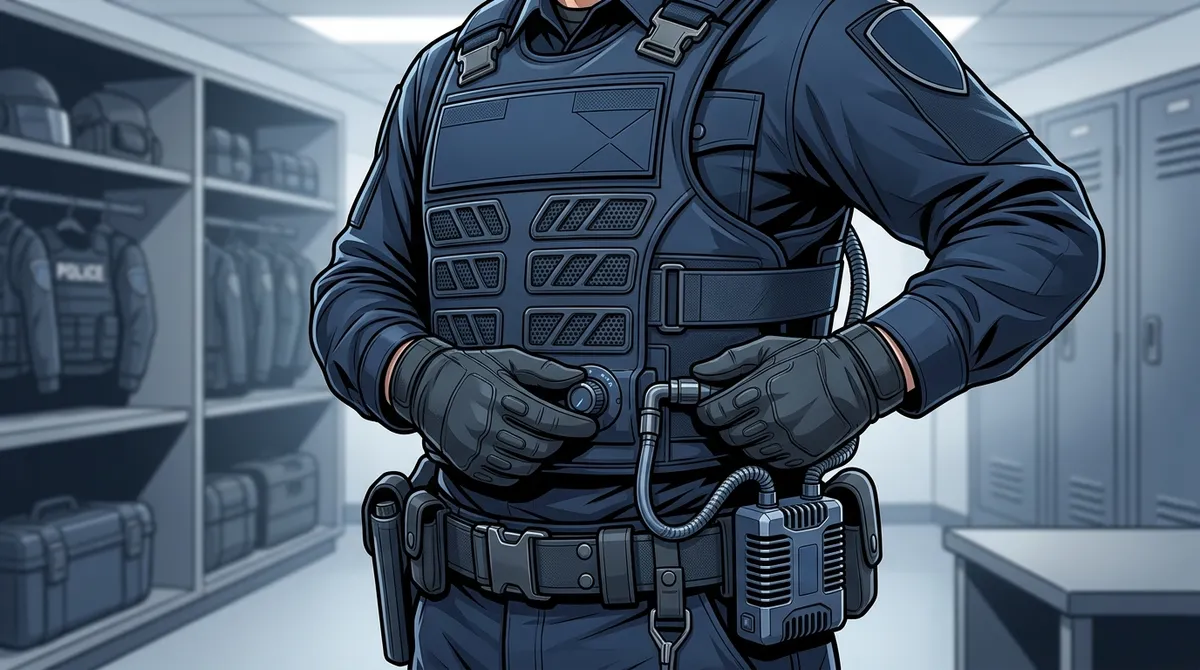
Top Vest Cooling Products for Police in 2026
Here’s a look at some of the most talked-about products in the law enforcement cooling space this year. Use this comparison to find what fits your situation best.
| Product | Type | Weight | Approx. Price | Best For |
|---|---|---|---|---|
| BluHalo Ventilation Vest | Active (inflate on demand) | Under 7 oz | $60 | Daily patrol, all-day comfort |
| Blufano Fan System | Active (powered fan) | Compact unit | Premium | Maximum cooling, long shifts |
| 221B Tactical Maxx-Dri Vest 3.0 | Passive (mesh separation) | ~9 oz | ~$100 | Full coverage, no charging needed |
| Tac Vent 2.0 | Passive (structured insert) | Lightweight | ~$35 | Budget-friendly entry option |
| Qore Performance IceVents | Passive (spacer inserts) | Under 1 oz | ~$70 | Minimal bulk, arid climates |
| SKD Tactical Pontoons | Passive (pontoon style) | ~1.4 oz | ~$20 | Ultra-budget, basic separation |
The BluHalo ventilation vest stands out because it was created by a Chicago police officer who experienced the same heat frustration firsthand. It inflates on demand to lift your vest up to 1.5 inches off your body, creating a real cooling air gap. When you don’t need it, it deflates flat so there’s no bulk. At just $60, it’s one of the most affordable active options on the market.
The Blufano fan system takes things a step further with a powered fan that delivers 8 to 32 hours of continuous airflow, a built-in 10,000mAh power bank, and even a forward-facing light for low-light situations. It’s the kind of upgrade that officers who work in consistently hot climates will appreciate most. You can also compare BluFano and BluHalo to decide which system works best for your shift type.
How Cooling Vests Actually Work Under Armor
The science is simple. Body armor traps heat because it blocks the natural process of convective cooling — where moving air carries heat away from your skin. Sweat can’t evaporate when it’s sandwiched between your body and a panel of ballistic material.
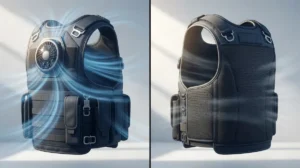
Vest cooling products solve this by creating an air gap. Even a small gap of half an inch to one and a half inches makes a dramatic difference in how much heat escapes. Some passive products achieve this with rigid structures. Active systems push air through that gap continuously, which speeds up the process significantly.
The Tac Vent 2.0, for example, is marketed to cool the area under armor by 7 to 14 degrees — a meaningful difference during a summer patrol in direct sunlight. Body Armor Standards from the National Institute of Justice don’t account for thermal comfort, which is exactly why add-on cooling systems have become so popular among officers.
Want to understand the full mechanics? This guide on how body armor air conditioning actually works explains it clearly.
Passive vs. Active: Which One Should You Choose?
This is the most common question officers ask when shopping for top vest cooling products for police. The honest answer depends on your situation.
| Factor | Passive System | Active System |
|---|---|---|
| Power needed | No | Yes (battery) |
| Cooling power | Moderate | High |
| Weight added | Very low | Low to moderate |
| Best climate | Mild to arid | Hot and humid |
| Cost | $20–$100 | $60–$150+ |
| Maintenance | Minimal | Charge regularly |
If you work in a dry climate with moderate temperatures, a passive system like IceVents or a mesh separation vest may be enough. If you’re doing summer patrols in a humid city or working outdoor events in 95-degree heat, an active system will serve you much better. Read more about passive vs. active law enforcement cooling gear to help you decide.
Step-by-Step: How to Choose the Right Cooling Product
Follow these steps to narrow down your best option quickly:
- Assess your climate. Do you work in a dry or humid area? Active systems shine in humidity. Passive systems work better in dry heat.
- Check your armor type. Soft armor, plate carriers, and outer carriers all have different fit profiles. Make sure your cooling product is compatible.
- Set a budget. Options range from $20 to well over $100. Decide what you’re willing to spend before you start comparing.
- Prioritize your pain points. Is excessive sweating your main issue? Or is it overall body temperature? Sweat management products and cooling products work slightly differently.
- Think about shift length. For shifts over 8 hours in heat, you’ll want an active system with solid battery life — or a passive vest that requires zero maintenance.
- Read real officer reviews. Real-world feedback from people in the same role is more valuable than marketing claims. Check out BluHalo customer reviews to see what officers are saying.
For even more guidance, this 2026 guide to choosing the right body armor ventilation vest walks you through the full decision process.
Common Mistakes to Avoid When Buying a Vest Cooling Product
Even with good intentions, it’s easy to buy the wrong product. Here are the most common mistakes officers make:
- Choosing based on price alone. The cheapest option may not provide enough separation or airflow for your needs.
- Ignoring armor compatibility. Some vests don’t work well with outer carriers or plate carriers. Always check before buying.
- Overlooking weight and bulk. A cooling product that changes your armor fit or adds significant weight creates new problems.
- Skipping the break-in period. Some officers give up too quickly. Give your body and gear a few shifts to adjust.
- Forgetting about sweat management. Cooling and moisture wicking go hand in hand. Look for products that address both.
For a full list of pitfalls, see 7 mistakes to avoid when choosing a cooling vest under body armor.
Quick Comparison: BluHalo vs. Blufano
If you’re leaning toward one of BluHalo’s products, here’s a side-by-side look to help you decide:
| Feature | BluHalo Vest | Blufano Fan System |
|---|---|---|
| Mechanism | Inflate on demand | Powered fan with air-redirect spout |
| Weight | Under 7 oz | Compact self-contained unit |
| Battery | No battery needed | Built-in 10,000mAh power bank |
| Runtime | Continuous when inflated | 8–32 hours depending on setting |
| Extra features | Low-profile, Velcro attachment | USB charging port, forward-facing light |
| Price | $60 | Premium |
| Best for | Officers wanting simple, on-demand cooling | Officers needing continuous powered airflow |
You can also bundle both products together at a discount through the BluHalo shop for maximum cooling coverage. Many officers use the BluHalo vest for everyday shifts and add the Blufano for extreme heat days or extended outdoor operations.
Final Thoughts: Stay Cool, Stay Sharp
Heat under body armor is one of the most persistent and underappreciated problems in law enforcement. It affects focus, stamina, and long-term health. The good news is that today’s top vest cooling products for police are better than ever — lighter, more powerful, and more affordable than they were just a few years ago.
Whether you go with a simple passive mesh layer or a powered fan system like the Blufano, the key is taking action. Don’t accept unnecessary discomfort as part of the job. Your performance — and your health — deserve better.
Ready to find the right cooling solution for your situation? Reach out to the BluHalo team and get personalized recommendations based on your armor type, climate, and shift demands. Staying cool on duty has never been more achievable.
FAQs
Q: What are the best cooling vests for police officers in 2026?
A: The best options in 2026 include the BluHalo ventilation vest for on-demand cooling and the Blufano fan system for continuous powered airflow — both designed specifically for officers wearing body armor. Passive options like the 221B Tactical Maxx-Dri Vest and Qore Performance IceVents are also popular for those who prefer a no-battery solution. The right choice really depends on your climate, shift length, and armor type.
Q: Do vest cooling products fit under police body armor?
A: Yes! Most vest cooling products are specifically designed to fit between your body and your soft armor or carrier without affecting the fit or protection level of your vest. Low-profile options like the BluHalo vest weigh under 7 ounces and sit flat when deflated, making them easy to wear all shift long. Always check compatibility with your specific armor style before purchasing.
Q: How much do police vest cooling products cost?
A: Prices range widely depending on the type and brand. Passive options like SKD Tactical Pontoons start around $20, while mid-range mesh vests like the Maxx-Dri 3.0 run about $100. The BluHalo active ventilation vest comes in at just $60, making it a great value for an on-demand cooling solution. Active fan systems like Blufano are priced at a premium but offer continuous powered airflow for all-day comfort.
Q: Can cooling vests help reduce heat stress for police officers?
A: Absolutely — and this is one of the most important reasons to invest in a cooling solution. Heat stress can impair judgment, slow reaction times, and cause serious health issues during long shifts. A good vest cooling product creates an air gap under your armor that allows heat and moisture to escape, helping keep your core temperature lower and your performance sharper. It’s a smart investment for any officer working in warm weather.
Q: What is the difference between a ventilation vest and a cooling pontoon system?
A: A ventilation vest (like BluHalo) is a wearable garment that wraps around your torso and uses inflation or a fan to create a sustained air gap under your armor. A pontoon system consists of smaller rigid inserts placed at specific points to create localized separation — they’re lighter and cheaper but provide less overall coverage. Ventilation vests tend to offer more consistent airflow across a larger surface area, which is why they’re a favorite among officers on long, hot shifts.