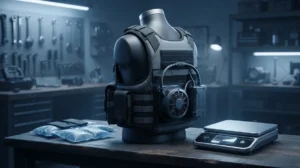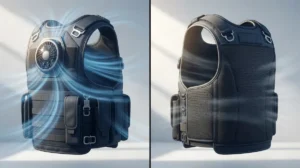
Key Takeaways
-
Active ventilation vests like BluHalo ($60) and Blufano ($150+) provide 8-32 hours of continuous cooling for long security shifts, while passive cooling packs last only 30 minutes to 4 hours—making active systems essential for full-shift protection.
-
Combine a moisture-wicking base layer with an active ventilation system for optimal heat and sweat management, as base layers alone cannot create airflow or release heat trapped between your body and solid vest panels.
-
BluHalo inflates on-demand to lift your vest 1.5 inches off your body, while Blufano uses a fan-powered system with adjustable airflow and includes a 10,000mAh power bank—choose based on shift length and environment needs.
-
For 12-hour outdoor summer posts or high-mobility armed guard roles, active ventilation systems are mandatory; passive cooling is only adequate for short 2-3 hour indoor tasks or event security.
-
Proper vest fit, consistent hydration, and regular gear cleaning are critical—trapped heat increases with tight vests, and ventilation system performance degrades with sweat and salt buildup over time.
-
Heat-related illness is an occupational hazard per OSHA guidelines; staying cool directly improves focus, safety, and job effectiveness while reducing the risk of ditching your vest mid-shift due to discomfort.
If you work a security job in a protective vest, you already know the feeling. It’s hour three of your shift, the sun is blazing, and the heat trapped under your body armor is making it hard to focus. Staying cool in a protective vest security job isn’t just about comfort — it’s about staying sharp, safe, and effective all shift long. The good news? You have real options in 2026, and they’re better than ever.
The two most popular approaches are active ventilation vests (like fan-powered systems) and passive cooling packs (like phase-change inserts or ice packs). Both promise relief, but they work very differently. Let’s break down each option so you can figure out what actually works best for your situation.
Why Heat Builds Up Under Protective Vests
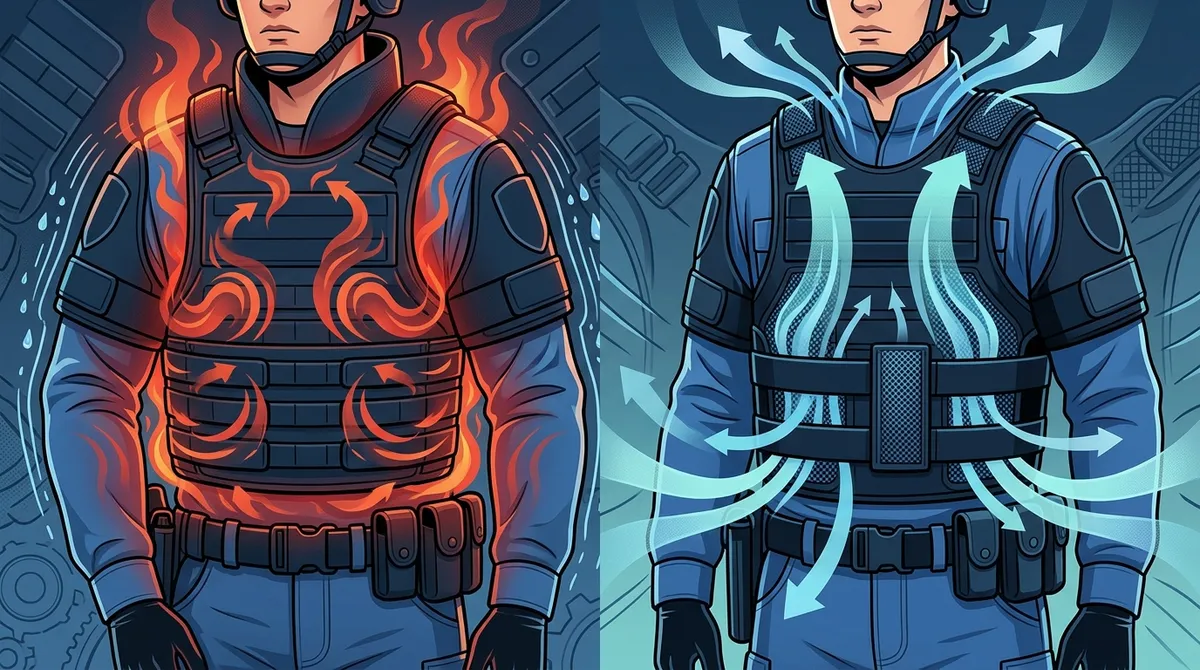
Body armor is designed to stop threats — not to breathe. The materials used in ballistic vests block airflow between your uniform and your skin. This creates a sealed pocket of heat and moisture against your torso. Over a long shift, that trapped heat adds up fast.
Security professionals working outdoor posts, patrolling large facilities, or standing in areas with poor ventilation feel this the most. According to the OSHA Heat Stress Guide, heat-related illness is a serious occupational hazard, and wearing heavy protective gear significantly increases risk. That’s exactly why professionals need a body armor ventilation vest built for the job.
The solution isn’t removing your vest — it’s managing the heat underneath it. Two main technologies tackle this problem in very different ways: ventilation systems that move air and cooling packs that absorb heat.

Option 1: Active Ventilation Vests
Active ventilation vests use fan systems or inflatable air gaps to circulate fresh air beneath your body armor. They create a physical space between your body and the vest, letting sweat evaporate and heat escape naturally. This is an ongoing, continuous process that works as long as the system is running.
Two standout products in this category come from BluHalo and Blufano, both built specifically for professionals who wear body armor daily.
BluHalo Ventilation Vest
The BluHalo ventilation vest was actually invented by a Chicago police officer who got tired of overheating on the job. That background matters — it means this product was designed by someone who lived the problem. BluHalo weighs under 7 ounces and sits flat when deflated. When you need cooling, you inflate it to lift your vest up to 1.5 inches off your body, creating an air gap that lets heat escape and sweat evaporate.
Officers report dramatic comfort improvements during hot shifts — even in 95-degree weather during 12-hour days. At just $60, it’s an affordable entry point into active ventilation. You can attach it to your vest with Velcro, inflate it on demand, and deflate it instantly with a button. Simple, effective, and low-profile.
Blufano Fan System
The Blufano takes things up a notch. It’s a self-contained, active airflow unit with a patented air-redirect spout that slides under any style of body armor. A built-in fan drives fresh air continuously beneath your vest for 8 to 32 hours depending on your setting. It also includes a 10,000mAh power bank that can charge your other devices, plus a forward-facing light for low-light situations.
Users love the Blufano for its all-day performance. The adjustable control knob lets you dial in exactly how much airflow you need. For security professionals on long shifts in hot environments, this kind of sustained, active cooling is hard to beat. You can even compare BluFano and BluHalo to decide which fits your needs best.
Option 2: Passive Cooling Packs
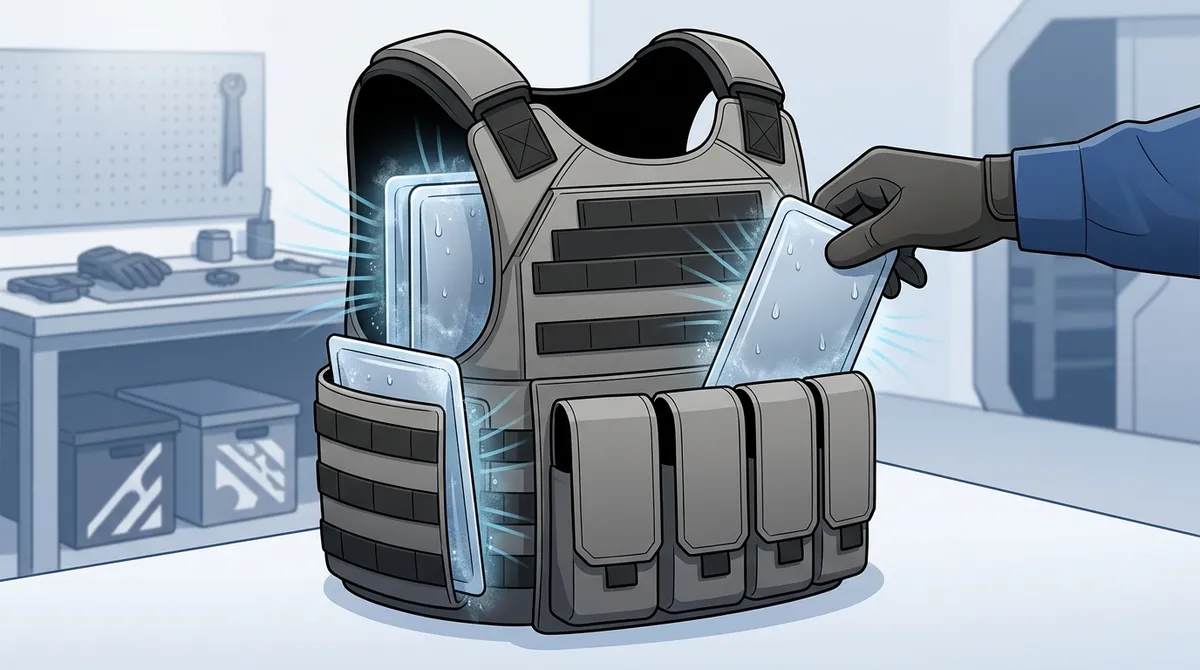
Passive cooling packs don’t use power or fans. Instead, they rely on materials that absorb heat — like phase-change materials (PCMs), ice inserts, or evaporative cooling fabrics. You insert them into pockets in a vest or wear them as a layer beneath your armor.
These systems are popular because they require no batteries or charging. But they come with a significant limitation: they stop working once the cooling material warms up or dries out. Depending on conditions, that can happen in as little as 30 to 90 minutes for ice-based packs, or 2 to 4 hours for phase-change materials.
Understanding the difference between ventilation and phase-change cooling vests can really help you make the right call for your work environment. For more on passive vs. active tactical vest ventilation, there’s a deeper breakdown worth reading before you decide.

Side-by-Side Comparison
Here’s a quick look at how these two approaches stack up across the factors that matter most to security professionals:
| Feature | Active Ventilation Vests | Passive Cooling Packs |
|---|---|---|
| Cooling Duration | 8–32+ hours (battery dependent) | 30 min – 4 hours |
| Requires Power | Yes (rechargeable battery) | No |
| Ongoing Airflow | Yes (continuous) | No (heat absorption only) |
| Sweat Reduction | High (evaporation assisted) | Moderate |
| Weight Added | Very light (under 7 oz for BluHalo) | Moderate to heavy |
| Mid-Shift Reset | Not needed (runs continuously) | Often required |
| Best For | Long shifts, hot climates, outdoor posts | Short tasks, indoor environments |
| Cost | $60–$150+ | $20–$100+ |
Key Factors to Consider for Your Security Job
Not every security role is the same. The right cooling solution depends on your specific work environment. Here are the most important factors to think through:
- Shift Length: If you work 8 to 12-hour shifts, passive cooling packs will likely run out of cooling capacity long before your shift ends. Active ventilation systems are built for endurance.
- Environment: Outdoor posts in direct sun demand more aggressive cooling than indoor facility work. Active fan systems handle high-heat outdoor environments much better.
- Mobility: If your job requires a lot of movement, a lightweight system like the BluHalo is ideal. Bulky ice packs can shift around and become uncomfortable during patrols.
- Recharge Access: Consider whether you can recharge a battery mid-shift. The Blufano’s 10,000mAh bank gives you all-day power without needing an outlet until after your shift.
For a more in-depth look at choosing the right solution, this guide on choosing the best ballistic vest cooling solution covers a lot of ground. And if you’re making mistakes with your current setup, check out the 10 security guard body armor cooling mistakes to avoid.
Performance in Real Security Conditions
Let’s look at how each option performs in the most common security job scenarios:
| Scenario | Active Ventilation Winner | Passive Cooling Adequate? |
|---|---|---|
| 12-hour outdoor post in summer | ✅ Yes (Blufano ideal) | ❌ No – runs out quickly |
| Indoor facility patrol (4-6 hrs) | ✅ Yes (BluHalo works well) | ⚠️ Maybe – borderline |
| Armed guard with high mobility | ✅ Yes (lightweight systems) | ❌ No – packs shift and add weight |
| Short event security (2-3 hrs) | ✅ Yes | ✅ Yes – works at this duration |
| Night shift with low light | ✅ Yes (Blufano has built-in light) | ⚠️ Maybe – no lighting advantage |
What About Moisture-Wicking Fabrics?
Some professionals try to solve the heat problem by wearing moisture-wicking base layers under their armor. This can help — but it’s not a complete solution on its own. Moisture-wicking fabrics pull sweat away from your skin, but they can’t create airflow or release heat trapped between your body and a solid vest panel.
The best approach is layering: start with a quality moisture-wicking base layer, then add an active ventilation system on top of that. This combination handles both sweat and heat — the two main sources of discomfort. You can explore the 9 best moisture-wicking vests for body armor comfort in 2026 for solid base layer options.
The Body Armor Standards from the National Institute of Justice also note that comfort factors — including heat management — directly affect how consistently officers wear their protection. A vest you can tolerate all day is far safer than one you ditch mid-shift because it’s unbearable.
Practical Tips for Staying Cool on Duty
Whatever system you choose, these habits will make a big difference during your shifts:
- Hydrate consistently — don’t wait until you’re thirsty. Dehydration makes heat stress worse and faster.
- Check your vest fit — a vest that’s too tight seals in heat even more. A proper fit allows at least a little space for air movement. See body armor fit and airflow tips for all-day comfort.
- Use vehicle AC strategically — Blufano users report that a few minutes with vehicle AC blowing directly at the unit dramatically speeds up cooling between patrol segments.
- Clean your gear regularly — sweat and salt buildup in your ventilation system or base layers can reduce performance and cause skin irritation over time.
- Layer smartly — thin, breathable base layer + active ventilation = the most effective combination for all-day comfort.
For a broader picture of heat prevention strategies, this resource on preventing heat stress while wearing body armor is a fantastic read. And if you want even more ideas, 7 ways to stay cool under pressure in body armor covers practical field-tested techniques.
It’s also worth noting that quality gear benefits from quality surroundings. Just like Bucheli Trim focuses on precision and durability in their craft, the best ventilation systems are built with the same attention to detail — designed to perform under real pressure, day after day.
Which One Should You Choose?
Here’s the honest answer: for most security professionals working full shifts in protective vests, active ventilation wins. Passive cooling packs are fine for short tasks, but they simply can’t keep up with long shifts, hot climates, or high-movement roles.
The BluHalo and Blufano systems are purpose-built for the exact problem you face. They provide continuous, on-demand cooling without sacrificing mobility or adding significant bulk. The BluHalo gives you an affordable, simple solution that creates an air gap on demand. The Blufano goes further with powered fan airflow, a massive battery, and extras like the built-in light. Together, they cover the full range of what security professionals need.
If budget is a concern, start with the BluHalo and upgrade later. If you want maximum all-day performance right away, the Blufano is your answer. You can also explore the BluHalo and Blufano shop to see current options and bundle deals that let you get both at a discount.
Staying cool in a protective vest security job doesn’t have to be a miserable grind. With the right ventilation solution, you can stay focused, comfortable, and fully protected — no matter how long or hot the shift gets. Ready to make the switch? Reach out to the BluHalo team to find the best cooling solution for your specific role and environment.
FAQs
Q: What is the best way to stay cool in a protective vest security job?
A: The most effective approach is using an active ventilation system like the BluHalo or Blufano, which circulate fresh air under your body armor continuously. Pairing that with a moisture-wicking base layer gives you the best all-day comfort during long security shifts.
Q: Do ventilation vests work under body armor without affecting protection?
A: Absolutely! Ventilation vests like BluHalo are designed specifically to be worn beneath body armor without interfering with the protective shell. They simply create an air gap or fan airflow between your body and the vest to reduce heat and moisture buildup.
Q: How long do cooling packs last under a security vest compared to ventilation systems?
A: Most passive cooling packs last between 30 minutes and 4 hours depending on heat and activity level, which often isn’t enough for a full security shift. Active ventilation systems like Blufano run for 8 to 32 hours on a single charge, making them far better suited for long duty days.
Q: Can a ventilation vest reduce sweat and odor under protective gear?
A: Yes! By keeping air moving under your vest, ventilation systems help sweat evaporate instead of pooling against your skin, which significantly reduces both moisture buildup and the odors that come with it. It’s one of the most appreciated benefits security professionals mention after switching to active ventilation.
Q: Are ventilation vests safe to use with security or police body armor?
A: Yes, ventilation vests are safe to use alongside certified body armor — they don’t alter or compromise the ballistic protection in any way. Always make sure your body armor still meets the required standards, and check out the Body Armor Standards from the NIJ for guidance on proper use and fit.