Key Takeaways
-
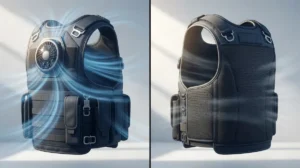
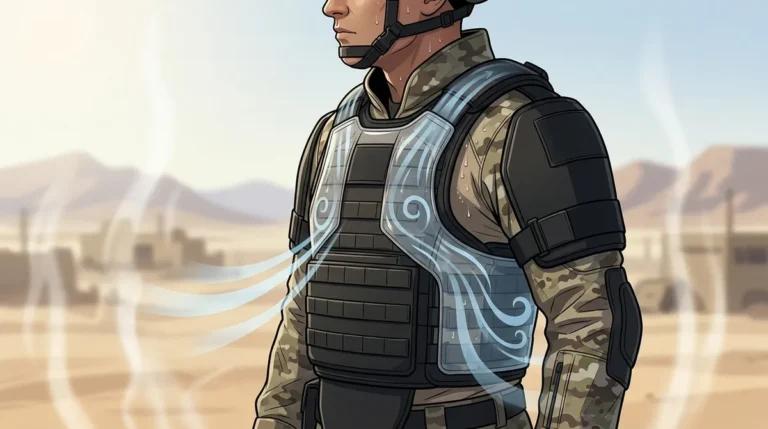
Heat stress from body armor impairs judgment, slows reaction time, and increases heat exhaustion risk—treating cooling systems as essential gear rather than optional equipment directly impacts operational safety and performance.
-
Choose lightweight, low-profile cooling systems (under 7 oz) that don’t add bulk; inflatable designs like BluHalo create proper 1.5-inch air gaps without compromising mobility or adding weight to your already-heavy gear.
-
Match your cooling system type to your environment: use passive systems for active movement in dry climates, and active fan systems (8-32 hour battery) for stationary posts or humid conditions where natural airflow is insufficient.
-
Proper fit and placement are critical—attach ventilation layers along the torso with Velcro, inflate to recommended levels, and perform movement checks to prevent hot spots and ensure consistent airflow throughout your shift.
-
Address both temperature and moisture management by selecting systems with 3D mesh panels, anti-microbial fabrics, and moisture-wicking base layers that allow sweat evaporation rather than trapping humid air against your body.
-
Invest in durable materials like double-layer polyethylene that withstand daily attachment/removal, UV exposure, and repeated inflation cycles; quality gear lasts through 12+ hour shifts and prevents costly replacements within months.
If you wear body armor for a living, you know the struggle. The heat builds up fast. Sweat soaks through your uniform. Your focus starts to slip. And before long, what should be a manageable shift turns into an endurance test. A good military body armor cooling system can be the difference between staying sharp and burning out — but only if you’re using it correctly.
The good news? Most of the common mistakes are easy to fix once you know what to look for. Whether you’re active duty military, a patrol officer, or a security professional, this guide is for you. We’ve rounded up the 7 biggest mistakes people make when choosing and using body armor cooling systems — so you don’t have to learn the hard way. Let’s dive in!

Why Body Armor Cooling Matters More Than You Think
Body armor traps heat against your torso. There’s simply no airflow between your skin and the hard plates or soft panels. According to the OSHA Heat Stress Guide, prolonged heat exposure impairs judgment, slows reaction time, and increases the risk of heat exhaustion. For professionals in the field, that’s not just uncomfortable — it’s dangerous.
That’s why ventilation vests and cooling systems have become essential gear for military and law enforcement. They create an air gap between your body and your armor, allowing heat and moisture to escape. But picking the wrong system — or using the right one incorrectly — can leave you just as hot as before.
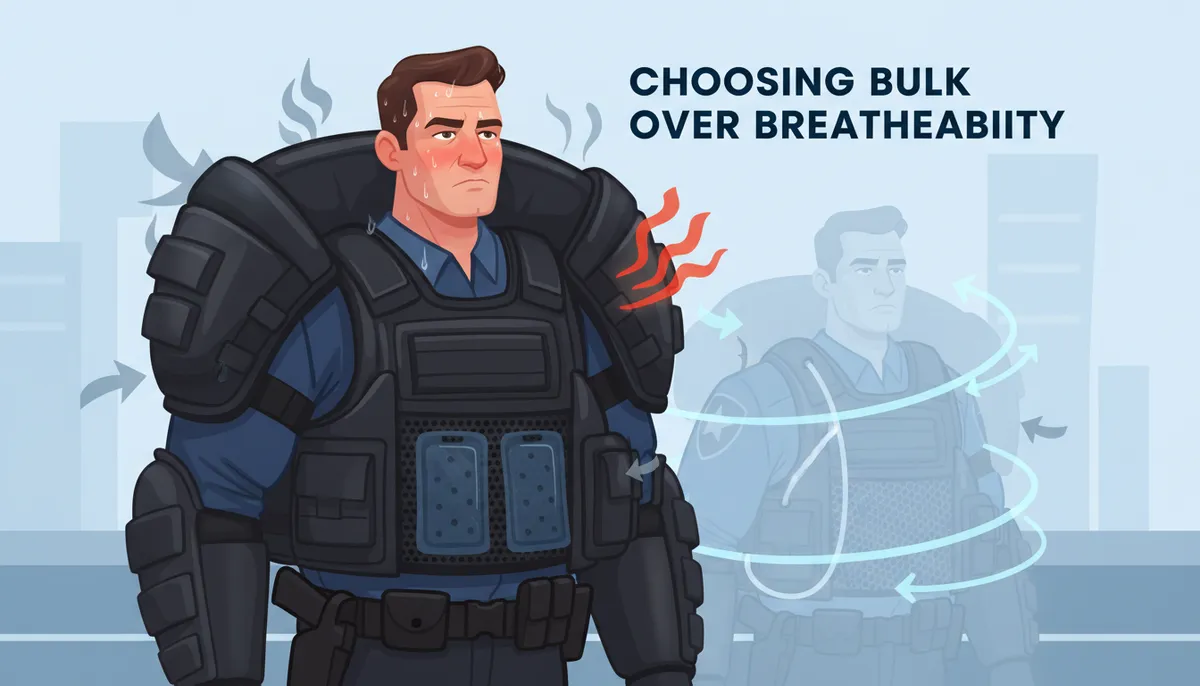
Mistake #1: Choosing Bulk Over Breathability
One of the biggest errors people make is picking a cooling system that adds too much weight or bulk. You already carry a lot. Adding a heavy, clunky layer under your armor defeats the purpose.
The best systems are lightweight and low-profile. For example, BluHalo’s ventilation vest weighs under 7 ounces and sits flat when deflated. When you need cooling on demand, it inflates to lift your vest up to 1.5 inches off your body — creating a proper airflow channel without adding bulk. That’s the kind of smart design you should look for.
Here’s a quick comparison of popular options to help you choose wisely:
| Product | Weight | Cooling Type | Price | Key Feature |
|---|---|---|---|---|
| BluHalo Ventilation Vest | Under 7 oz. | Passive / On-Demand | $60 | Inflatable 1.5″ air gap, Velcro attach |
| Blufano Fan System | Compact | Active Fan-Driven | Bundle available | 8–32 hr battery, 10,000mAh power bank, light |
| Maxx-Dri Vest 3.0 | 9 oz. | Passive Mesh | $100 | 360° separation for heat and moisture escape |
| Qore Performance IceVents® | Under 1 oz. | Passive Panel | $70 | 90% air by volume, anti-microbial |

Mistake #2: Ignoring Active vs. Passive Cooling
Not all cooling systems work the same way. Passive systems create space for air to flow naturally. Active systems use fans to push or pull air through. Both have their place, but using the wrong type for your environment is a common mistake.
In high-heat, low-movement situations — like standing post or riding in a vehicle — passive airflow may not be enough. That’s where the Blufano active fan system shines. It uses a patented air-redirect spout that slides under any body armor style, with adjustable fan speed and a 10,000mAh power bank that lasts 8 to 32 hours per charge. Learn more about passive vs. active tactical vest ventilation to find the right fit for your role.
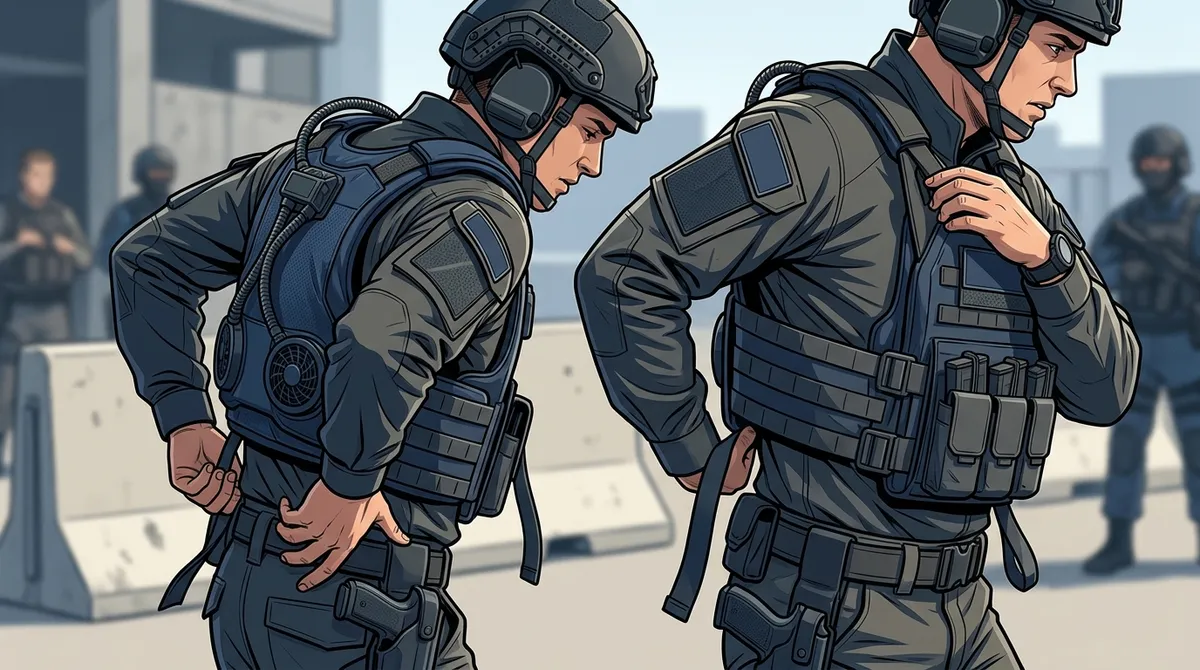
Mistake #3: Skipping Proper Fit and Placement
Even the best military body armor cooling system won’t work if it’s not positioned correctly. A vest that bunches up or shifts during movement creates hot spots instead of relieving them.
Follow these steps for proper placement:
- Attach the ventilation layer to a clean, dry vest surface using the included Velcro or strap.
- Position the airflow channels or pontoons along the torso — not bunched at the sides.
- Inflate (if applicable) to the recommended level before putting on your outer armor.
- Do a quick movement check — squat, reach, and turn — to confirm nothing shifts.
Good fit means consistent airflow all shift long. Check out these helpful body armor fit and airflow tips for more guidance.
Mistake #4: Neglecting Moisture Management
Cooling isn’t just about temperature — it’s about moisture too. Sweat that has nowhere to go creates a wet, uncomfortable environment that actually traps more heat. Many people focus on air circulation but forget about wicking and evaporation.
The best systems address both. Here’s what to look for in materials:
- 3D mesh panels — allow both airflow and sweat evaporation
- Anti-microbial fabrics — prevent odor and bacteria buildup from sweat
- Moisture-wicking base layers — pull sweat away from the skin
- Ventilation channels — direct humid air away from the body
- Breathable polyethylene structures — durable and non-absorbent for long wear
You can also explore the best moisture-wicking vests for body armor comfort to stack your cooling strategy effectively.
Mistake #5: Not Accounting for Your Environment
A cooling system that works great in dry desert heat may underperform in humid coastal conditions. Temperature and humidity both affect how well evaporative cooling works. This is a mistake that’s easy to overlook during gear selection.
Review this quick breakdown to match your system to your climate:
| Environment | Main Challenge | Best Cooling Approach | Recommended Feature |
|---|---|---|---|
| Dry / Desert Heat | Rapid body temperature rise | Passive evaporative + air gap | Mesh channels + inflation vest |
| Humid / Tropical | Sweat won’t evaporate | Active fan-driven airflow | Fan system with strong airflow |
| Urban / Patrol | Heat buildup during low movement | Active cooling with on/off control | Adjustable fan speed settings |
| Cold / Winter | Moisture trapping under armor | Passive ventilation channels | Vertical foam channels (EVAP-style) |
Understanding your environment helps you choose the right gear from the start. For a deeper look, this guide on choosing law enforcement gear for hot climates covers the key considerations clearly.
Mistake #6: Overlooking Long-Term Durability
Body armor ventilation gear needs to hold up under daily use. Cheap materials break down fast — especially when exposed to sweat, UV rays, and repeated inflation and deflation cycles. Choosing a system purely on price often leads to replacing it within months.
BluHalo is built from double-layer, high-strength, high-tensile polyethylene — the same kind of material engineered for durability under stress. Officers who’ve used it report significant comfort improvements even through 12-hour shifts in 95-degree weather. That kind of performance comes from quality materials, not cutting corners.
When evaluating durability, ask these questions:
- What material is the ventilation layer made from?
- Can it handle daily attachment and removal?
- Is it washable or easy to clean?
- Does it come with a warranty or satisfaction guarantee?
For a broader look at gear quality, the Body Armor Standards from the National Institute of Justice offer helpful context on performance expectations for protective gear.
Mistake #7: Treating Cooling as Optional Equipment
This might be the biggest mistake of all — thinking a body armor cooling system is a luxury instead of a necessity. Heat stress affects performance, decision-making, and safety. It’s not just discomfort. It’s a real operational risk.
Research consistently shows that overheating under armor leads to fatigue, reduced alertness, and slower response times. For military personnel, law enforcement, and emergency responders, those effects can have serious consequences on the job. A military body armor cooling system isn’t a nice-to-have — it’s essential gear.
Here’s a summary of what heat stress actually does to performance:
| Heat Stress Effect | Impact on Performance | Cooling System Benefit |
|---|---|---|
| Elevated core temperature | Slower reaction time | Reduces heat buildup under armor |
| Excessive sweating | Discomfort, distraction | Wicks and evaporates moisture |
| Dehydration risk | Mental fatigue, poor focus | Reduces sweat rate and heat load |
| Skin irritation | Constant distraction | Creates air gap to reduce friction |
If you want to learn more about preventing heat stress on duty, this in-depth guide on preventing heat stress while wearing body armor is a great place to start.
How to Build the Best Cooling System Setup
Now that you know what to avoid, here’s how to put together a cooling setup that actually works for long shifts:
- Start with a base layer — choose a lightweight, moisture-wicking shirt to help sweat evaporate faster.
- Add a ventilation vest — the BluHalo creates an instant air gap with its on-demand inflation system.
- Consider an active fan option — Blufano slides under any armor style and runs for up to 32 hours per charge.
- Stay hydrated — cooling gear works best when your body is properly hydrated before and during your shift.
- Inspect and clean your gear regularly — dirty or compressed ventilation channels lose effectiveness over time.
You can explore the full lineup and bundle options at the BluHalo shop. Bundling the BluHalo vest with the Blufano fan system gives you both passive and active cooling in one complete package — at a discount.
What Professionals Are Saying
Officers who’ve switched to active ventilation systems consistently report major improvements in comfort, focus, and endurance during hot shifts. The feedback is especially strong from those working in high-heat environments or wearing armor for 10+ hours at a stretch.
Real-world performance matters most. That’s why reading verified reviews from professionals can help you feel confident in your gear choice. You’re not experimenting — you’re choosing what’s already working for people in your exact situation.
For additional context on what cooling options are available today, check out the best vest cooling systems guide for a well-rounded comparison.
Conclusion: Stay Cool, Stay Sharp
Avoiding these 7 mistakes can completely change how you feel during long, hot shifts. The right military body armor cooling system keeps you cooler, drier, and more focused — without adding bulk or slowing you down. Whether you go with a passive ventilation vest like BluHalo or an active fan system like Blufano, the key is to choose smart, fit it correctly, and treat it as essential gear — not an afterthought.
Your comfort and performance matter. The professionals counting on you deserve your best — and so do you. Reach out to the BluHalo team today if you have questions about which cooling solution is right for your role, your climate, or your gear setup. We’re here to help you stay cool under pressure.
FAQs
Q: What is the best military body armor cooling system for long shifts?
A: The best system depends on your environment and needs! For on-demand passive cooling, the BluHalo ventilation vest is a fantastic choice — it’s under 7 oz and creates a 1.5-inch air gap under your armor. For active, fan-driven cooling during low-movement situations, the Blufano fan system runs up to 32 hours and is a total game-changer for hot shifts.
Q: Do ventilation vests add bulk under body armor?
A: Not at all — the good ones are designed to stay low-profile! BluHalo, for example, sits completely flat when deflated and only inflates when you need that cooling air gap. You get comfort without any added weight or bulk that would interfere with your gear or movement.
Q: Can a military body armor cooling system work in both hot and cold weather?
A: Absolutely! Ventilation systems don’t just cool — they also prevent moisture buildup in cold weather, which can make you feel even colder. Products with vertical foam channels or breathable mesh work year-round by managing both heat and sweat regardless of the season.
Q: How does an active cooling fan system differ from a passive ventilation vest?
A: A passive vest creates space for natural airflow when you move, while an active fan system (like Blufano) mechanically pushes air under your armor continuously. Active systems are especially helpful when you’re stationary — like standing post or riding in a vehicle — where natural airflow just isn’t enough to keep you cool.
Q: Is a body armor cooling system worth the investment for security professionals?
A: 100% yes! Heat stress reduces focus, slows reaction time, and leads to fatigue — none of which you can afford on duty. A quality cooling system like BluHalo is priced at just $60, which is a small investment for the comfort and performance improvement you’ll feel on every single shift.