Key Takeaways
-
Active outer carrier cooling fans outperform passive ventilation for long shifts and static posts by providing steady airflow independent of body movement, making them ideal for officers in vehicles or at checkpoints.
-
Proper fit under body armor is critical for cooling fan effectiveness; ensure intake/exhaust ports aren't blocked and there's open space for air circulation, as fans designed for regular clothing may not work under tight-fitting carriers.
-
Battery runtime varies significantly by product and fan speed; check runtime at your intended speed setting (not just lowest), confirm battery type, and test the system during a real shift before relying on it for full duty days.
-
Combining active cooling fans with passive air-gap layers provides optimal results by creating space for air movement while the fan actively circulates it, delivering superior heat management compared to either method alone.
-
Cooling fans are comfort and heat-management tools, not heat illness prevention devices; they must be paired with proper hydration, rest breaks, acclimatization, and heat safety protocols for effective protection.
-
Fan effectiveness decreases in high humidity since cooling relies on sweat evaporation, which slows in moist air; users in humid climates should maintain realistic expectations and incorporate cool-down breaks for faster temperature reduction.
If you have ever finished a long shift and felt like your vest was a personal sauna, you are not alone. Body armor and tactical carriers are built to protect you. They are not built to breathe. Heat and sweat get trapped against your torso, and that wears you down fast.
That is why so many officers, soldiers, and security pros now look at an outer carrier cooling fan. It sounds simple: add airflow where the heat builds up. But is a fan really better than a passive ventilation layer? And does it matter if you wear an outer carrier instead of a plain vest?
In this friendly guide, we compare active fan cooling with passive ventilation. You will learn how each one works, where each one shines, and what to check before you buy. We will keep it simple and honest, so you can pick the right setup for your gear and your shift.
What Is an Outer Carrier Cooling Fan?
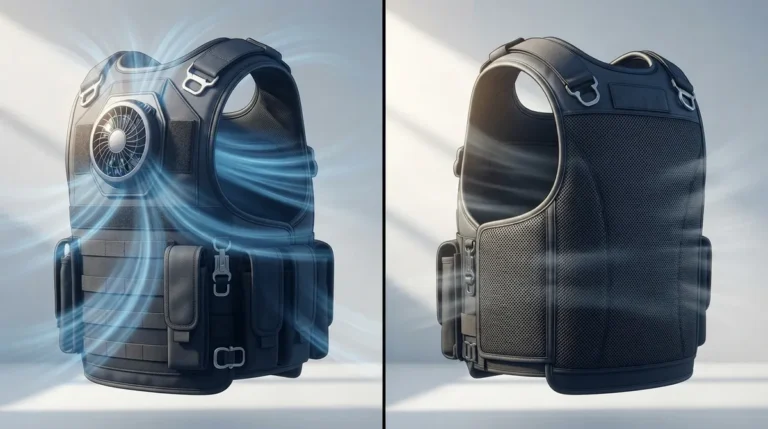
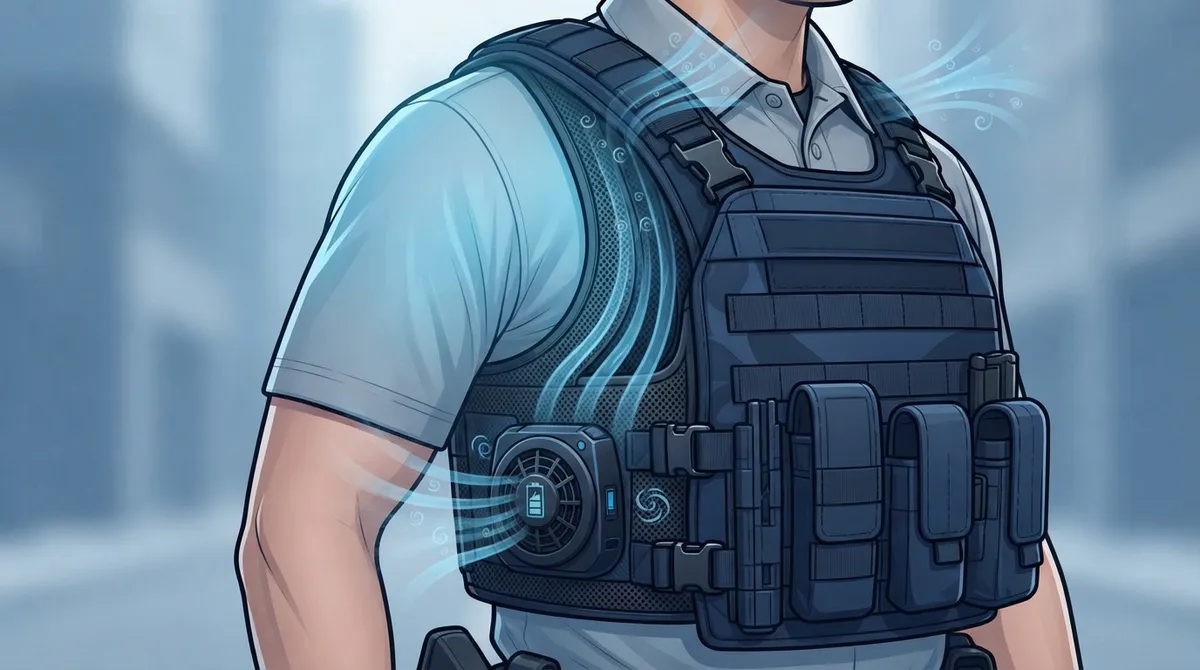
In the ventilation vest world, an outer carrier cooling fan is a battery-powered fan or airflow unit. It works with a tactical outer carrier or body armor. It moves air under the carrier, where heat and sweat get stuck.
Some designs are built into a vest. Others are a separate unit with an outlet that slides under your armor. Either way, the goal is the same: keep air moving across your skin so sweat can evaporate.
One key point to remember is that a fan does not make cold air. It does not work like a tiny air conditioner. It cools mainly by moving air, which helps sweat dry. That is called evaporative cooling, and it is the same reason a breeze feels good on a hot day.
If you want a deeper look at the basics, our guide on how an active cooling system works in ventilation vests breaks it down step by step.
What Is Passive Ventilation?
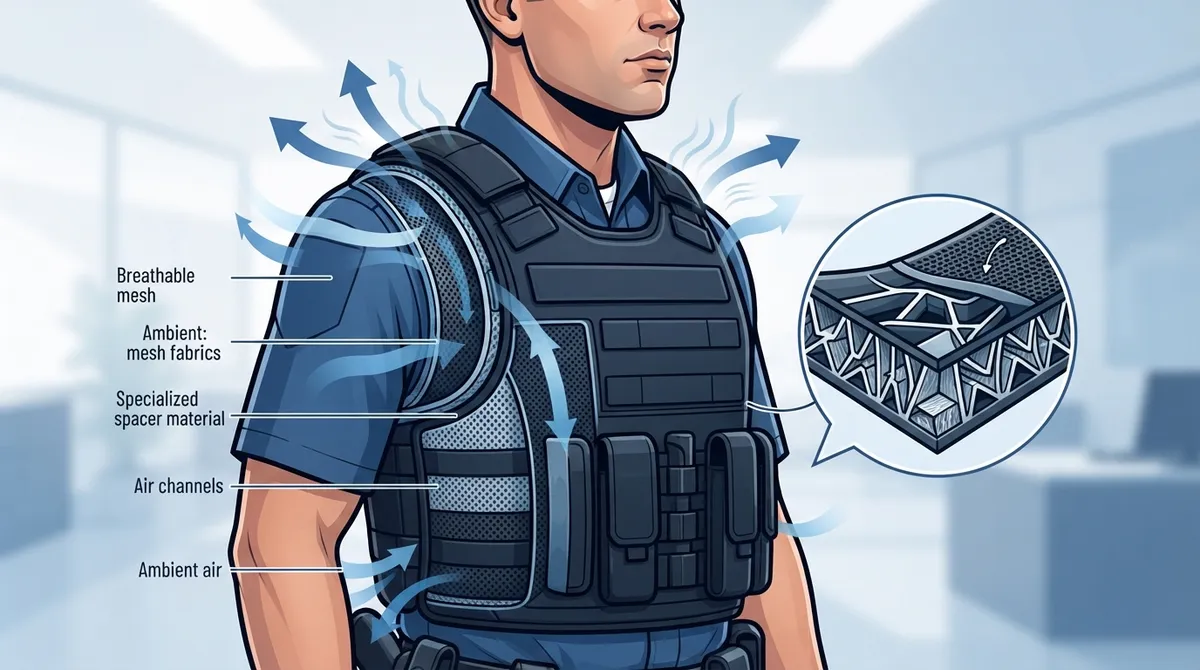
Passive ventilation uses no power. Think spacer mesh, channeled foam, or air-gap panels that sit between your body and your armor. These layers create small pockets for air to move through as you walk, bend, and shift.
Passive layers are simple. There is no battery to charge and no fan to hear. They can help lift the carrier a little and cut down on that stuck, sticky feeling.
The tradeoff is that passive layers rely on your movement. When you sit in a patrol car or stand at a post for hours, there is little airflow. Heat can still build up. You can read more about this in our comparison of passive vs. active tactical vest ventilation.
Outer Carrier Cooling Fan vs. Passive Vent: Side-by-Side
Here is a quick look at how the two approaches compare for everyday duty use.
| Feature | Outer Carrier Cooling Fan | Passive Ventilation |
|---|---|---|
| Power needed | Yes, battery powered | No power needed |
| Airflow when still | Yes, steady airflow | Limited when you are not moving |
| Cooling method | Moves air, speeds up sweat evaporation | Creates small air gaps |
| Noise | Low hum, varies by speed | Silent |
| Maintenance | Charge battery | Wipe clean, air dry |
| Best for | Long shifts, hot days, low movement | Light duty, cooler climates, backup use |
Neither option is perfect. The best choice depends on your climate, your workload, and how much you move during a shift.
Where a Cooling Fan Shines
A fan is the better pick when you need airflow that does not depend on motion. Here are the situations where it tends to help most:
- Long patrol shifts where you spend hours in a vehicle.
- Static posts such as gates, checkpoints, and protective details.
- Hot, dry climates where sweat dries quickly in moving air.
- Low-light work when a built-in light is a handy bonus.
- Heavy gear loads where the carrier sits tight against the body.
Fan-based cooling is also easy to adjust. If you are warm, you turn it up. If you are comfortable, you turn it down and save battery.
Where Passive Vent Layers Still Win
Passive layers are not out of the game. They have real strengths:
- No charging, no cords, and no batteries to forget.
- Zero noise, which matters on some tactical jobs.
- Very low weight and a slim profile.
- Simple, low-cost comfort for mild weather.
Many wearers even pair the two. A passive layer creates the space, and a fan pushes air through it. That combo can give you the best of both worlds. Our post on small fan vs. air-gap vest explores that idea in more detail.
Why Fit Matters More Than You Think
Here is a tip many people miss. A fan made for everyday clothing may not work well under a close-fitting carrier. If the air has nowhere to go, the fan cannot do its job.
Before you buy, think about these fit points:
- Intake and exhaust: Make sure air can enter and leave without being blocked.
- Air path: Check that there is open space under your armor for air to flow.
- Carrier compatibility: Confirm the product is meant for use under body armor, not just general clothing.
- Comfort: Sit, stand, bend, and drive in it before you rely on it.
A cooling vest that fits one carrier may not fit another. If you want a full checklist, see our guide on how to pick a cooling fan system for body armor.
Battery Runtime: What to Expect
Battery life is one of the biggest questions people ask. The honest answer is that it varies a lot. Higher fan speeds use more power, and different products use different batteries.
To give you a sense of the range, one commercial fan-vest listing claims about 25 hours on its lowest setting and about 12 hours on its highest, using a 20,000 mAh battery. Another maker, INUTEQ, says its AirVent Vest can run up to four hours per charge, depending on the battery. These are vendor claims, not independent tests, and they should not be treated as a standard.
So how do you plan around that? Try this simple approach:
- Check the runtime at the fan speed you plan to use, not just the lowest speed.
- Confirm the battery type, charging method, and connector.
- Ask if you can carry a spare or swap the battery mid-shift.
- Test the system on a real shift before you trust it for a full day.
Blufano, from BluHalo, uses a built-in 10,000 mAh power bank and offers about 8 to 32 hours of runtime depending on the setting. It also works as a USB charger for your devices, which is a nice extra on long days.
The Humidity Reality Check
Fans work by helping sweat evaporate. That means they work best when the air is dry enough to take up moisture. In very humid weather, sweat evaporates slowly, so the cooling effect can feel weaker.
That does not mean a fan is useless in humid places. Moving air can still reduce that clammy, stuck feeling. But you should keep your expectations realistic. Some wearers find that using vehicle air conditioning with the fan running helps them cool down faster between calls.
For a closer look at moisture, check out how sweat management works under body armor.
A Fan Is Not a Heat Safety Plan
This part is important. An outer carrier cooling fan is a comfort and heat-management tool. It is not a replacement for proven heat safety steps.
NIOSH lists air-cooled garments and other wearable cooling systems as possible heat-protection measures. But it also says to look at the whole picture, including your full gear setup, work rate, fitness, hydration, acclimatization, and the environment. You can read more in the OSHA heat stress guide.
Keep these basics in place no matter what gear you wear:
- Drink water regularly, before you feel thirsty.
- Take rest breaks in shade or a cool area when you can.
- Ease into hot conditions so your body can adjust.
- Know the signs of heat illness and speak up early.
Our article on how to prevent heat stress while wearing body armor covers these habits in more detail.
Meet the BluHalo and Blufano Options
At BluHalo, we make two products built for exactly this problem. Each one tackles heat under armor in a different way, and they work great together.
Blufano: Active Fan Cooling
Blufano is a self-contained, fan-driven airflow unit. It has a patented air-redirect spout that slides under any style of body armor. You can secure it with an optional strap and adjust the airflow with a control knob.
It includes a built-in 10,000 mAh power bank and a forward-facing light for hands-free use in low light. Officers often mention less sweat, faster cooling, and better focus on hot days. If you are weighing options, see our review of the Blufano vest cooling fan.
BluHalo: On-Demand Air Gap
The BluHalo ventilation vest was created by a Chicago police officer. It weighs under 7 ounces and lies flat when deflated. With a small pump, you inflate it to lift your vest up to about 1.5 inches off your body. That creates a cooling air gap. A button lets you deflate it fast.
It attaches to a clean vest with Velcro and is made from double-layer, high-strength polyethylene for durability. You can learn more in our guide on how to use the BluHalo ventilation vest for maximum comfort.
Better Together
Pair the two and you get a lifted vest plus steady moving air. That air gap gives the fan room to work, and the fan keeps the space fresh. Both products are sold in the BluHalo shop, and bundling them saves money. Not sure which fits you? Compare them in BluFano vs. BluHalo.
How to Choose: A Simple Decision Guide
Not sure where to start? Walk through these steps:
- Check your climate. Hot and dry favors a fan. Mild weather may only need a passive layer.
- Think about your movement. Lots of sitting or standing still points to a fan.
- Look at your carrier. Make sure there is a clear path for air under your armor.
- Plan your battery. Pick a runtime that fits your longest shift, with a buffer.
- Test before you trust. Wear it in real conditions before a critical day.
You can also avoid common slip-ups by reading 7 body armor cooling fan mistakes you must avoid.
Who Benefits Most?
Different jobs face different heat challenges. Here is how an outer carrier cooling fan tends to help:
- Law enforcement officers: Long, hot patrol shifts with lots of time in the car.
- Military personnel: Extended missions in high heat with heavy armor.
- Security professionals: Hours at a post wearing armor in any climate.
- Tactical and SWAT teams: High-intensity work where overheating hurts performance.
- Emergency responders: Heavy protective gear in hot, demanding conditions.
For more ideas on staying comfortable, explore our roundup of the 9 best body armor cooling systems for hot shifts in 2026.
The Verdict: Which One Wins?
So, who takes the crown? For most people working long, hot shifts in armor, an active outer carrier cooling fan wins on raw performance. It moves air even when you stand still, and you can dial it up or down as you need.
Passive ventilation still has a place. It is quiet, simple, and great for mild days or as a base layer. The smartest setup often blends both, which is exactly why BluHalo and Blufano work so well as a team.
Whatever you choose, remember that gear is only one piece of staying safe in the heat. Pair it with water, rest, and good habits. For standards on armor itself, the body armor standards from NIJ are a handy reference.
Ready to feel the difference on your next shift? Check out our full lineup in the shop, or get in touch with our team and we will help you find the right cooling setup for your gear.
FAQs
Q: What is an outer carrier cooling fan?
A: It is a battery-powered fan or airflow unit that moves air under a tactical outer carrier or body armor. It helps sweat evaporate so you feel cooler and less damp. It does not make cold air like an air conditioner.
Q: Can I add a fan to my existing outer carrier?
A: Often you can, but fit matters a lot. Look for a unit built for use under body armor, like Blufano, with an air-redirect spout that slides under your vest. Always test it in your own setup to make sure air can flow freely.
Q: How long does a vest cooling fan battery last?
A: It depends on the product and the fan speed. Higher speeds use more power, and claims vary widely by brand. Blufano’s built-in 10,000 mAh battery offers roughly 8 to 32 hours depending on the setting, so check runtime at the speed you plan to use.
Q: Do cooling fans work in humid weather?
A: They still help, but not as much. Fans rely on sweat evaporating, and that slows down in very humid air. Pairing a fan with an air gap and taking cool-down breaks can make a real difference.
Q: Can an outer carrier cooling fan prevent heat illness?
A: No, a fan is a comfort and heat-management aid, not a cure-all. You still need hydration, rest breaks, acclimatization, and a solid heat-safety plan. Think of the fan as one helpful tool in a bigger toolbox.