Key Takeaways
-
Create an air gap between your body and armor using a ventilation vest to allow sweat evaporation; research shows this reduces sweat rates by 21-25% and skin temperature by 0.9°C.
-
Active fan-driven cooling systems outperform passive mesh ventilation in extreme heat and long shifts, with studies showing active systems reduce physiological strain while passive devices show negligible effects.
-
Wear moisture-wicking synthetic base layers instead of cotton to pull sweat away from skin faster, paired with a properly fitted carrier that maintains 1-1.5 inches of air gap for optimal airflow.
-
Stay hydrated throughout your shift and take scheduled cooling breaks in shade or air conditioning, as ventilation alone cannot replace water your body needs during extended wear.
-
Monitor for heat-related illness symptoms like dizziness, headache, confusion, or muscle cramps while wearing body armor, and seek immediate medical attention if these warning signs appear.
-
Maintain your ventilation gear by wiping it down after each shift, checking straps and components regularly, and ensuring battery-powered systems are fully charged before use.
If you’ve ever peeled off a bulletproof vest at the end of a shift to find your shirt completely soaked, you know exactly why this article exists. You’re not alone, and you’re definitely not overreacting. Whether you’re a patrol officer baking in a squad car, a soldier moving through a hot zone, or a security professional standing post for hours, that trapped sweat isn’t just uncomfortable. It can wear you down, distract you, and even become a safety issue. The good news? You don’t have to just tough it out. There are real, science-backed ways to stay cooler and drier under your armor, and we’re going to walk through every single one of them together.
The short answer to how to stop sweating under a bulletproof vest is this: create an air gap between your body and the armor, wear the right base layer, and give your skin a way to actually cool itself through evaporation. Sounds simple, right? It actually is, once you understand what’s happening under that vest and what tools can help. Let’s dig in.
Why You Sweat So Much Under Body Armor
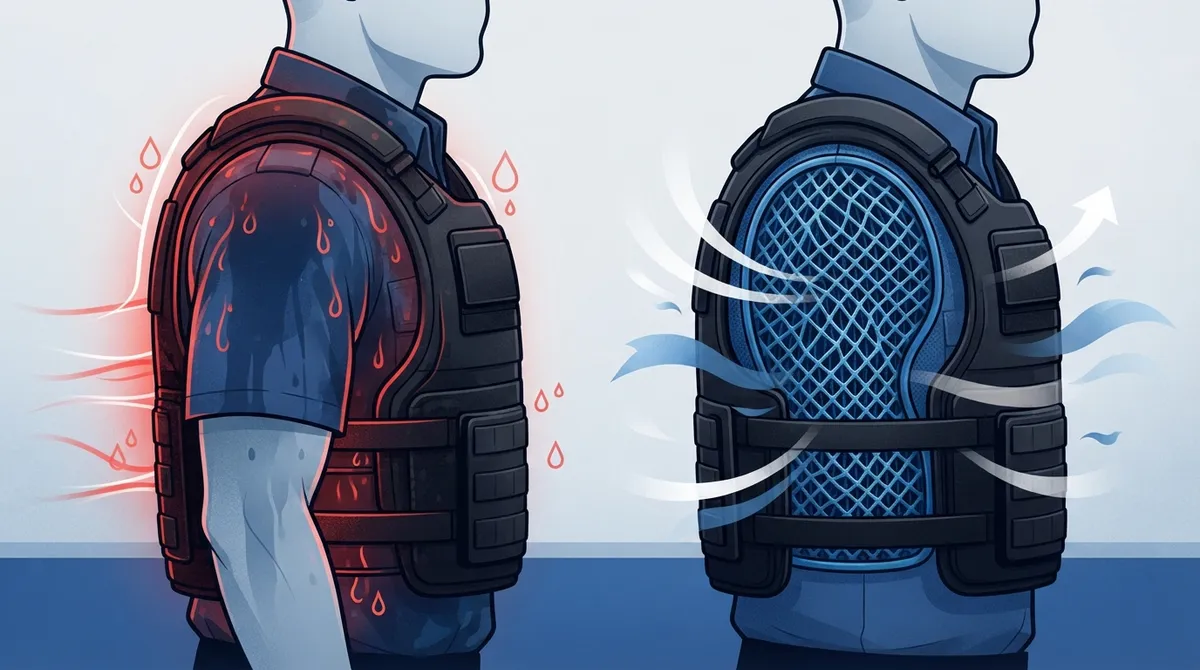
Your body sweats to cool itself down. That’s a good thing. The problem starts when sweat has nowhere to go. Body armor presses tightly against your skin, blocking airflow and trapping heat and humidity in that small space. Sweat pools instead of evaporating, and pooled sweat does almost nothing to cool you off.
Add in the physical workload of wearing 8 to 10 extra pounds of gear, plus a duty belt, plus whatever the weather is doing, and you’ve got a recipe for overheating. This isn’t just an annoyance. According to the OSHA Heat Stress Guide, prolonged heat exposure combined with heavy protective equipment can lead to serious heat-related illness if it’s not managed properly.
The Real Problem: Restricted Airflow, Not Just Heat
Here’s something a lot of people miss. It’s not just the outside temperature causing the sweat. It’s the lack of airflow underneath the vest itself. Even on a mild day, a tightly fitted carrier can create a hot, humid microclimate against your skin. That’s why some officers sweat just as much on a cool 70-degree day as they do in the middle of summer, especially during high-activity calls.

How to Stop Sweating Under a Bulletproof Vest: 6 Proven Steps
Let’s get into the practical stuff. These steps work together, and combining them gives you the best results.
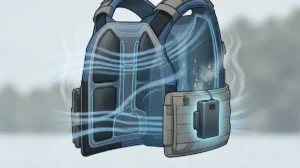
- Add an air-gap ventilation layer. This is the single biggest game-changer. A ventilation vest sits between your body and the armor, lifting the carrier slightly off your skin so air can actually move. This is exactly the problem BluHalo was built to solve.
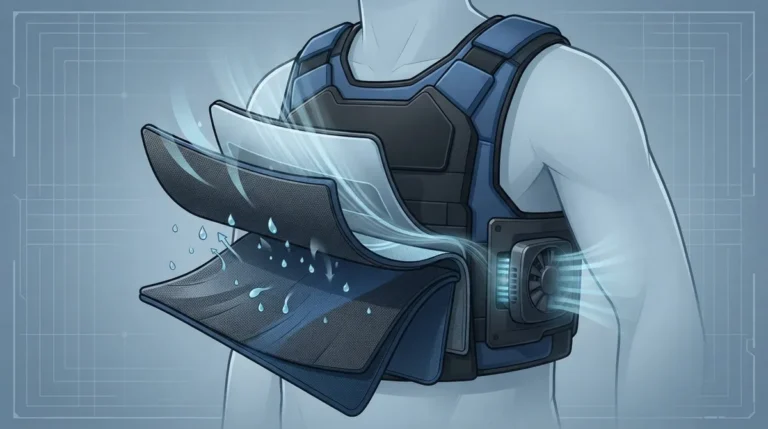
- Choose active airflow over passive mesh when you need serious relief. Fan-driven systems physically push air through the gap instead of just relying on natural movement.
- Wear a moisture-wicking base layer. Skip the cotton t-shirt. Synthetic technical fabrics pull sweat away from your skin so it can evaporate faster.
- Check your armor fit. A carrier that’s too tight leaves no room for airflow at all, no matter what you add underneath.
- Stay hydrated before and during your shift. Ventilation helps you sweat more efficiently, but it can’t replace water your body needs.
- Take scheduled cooling breaks in shade or air conditioning. Even the best gear needs a little help from smart scheduling on extreme heat days.
For a deeper walk-through of fit and airflow basics, our guide on body armor fit and airflow tips for all-day comfort covers small adjustments that make a big difference.
Passive vs. Active Ventilation: Which One Actually Works Better?
This is one of the most common questions we get, and it deserves a straight answer. Passive systems use mesh, spacer fabric, or raised channels to let air flow naturally. They’re lightweight and need no batteries. Active systems use a fan to force air through the gap, and research backs up their advantage in tough conditions.
A 2014 systematic review published in Military Medicine looked at six studies on body-armor cooling devices. It found that active cooling devices reduced physiological strain, like core temperature, skin temperature, or heart rate, compared to armor alone. Passive devices, on the other hand, showed only negligible effects in those same studies. That’s a pretty clear signal for anyone working long shifts in serious heat.
| Feature | Passive Ventilation | Active Ventilation (Fan-Driven) |
|---|---|---|
| Power source | None needed | Rechargeable battery |
| Best for | Moderate heat, routine patrols | Extreme heat, long shifts, high exertion |
| Weight | Very light | Slightly heavier, still low-profile |
| Cooling strength | Relies on natural air movement | Forces continuous airflow |
| Example product | BluHalo inflatable spacer vest | Blufano fan-driven system |
Our detailed comparison, Passive vs. Active Tactical Vest Ventilation: Which Wins?, breaks this down even further if you want to dig into the specifics before choosing.
The Science Behind Ventilation and Sweat Reduction
We know claims about cooling gear can sound too good to be true, so let’s look at the actual research. A study on personal ambient ventilation worn with a ballistic vest found skin-temperature reductions of about 0.9°C and 0.6°C in two separate test conditions. Even better, sweat rates dropped by 21% and 25% when cooling was used compared to no cooling at all.
Separate research from the U.S. Defense Technical Information Center found that forced ventilation under heavy protective garments increased the cooling effect of sweat evaporation by roughly 45 watts. Another military study on a spacer vest worn under body armor estimated about a 20% increase in whole-body evaporative-cooling potential compared to armor alone. These aren’t small numbers. They represent a real, measurable difference in comfort and safety.
What This Means for You
In plain terms, adding a proper air gap and airflow system helps your sweat actually do its job: cooling you down through evaporation instead of just soaking your shirt. This matters most during long shifts, hot climates, or high-intensity operations where your body is working overtime.
Building Your Complete Cooling System
Ventilation alone is powerful, but pairing it with the right supporting gear multiplies the benefit. Here’s what a smart setup looks like:
- A ventilation vest or spacer layer, like the BluHalo ventilation vest, worn directly under your carrier
- A moisture-wicking synthetic base layer instead of cotton
- A properly fitted plate carrier that doesn’t compress the air gap
- Consistent hydration throughout your shift
- Scheduled breaks in shade or climate-controlled spaces during extreme heat
For officers and tactical teams who need continuous airflow through 8-, 12-, or even longer shifts, an active fan system like Blufano takes things a step further. It uses a self-contained fan with a patented air-redirect spout that slides under any style of body armor, delivering adjustable airflow for 8 to 32 hours depending on the setting. It even includes a 10,000mAh power bank that can charge your phone or radio, plus a built-in light for low-visibility situations. That’s the kind of gear built by people who understand what a real shift feels like.
Fit and Safety: Don’t Sacrifice Protection for Comfort
This part is important, so let’s be really clear about it. Any ventilation product you add should never interfere with your armor’s ballistic coverage, plate placement, or carrier closures. Always follow the instructions from both your armor manufacturer and your ventilation system’s maker.
Standards for body armor performance are set and tested through programs referenced in the National Institute of Justice’s Body Armor Standards, and staying within those guidelines protects you just as much as staying cool does. A ventilation vest like BluHalo is designed to sit flat and unobtrusive when deflated, weighing under 7 ounces, so it doesn’t shift your plate positioning or bulk out your profile when you don’t need it.
How Much Air Gap Do You Actually Need?
You might be wondering how much space is enough to make a real difference. Research and product design both point to roughly 1 to 1.5 inches of lift being enough to create meaningful airflow without compromising fit. BluHalo, for example, can lift your vest up to about 1.5 inches off your body when inflated, giving heat and moisture a real path to escape, then deflates flat with the push of a button when you don’t need it anymore.
Cleaning and Maintaining Your Ventilation Gear
Keeping your ventilation system clean isn’t just about hygiene, though that matters too. A clean system also performs better and lasts longer. Here’s a simple maintenance routine:
- Wipe down the exterior after each shift with a damp cloth
- Follow manufacturer instructions for any deeper cleaning cycles
- Let it fully air dry before storing or reattaching to your carrier
- Check straps, Velcro, and fan components regularly for wear
- Charge battery-powered units fully before each shift if using an active system
Skipping maintenance is one of the most common mistakes we see, and it’s covered in more detail in our article on mistakes to avoid with a body armor ventilation system.
Recognizing When It’s More Than Just Sweat
Ventilation helps a lot, but it doesn’t replace basic heat-safety awareness. Heavy sweating combined with headache, dizziness, weakness, confusion, nausea, or muscle cramps are warning signs of heat-related illness. If you or a teammate notices these symptoms, stop, cool down immediately, and get medical attention if needed. No amount of gear replaces good judgment and looking out for each other on shift.
Our guide on how to prevent heat stress while wearing body armor goes further into recognizing and responding to these warning signs during long shifts.
Why BluHalo and Blufano Lead the Way
We built BluHalo because a Chicago police officer got tired of soaking through his uniform every shift, especially during 12-hour days in 95-degree heat. That firsthand frustration turned into a product designed specifically for people who wear armor for a living, not just for a lab test. And when officers needed something even more powerful for extreme conditions, Blufano’s fan-driven airflow became the next-level answer, giving continuous cooling relief for up to 32 hours on a single charge.
Whether you go with the lightweight, cooling-on-demand simplicity of BluHalo or the powered airflow of Blufano, both products are built around one goal: helping everyday heroes stay cooler, drier, and more focused on the job. You can even bundle both together at a discount for maximum cooling coverage. Browse the full lineup in our shop to find the right fit for your role and climate.
Final Thoughts on Staying Cool and Dry
Sweating under a bulletproof vest isn’t something you just have to accept as part of the job. With the right combination of airflow, moisture-wicking layers, proper fit, and smart hydration habits, you can genuinely feel the difference during even the hottest, longest shifts. Thousands of officers, soldiers, and security professionals have already made the switch, and their feedback speaks for itself.
If you’re ready to stop dreading hot shifts and start feeling more comfortable under your armor, our team would love to help you find the right setup. Get in touch with our team today and let’s talk about which ventilation system fits your needs best. And if you’re managing outdoor teams beyond body armor use, groups like All Trusted Lawn Care understand heat management challenges too, since staying cool in demanding outdoor work is a universal need across many professions.
FAQs
Q: How does a ventilation vest stop sweating under a bulletproof vest?
A: It creates a small air gap between your skin and the armor, giving heat and moisture a path to escape instead of getting trapped. This lets sweat actually evaporate and cool you down, rather than just pooling against your body all shift long.
Q: Is a passive mesh ventilation vest or an active fan system better for body armor?
A: It really depends on your conditions. Passive mesh works well for routine patrols and moderate heat, while active fan systems like Blufano provide stronger relief during extreme heat or long, high-intensity shifts. Many officers actually love pairing both for maximum comfort.
Q: What should I wear under body armor to stay cool and dry?
A: Start with a moisture-wicking synthetic base layer instead of cotton, then add a ventilation layer like BluHalo underneath your carrier. This combo helps sweat move away from your skin quickly so it can evaporate properly.
Q: Can a ventilation vest affect the fit or protection of body armor?
A: A well-designed ventilation vest, like BluHalo, is built to sit flat and low-profile when not in use, so it shouldn’t interfere with plate placement or coverage. Always follow both your armor manufacturer’s and ventilation system’s fitting instructions to stay safe and comfortable.
Q: How do you prevent heat stress during a long patrol while wearing body armor?
A: Combine ventilation gear with regular hydration, moisture-wicking clothing, and scheduled cooling breaks in shade or air conditioning. It’s also smart to watch for early warning signs like dizziness or excessive fatigue, and take action right away if you notice them.