Key Takeaways
-
Vest cooling fans work through forced convection and sweat evaporation—they pull fresh air across your torso to speed up natural cooling, not create cold air like air conditioners.
-
Battery runtime ranges from 4-32 hours depending on capacity and speed settings; aim for 6,000-10,000 mAh batteries to complete full shifts without excess weight.
-
Fans are most effective in dry to moderately humid conditions below 95°F; effectiveness decreases in extreme heat or high humidity, so they should complement hydration and scheduled breaks, not replace them.
-
Look for airflow of at least 1.5-3.0 cubic meters per minute, multiple speed settings, noise around 40-45 dB, weight under 7 ounces, and verified compatibility with your specific body armor before purchasing.
-
Proper airflow distribution across your entire torso matters significantly; engineered designs with mesh panels and air channels spread cooling evenly, unlike single-spot fans that provide minimal relief.
-
Heat stress combined with extended shifts impairs focus and reaction time; fan-cooled vests help law enforcement, military, and first responders maintain alertness and performance during 8-12 hour duties in hot conditions.
If you’ve ever finished a 12-hour shift with a soaked undershirt and a vest that feels like a sauna, you already know why a vest cooling fan matters. Whether you’re patrolling city streets, standing post at a checkpoint, or running calls in a plate carrier, trapped heat under body armor can wreck your comfort and your focus. The good news? You don’t have to just tough it out anymore. A quality vest cooling fan pulls fresh air across your torso, helps sweat evaporate faster, and gives you real relief when the temperature climbs.
In this guide, we’ll break down exactly how these systems work, what to look for before you buy one, and how they compare to other cooling options like ice packs or phase-change inserts. We’ll also share the honest limits of fan technology so you know what to expect. By the end, you’ll understand why so many officers, soldiers, and first responders are adding a fan-cooled vest to their daily gear. Let’s dive in and get you closer to a cooler, more comfortable shift.
What Is a Vest Cooling Fan, Exactly?
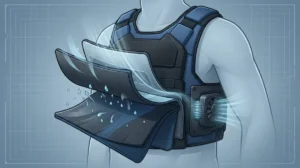
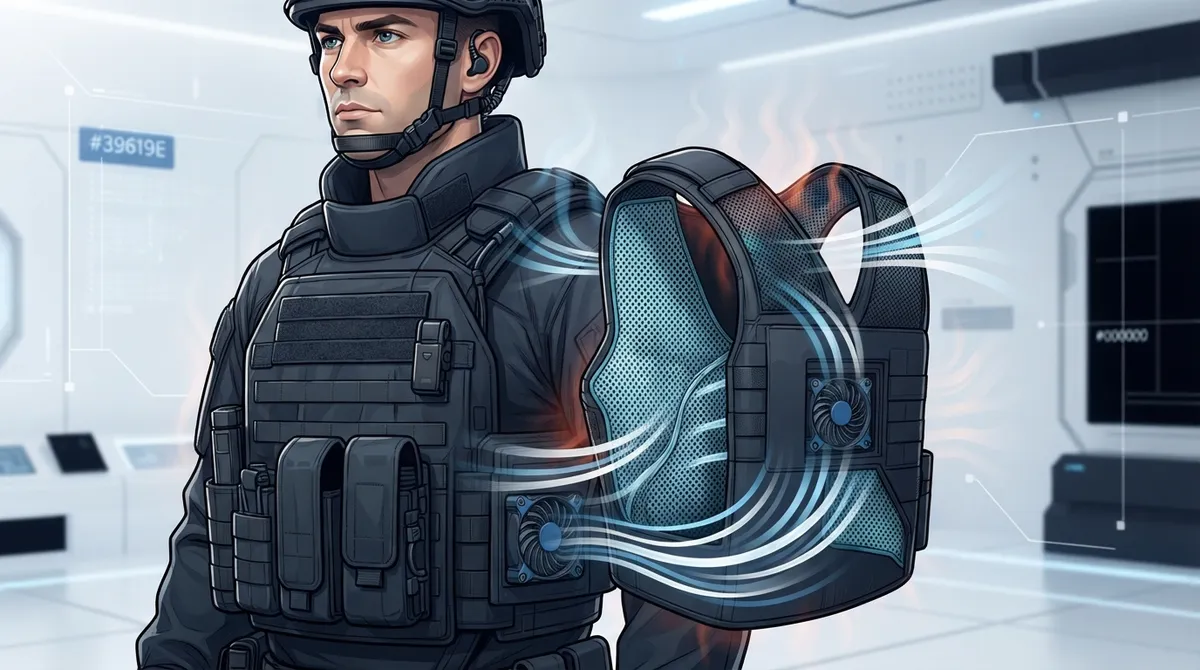
A vest cooling fan is a small, battery-powered fan built into, clipped onto, or connected to a ventilation vest. It pulls in outside air and pushes it across your chest and back, right in that hot, sweaty gap between your skin and your body armor. Think of it like a tiny personal breeze machine hiding under your uniform.
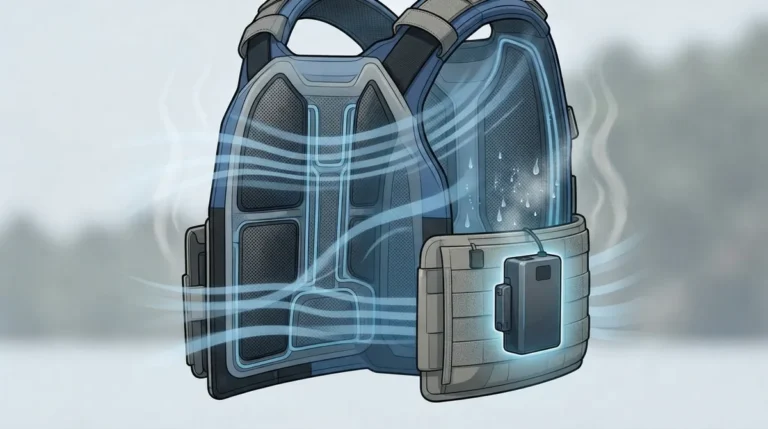
Here’s the important part: these fans don’t create cold air. They’re not mini air conditioners. Instead, they cool you through two simple processes: moving air across your skin (forced convection) and speeding up sweat evaporation. That’s actually how your body naturally cools itself, and the fan just gives it a helpful boost.
This means performance depends a lot on the weather. A fan works best in dry or moderately humid air, since evaporation needs somewhere for that moisture to go. On a scorching, humid day, you’ll still feel a difference, but it won’t feel like walking into a walk-in freezer. Setting realistic expectations helps you get the most value out of this gear.
How Does a Cooling Fan Vest Work Under Body Armor?
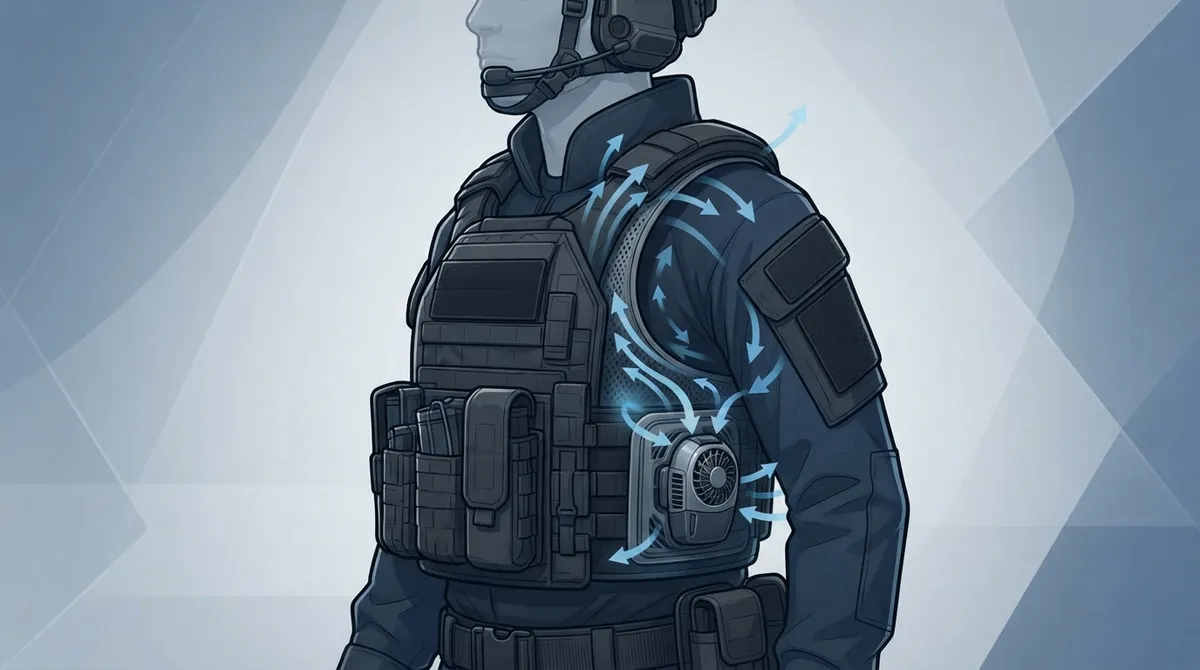
Most vest cooling fans use one or two compact brushless DC fans, usually placed near the lower back, waist, or sides of the vest. These spots let the fan pull in ambient air without being blocked by your duty belt or gear.
Once the air enters, it doesn’t just blast out in one spot. Good designs use mesh panels, air channels, or small baffles to spread that airflow evenly across your chest and back. This matters a lot. A fan that only cools one square inch of your body isn’t doing much for you. You want the air moving across as much surface area as possible.
This is exactly the engineering behind products like the Blufano system, which uses a patented air-redirect spout that slides under almost any style of body armor. It spreads airflow instead of dumping it all in one place, so you get consistent relief from your collar to your waistband.
Where Fans Are Typically Placed
- Lower back or waistband, where the fan pulls in outside air away from your body
- Side panels, which keep the fan clear of your duty belt or plate carrier straps
- Integrated into a full ventilation garment, where the fan connects to internal air channels
- Clip-on style, which attaches to the outside or inside of an existing carrier
Fan-Cooled Vests vs. Ice and Phase-Change Vests
People often ask how a fan vest stacks up against ice packs or phase-change cooling inserts. Both approaches have their place, and understanding the difference helps you pick the right tool for your job.
| Feature | Fan Cooling Vest | Ice/Phase-Change Vest |
|---|---|---|
| Cooling method | Airflow + sweat evaporation | Direct heat absorption |
| Best environment | Dry to moderate humidity | Any humidity level |
| Weight | Very light (under 1 lb typically) | Heavier, especially with ice packs |
| Runtime | 4-32 hours depending on battery | 1-3 hours before recharging/freezing |
| Maintenance | Recharge battery | Refreeze or replace packs |
| Noise | Low hum, around 40-45 dB | Silent |
Neither option is perfect for every scenario, and some professionals actually combine both. If you want a deeper comparison, check out this breakdown of ventilation vs. phase change cooling vests to see which fits your specific work environment.
Battery Life and Power Options You Should Know About
One of the biggest questions people have is simple: how long does the fan actually run? The answer depends on battery size, fan speed, and how many fans your vest has.
- USB power banks are common for lighter, clip-on fan units. These are convenient but usually offer shorter runtimes on a single charge.
- Dedicated lithium-ion battery packs built into the vest system, like the 10,000mAh pack in the Blufano unit, can power the fan for 8 to 32 hours depending on your speed setting.
- Tool-battery platforms, such as an 18V system, are popular in industrial and construction settings. One well-known example runs about 13.5 hours on a 6.0 Ah battery at a moderate airflow setting.
For a full shift, most professionals do best with a battery in the 6,000-10,000 mAh range. Anything smaller may leave you without cooling before your shift ends, while anything much larger adds unnecessary weight. If you want more detail on picking the right battery size, this article on choosing a cooling fan system for body armor walks through the tradeoffs.
Key Features to Compare Before You Buy
Not all fan vests are created equal. Here’s what actually matters when you’re comparing options:
- Airflow volume – Look for at least 1.5 to 3.0 cubic meters per minute for noticeable cooling
- Speed settings – Multiple speeds let you dial in comfort versus battery life
- Noise level – Most quality fans run around 40-45 dB, quiet enough for most duty environments
- Weight – Under 7 ounces is ideal so you don’t feel extra bulk under your vest
- Washability – Sweat-resistant materials that can be wiped down or laundered easily
- Compatibility – Make sure it fits under your specific body armor or plate carrier without shifting
- Attachment security – Velcro or straps that stay put during movement, not just while standing still
These same principles apply whether you’re shopping for a full ventilation vest or a standalone clip-on fan. Our team put together a detailed guide on choosing a compact fan for body armor cooling if you want to go even deeper.
Why This Matters More for High-Stress Professions
Cooling isn’t just about comfort. It’s about staying sharp when it counts.
Law Enforcement and Security
Patrol officers and security professionals often wear body armor for 10-12 hour shifts, sometimes without much of a break. Heat buildup can lead to fatigue, irritability, and slower reaction times, none of which help you make good decisions in the field. Many departments are now recommending gear like BluHalo, which was actually designed by a Chicago police officer who understood this problem firsthand.
Military and Tactical Teams
Soldiers and SWAT operators face an even tougher challenge: heavy plate carriers, additional gear, and missions that don’t pause for a water break. A reliable cooling system helps maintain endurance and focus during extended operations in punishing heat.
Emergency Response Personnel
Firefighters, EMS, and hazmat teams already deal with extreme heat from their environment. Adding a heavy protective vest on top only makes things worse. Fan-cooled ventilation gives these teams a fighting chance at staying functional longer.
Across all these roles, the goal is the same: reduce heat stress so people can perform their jobs safely. According to the OSHA Heat Stress Guide, prolonged heat exposure combined with physical exertion significantly increases the risk of heat-related illness, which makes proactive cooling solutions worth the investment.
Fan Vests Are a Tool, Not a Cure-All
Here’s something we believe in being upfront about: a vest cooling fan should support your safety routine, not replace it. Research from NIOSH notes that increasing airflow across the skin helps reduce heat stress when air temperature is below about 95°F (35°C). Above that threshold, airflow alone becomes less effective and may not provide the relief you’re hoping for.
That means hydration, scheduled breaks, shaded recovery areas, and heat acclimatization still matter, even with a great cooling vest. Think of your fan system as one strong piece of a bigger heat-safety puzzle. Pairing your ventilation gear with smart work habits gives you the best possible protection against heat illness. For more on building a complete heat-safety approach, take a look at our article on preventing heat stress while wearing body armor.
It’s also worth remembering that your body armor itself needs to meet certain protective standards regardless of the cooling accessories you add. The National Institute of Justice’s body armor standards are a great resource if you want to understand how ballistic protection and comfort upgrades can work together safely.
Compatibility With Body Armor and Other PPE
One question we hear constantly: will a fan vest actually fit under my existing gear? The answer is usually yes, but fit matters.
Integrated systems, like BluHalo, are designed specifically to sit under a vest and inflate to create a cooling air gap of up to 1.5 inches, without adding bulk when deflated. Clip-on fans, on the other hand, may attach to either the inside or outside of your carrier, depending on the model.
Before buying, check that the system doesn’t interfere with quick-release mechanisms, plate pockets, or any other safety features built into your armor. A cooling accessory should never compromise the protective function of your gear. Our shop page includes compatibility details for each product so you can confirm fit before you order.
Real Feedback From People Who Wear These Daily
We love hearing from officers and professionals who’ve made the switch to active cooling. One common theme? Once people try a properly designed system, they can’t imagine going back to a bare vest. Comments about finishing 12-hour shifts in 95-degree heat without feeling completely drained come up again and again in our customer reviews. That kind of consistent feedback is exactly why we stand behind our products so confidently.
If you want to see the airflow and fit in action before committing, our videos page shows exactly how BluHalo and Blufano perform in real conditions.
Making the Right Choice for Your Needs
So how do you decide which system fits your situation? Here’s a simple way to think about it:
- If you want ultra-lightweight, on-demand cooling that stays flat when not in use, an inflatable air-gap vest like BluHalo is a strong fit.
- If you want continuous, adjustable airflow for extended shifts of 8 hours or more, a fan-driven system like Blufano gives you longer runtime and steady relief.
- If you work in extremely humid conditions, consider pairing your fan system with hydration strategies and scheduled cooling breaks for the best results.
- If you want maximum comfort, many of our customers actually bundle both products together for layered cooling performance.
Whatever you choose, remember that comfort translates directly into better focus and better performance on the job. That’s not just a nice bonus, it’s a real safety benefit for you and everyone counting on you.
Wrapping Up: Cooler Shifts Start With the Right Gear
Heat shouldn’t be something you just accept as part of wearing body armor. With the right vest cooling fan setup, you can reduce sweat buildup, stay more alert, and finish your shift feeling like a person instead of a puddle. Whether you’re drawn to the lightweight, inflatable design of BluHalo or the adjustable, long-lasting airflow of Blufano, there’s a solution built for how you actually work.
We’d love to help you find the right fit for your gear and your climate. Get in touch with our team today, and let’s get you set up for a cooler, more comfortable shift ahead.
FAQs
Q: How does a cooling fan vest work under body armor?
A: A cooling fan vest uses one or two small battery-powered fans to pull in outside air and push it across your torso. This helps sweat evaporate faster and moves heat away from your skin, which is exactly what your body needs when it’s trapped under heavy armor all day.
Q: Do vest cooling fans actually make you feel cooler?
A: Yes, most people notice a real difference, especially in dry or moderately humid weather. The fan doesn’t produce cold air, but it speeds up evaporation and keeps fresh air moving, which is a tried-and-true way to feel more comfortable during long shifts.
Q: How long does a battery-powered vest cooling fan run?
A: It depends on the battery size and fan speed you choose. Many systems run anywhere from 4 to 8 hours on standard settings, while larger battery packs like the one in Blufano can last up to 32 hours on lower speeds.
Q: Are ventilation vests effective in humid weather?
A: They still help, but the cooling effect is a bit less dramatic than in dry conditions since evaporation slows down when the air is already full of moisture. Pairing your fan vest with good hydration habits and scheduled breaks gives you the best results even on sticky, humid days.
Q: Can a cooling fan vest be worn with body armor or other PPE?
A: Absolutely, that’s exactly what these systems are designed for. Just double-check the fit and make sure the fan or air channels don’t interfere with any quick-release straps or safety features on your specific vest.